Mississippi WMA Hog Retrieval Rules
Recovering a hog on a Mississippi Wildlife Management Area can raise a practical question: may you bring an ATV or UTV to the animal? The answer depends on the area’s current rules and where the machine would travel. Treat retrieval as no automatic permission to leave an approved route, and check the specific WMA rules before riding in.
Hog retrieval does not automatically authorize an ATV ride
A downed hog and an ATV are two separate issues. You may be able to retrieve game while still being prohibited from driving your machine to its location. The fact that the hog is yours, is already dead, or lies a short distance from a road does not by itself make cross-country travel permissible.
On a WMA, use the conservative assumption that your ATV or UTV must stay on routes specifically open to that type of vehicle. Some areas may have designated roads or trails, seasonal restrictions, closures, or other site-specific rules. A road that looks usable is not necessarily open to recreational vehicle traffic, and a route open to other vehicles may not be open to ATVs.
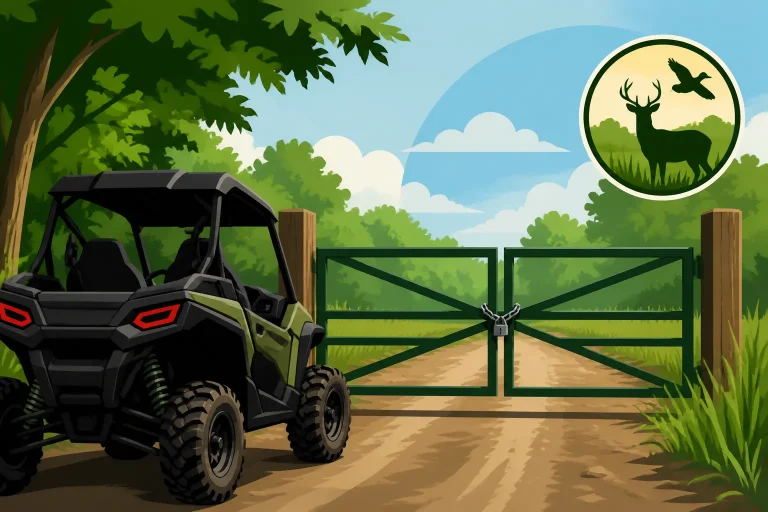
That distinction matters when a hog falls in thick cover, across a ditch, or beyond a gate. Do not drive around a barrier, across a field, or through timber just to shorten the carry. A retrieval need does not make a closed road or unauthorized route open. For the broader rules that apply to riding on these lands, see Mississippi WMA Riding Rules and Mississippi WMA Designated Roads Only.
Before moving the machine, ask the WMA manager or the relevant wildlife agency contact whether vehicle-assisted game retrieval is allowed on that area and under what conditions. If you cannot confirm permission, leave the ATV parked on an authorized route and retrieve the hog on foot, if it is safe and lawful to do so. You can also ask what to do if the animal is too heavy to carry or is located beyond the area where vehicles may travel.
Check what “retrieval” means in the rule
Rules may distinguish between recovering an animal and using a vehicle to reach it. They may also treat different activities differently, such as riding on an open road, leaving the road to reach a carcass, or driving a machine to transport game. Do not assume that permission for one activity covers the others.
A wounded hog creates additional questions. If an animal is still moving, do not treat the situation as ordinary carcass retrieval. Follow the applicable hunting rules, avoid unsafe pursuit, and contact the appropriate WMA staff or law enforcement if you need help resolving what is permitted. For more on the general issue, Mississippi WMA Game Retrieval Rules is a useful related reference, but the rules for the specific area still matter.
Check routes, closures, and weapon rules before riding
A little preparation can prevent a difficult conversation at a gate or trailhead. Before a hunt, identify where you can park, which routes are open to your machine, and how you will handle a retrieval if the animal falls away from those routes.
Use the current WMA map, regulation materials, and posted signs. Pay attention to temporary closures and seasonal notices, not just the general map. A road that was open on a previous trip may have been closed for management work, weather, hunting activity, or another reason. If signs or barriers conflict with what you expected, follow the on-site restriction and ask the area manager rather than trying to infer an exception.
A sensible pre-ride check includes:
- Confirm the area’s vehicle rules. Ask whether ATVs or UTVs are allowed, which routes they may use, and whether game retrieval changes any of those limits.
- Check the route and the access point. Find the approved parking location and open roads before unloading. Do not assume that an entrance gate means every road beyond it is open.
- Read signs at the trailhead and along the route. A closed-gate sign or other posted restriction takes priority over convenience.
- Clarify what happens if the animal is off-route. Ask whether you must carry it out, contact staff, or use another approved method.
- Plan how firearms will be handled. Vehicle movement and hunting activity can involve separate restrictions. Confirm how a firearm must be carried or secured when riding.
For closures and signs, see Mississippi WMA Road Closure Signs. For questions involving firearms and machines, review Mississippi WMA Weapon Restrictions and Mississippi WMA Firearm Setbacks. Do not treat these general topics as a substitute for the WMA’s current, site-specific rules.
| Situation | Safer approach |
|---|---|
| Hog is beside a route confirmed open to your machine | Stay on the route and confirm that game transport is allowed |
| Hog is off the approved route | Do not drive cross-country; ask the area manager how to retrieve it |
| Gate or sign blocks the route | Do not go around it; use another authorized route or contact staff |
| You cannot confirm whether the route is open | Leave the machine parked and verify before proceeding |
| Firearm is with you while riding | Follow the area’s rules for securing or carrying it; do not assume riding changes them |
| Hog is wounded or still moving | Treat it as an active hunting and safety situation, not routine carcass transport |
Do not infer an exception from other public-land rules
A rule that applies to one WMA, one season, or one type of vehicle may not apply to another. The same caution applies to routes used by hunters on foot or in full-size vehicles. Permission to use a road does not automatically permit an ATV to use it, and permission to use an ATV on one route does not automatically permit leaving that route.
If the hunt involves a firearm, check whether the WMA restricts loaded weapons on machines or near roads. Keep the firearm handled and secured exactly as the applicable rules require. A hog’s location is not a reason to ignore weapon restrictions or to ride with a firearm in a way the area prohibits.
If you are hunting on a WMA you have not visited before, confirm how access and land-use rules apply before the trip. [Mississippi Hunting License and Land Access] can help with the broader access question, while the area’s current regulations determine the specific route and vehicle conditions.
Make a retrieval plan before the shot
A retrieval plan is most useful before the animal is down. It can be hard to judge distance, terrain, and route legality when you are focused on getting a heavy hog out of the woods. Decide in advance where the machine will remain, what you will carry, and who you will contact if the animal falls beyond an approved route.
Think through the likely obstacles. A hog may be in brush, across a drainage, or on the other side of a closed road. Wet ground can make a route impassable and can increase the damage caused by driving off the established surface. A UTV’s size does not make an unauthorized route acceptable; a smaller ATV is not automatically exempt either.
Useful preparations include:
- Carrying a phone or another reliable way to contact your hunting partner or area staff.
- Taking a map that shows the WMA boundary, approved access, and parking location.
- Agreeing on a meeting point in case one person stays with the machine.
- Bringing suitable gloves and a safe way to carry or drag the animal on foot, if that method is allowed and practical.
- Leaving enough time to retrieve the hog without rushing into a closed area or riding after dark without checking the rules.
- Knowing what to do if the animal is too heavy, the terrain is unsafe, or the route is unclear.
Do not assume that a friend’s permission, a hunting-club custom, or past practice is enough. Someone may have used a route under different conditions, or a rule may have changed. If a hunt is taking place on land that is not a WMA, landowner permission and that property’s own rules are relevant; they do not replace WMA requirements. For questions about access beyond a WMA, Mississippi Landowner Permission Forms may help clarify the separate permission issue.
What to do when a hog is down
When you reach a downed hog, pause before bringing the machine closer. Confirm the animal is dead, make sure everyone is in a safe position, and check where you are in relation to the approved route and the WMA boundary. If the animal is not clearly dead, do not approach casually or assume a vehicle can be used to push through brush. Handle the situation safely and follow applicable hunting rules.
Then choose a retrieval method that stays within the rules:
- If the animal is beside an approved route, verify that riding on that route and transporting game are allowed. Keep the machine on the route and do not drive onto the shoulder, into vegetation, or around a barrier unless expressly permitted.
- If the animal is off-route, leave the ATV or UTV where it is allowed to be and retrieve the hog without taking the machine cross-country. If that is not feasible, contact WMA staff for instructions rather than improvising.
- If the route is closed or unclear, stop and ask. Do not use another path simply because it appears to connect to an open road.
- If a firearm is present, follow the area’s weapon rules throughout the retrieval. Do not let urgency lead to unsafe handling or a prohibited setup.
- If you are uncertain about the boundary or authority, give the WMA staff the area, road, and approximate location and ask for a clear direction before moving the machine.
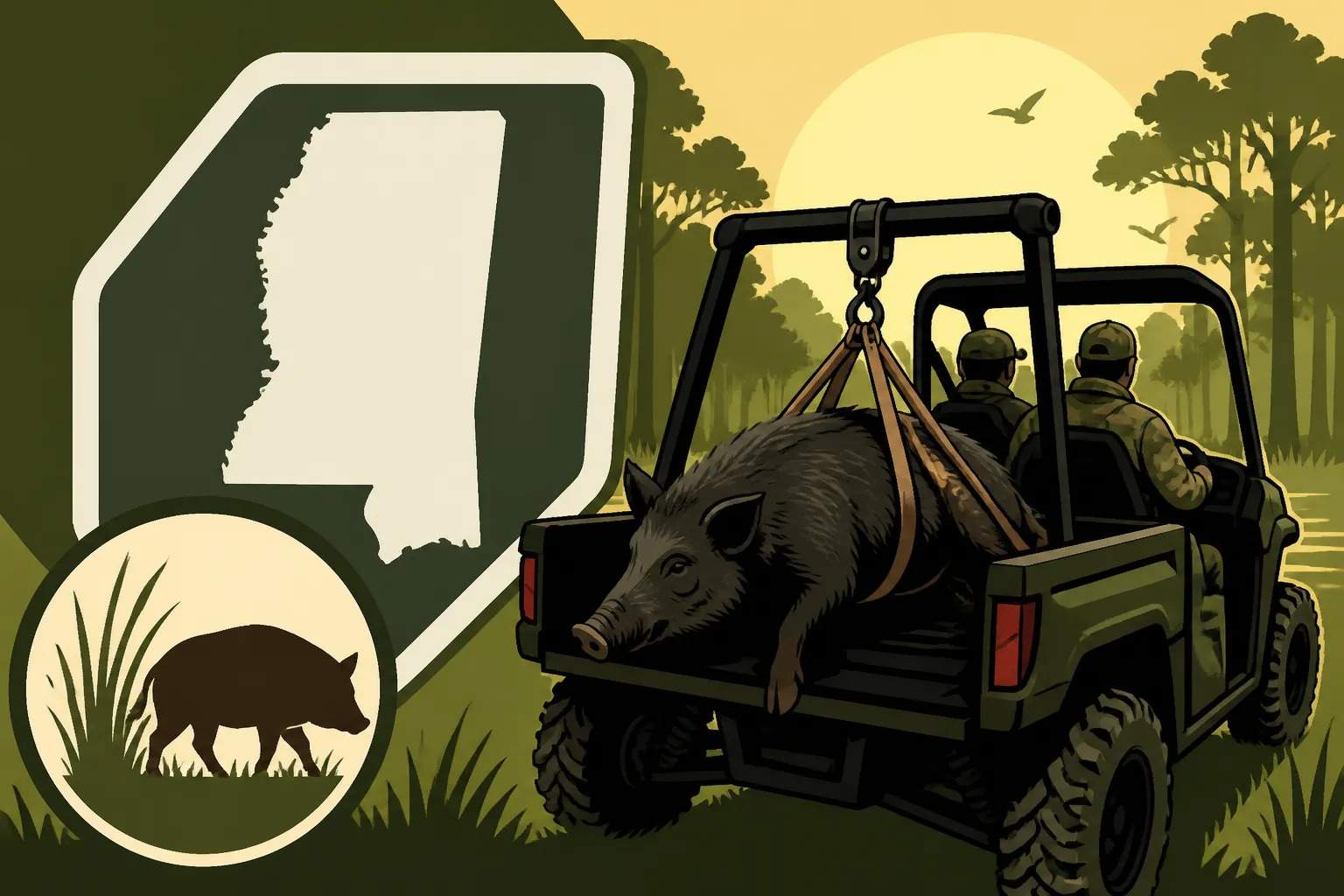
Take care with the animal during transport. Secure it so it cannot shift, interfere with steering, or fall from the machine. Avoid blocking the route or creating a hazard for other hunters. If the retrieval requires more than one trip, keep each trip within the same authorized access rules; repeated use does not create permission to take a shortcut.
If you discover that a hog is on the other side of a boundary, do not assume WMA vehicle rules stop applying just because the animal crossed onto private land. You may need permission from the landowner to enter or recover it. Likewise, a machine allowed on private property may still be restricted once it returns to WMA land.
When the rules remain uncertain, a brief call is better than risking a citation, damaging the property, or creating a safety problem. Mississippi Permit Questions Riders Ask offers related context on access questions, but the WMA manager is the right person to clarify a specific route or retrieval situation.
Disclaimer
This article is for general informational purposes only and does not constitute professional advice. Laws, prices and regulations vary by location and change over time. Consult a qualified professional for guidance on your specific situation.