Group Limits on a Busy Southern Weekend
A large group can turn a fun Mississippi ATV or UTV weekend into a long wait at the gate—or a problem on a narrow trail. Group limits depend on where you ride, who manages the property, and whether you booked a private event or site. Here’s how to check the rules, coordinate riders, and avoid assuming one permit covers everyone.
Why group limits vary by riding area
Mississippi does not have one universal group-size rule that applies to every ATV or UTV ride. A national forest, wildlife management area, state park, private mud park, and organized event may each have different procedures. Even within one property, rules can differ by trail, campground, event area, or time of year.
That distinction matters on a busy weekend. A group might be able to ride the same property but still need to split into smaller units, stagger its arrival, make a reservation, or follow a special event process. The park or land manager is the source for the limit that applies to the place and date you have in mind. Don’t assume that a number mentioned by another rider applies to every trail or park.
Public riding areas often have rules about where machines may travel, what permits riders need, and which areas are open. Those rules are separate from the size of your party. For example, a group that has the right pass still needs to stay on authorized routes and follow posted closures. Review Mississippi Forest Pass Coverage before treating a forest pass as permission to ride anywhere on public land.
Private parks can set their own check-in, reservation, waiver, and group procedures. A busy holiday weekend may require advance arrangements even if the park normally accepts walk-ins. A park may also have practical limits based on parking, trail capacity, campground space, or staff availability. Check Mississippi Riding Areas That Take Reservations if you are comparing places where advance planning may matter.
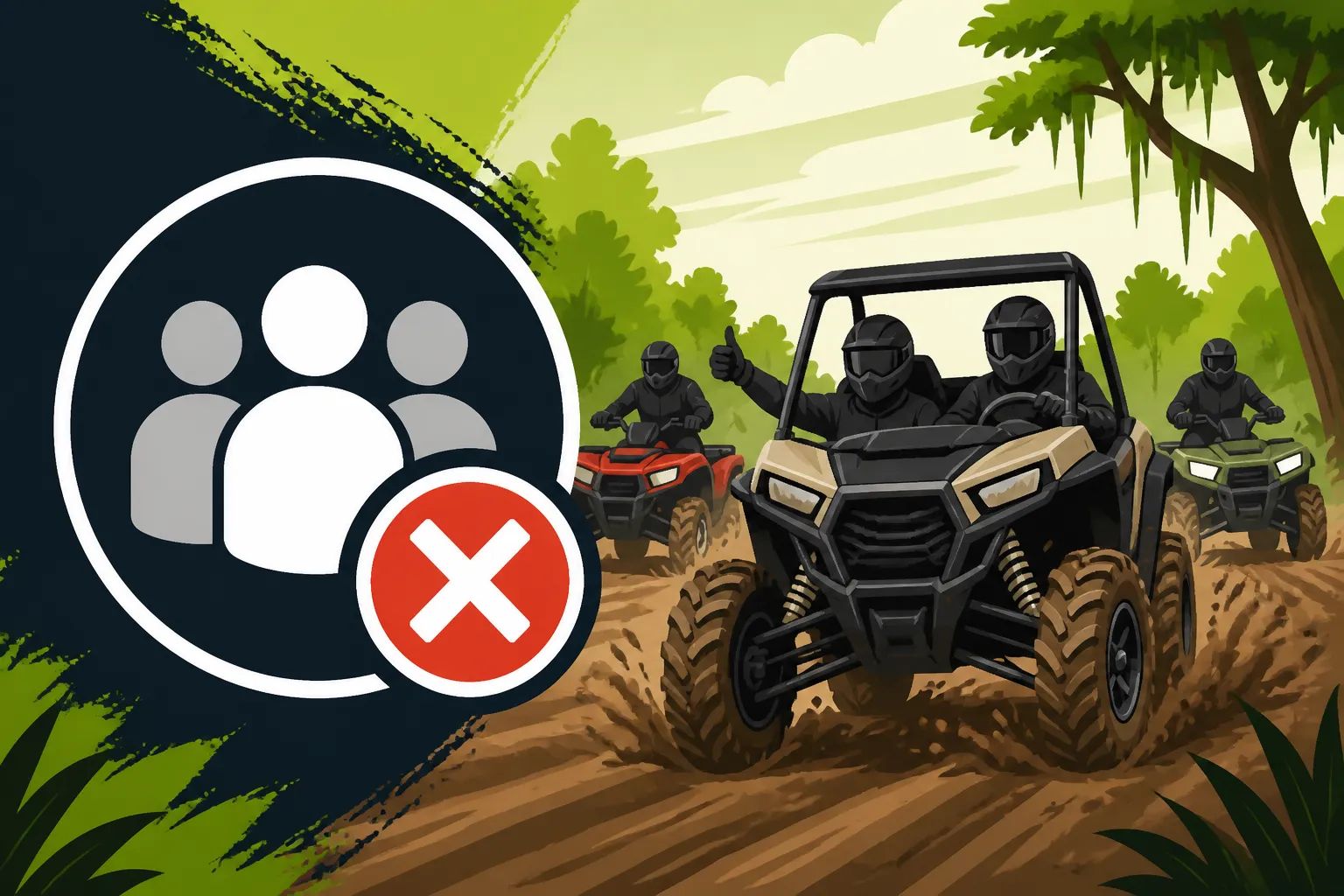
Group size may also affect the experience even when no formal cap applies. A dozen machines arriving together can create a line at check-in, block a trailer staging area, or stretch so far along a trail that riders lose contact. A smaller riding unit is easier to count, easier to communicate with, and less likely to hold up other trail users. When the group is larger than a few machines, ask whether the property expects it to break into smaller groups.
What to confirm before you invite everyone
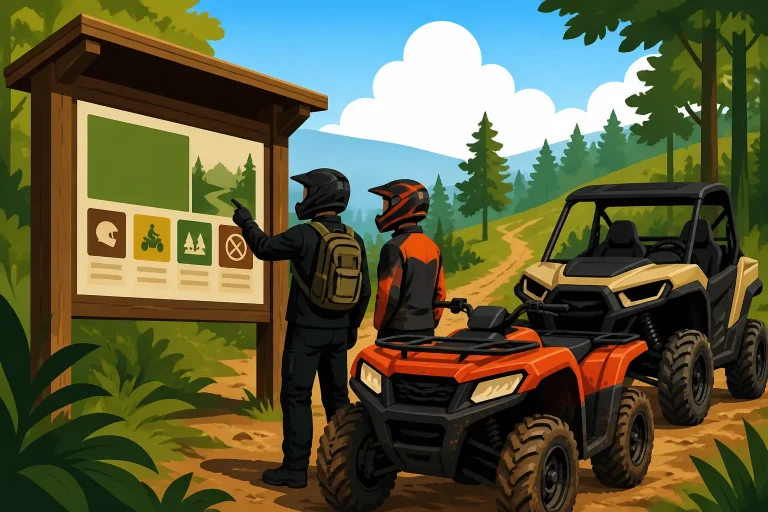
Start with the exact destination. “We’re riding in a national forest” or “we’re going to a mud park” is not enough to identify the relevant rules. Confirm the property, trail system or riding zone, planned date, and whether your visit is a regular ride or an organized gathering. Weather, maintenance, hunting activity, and special events can change what is open or available.
Then contact the managing office, park operator, or event organizer. Ask direct questions and record the answers somewhere the trip organizer can find them. A quick phone call or message before the weekend can prevent a caravan of machines from reaching a gate only to discover that the group needs a reservation or must use a different staging area.
Useful questions include:
- Is there a maximum number of machines or riders allowed together?
- Does the limit apply to the whole party, or to each riding group on the trail?
- Do you require advance notice, reservations, or a special event permit?
- Does each rider need an individual pass, waiver, or proof of age?
- Are there separate rules for passengers, children, or side-by-sides?
- Where can the group park trailers and gather before entering?
- Are any trails or facilities likely to be closed on our planned date?
- If a group needs to split up, are there designated meeting points?
For public forest riding, ask the office responsible for the specific trail area rather than relying only on a general map or a social media post. A map can show routes, but it may not answer whether a large organized group needs approval or whether the route is currently open. The questions in [Questions Worth Asking a Southern Forest Office] can help you prepare for that conversation. For property-specific guidance, see Mississippi Group Size on Forest Trails.
If you are organizing a club outing, charity ride, or another planned gathering, don’t assume that a regular day-use pass covers the event. Ask whether the activity needs advance approval or a permit, and what information the organizer must provide. Mississippi Event Permits for a Ride is a useful starting point for understanding why a planned group event may need more coordination than an ordinary visit.
| Before the weekend | What to verify | Why it matters |
|---|---|---|
| Group size | Maximum party or riding-unit size | A total party may need to split into smaller trail groups |
| Access | Passes, tickets, and entry procedures | One person’s pass may not cover the rest of the riders |
| Parking | Trailer staging and overflow options | A large caravan can fill limited space quickly |
| Timing | Arrival window and gate procedures | Late arrivals can disrupt check-in or reservations |
| Trail status | Open routes, closures, and conditions | The planned route may not be available that day |
| Special plans | Event approval or reservation needs | Organized gatherings may have separate requirements |
Plan a large ride so it runs smoothly
Once the rules are clear, give the group a simple plan. Name one organizer who will handle the property’s requirements and pass the information to everyone. If the party must divide into smaller riding units, assign a lead and a sweep rider to each one. A sweep rider stays near the back, checks that nobody has fallen behind, and knows what to do if a machine stops.
Set the meeting point before anyone leaves home. It should be a place that can accommodate the machines and trailers without blocking a public road, gate, business, or trail entrance. If the parking area is limited, consider having people arrive in smaller waves instead of asking every rider to show up at once. Confirm whether the operator allows a group to wait near the entrance; never assume roadside space is available.
Give each rider the practical details in advance: the correct entrance, check-in procedure, required documents or passes, property rules, and what to do if they arrive late. Tell everyone to check for updated closures before loading. Mississippi Trail Conditions After Rain explains why conditions can change quickly and why the group should confirm access close to departure.
A short ride briefing can prevent confusion once machines are moving. Cover the route, speed expectations, spacing, hand signals or communication methods, and the place to stop if the group gets separated. Agree that riders will not leave the route to catch up or take an unapproved shortcut. On narrow trails, keep enough space between machines to stop safely, but don’t let the group stretch so far that the lead rider has no idea whether the back is still moving.
Plan for different machine types and rider experience. A route suited to a compact ATV may not work for every side-by-side, and a beginner may need a slower pace than an experienced rider. Check the riding area’s width and vehicle requirements before promising access to the whole group. Mississippi Trails That Allow Side-by-Sides can help narrow down options when the party includes UTVs.
Carry a charged phone, but don’t rely on cell service in remote areas. Choose meeting points that are easy to describe, and agree that a rider who becomes separated will stop at a safe place rather than continuing down an unfamiliar trail. For a large outing, share the organizer’s contact details and the property’s contact information before the ride begins.
Permits, reciprocity, and common mistakes
A group limit is not the same thing as a permit requirement, and neither is the same as reciprocity between states. These are separate questions. A rider visiting from Alabama, Louisiana, Tennessee, or another state should check whether the destination requires an entry pass or individual paperwork, even if the rider’s home state has a different system. A visitor’s machine being allowed on a trail does not necessarily mean the rider can skip the Mississippi property’s own check-in rules.
Likewise, one group leader’s paperwork may not cover every machine. Ask whether each rider needs a pass, ticket stub, waiver, identification, or safety document. For forest trail access, the Mississippi National Forest Riding Explained overview helps separate riding access from other rules. A group organizer should not collect assumptions from several riders and treat them as confirmation.
Common planning mistakes include:
- Assuming there is a statewide group cap. Limits and procedures are property-specific. Confirm the rules with the place you will actually visit.
- Treating a large group as an ordinary walk-in. A club ride or organized gathering may need advance notice, even when individual riders usually enter without a reservation.
- Thinking one pass covers the caravan. Ask whether documents are issued per rider, machine, vehicle, or group.
- Arriving without a parking plan. Multiple trucks and trailers can take up more space than the riding group expects.
- Relying on old information. A rule from a previous season, event, or trail area may no longer apply.
- Ignoring closures because the group has traveled a long way. A pass or reservation does not override a closed gate or posted restriction.
- Letting the group spread too far out. Use smaller units and agreed meeting points so riders can stay accounted for.
If the property does not publish a clear group policy, ask a staff member or managing office before the trip. Be specific about how many machines and people you expect, whether you plan to ride together, and whether the outing is organized or informal. Ask what happens if the group is larger than allowed, rather than relying on a guess at the gate.
After you get an answer, share it with the entire party. That small step helps avoid the familiar busy-weekend problem: one person knows the rule, while the rest of the group arrives expecting something different. A little coordination keeps the focus on riding and makes it easier for the property to manage trail access for everyone.
Disclaimer
This article is for general informational purposes only and does not constitute professional advice. Laws, prices and regulations vary by location and change over time. Consult a qualified professional for guidance on your specific situation.