Mississippi Forest Pass Coverage
A Mississippi forest pass can be easy to misunderstand: it may cover access to designated National Forest OHV trails, but it does not open every road or replace other rules. If you are deciding whether your pass works at a particular trailhead, the key is to match the pass to the land, machine, and activity—and check the site’s current conditions before you haul out.
What Mississippi Forest Pass Coverage Means
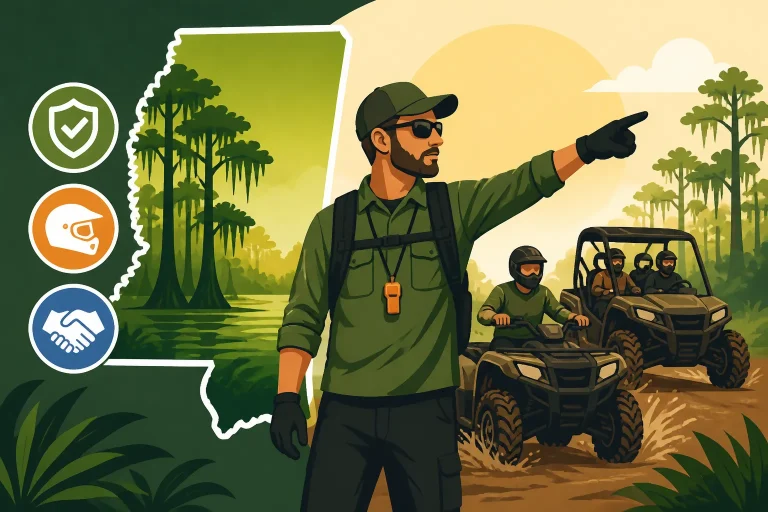
The Mississippi National Forest OHV pass is an access pass for qualifying riding on designated off-highway vehicle routes in the National Forest system. Its forest-wide coverage is intended to make one pass useful across the participating National Forest districts in Mississippi, rather than requiring a separate pass for each district. Confirm the current coverage and application instructions with the Forest Service before relying on it for a trip.
The pass covers access, not unrestricted use of public land. A route must be open to the kind of machine you plan to ride, and any posted closure, width restriction, seasonal limit, or other trail rule still applies. Forest roads that happen to be open to other vehicles are not automatically OHV trails, and an OHV pass does not authorize riding wherever a machine can physically travel.
| The pass may help cover | The pass does not automatically cover |
|---|---|
| Use of eligible, designated National Forest OHV routes | Riding on every road or trail inside a National Forest |
| Access under the pass rules in participating Mississippi districts | Routes closed by signs, gates, weather, or seasonal restrictions |
| The pass requirement for a qualifying machine, when used as directed | State registration, a street-use permit, or permission to cross private land |
| Forest OHV access during the pass’s valid period | Fees or rules at private parks and separate riding areas |
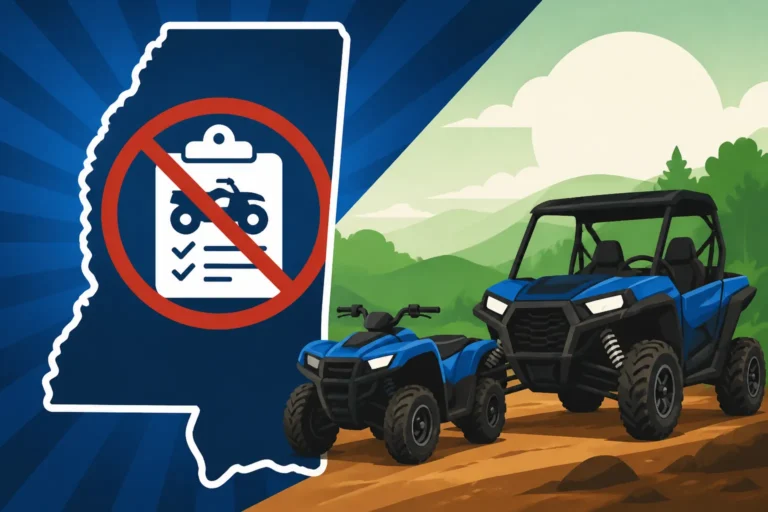
The pass is not the same thing as a state registration sticker or a license plate. Mississippi does not issue an ATV plate simply because a rider has a Forest Service pass. It also does not give a rider permission to use public roads. For the distinction between title and road-use rules, see Mississippi Does Not Register ATVs and Why a Title Does Not Open Any Roads.
Coverage depends on where the riding takes place. A National Forest trail may fall under the pass program, while a nearby privately operated park, state-managed property, or separate public trail system may have its own access process. Do not assume that a pass accepted at one trailhead will be accepted at another merely because both places are in Mississippi.
The pass is tied to trail access, not just the state
The most useful question is not simply “Does the pass work in Mississippi?” It is “Does this pass cover this route, and does my machine meet that route’s rules?” A forest-wide pass can simplify access among participating districts, but it does not make every road or trail in the state part of the same system.
Before leaving home, identify the exact riding area and the route you expect to use. Check its official map, trailhead notices, and current closure information. If the trail’s status is unclear, contact the relevant Forest Service office rather than relying on a general map or an old social media post.
For practical preparation, Mississippi National Forest Riding Explained covers the broader distinction between riding areas and forest access. Which Trails the $60 Forest Pass Opens can also help narrow down what to confirm for a planned ride.
What the Pass Does Not Cover
A pass is not a general-purpose authorization to ride anywhere on public land. It does not override route designations, land ownership, or posted restrictions. A trail can be closed even when a rider has a valid pass, and a pass does not turn a closed route into an open one.
It also does not provide permission to cross private property to reach a trail. A connecting lane, timber road, or informal cut-through may look like a convenient route, but the rider still needs lawful access. Check gates and signs, and get written permission when a route crosses land that is not open to public riding. Written Permission From a Southern Landowner explains why access should be settled before a ride, not at the property line.
A National Forest pass does not automatically satisfy the separate requirements of other riding areas. For example, Bethel OHV trails have their own access details, including a day-use process. Do not assume the Forest Service pass replaces Bethel’s ticket or other site requirements. Check Bethel OHV Trails in Mississippi and Every Rider Must Carry a Day-Use Ticket Stub before heading there.
The same caution applies to private mud parks and other managed riding venues. Each may set its own entry, waiver, age, helmet, machine-width, or camping rules. A Forest Service pass is not a substitute for a park’s admission or waiver process. See Mississippi Private Park Waivers and Rules when planning a private-park visit.
It does not guarantee every machine can use every route
Machine eligibility matters. The pass program has a 50-inch width limit associated with forest trail access, but do not treat that as the only machine rule. A route or riding area may have a narrower limit, a different measurement method, or additional requirements. Confirm the applicable limit before loading a wide ATV or side-by-side. The overview at The 50-Inch Width Limit Written Into the Pass is useful background, while the trail’s current official information should guide the final decision.
Do not guess at width based on the machine’s advertised class or model name. Measure the actual machine as directed by the applicable rules, accounting for tires or other parts if the instructions specify them. Accessories can affect dimensions, and a machine that fits one route may not fit another.
A pass also does not replace rider qualifications or safety requirements. The rules can depend on the trail system, the rider’s age, and the location. Riders under 16 should check applicable certificate and helmet requirements before the trip. Mississippi Riders Under 16 Need a Safety Certificate and Helmets Are Required Under 16 on Forest Land address those issues.
Check These Details Before You Ride
A few checks before departure can prevent a long drive ending at a closed gate or an unsuitable trail. Use the pass as one part of your planning, not as proof that all other requirements are settled.
- Identify the exact riding area. Confirm that it is a National Forest OHV area covered by the pass, rather than a private park or another public riding system.
- Check the route designation. Make sure the trail is designated for your kind of machine and is open on the day you plan to ride.
- Verify machine limits. Check width and any other equipment or vehicle restrictions for the specific route.
- Review rider requirements. Confirm age-related rules, safety certificates, helmets, and any other required documents.
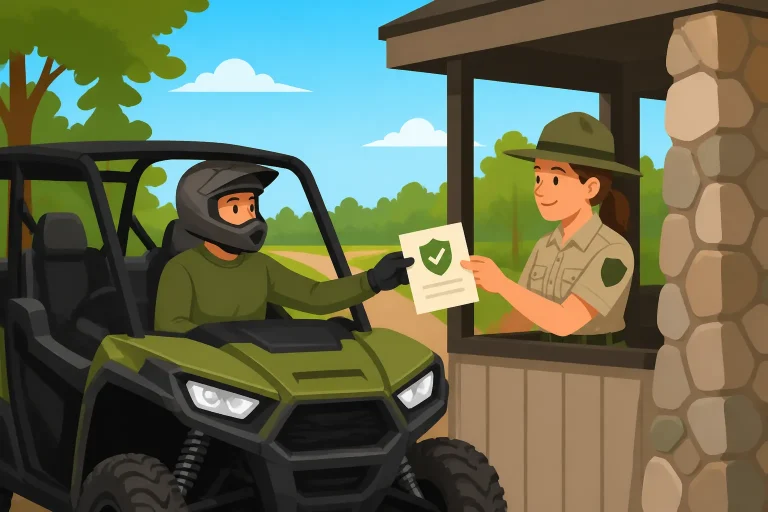
- Follow pass display or possession instructions. Read the current directions for how the pass must be carried or displayed. Keep it accessible at the trailhead.
- Check for temporary closures. Heavy rain, maintenance, fire danger, or other conditions can affect access. Call or check official updates before towing to the site.
- Plan for separate rules elsewhere. If the trip includes another forest, park, or trail system, check whether it has a separate pass, ticket, waiver, or fee.
The Forest Service’s current instructions are the authority for pass validity, purchase, display, and coverage. Pass prices and procedures can change, so verify current figures and requirements directly before buying or traveling. How to Buy a Mississippi Forest Pass and Mississippi Forest Pass Cost cover the practical purchase questions; Mississippi Forest Pass Coverage should not be read as a promise that every forest road is open to OHVs.
Keep the pass in a place where it will not be lost, soaked, or damaged. If the instructions call for a displayed pass, use a secure holder that remains visible as required. A waterproof document pouch from an outdoor retailer or an online marketplace such as Amazon can help protect paper materials, but the holder does not change the display rules.
A Simple Way to Avoid a Coverage Mix-Up
Before setting out, write down the name of the riding area, the trail or route you intend to use, and the office or official page where you checked its status. This small step helps distinguish a valid pass from a valid route. If the pass is accepted but the trail is closed, the pass cannot solve the closure. If the route is open but your machine is too wide, the pass cannot make it eligible.
Also separate three questions that riders often treat as one:
- Do I have the required pass? Check that the pass is valid for the relevant system and period.
- May this machine use this route? Confirm the designation and machine limits.
- May I ride this route today? Check current openings, weather closures, and posted notices.
A “yes” to the first question does not guarantee a “yes” to the other two. For day-of-trip updates, Checking Trail Conditions Before You Load the Trailer offers a useful planning approach. If a route sign conflicts with older information, follow the current on-site restriction and contact the managing office for clarification.
If your plans include state-managed land, wildlife management areas, or a private riding venue, check that property’s rules separately. Pass coverage is specific to the system it serves; it should not be used to infer access rights elsewhere. Mississippi WMA Designated Roads Only explains why land-management rules can differ even when a route appears similar.
A forest pass is most helpful when you know exactly what it covers: eligible access on designated National Forest OHV routes, subject to the pass instructions and the route’s own rules. Verify the area, machine limits, and current conditions before you travel, and treat other riding locations as separate unless their official rules say otherwise.
Disclaimer
This article is for general informational purposes only and does not constitute professional advice. Laws, prices and regulations vary by location and change over time. Consult a qualified professional for guidance on your specific situation.