Every Rider Must Carry a Day-Use Ticket Stub
At Bethel OHV Trail, a day-use ticket stub is easy to misplace once helmets are on, gloves are muddy, and the group is ready to ride. But every rider needs to keep their own proof of day-use access with them. This guide explains what to carry, how to protect it, and how to prepare before leaving the trailhead.
Why every rider should keep a day-use ticket stub
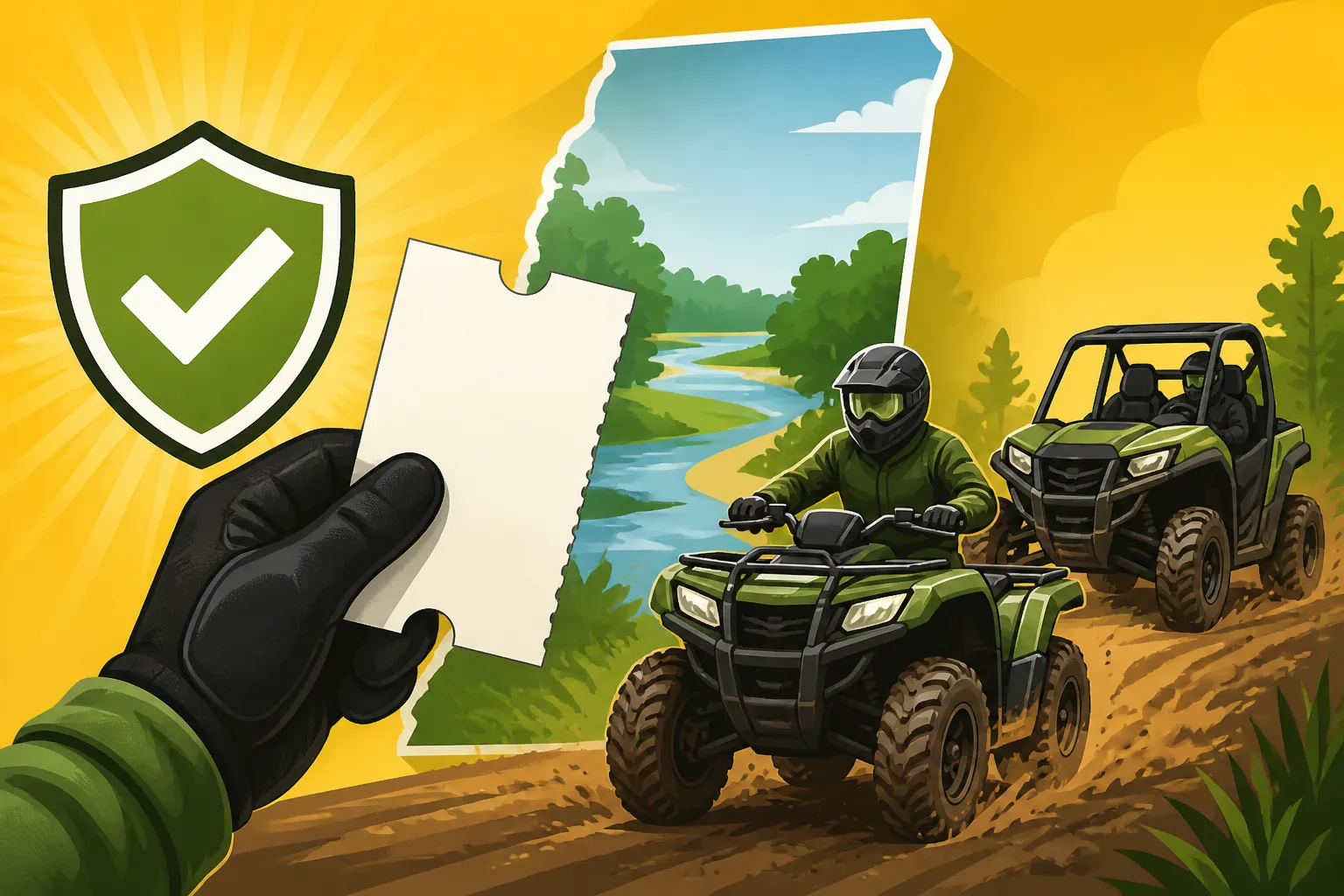
A ticket stub is more than a scrap of paper: it is the proof you may be asked to show that you have met the trail’s day-use requirements. Treat it as part of your riding gear, just like your keys, phone, and safety equipment. Keeping it on your person makes it easier to produce during a check and less likely to disappear if a machine is parked or moved.
If you are comparing riding areas, start with [Mississippi ATV Trails: Where to Ride] and [Bethel OHV Trails in Mississippi]. Bethel is a popular place to plan around, but arriving with a ticket stub is only one part of a smooth riding day. You also need to confirm that the trail is open and that your machine and group are prepared for its rules.
Each rider should carry their own proof
When a group arrives together, it is tempting to let one person hold the paperwork for everyone. That can create a problem if riders separate, someone rides back to the parking area, or the person carrying the papers is not nearby when proof is requested. The safer approach is simple: each rider keeps their own day-use ticket stub.
For a family ride, give each rider their stub before anyone starts the engine. For a group of friends, agree on this at the staging area instead of assuming the driver or trip organizer will carry everything. A passenger should also keep their own proof rather than relying on the machine’s operator to produce it.
A small pocket in a riding jacket or waist pack works well. If you have a wallet or a secure document pouch that stays with you while riding, use that. Avoid placing the stub loosely on a seat, rack, trailer fender, or dashboard: those spots are exposed to wind, rain, mud, and accidental loss.
A ticket stub is not the same as a trail map
A map helps you understand where you are going. A ticket stub is proof of day-use access. One does not replace the other, so do not assume that a map app, a trail pass from another location, or a photograph of the trail map is enough to satisfy a ticket requirement.
Navigation apps such as onX Offroad can be useful when you are planning a route and want to review the area before loading the trailer. They do not serve as a substitute for the day-use proof required at the riding area. Keep your stub and any other required documents with you, even if you have downloaded maps for offline use.
It is also smart to keep a backup photo of the stub on your phone in case the paper gets damaged. Think of the image as a backup record, not a replacement for the physical item unless the posted rules or staff specifically say a digital copy is accepted.
How to protect your ticket stub on a muddy ride
A ticket can be intact when you leave the parking area and nearly unreadable after a few hours in wet brush, mud, or heavy rain. Planning for that is easier than trying to dry and decipher a soggy stub at the end of the day. Choose a storage spot before you ride, and keep it consistent.
Use a secure, weather-resistant pocket
Put the stub in a zippered pocket or a small waterproof pouch that stays attached to you. A clear pouch can make it easier to identify the paper without removing it, while a sealed pocket protects it from splashes and sweat. If you keep your phone in a separate waterproof case, do not assume that the ticket is protected just because the phone is.
Before heading out, check that the pocket closes fully and that the ticket cannot slide out when you bend, sit, or climb on and off the machine. A loose pocket may seem fine in the parking area but open when you are moving through uneven terrain. Riders who carry keys, a phone, and other small items may find it helpful to give the stub its own sleeve so it does not get folded or torn.
For younger riders, an adult can help them secure the ticket and check that it stays with them. That does not mean the adult should carry every rider’s stub. It means making sure each person knows where their own proof is and can reach it without rummaging through a backpack or asking someone else to return to the staging area.
Keep the stub away from machine-only storage
Storing the ticket in a glove box or clipped to the machine may seem convenient, but it can leave the rider without proof if they switch machines, walk away, or become separated from the group. A ticket attached to a parked ATV or UTV is not much help when the rider is elsewhere.
Machine storage can also expose the paper to water, vibration, and grime. If you carry a spare document pouch in a machine’s storage compartment, use it for backup items rather than as the only place your proof is kept. The primary stub should remain with the rider who needs to show it.
Navigation tools deserve the same common-sense treatment. If you use onX Offroad to check your planned route, secure your phone so it is not loose in a pocket that can open or in a place where mud can cover the screen. Download or review the map before you lose service, and keep the ticket stub in a separate, protected place.
A simple checklist before leaving the trailhead
A few minutes of checking at the start can prevent avoidable delays later. Do this before the group spreads out or begins riding. It is especially useful when people arrive in separate vehicles, children are riding, or someone in the group is visiting Bethel for the first time.
| Before riding | What to check | Why it helps |
|---|---|---|
| Ticket stub | Each rider has their own stub in a secure pocket | Prevents one person from holding everyone’s proof |
| Trail access | Posted signs and current instructions | Confirms you are following the rules in effect at the site |
| Route plan | Intended route and map access | Helps the group stay oriented if phone service is limited |
| Machine fit | Width and other trail restrictions | Avoids bringing a machine onto a route it cannot use |
| Group plan | Meeting point and what to do if separated | Reduces confusion if riders lose sight of one another |
Check the trail and your machine before riding
Do not treat a ticket stub as confirmation that every trail is open or suitable for your machine. Conditions can change, and a route may have restrictions or closures. Check posted information and available trail updates before you leave home. [Checking Trail Conditions Before You Load the Trailer] and [Bethel's Wet Weather Closures in Mississippi] are useful topics to review when planning a trip.
Also confirm that your machine fits the route you intend to ride. Bethel is associated with width limits, so compare your machine’s actual width with the current posted requirements before loading it. [Bethel's Width Limit in Mississippi] and [Bethel's 43 Miles in Mississippi] can help you plan around the trail system’s characteristics rather than discovering a mismatch at the entrance.
If you use onX Offroad to plan, treat it as one planning aid, not the final word on access. Review site signs and current directions when you arrive. Conditions, closures, and access instructions can affect your plan even when a route appears on a map.
Make the ticket check part of your group routine
Before starting, ask each rider to confirm that their stub is secure. It takes only a moment, and it works better than stopping halfway through the ride because someone left theirs in a truck. For a larger group, the organizer can run through a short checklist while everyone is still together.
Set a meeting location that is easy to recognize, such as the trailhead or another permitted staging spot. Agree that riders will not split off without telling the group, especially if children or less experienced riders are along. Keep your ticket with you if you return to the parking area or change machines.
For younger riders, check the applicable age and safety requirements as part of the same routine. [You Need a Driver's License on Bethel Trails] and [Mississippi Riders Under 16 Need a Safety Certificate] cover other rules that may matter to your group. Ticket proof does not replace these requirements, and being prepared for one does not automatically mean you have met the others.
Common ticket mistakes and how to avoid them
Most problems are ordinary, preventable mix-ups: one person carries the whole group’s paperwork, the stub is left in a truck, or riders assume that a phone screenshot must be accepted. A calm system avoids these headaches without making the day feel like an administrative exercise.
Leaving the stub in the truck or on the machine
This often happens when riders are changing clothes, unloading gear, or helping someone with a helmet. The ticket gets set down “for a second” and stays behind. Make the habit consistent: secure the stub with your riding gear before you mount up, and check for it whenever you return to the staging area.
If your group is changing machines, pause and make sure each person still has their own ticket. If a rider’s stub is lost or damaged, ask staff or follow the instructions posted at the site rather than assuming a photo, another rider’s ticket, or a receipt will be accepted.
Assuming a pass or app automatically covers the requirement
A pass, receipt, digital map, or app may serve a different purpose from a day-use ticket stub. Read the instructions for the specific riding area and follow the posted requirements. For information about the distinction between forest passes and the access they cover, see [Mississippi Forest Pass Coverage].
It is useful to use onX Offroad to prepare for the route, especially if you want to review the area before arriving. Still, keep the required proof with you and verify access details at the site. A route shown in an app does not, by itself, establish that you have paid, checked in, or met the trail’s entry requirements.
Forgetting that rules can vary by riding area
A routine that works at one park or trail system may not apply somewhere else. Ticket procedures, access conditions, machine limits, and safety requirements can differ. When you take a ride to a new location, check its rules before departure rather than carrying over assumptions from your last trip.
That small bit of preparation can spare you a frustrating start: a trailer unloaded at the wrong place, a machine that does not fit the route, or a rider who cannot produce the required proof. Keep each person’s day-use ticket stub secure, follow site instructions, and make the ticket check part of the group’s regular pre-ride routine.
Disclaimer
This article is for general informational purposes only and does not constitute professional advice. Laws, prices and regulations vary by location and change over time. Consult a qualified professional for guidance on your specific situation.