Mississippi State Park Age Proof
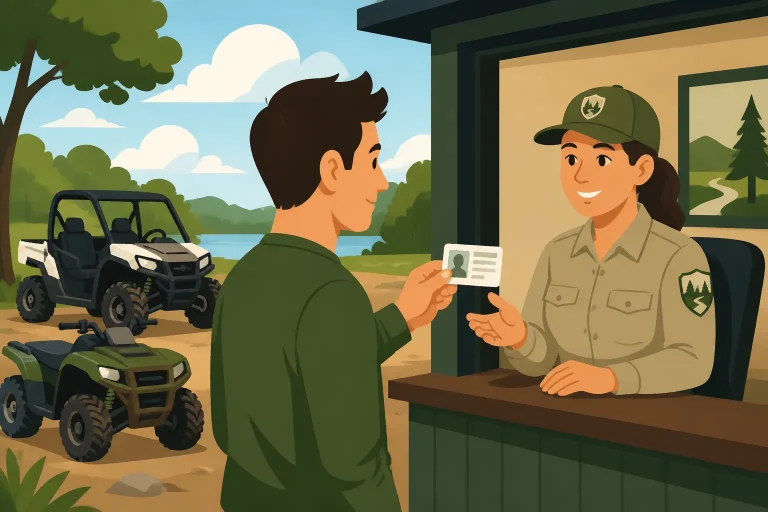
Mississippi state parks may ask for proof of a young rider’s age when you check in, sign a waiver or confirm that the rider meets a park’s rules. The tricky part is that acceptable documents and procedures can depend on the park and activity. Here’s what to bring, what to confirm before leaving home, and why age proof is not the same as a riding permit.
Why a Mississippi state park may ask for age proof
Age verification helps park staff apply rules that differ for adults and children. A park may need to confirm a rider’s age when checking eligibility, completing paperwork or deciding which safety requirements apply. The details can vary, so don’t assume that a rule or procedure at one park applies at every other location.
Age proof is only one part of the check-in process. A park may also require a signed waiver, identification for the responsible adult, a safety certificate or compliance with equipment rules. Review Mississippi State Park ATV Rules before your trip, then contact the specific park to confirm its current requirements.
Age proof is not the same as an ATV permit
Showing a child’s age does not, by itself, authorize that child to ride. The rider must still meet the applicable rules for the location, machine and activity. A waiver also does not replace an age requirement or make an otherwise ineligible rider eligible.
Keep these separate questions in mind:
- How old is the rider? The park may ask for a document that helps verify the answer.
- Can the rider use this machine here? Check the park’s age, passenger and equipment rules.
- What paperwork is required? Ask about waivers, identification and any required safety documentation.
- Where can the machine be ridden? A park’s rules apply to its own facilities and do not create permission to ride on public roads or elsewhere.
For related details, see Mississippi State Park Waiver Steps and [Mississippi State Park Helmet Requirements]. Requirements can differ between state parks, national forest trails, wildlife management areas and private riding parks.
Confirm that the park allows the machine
Not every Mississippi state park allows ATV or UTV riding. Verify that the particular park permits the type of machine and activity you have in mind before loading the trailer. Which Mississippi State Parks Allow Machines is a useful starting point, but call the park to confirm current access, riding areas and check-in procedures.
That call can also clarify whether age verification is required for every young rider, only for particular activities, or only when staff need to resolve an eligibility question. The park can tell you what it accepts and whether a parent or guardian must be present.
What to bring when a young rider’s age may be checked
There may not be one document that every park accepts in every situation. Ask the park what it considers acceptable proof before you travel. If you cannot reach staff, bring a reliable document showing the child’s name and date of birth, along with identification for the adult responsible for the group. Treat possible documents as options to confirm, not as a guaranteed list.
A practical preparation checklist:
- Call the park directly. Ask whether age proof is required for your planned activity and what forms are accepted.
- Ask about the adult’s role. Confirm whether a parent or legal guardian must check in, sign the waiver or stay with the young rider.
- Bring the child’s document. Use the document the park says it accepts. If staff cannot confirm a specific type, bring a second reasonable document if available.
- Bring adult identification. The adult may need to establish identity or complete paperwork even if the child’s age is the main question.
- Carry required safety paperwork separately. If the park asks for a safety certificate, keep it with the other documents rather than assuming age proof substitutes for it.
- Keep documents accessible. Store them where they can be shown at check-in without unpacking riding gear or leaving papers loose in a vehicle.
A passport, birth certificate or other document that records a date of birth may be worth asking about, but acceptance is up to the park. A school card or a photo of a document may not be enough. Confirm whether copies or digital images are acceptable, particularly if you prefer not to carry an original document on a riding trip.
| Item to confirm | What to ask the park |
|---|---|
| Proof of age | Which documents are accepted for a minor? |
| Copies or photos | Must the document be original, or will a copy or image work? |
| Adult identification | Does a parent or guardian need photo ID? |
| Waiver | Who must sign, and must the adult be present? |
| Safety documentation | Is a certificate required for this rider or activity? |
| Machine eligibility | Are there age, passenger or machine-type restrictions? |
| Check-in timing | Where should the group go before riding? |
If a family member or another adult is bringing the child, ask whether that adult may sign the waiver and what authorization the park requires. Do not assume that a relative, coach or friend can sign in place of a parent or guardian.
Pack for the whole group, not just the youngest rider
If several children are riding, check whether staff need documentation for each one. Carrying one child’s birth document for the whole group will not establish the ages of the others. Write down each rider’s full name and date of birth as a backup for the check-in conversation, but do not treat a handwritten note as a substitute for a document the park requires.
Also check whether the park expects proof to be shown at the office, gate or activity area. Some facilities keep signed forms on file; procedures may differ. State Parks Keep Your Signed Waiver on File explains why it is sensible to ask how paperwork is handled rather than expecting to repeat the same process at every visit.
Age proof, safety certificates and identification are different things
Several documents can come up during a state park visit, but they serve different purposes. A date-of-birth document helps establish age. A safety certificate indicates completion of a course, if one is required for the rider or setting. Identification helps establish who an adult or rider is. A waiver records acknowledgment of the park’s terms. One document does not automatically replace the others.
This distinction matters most when a child has no photo ID. A birth document may show age but may not identify the adult who brought the child. Likewise, a parent’s driver’s license confirms the adult’s identity but does not prove the child’s age. Ask the park which documents it needs for each person.
Do not assume a statewide age rule answers every park question
A rule that applies to riding on one type of public land may not be the park’s complete check-in policy. For example, requirements discussed for forest trails or other public land should not automatically be applied to state parks. Read [Mississippi Rules for Riders Under 16] and Mississippi Safety Course Certificates for related topics, then verify whether the particular state park uses those requirements for your planned ride.
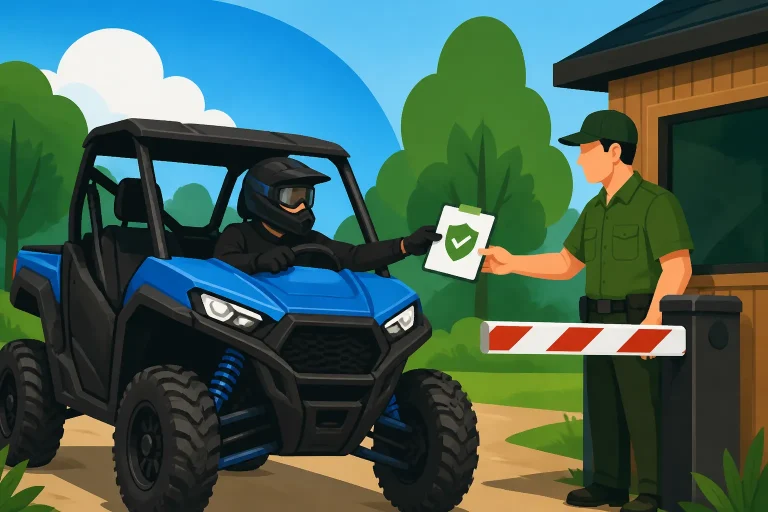
If the park asks for a certificate, ask what kinds it accepts and whether the child must carry it while riding. Showing a Safety Certificate at a State Park Gate covers the practical question of presenting safety paperwork, but the park itself is the best place to confirm its current process.
A document check also does not settle questions about whether a child may drive a specific ATV or UTV, ride as a passenger, or use a particular trail. Those issues can depend on the park’s rules and the machine’s design. Confirm each one rather than treating proof of age as a general approval to ride.
A simple check-in plan before you leave
A few minutes of preparation can prevent a long drive from ending at the entrance. Start with the park, not an assumption based on a previous visit or another location’s website. Ask about age proof, paperwork and the exact machine you plan to bring.
Use this sequence:
- Identify the destination and activity. State whether the child will operate a machine, ride as a passenger, or take part in another activity.
- Describe the machine accurately. Give the park the vehicle type and seating arrangement. Do not use “ATV” as a catch-all if you are bringing a side-by-side or another vehicle.
- Ask what age proof is accepted. Confirm whether an original is needed and whether a copy or phone image is acceptable.
- Ask who must be present. Clarify whether a parent or guardian must handle check-in and sign the waiver.
- Confirm other requirements. Ask about helmets, safety certificates, passenger limits and any machine restrictions that apply.
- Check again before departure if plans change. A different park, vehicle or rider can change the answer.
Keep the park’s phone number and any instructions with your trip information. If staff provide guidance verbally, note the date and the name or position of the person you spoke with when possible. That record is not a substitute for the park’s rules, but it can help your group remember what was confirmed.
On arrival, follow the posted signs and staff directions. If a document is not accepted, ask what alternative the park permits rather than arguing that another park accepted it. Policies and operating procedures can differ, and staff at the location control its check-in process.
Age proof is a small piece of a safe, organized ride. Confirming it ahead of time helps you avoid delays, but it does not guarantee access or replace any other park rule. Check the destination’s requirements, bring the documents it requests, and make sure every rider is eligible for the activity and machine.
Disclaimer
This article is for general informational purposes only and does not constitute professional advice. Laws, prices and regulations vary by location and change over time. Consult a qualified professional for guidance on your specific situation.