Photo ID at a Southern Park Office
A photo ID can seem like a small detail when you are loading an ATV or UTV for a Mississippi state park visit. But arriving without the right identification can complicate check-in, a required waiver, or proof of age. Here’s what to bring, what ID does not prove, and how to check the rules before you travel.
Why a park office may ask for photo ID
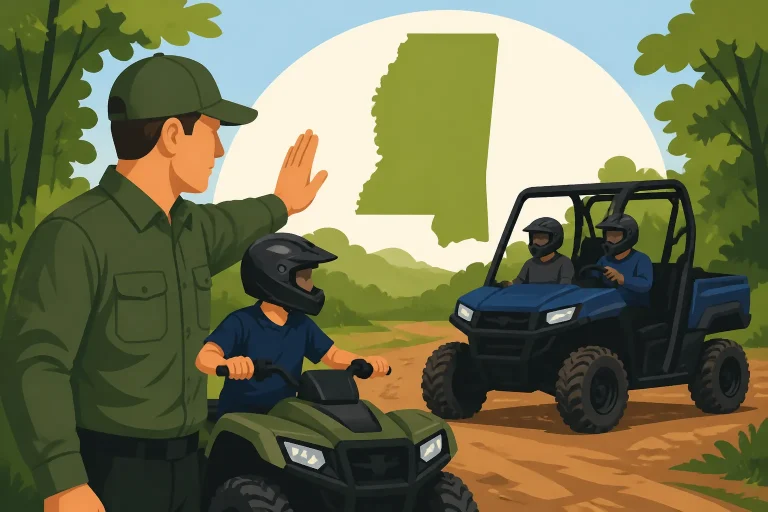
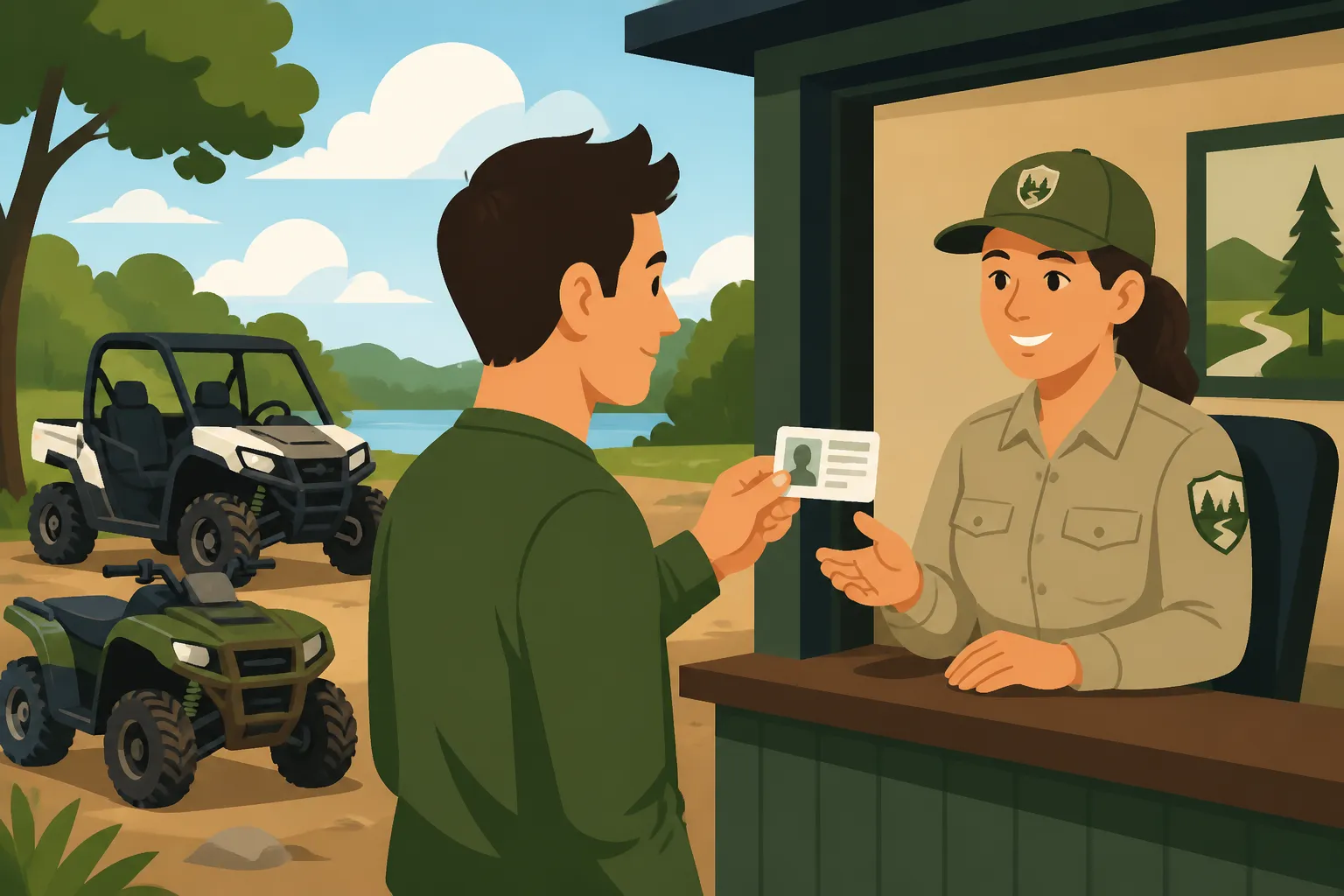
At a park office or entrance, staff may use photo ID to confirm that the person checking in is the person named on a reservation, waiver, or other park paperwork. It can also help establish an adult’s identity when a minor is riding with them. The exact check-in process can differ by park and activity, so do not assume that one park’s procedure applies everywhere.
A driver’s license is usually the simplest document to carry because it provides a photo and identifies its holder. If you do not have one, contact the park before the trip and ask what other identification it accepts. A passport or another government-issued photo ID may be useful, but acceptance should be confirmed with the specific park.
Bring the original ID rather than relying on a picture of it on a phone. A digital image may not be accepted for identity checks, and a phone can lose power or service. Keep the ID accessible, but secure it when you are riding. If a group is arriving in multiple vehicles, make sure the person responsible for the reservation or paperwork has their ID ready at check-in.
Photo ID is not the same as a riding permit, a safety certificate, or proof that the machine is allowed at the park. It confirms who you are; it does not establish that your ATV or UTV meets a park’s equipment, age, or access rules. For a broader look at park paperwork, see Mississippi State Park Waiver Requirements. If staff ask you to sign a liability waiver, follow the park’s instructions even if you have visited before; a previous visit does not necessarily cover a new visit or a different rider. Some parks keep a signed waiver on file, but confirm how that works at your destination with State Parks Keep Your Signed Waiver on File.
Before leaving home, check which Mississippi state parks currently allow the kind of machine you plan to bring. A state park visit does not automatically mean off-road riding is permitted. The answer depends on the park’s designated areas and current rules, not simply on having a title or photo ID. Start with Which Mississippi State Parks Allow Machines and then contact the specific park to verify its current check-in procedure.
What to bring for check-in
Think of check-in as a set of separate questions: who is arriving, who is riding, what machine is coming, and whether the activity is allowed at that location. A photo ID answers only the first question. The other documents depend on the riders, the machine, and the park.
| Item | What it may help establish | What to confirm before you go |
|---|---|---|
| Government-issued photo ID | Identity of the person checking in or signing paperwork | Which forms of ID the park accepts |
| Reservation or visit details | Who booked and what the booking covers | Whether the reservation includes the riding activity |
| Safety certificate, if applicable | That a young rider completed an accepted course | Whether the park requires it and which courses qualify |
| Ownership or purchase paperwork | Information about the machine | Whether the park asks to see it |
| Waiver or park forms | Agreement to the park’s conditions | Whether forms are completed at the office or in advance |
Do not treat this table as a universal list of required documents. A park may ask for some items and not others, and its staff can tell you what applies to your visit. When you call, explain the type of machine, the ages of the riders, whether anyone is visiting from another state, and whether you have a reservation. Those details make the answer more useful than asking only, “Do I need ID?”
Adults and young riders
If a child or teenager is riding, check the rules for both the rider and the supervising adult. A parent’s photo ID does not replace a safety certificate if the park requires one for that rider. Likewise, a certificate does not replace the adult’s identification or any waiver the park requires.
Ask what proof of age the park accepts if a rider’s age affects access. Also ask whether a safety certificate must be carried during the ride or shown at check-in. Mississippi’s public-land rules and an individual park’s conditions may not be identical; the practical answer is to verify the requirements for the specific place and activity. Mississippi Safety Certificates for Young Riders explains the certificate issue in more detail.
For minors arriving with someone other than a parent or legal guardian, ask the park whether it has any additional permission or waiver procedure. Do not assume an accompanying adult can sign every form on a child’s behalf. Sorting that out before travel is easier than trying to reach a parent from a busy entrance.
Visitors from outside Mississippi
A visitor’s out-of-state driver’s license can identify the person, but it does not automatically satisfy every riding or park requirement. Ask whether the park recognizes an out-of-state safety course, and whether it has any specific conditions for visiting riders. A state’s rules for its own public lands do not necessarily carry over to a Mississippi park.
If you are bringing a machine from Alabama, Louisiana, Tennessee, or another state, do not assume it needs a Mississippi sticker or that an out-of-state permit opens access. Ask the destination park what it requires from visitors and what riding areas are open. Mississippi Visitors From Alabama is a useful starting point for one common border-state question, but the park itself should confirm the details for your planned visit.
Photo ID does not authorize the ride
One of the easiest mistakes is to treat a successful office check-in as approval to ride anywhere on the property. Check-in confirms only the paperwork and access covered by the park’s process. It does not create access to a closed road, an undesignated trail, or land outside the park.
Before unloading, read the posted signs and ask staff where the machine may be operated. Confirm whether the rules differ for an ATV and a side-by-side, and whether width, passenger seating, sound, safety gear, or other equipment conditions apply. Do not rely on a machine being legal on a private trail or in another state as proof that it is accepted at a particular Mississippi park.
The same distinction applies to identification and ownership documents. A photo ID establishes a person’s identity; ownership paperwork relates to the machine. Neither one is a substitute for permission to ride. If you are concerned about what to carry as proof that the machine is yours, see Mississippi Proof of Ownership on the Trail. For title questions, keep in mind that Mississippi’s title rules and a park’s access rules address different things.
It is also important not to confuse a state park visit with national forest riding. National forest trails can have their own pass, machine, and rider conditions. A state park waiver or check-in record does not serve as a national forest pass. Check Mississippi Forest Pass Coverage if your trip includes national forest trails, and verify the rules for each destination separately.
A practical pre-trip check
A short call to the park can prevent a long drive with the wrong paperwork or an ineligible machine. Ask direct, specific questions and write down the answer, including the name of the park office or staff member if provided. Rules can change with conditions, closures, or park procedures, so confirm close to the visit rather than relying on an old social media post or advice from a different park.
Use this checklist:
- Confirm the park allows the type of machine you plan to bring and identify the permitted riding area.
- Ask which photo IDs are accepted and whether the person who made the reservation must be present.
- Ask whether every adult rider needs to show ID or whether ID is needed only from the person checking in.
- If a minor is riding, confirm age rules, supervision requirements, and any accepted safety certificate.
- Ask whether waivers must be signed at the office, completed in advance, or handled separately for each rider.
- Confirm any machine-specific restrictions, including width, passenger seating, sound, and required equipment.
- Ask what proof of ownership or other paperwork, if any, should be carried.
- Check for closures, weather restrictions, or changes to the riding area before loading the trailer.
When you arrive, keep identification and paperwork together in a secure, dry place. A small document pouch can help keep papers away from mud and rain, but avoid storing your only ID where it could be lost during a ride. Leave a copy of important details with someone in your group or keep secure copies separately; do not hand over original documents unless park staff explain why they need them.
If you are turned away or told a document is missing, ask which rule applies and whether there is a way to resolve the issue before unloading. Be courteous and follow staff instructions. A park office cannot waive a requirement simply because you drove a long distance, and riding without permission can create a much bigger problem than rescheduling.
Disclaimer
This article is for general informational purposes only and does not constitute professional advice. Laws, prices and regulations vary by location and change over time. Consult a qualified professional for guidance on your specific situation.