Mississippi Fire Restrictions in Dry Months
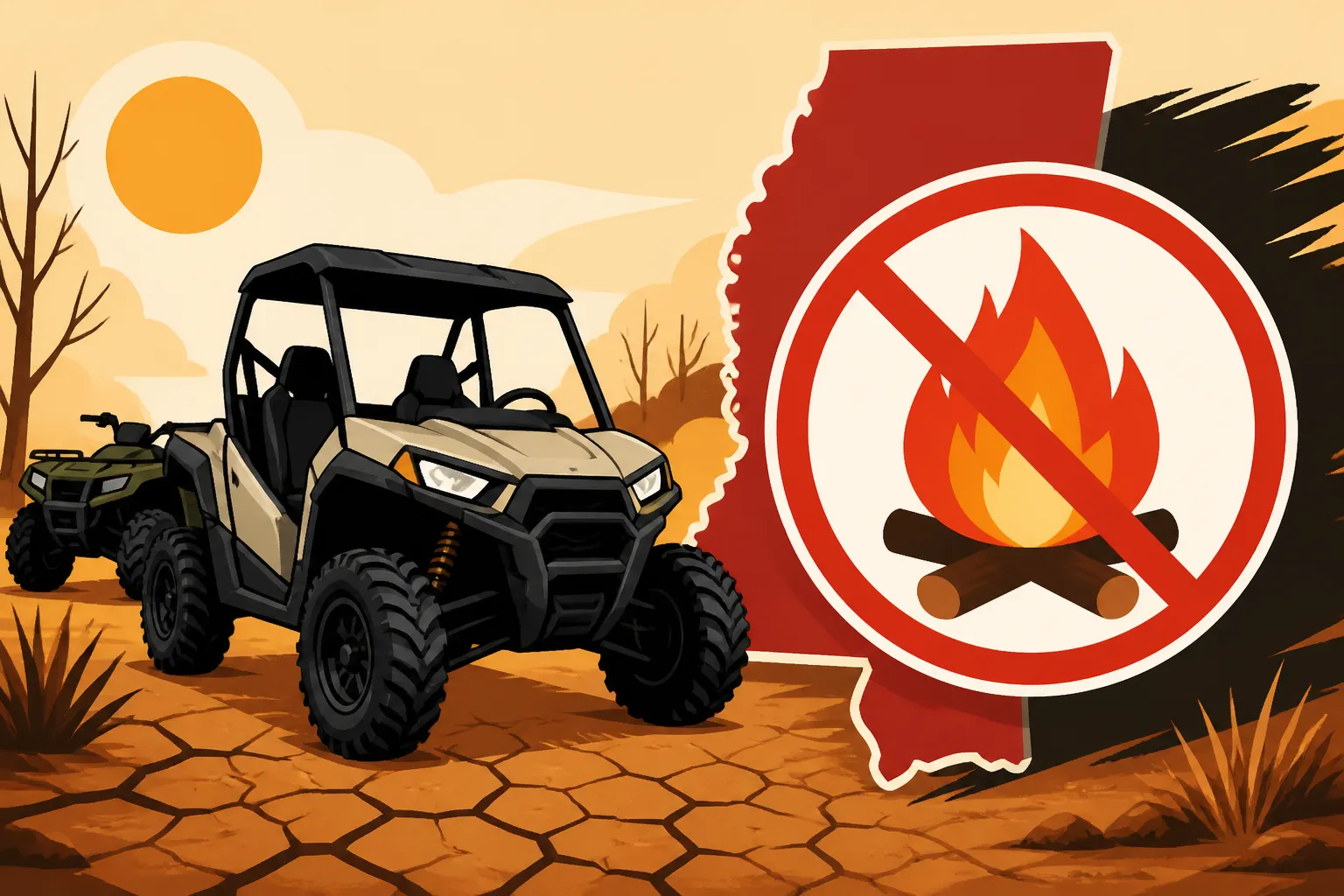
Dry weather can turn a routine Mississippi ATV or UTV ride into a fire risk, but a burn ban does not always mean riding is prohibited. The important distinction is what the restriction covers, who manages the land and whether a separate fire order applies. Check those details before you load up, then adjust your equipment and riding habits to reduce the chance of starting a fire.
What dry-month fire restrictions mean for ATV and UTV riders
Mississippi does not have one simple rule that automatically bans every ATV or UTV whenever conditions are dry. Restrictions can come from different authorities and address different activities. A county burn ban, a land manager’s fire order and a private park’s rules may not cover the same things.
A burn ban often focuses on outdoor burning, such as burning brush or yard debris. That does not necessarily tell you whether riding is allowed, whether a campfire is permitted at your destination or whether a specific trail has been closed. Read the actual notice rather than relying on a social media summary or assuming that “burn ban” means either “everything is closed” or “nothing changes for riders.”
Restrictions may also be temporary. A land manager can close an area or prohibit fires because of local conditions even if there is no general riding ban. Conversely, a riding area may remain open while limiting campfires, charcoal grills or other ignition sources. The rules at the trailhead and the current notices from the agency or property owner matter more than a broad assumption about the season.
Before you ride, identify who controls each part of your trip:
- Public riding land: Check the managing agency’s current alerts, restrictions and closure notices. A forest pass or other required permit does not override a temporary fire order. For background on what a pass does and does not authorize, see What a Mississippi Forest Pass Does Not Cover.
- State parks: Confirm the park’s current ATV rules and any separate fire, camping or equipment requirements. Mississippi State Park ATV Rules is a useful starting point, but current notices and the park’s own instructions should control.
- Wildlife management areas: These areas can have designated access routes, seasonal limits and closure signs. Do not treat an open road or gate as permission to use every route; check Mississippi WMA Road Closure Signs and the applicable management-area rules.
- Private parks and riding property: The owner or operator can set restrictions that are stricter than general rules. Ask whether the property is open, whether campfires or grills are allowed, and whether dry-weather conditions have changed the riding area’s status.
- Private land: Get permission from the landowner and follow any conditions they set. Permission to ride is not automatically permission to make a fire, use a burn barrel or camp overnight.
A useful way to think about it is to separate the questions. Is the route open? Is the machine allowed there? Is a fire allowed at the staging or camping area? Are there extra restrictions on equipment or activities? One “yes” does not settle the others.
| Situation | What to verify before riding | Why it matters |
|---|---|---|
| County or local burn ban | Read the official notice and check which activities it covers | A ban on open burning may not answer whether trails are open |
| National forest or other public land | Check current alerts, fire orders, route closures and permit requirements | The land manager may impose separate restrictions |
| State park | Confirm riding rules, fire rules and current park notices | Park requirements can differ from rules elsewhere |
| Private riding park | Contact the operator or read its current posted rules | The operator may close trails or restrict ignition sources |
| Private land | Get permission and ask about fire and equipment limits | The landowner can set conditions for access |
For national forest trips, do not rely only on a pass or an older map. Mississippi National Forest Riding Explained can help you understand the broader access picture, while Checking Trail Conditions Before You Load the Trailer is a practical reminder to confirm that the route is open on the day you plan to go. Wet-weather closures and fire restrictions are separate issues, so check both.
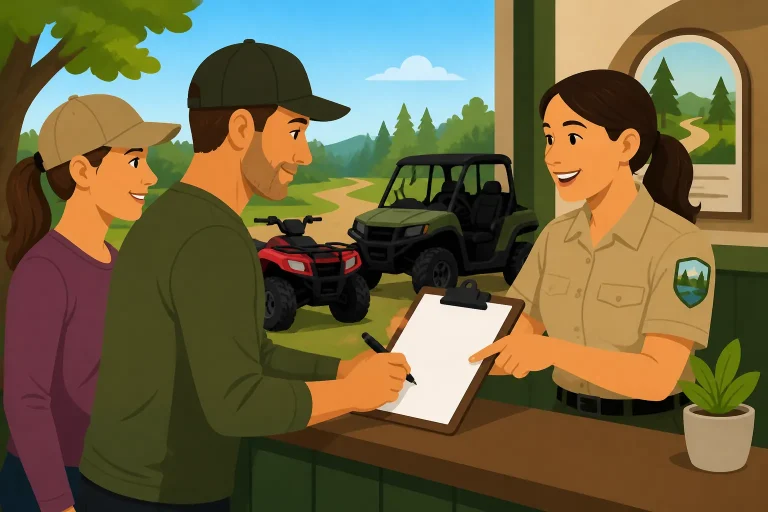
If a restriction is unclear, contact the agency, park operator or landowner responsible for the specific place. Ask direct questions: “Is the riding area open today?” “Are campfires or portable stoves allowed?” “Are there restrictions on spark arrestors or other equipment?” “Does this notice apply to the staging area as well as the trail?” Keep the answer tied to the exact location and date rather than applying it to every ride in the state.
How to prepare your machine and campsite
Dry grass, pine needles, leaves and brush can ignite from heat or a spark. The safest response is to reduce avoidable ignition sources before you set out, not to assume that a fire will be easy to control once it starts.
Start with the machine. Check the exhaust system and make sure components are secure and in sound condition. If the riding area requires a spark arrestor, confirm that your machine has the required equipment and that it is maintained correctly. Requirements can vary by land manager and riding location; Mississippi Spark Arrestor Requirements and Mississippi State Park Spark Arrestor Rules are useful places to look for the relevant questions, but verify the rule for your destination.
A spark arrestor is not a guarantee that a machine cannot start a fire. It does not make it safe to ride through dry brush, park over dead vegetation or ignore a closure. Treat it as one part of prevention, not a substitute for cautious riding and compliance with posted restrictions.
Before departure, inspect for conditions that can increase heat or create sparks:
- Look for damaged or loose exhaust parts, exposed wiring and anything rubbing against a hot component.
- Clear dry debris from areas where it can collect near the exhaust or engine, following the machine’s maintenance instructions.
- Check that the machine is not leaking fuel or oil.
- Carry a basic tool kit and know how to shut the machine down if something seems wrong.
- Avoid carrying fuel in an unsuitable container or storing it where it could spill onto hot components.
At the riding area, stay on authorized routes. Cutting through dry grass or brush can damage vegetation and bring hot parts into contact with combustible material. Do not park a hot machine over dry grass, pine straw or leaf litter. Choose a cleared, stable surface, and do not leave a running machine unattended.
Be especially careful at the staging area and campsite. A legal ride does not automatically make a campfire legal. Before lighting anything, confirm that fires are allowed under current orders and the property’s rules. If you cannot confirm, do not light it. A stove, grill or other device may also be restricted, so do not assume that a contained flame is exempt.
When fires are allowed, follow the land manager’s directions about where and how to use them. Keep any permitted fire attended, have water and a suitable means of extinguishing it nearby, and make sure it is completely out before leaving. Never leave a fire smoldering because it looks contained. Wind can carry embers into dry vegetation, and buried coals may remain hot after the visible flame is gone.
A small fire extinguisher can be useful in a vehicle, but it is not a reason to take chances. Choose one appropriate for the hazards, mount it securely where it can be reached, and learn how it operates. If buying one through a retailer such as Amazon, check the extinguisher’s rating, condition and mounting instructions rather than choosing by size alone. A small extinguisher may help with an early, contained fire; it is not suitable for fighting a spreading brush or forest fire.
Other practical supplies include a phone with the area’s location saved, drinking water and a first-aid kit. Cell reception may be unreliable in some riding areas, so note the trailhead or access point before leaving. A paper map can help you describe your location if you need to report smoke or a fire.
What to do when conditions are especially dry
Dry conditions call for more than checking whether a sign says “open.” Look at the terrain and weather as well as the official rules. Wind, cured grass, leaf litter and recent rain can all affect how quickly a fire could spread. A trail that seems manageable in damp conditions may become a poor choice after a prolonged dry spell.
Before leaving home, check current notices from the relevant county or local authority and the manager of the riding area. For public land, look for fire alerts as well as road and trail updates. For a private park, contact the operator directly if the status is uncertain. If an alert is vague, ask whether it affects riding, fires, cooking devices, overnight stays or only particular parts of the property.
Use this simple decision process:
- Confirm the destination is open. Check the official source for the exact trail, park or property, not just the general region.
- Read the restriction itself. Identify which activities are prohibited and whether the notice applies to the place and time of your visit.
- Check the machine requirements. Confirm any spark-arrestor, equipment or route conditions that apply there.
- Decide whether the conditions justify changing plans. If the area is extremely dry, windy or difficult to access in an emergency, choose a different activity or postpone the ride even if it remains open.
- Tell someone where you are going. Share the riding area, expected return time and a way to contact you.
- Carry only what you can use safely. Keep emergency equipment accessible, and do not rely on it to control a large fire.
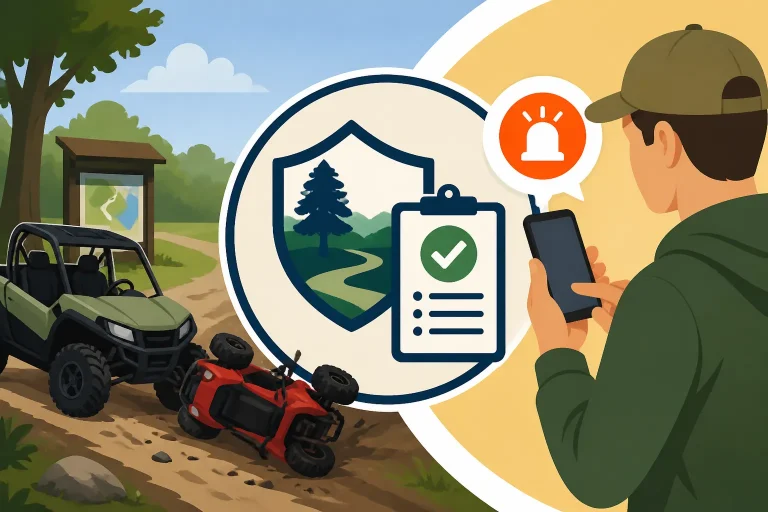
If you see smoke or a fire, do not ride toward it to investigate. Move away from the hazard, avoid blocking access roads and report the location to emergency services or the responsible land manager. Give the clearest location you can: trail name, nearby access point, road crossing or a saved map location. Follow instructions from responders and leave the area if directed.
Do not try to suppress a fire that is spreading through grass, brush or trees. A vehicle can become trapped by smoke, changing wind or blocked routes, and an extinguisher is not designed for a wildfire. Protect people first, then help responders by reporting what you saw and where.
Also avoid creating additional problems while leaving. Do not drive through smoke if visibility is poor, and do not stop where emergency vehicles need access. If a route is closed, respect the closure rather than looking for an alternate path around a gate or sign. Closures can protect riders as well as land and equipment.
Common mistakes to avoid
The most common mistake is treating a fire restriction as a single statewide yes-or-no rule. In practice, the answer depends on the notice, the land manager and the activity. A county notice about burning, for instance, may not answer whether a public trail is open or whether a private campground permits a grill. Read the exact wording and check with the authority responsible for the place.
Another mistake is assuming a permit settles every question. A pass may give access under specified conditions, but it does not guarantee that a route is open during a temporary closure or that fires are permitted. Check current conditions even if your pass is valid and your machine meets the ordinary requirements.
Riders can also confuse “no fire ban posted” with “fire is safe.” Legal permission and prudent judgment are different. If vegetation is tinder-dry, wind is strong or there is no quick way to leave, skipping the campfire is a sensible choice. You can still ride where allowed while avoiding unnecessary ignition sources.
Other avoidable errors include:
- Relying on an old screenshot or a previous trip’s information.
- Taking a social post as the final word without checking the official notice.
- Assuming a spark arrestor makes any route or riding style acceptable.
- Parking over dry vegetation after a hard ride.
- Leaving a grill, stove or campfire unattended.
- Treating a closed road as an invitation to detour around a barrier.
- Carrying an extinguisher but not knowing where it is or how to use it.
- Waiting until you reach the trailhead to find out whether the area is open.
A short check before loading can prevent a wasted drive and reduce risk. Confirm the land status, read any current fire notice, verify the machine requirements and decide whether the conditions suit the trip. If the rules are unclear, ask the responsible authority before riding. If conditions feel unsafe, postponing is better than depending on luck or trying to manage a fire after it starts.
Disclaimer
This article is for general informational purposes only and does not constitute professional advice. Laws, prices and regulations vary by location and change over time. Consult a qualified professional for guidance on your specific situation.