Mississippi Parent Riding With a Child
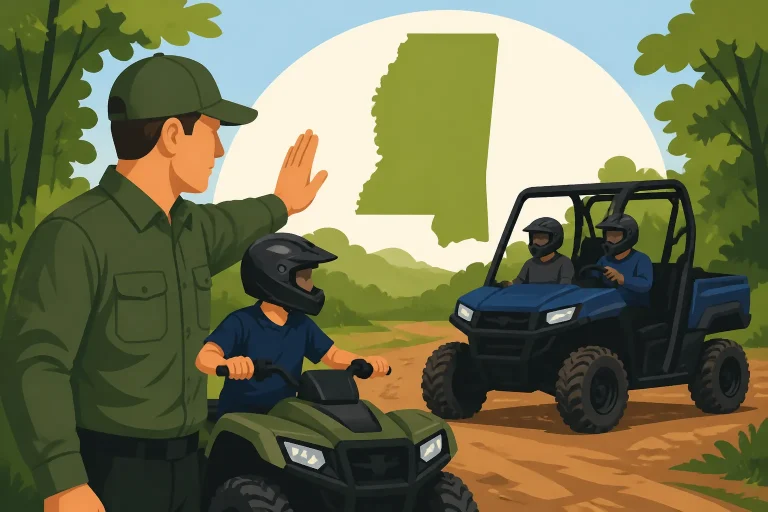
Taking a child ATV riding in Mississippi raises two different questions: can the child operate a machine, and can the child ride as a passenger? The answer depends on the child’s age, the machine’s design, and where you ride. Here’s how to sort out the safety-certificate and helmet questions, choose a suitable setup, and check the rules before loading up.
Decide whether your child is driving or riding as a passenger
Start by identifying the child’s role. A child operating a small quad has different needs from a child sitting in the passenger seat of a side-by-side. The machine’s design matters too: an ATV, a youth quad and a UTV are not interchangeable just because they are all off-highway vehicles.
If your child will operate a machine, consider the child’s size, coordination, experience and ability to reach and use every control. A machine that is too large or powerful can be difficult to manage even on easy ground. Follow the manufacturer’s age and size guidance, and do not treat an adult’s supervision as a substitute for a machine the child can control.
If your child will ride with you, use a machine built to carry a passenger. A passenger should have a proper seat and, where fitted, a seat belt and handholds. Do not put a child on an ATV rack, share a single-person seat, or assume that slow riding makes an improvised passenger setup safe. Mississippi’s passenger rule is tied to the machine’s design; see Passengers Only on a Factory Two-Seat Machine for more detail.
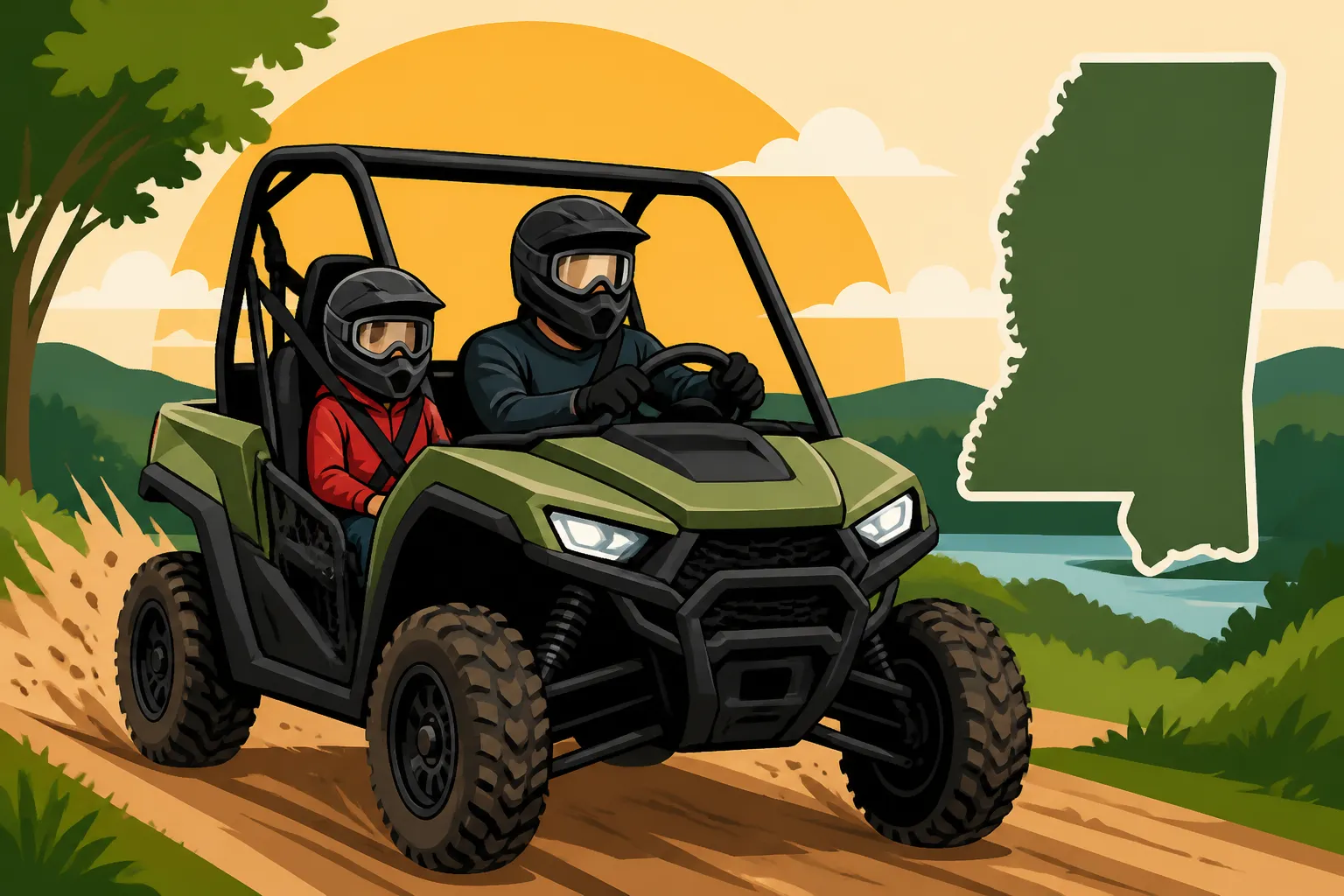
A UTV designed for multiple occupants can be a more appropriate way to ride together, but it still needs to be used as intended. Keep the child seated in the correct position and use the machine’s restraint system. Do not let a child ride in the cargo bed or stand while the UTV is moving.
| Child’s role | Questions to answer before riding |
|---|---|
| Operating a youth ATV | Is the machine suitable for the child’s size and skill? Does the child meet the applicable training and safety requirements? |
| Operating an adult-sized ATV | Can the child reach and use the controls while maintaining safe body position? Is this permitted at the riding area? |
| Riding as a passenger | Is the machine designed and equipped to carry a passenger in that seat? Can the child use the provided restraints and handholds? |
| Riding in a UTV | Is the child in a designated seat with the required restraint? Does the riding area allow the machine and the child’s age group? |
These checks are useful whether you are going to a private park, public land or a permitted trail system. The rules at one venue do not automatically apply at another. Before choosing the machine, read Mississippi Rules for a Child Passenger and Mississippi Rules for a Teen Rider if those situations apply to your family.
Check certificates, helmets and riding-area rules
Mississippi’s requirements can depend on where the machine is being operated. Public land, a state park, a national forest trail and a private riding park may each have rules beyond what a family expects from a casual off-road ride.
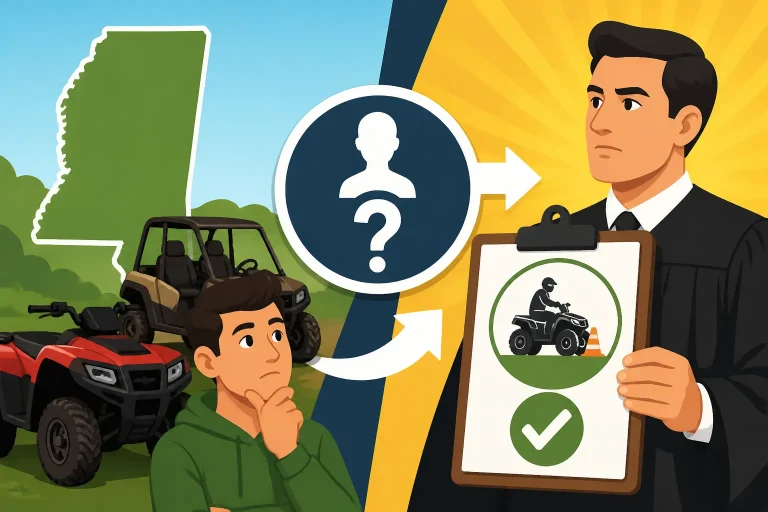
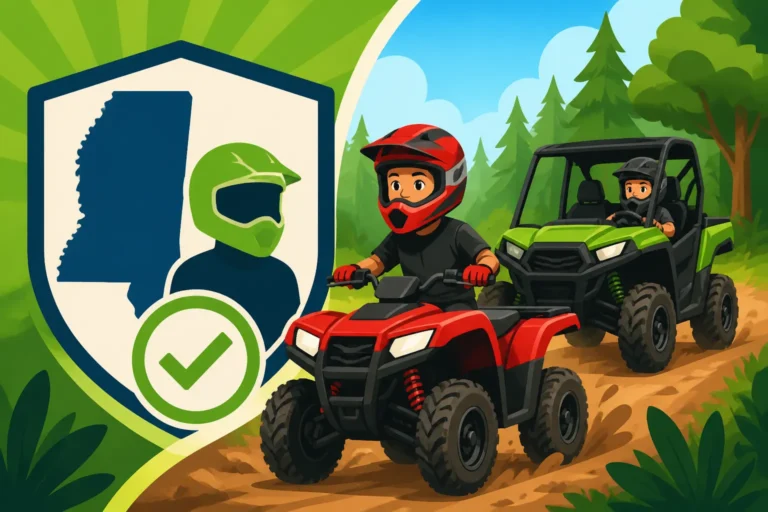
For riders under 16, a safety certificate is an important part of planning. Mississippi’s public-land rules require young riders to have the applicable safety credential, and some riding areas may ask to see it. A parent’s driver’s license or safety certificate does not become the child’s credential. Check Mississippi Riders Under 16 Need a Safety Certificate and Which ATV Safety Courses the State Will Accept before assuming a course or card will meet the requirement.
The child should carry the required proof when riding, rather than relying on a parent to explain that a course was completed. Ask the land manager or park what form of proof they accept and whether they require anything else. If the child’s certificate is stored on a phone, keep a backup or know how to retrieve it when cell service is unavailable.
A child under 16 also needs a helmet that meets the applicable rules. Choose a properly fitting helmet intended for off-road riding, secure the chin strap, and check for damage before each ride. A helmet that is loose, badly worn or sized for an adult does not provide a reliable fit. Confirm the standard required at the place you plan to ride; Which Helmet Standard a Rider Under 16 Needs explains why the label matters. If you shop through a retailer such as Amazon, check the helmet’s certification, size and return terms rather than relying on a product title or appearance.
Venue rules can add requirements. A state park or private facility may require helmets for every rider, not only children, and may set its own age, passenger, waiver or equipment conditions. A child’s certificate does not guarantee access if the park has a minimum age or machine restriction. Review [Mississippi State Park ATV Rules] or Mississippi Private Park Age Minimums as appropriate, then confirm the current rules with the place itself.
For national forest trails, check the applicable pass and access rules as well as child-specific requirements. A pass is permission for the covered riding opportunity; it is not a substitute for a safety certificate, a helmet or compliance with trail restrictions. The details are covered in Mississippi National Forest OHV Passes and Mississippi Forest Rules for Riders Under 16.
Set up a ride a child can manage
A family ride should be planned around the least experienced rider, not the fastest adult or the largest machine. Pick a route that matches the child’s skills and the machine’s capabilities. A familiar, short loop is a better first outing than a long route with steep slopes, deep mud, water crossings or traffic from larger machines.
Before leaving home, do a basic check of the child’s machine and protective gear:
- Confirm that brakes, throttle, tires, steering and controls work properly.
- Make sure the child can reach the controls and stop the machine confidently.
- Check that the helmet fits and fastens securely.
- Use eye protection, sturdy footwear, gloves and clothing suited to the conditions.
- Set clear rules about speed, spacing, stopping and staying on the marked route.
- Carry water, a first-aid kit and a way to contact help if the route and signal allow it.
For a passenger, check the seating and restraint system before each trip. The child needs to sit fully in the designated position and keep arms and legs inside the vehicle. A parent should not carry a child on an ATV that is designed for one rider, even for a short trip between staging areas. Nor should a child be carried on a rack because the machine has no passenger seat.
Keep early outings short enough that a child can stay attentive. Fatigue, heat and excitement can make it harder to follow instructions. Stop for water and breaks, and end the ride if the child becomes uncomfortable or is no longer riding carefully. In warm weather, plan around heat and avoid pushing through signs of overheating.
Choose terrain with room to slow down and stop. Avoid riding close behind another machine, especially in dust, and leave enough distance to react if the rider ahead brakes or changes direction. An adult leading a group should keep the child within sight and use simple instructions that can be understood over engine noise.
A parent’s presence helps with supervision, but it does not remove the need to follow posted restrictions. Stay on routes open to the machine you are using, obey closures, and do not ride onto private property without permission. For public-land questions, [Mississippi WMA Riding on Designated Roads] and Mississippi Permit Questions Riders Ask can help clarify what access does and does not allow.
Confirm the details before you leave
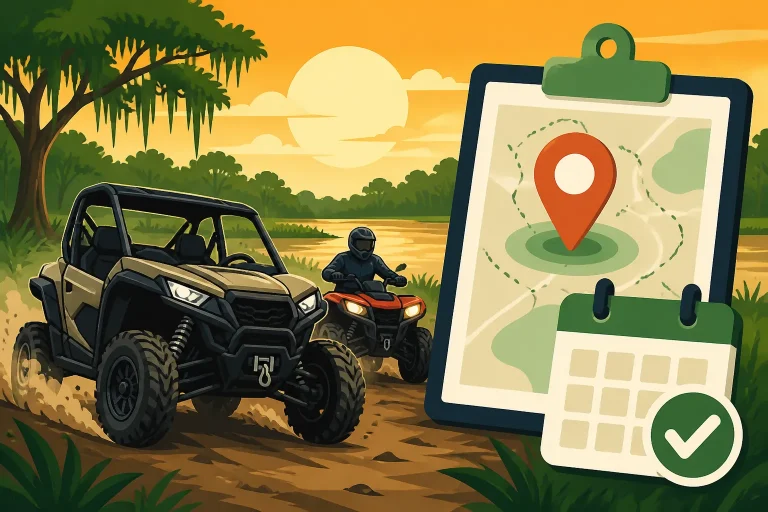
Rules can differ by site, and conditions can change. A trail that allows one type of ATV may not allow a wider side-by-side. A park may have a temporary closure, an age limit, a waiver process or an equipment check. Calling or checking the official site before loading the trailer can prevent a wasted trip and a difficult conversation at the gate.
Use this quick pre-ride sequence:
- Choose the child’s role. Decide whether the child will operate a machine or ride as a passenger.
- Match the machine to that role. Check the manufacturer’s guidance and make sure any passenger seat is designed for an occupant.
- Confirm the credential. Ask what safety certificate or other proof the child needs, especially for public land.
- Check protective gear. Verify helmet fit and the venue’s helmet standard, then pack suitable clothing and eye protection.
- Contact the riding area. Confirm that the route is open and allows your machine, the child’s age group and your intended activity.
- Set family rules. Agree on speed, spacing, stopping points and what the child should do if separated from the group.
If you are uncertain whether a particular course, machine or seat arrangement qualifies, ask the land manager or park staff directly and describe the exact setup. General statements such as “it’s a family trail” or “kids ride here” are not enough to confirm that your child has the required credential or that a passenger arrangement is allowed.
The safest plan is straightforward: use a machine suited to the child’s role, meet the applicable certificate and helmet requirements, and verify the riding area’s own rules. A parent can make the outing calmer and more manageable, but supervision does not replace legal access, proper equipment or a passenger seat designed for the child.
Disclaimer
This article is for general informational purposes only and does not constitute professional advice. Laws, prices and regulations vary by location and change over time. Consult a qualified professional for guidance on your specific situation.