Passengers Only on a Factory Two-Seat Machine
It's a common sight on trails across Mississippi: a single-seat ATV with an extra rider perched precariously on the rack, or a side-by-side crammed with more people than it was designed for. We've all seen it, and maybe even done it in a moment of convenience, but understanding the specific rules around carrying passengers on your off-road machine in Mississippi is crucial for both safety and staying on the right side of the law. This guide will walk you through the regulations, emphasizing why a machine's factory design dictates who can ride and where, helping you avoid unnecessary risks and potential fines.
Understanding Mississippi's Passenger Rules for ATVs and UTVs
When it comes to off-road machines in Mississippi, the law is pretty straightforward, even if it can feel a bit counterintuitive to folks who are used to simply making do. The core principle revolves around the machine's original design: if it left the factory with seating for only one person, that's all it's legally and safely intended to carry on public lands. This isn't just a quirky regulation; it’s rooted deeply in vehicle dynamics and rider safety. Adding a passenger to a machine designed for one throws off its balance, changes its handling characteristics dramatically, and significantly increases the risk of an accident, especially on challenging terrain like the muddy trails of Red Creek Off-Road or the winding paths of Bethel OHV Trails.
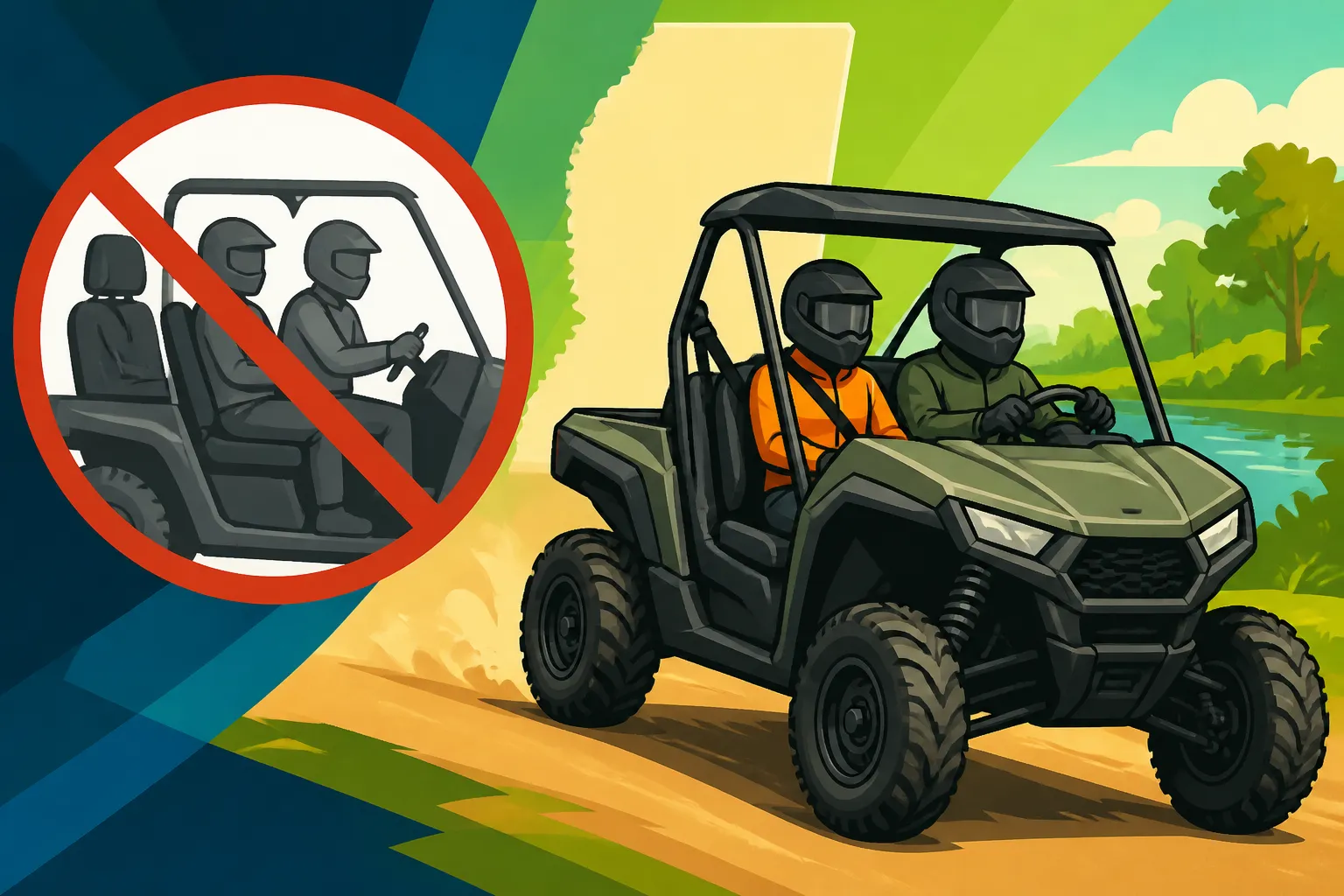
For side-by-sides, or UTVs as they're often called, the rules adapt to their design. These machines are typically built with multiple seats, often side-by-side (hence the name!) with proper restraints and roll cages. If your UTV has two factory-installed seats with seatbelts, you can carry one passenger. If it has four, you can carry three, and so on. The key phrase here is "factory-installed." You can't just bolt a new seat onto the bed of your utility side-by-side and call it a passenger rig; it needs to be an integral part of the manufacturer's original design, complete with all the safety features that come with it. It's about respecting the engineering that went into making these machines as safe as possible for their intended number of occupants.
The Clear Line Between Single and Multi-Rider Machines
Many folks get confused by the distinction between an ATV and a side-by-side, or even between different types of ATVs. Let's clear this up: a traditional ATV, or "quad," is almost always designed for a single operator. These machines require the rider to use their body weight to shift balance and control the vehicle, especially in turns or over obstacles. Adding a second person, even a small child, completely compromises this dynamic. The extra weight is often placed high and rearward, making the front end light and prone to lifting, and severely reducing the operator's ability to react safely. It's why you see so many warnings on the machines themselves: "No Passengers." This isn't just a suggestion; it's a critical safety directive that Mississippi law echoes when it comes to riding on state lands, national forests, or wildlife management areas.
In contrast, a side-by-side, also known as a UTV or ROV (Recreational Off-Highway Vehicle), is explicitly engineered to carry one or more passengers. These machines have bench or bucket seats, a steering wheel, foot pedals, and a roll-over protective structure (ROPS) that provides a much higher level of occupant protection. They also typically have a wider stance and a lower center of gravity than a quad, making them inherently more stable with multiple occupants. When we talk about [Titling a Side-by-Side in Mississippi], the title document itself will often differentiate between these types of machines, implicitly acknowledging their different design capabilities and intended uses. Always double-check your machine's manual and compliance label to be absolutely certain of its intended capacity.
Public vs. Private Land Passenger Rules
Now, here's where things can get a little nuanced, and it often leads to misunderstandings. State laws and regulations for ATVs and UTVs, particularly concerning passengers, primarily apply to public lands. This includes places like the De Soto National Forest, state parks that permit OHV use, and wildlife management areas (WMAs). On these public grounds, a Mississippi deputy, forest ranger, or WMA officer can absolutely cite you if you're carrying an unauthorized passenger on a single-rider ATV, or if you've overloaded a multi-passenger UTV. These are the places where the "factory two-seat machine" rule is strictly enforced. You can find more detail on this in [Mississippi WMA Road Riding] or [Mississippi State Park Waiver Requirements].
However, if you're riding exclusively on your own private property, or on land where you have explicit permission from the landowner (like a hunting lease on timber company land), the state's passenger laws generally don't apply in the same way. On private land, the landowner's rules and your own personal judgment take precedence. While it might be legally permissible to carry an extra person on your own back forty, it's never truly safe to ignore the manufacturer's recommendations. The physics of an overloaded machine don't change just because you're on private ground. Still, the enforcement arm of the state will be much more concerned with public land infractions. This distinction is often a source of confusion, especially for new riders or those moving to Mississippi from states with different regulations.
The Dangers of Unapproved Passengers and Overloading
The reason these passenger rules exist isn't to make your life harder; it's to save lives and prevent serious injuries. As an off-road enthusiast, you know that trails can be unpredictable – rocks, roots, sudden dips, and slick mud are par for the course. Throwing an extra, unintended passenger into that mix amplifies every single risk. The machine's handling becomes sluggish, braking distances increase, and the chance of a rollover skyrockets. It's a risk that's simply not worth taking, no matter how short the ride or how well you think you know the terrain.
Imagine trying to navigate a tricky section of trail near Perkinston, where the ground is uneven and full of unexpected ruts. On a solo quad, you'd lean into the turns, shift your weight, and muscle the machine through. Now, add a passenger holding onto you, perhaps not anticipating your movements. That vital ability to shift your center of gravity is severely hampered, making the machine much harder to control. The same goes for braking: the added weight pushes the machine forward, requiring more distance and putting extra strain on your brakes. For those who use their machines for work, like on a farm or for timber, carrying more than the specified load, whether it's gear or extra people, can also accelerate wear and tear on components, leading to costly repairs down the line.
Impaired Handling and Stability Risks
When an ATV designed for one rider carries two, the balance point shifts dramatically. ATVs are designed to be ridden actively, meaning the rider constantly shifts their weight, stands, and leans to maintain control. A passenger, even if they try to mimic the driver's movements, acts as dead weight, disrupting this crucial dynamic. The front wheels might lift unexpectedly during acceleration, or the machine could "wash out" in a turn because the rider can't effectively transfer weight to the inside wheel. This loss of stability is a leading cause of rollovers, which can result in severe injuries or even fatalities for both the operator and the passenger.
Furthermore, the suspension system of a single-rider ATV is tuned for one person's weight. Adding a second person will cause the suspension to bottom out more easily, especially over bumps or jumps. This not only makes for an uncomfortable ride but can also lead to loss of control, as the suspension can't properly absorb impacts. For machines that are pushed to their limits, perhaps with robust SuperATV suspension components already installed, adding an unauthorized passenger negates the very safety and performance benefits those upgrades are meant to provide. Always consider what your machine was engineered to do safely before you add extra weight or people.
Legal Ramifications and Penalties
Beyond the immediate safety hazards, there are very real legal consequences for violating passenger rules on public land in Mississippi. While the state's ATV laws are relatively thin, they do address proper operation and safety. A citation for carrying an unauthorized passenger could lead to fines, court costs, and potentially even an impoundment of your machine depending on the circumstances and the discretion of the enforcing officer. It's not a fun way to end a day of riding, and it's certainly more expensive than sticking to the rules.
Consider the potential liability in case of an accident. If you're involved in a crash while carrying an unauthorized passenger, your insurance policy might deny coverage, leaving you personally responsible for medical bills, property damage, and legal fees. Even if you have comprehensive coverage for your quad, if you've violated a fundamental safety rule, you could find yourself in a very difficult position. This is a far cry from the peace of mind you get when you ride responsibly, ensuring everyone's safety and staying within the bounds of the law, whether you're exploring [Mississippi National Forest Riding Explained] or a local WMA. Always carry your [Mississippi Safety Course Certificates] if you're under 16, and make sure any passengers are riding on an appropriately designed machine.
What Counts as a Multi-Passenger Machine?
So, how do you know if your machine is built for more than just you? It boils down to a few key design elements that manufacturers incorporate specifically for passenger safety. This isn't about aftermarket add-ons; it's about what the machine looked like when it rolled off the assembly line.
| Feature | Single-Rider ATV (Quad) | Multi-Rider UTV (Side-by-Side) |
|---|---|---|
| Seating | Saddle-style seat, straddle position | Bench or bucket seats, car-like position |
| Steering | Handlebars | Steering wheel |
| Foot Controls | Footpegs/footwells | Foot pedals (gas, brake) |
| Passenger Accom. | None (often marked "No Passengers") | Dedicated seats, handholds, seatbelts |
| Roll-Over Protection | None (rider ejected) | Roll-Over Protective Structure (ROPS) |
| Stability | Rider active weight shift for balance | Wider stance, lower center of gravity |
This table clearly illustrates the fundamental differences in design philosophy. A single-rider ATV is built for agile, active riding by one person, relying on the rider's body movements for control. A multi-rider UTV, on the other hand, is designed for stability and protection for multiple occupants, more akin to a small off-road vehicle than a motorcycle.
Factory-Installed Seating and Safety Features
A truly multi-passenger machine will have seating that is an integral part of its original design, not something bolted on later. This means actual seats, designed to hold a person securely, complete with seatbelts or harnesses for each intended occupant. You'll also find grab handles or handholds within easy reach for passengers to steady themselves, especially important when traversing rough terrain or during sudden maneuvers. The presence of a sturdy roll-over protective structure (ROPS) is another tell-tale sign that a UTV is designed for multiple occupants. This framework is engineered to provide a safety zone around the occupants in the event of a rollover, a critical feature for any machine carrying passengers.
If your machine has only a long, motorcycle-style saddle and no seatbelts for a second rider, it’s a single-seater, regardless of how comfortable that second person might feel back there. If you're ever in doubt, check your owner's manual. It will explicitly state the machine's seating capacity and intended use. This information is usually prominent on warning labels affixed to the vehicle itself. Ignoring these manufacturer guidelines not only puts lives at risk but also puts you in direct conflict with Mississippi's emphasis on [Mississippi Safety Certificates for Young Riders] and proper equipment.
The Role of Manufacturers' Warnings and Compliance Labels
Every ATV and UTV sold in the United States comes with a compliance label, usually found on the frame or within the owner's manual. This label provides vital information about the machine, including its vehicle identification number (VIN), weight limits, and crucially, its seating capacity. Manufacturers also place numerous warning decals directly on the machine itself, often repeating the "No Passengers" directive on single-rider ATVs. These aren't just suggestions from the manufacturer; they are legally mandated safety warnings that underscore the inherent dangers of misusing the vehicle.
Heeding these warnings is paramount. They represent years of engineering, testing, and accident data analysis by the industry to ensure rider safety. Overriding these warnings by carrying an extra passenger on a single-seat ATV is effectively choosing to ignore expert safety advice. When you're considering buying a used machine, especially from a private seller, always take the time to [Checking a Used Quad Against Stolen Machine Records] and also to verify its intended passenger capacity on the compliance label. Don't just take the seller's word for it; a quick check can reveal if the machine is truly designed for the number of people you plan to carry.
Staying Safe and Legal on Mississippi Trails
The best way to enjoy Mississippi's fantastic off-road opportunities, from the pines of the De Soto to the mud pits of the private parks, is to do so responsibly. This means understanding and adhering to the passenger rules. It's about respecting the capabilities of your machine and ensuring that everyone who rides with you is as safe as possible. Riding legally means riding intelligently, not just for your own well-being, but for the preservation of access to these trails for all riders.
If you've got a single-rider ATV, plan your outings accordingly. If multiple people want to ride, ensure everyone has their own appropriately designed machine, or opt for a multi-passenger side-by-side. If you frequently ride with family or friends, investing in a UTV designed for multiple occupants is often the safest and most enjoyable long-term solution. These machines are engineered from the ground up to handle the weight and dynamics of several people, offering a much more stable and secure platform. Just ensure that you're also adhering to [Mississippi Helmet Law for Riders Under 16] and any other relevant safety regulations for all occupants.
Planning for Multiple Riders
When planning a group ride or a family outing, consider the total number of people who want to participate and match them with the correct type of machine. If you have several family members eager to hit the trails, a UTV that seats two, three, or four people is your best bet for shared adventures. Brands like SuperATV offer a wide array of accessories designed for UTVs that can enhance the comfort and safety of all occupants, such as windshields, roofs, and door panels, further improving the experience for passengers. However, these accessories are meant to enhance an already multi-passenger machine, not to convert a single-seater.
For traditional ATVs, the solution is straightforward: one rider per machine. If you're heading out with a group, ensure everyone has their own quad, or consider staggering rides so that everyone gets a turn. It might mean a bit more logistical planning, but it's a small price to pay for the safety and legality it provides. Remember, the goal is to make memories on the trail, not regret a shortcut taken. Many [Mississippi ATV Trails: Where to Ride] offer varying levels of difficulty, so having the right machine for the right number of riders is key to a smooth and enjoyable experience.
Encouraging Responsible Riding Practices
As members of the off-road community, we all have a role to play in promoting safe and responsible riding. This includes educating newer riders about passenger rules, setting a good example, and speaking up when we see unsafe practices. A simple conversation about why a "No Passengers" sticker is there can go a long way in preventing an accident. We want to ensure that access to our beautiful natural areas remains open for generations of riders, and irresponsible behavior, particularly involving safety violations, is one of the quickest ways to see those privileges revoked.
Encourage everyone in your riding group to complete a safety course. [Mississippi Safety Course Certificates] are particularly important for young riders, but they offer valuable refreshers for experienced operators too. Knowing how to react in an emergency, understanding basic machine maintenance, and being familiar with local laws contribute to a safer environment for everyone. Ultimately, our shared passion for off-road adventure thrives when we prioritize safety and respect the rules designed to protect us all.
Disclaimer
This article is for general informational purposes only and does not constitute professional advice. Laws, prices and regulations vary by location and change over time. Consult a qualified professional for guidance on your specific situation.