Mississippi Safety Course Certificates
Navigating the world of ATV and UTV riding in Mississippi can sometimes feel like a maze, especially when it comes to understanding all the rules for younger riders. One of the most common points of confusion and frustration for parents and guardians is whether their child needs a special certificate to legally ride. This guide is here to clear up exactly what Mississippi requires regarding ATV safety course certificates, who needs one, where to get it, and what invaluable skills it imparts.
Understanding Mississippi's ATV Safety Certificate Requirements
It's a common misconception that if you're riding on private land, all rules go out the window. While private property does offer more leeway, Mississippi law still has specific requirements, especially concerning the age of the rider, that many people aren't aware of. This can lead to unexpected trouble if a young rider ventures onto public land without the proper documentation.
Who Needs a Safety Certificate in Mississippi?
Let's cut right to it: in Mississippi, if you're under the age of 16 and plan to operate an ATV or UTV on public property, you need an ATV safety certificate. This isn't just a suggestion; it's a legal requirement. Think of it as a foundational step to responsible riding, much like earning your driver's permit before hitting the road in a car. Even if your child is an experienced rider on your family's land, this certificate becomes critical once they step onto, say, a designated trail within a national forest or a state park. It’s all about ensuring that young riders have a baseline understanding of safety protocols and machine operation before they're exposed to the varying conditions and other riders found on public lands. This is covered specifically in the rules around [Mississippi Rules for Riders Under 16].
What the Law Says About Young Riders
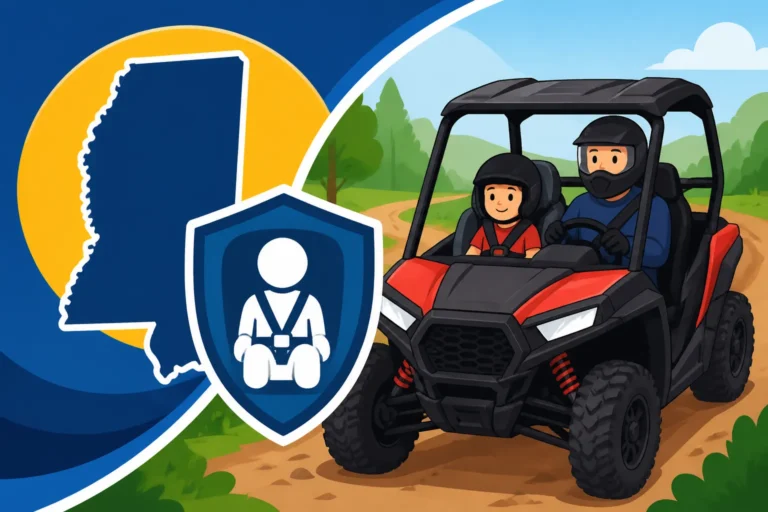
Mississippi's off-road vehicle laws, while not as extensive as some other states, are very clear on a few key points. For starters, the law states that anyone under the age of 16 operating an ATV or UTV on public property must possess a valid ATV safety certificate. This certificate demonstrates that they've completed an approved safety course. Furthermore, riders under 16 are also required to wear an approved helmet, regardless of where they are riding – public or private land. This dual focus on education and protective gear highlights the state's commitment to protecting its youngest riders. Without this certificate, a young rider could face legal repercussions, even if they're just crossing a short stretch of public road to get to another section of private property, or participating in a supervised event on public land. It’s a measure designed to prevent accidents and injuries, especially given the inherent risks involved with off-road riding. The law also implies that supervision is key, as highlighted in [Mississippi Parent Riding With a Child].
The Distinction Between Public and Private Land
This is where a lot of riders, especially those new to Mississippi, get confused. Many assume that as long as they own the land or have permission from the landowner, no state laws apply. While it's true that the state's ATV safety certificate requirement primarily applies to public property, understanding this distinction is crucial to avoid issues. "Public property" typically includes places like national forests, state parks, wildlife management areas (WMAs) where ATVs are permitted on designated roads or trails, and even certain county or city lands if an ordinance allows. If your child is riding exclusively on your private farm or a friend's private hunting lease, the state's certificate requirement doesn't apply. However, if that private land abuts a public road, and your child needs to cross it, or if you take your machines to a place like Bethel OHV Trails, that certificate becomes mandatory. Remember, even if you are allowed to ride on public land, there are rules that dictate [Mississippi Requires a License or a Safety Card] or a safety certificate.
For clarity, here's a quick overview of who needs a certificate:
| Rider Age | Riding Location | Safety Certificate Required? | Helmet Required? |
|---|---|---|---|
| Under 16 | Public Property | Yes | Yes |
| Under 16 | Private Property | No | Yes |
| 16 and Over | Public Property | No (Driver's License or ID) | No (Recommended) |
| 16 and Over | Private Property | No | No (Recommended) |
It's always better to err on the side of caution and ensure young riders are certified, especially if there's any chance they'll ride on or near public access points. Many components from brands like SuperATV are designed for all types of terrain, and while they don't directly relate to certificates, ensuring your machine is properly equipped for the environment and the rider's skill level is a huge part of safety.
Where to Obtain a Mississippi ATV Safety Certificate
Once you understand the necessity of an ATV safety certificate, the next logical question is, "Where do I get one?" Fortunately, Mississippi has a straightforward process, primarily facilitated through its Extension Service and other approved organizations. It’s not like trying to find a needle in a haystack; the resources are there if you know where to look.
The Role of the Mississippi Extension Service
The Mississippi State University Extension Service plays a vital role in offering approved ATV safety courses across the state. They often partner with local 4-H programs and other community organizations to deliver these courses, making them accessible to families in various counties. The Extension Service courses are designed to meet the state's requirements, covering everything from basic machine controls to environmental responsibility. These courses are typically taught by certified instructors who have experience not only in off-road riding but also in youth education. They understand how to engage young minds and impart critical safety lessons in a way that sticks. You can find more details about these specific courses under [Mississippi Extension Service Courses] and [ATV Safety Courses Run by the Extension Service]. They are often offered at various times throughout the year, so it's a good idea to check their schedule well in advance, especially before peak riding seasons.
Identifying Approved Courses and Providers
Beyond the Extension Service, other organizations may offer ATV safety courses that are recognized and approved by Mississippi. These could include certain private riding schools, dealerships, or even non-profit safety organizations. The key is to ensure that any course you choose is officially approved by the relevant state authority, typically the Department of Public Safety or an equivalent agency. An approved course means that its curriculum meets specific standards and that the instructors are qualified. Don't just assume any "ATV safety class" will suffice; always verify its approval status. The state wants to ensure that the content being taught is comprehensive and relevant to Mississippi's riding environment. Look for details on [Mississippi Courses Approved by Public Safety] to confirm legitimacy.
Online vs. In-Person Training Options
In today's digital age, many people wonder if an online ATV safety course is a viable option for meeting Mississippi's certificate requirement. While some states accept online-only courses, Mississippi typically places a strong emphasis on hands-on, practical training, especially for young riders. The approved courses usually combine classroom instruction with actual riding practice, allowing young operators to apply what they've learned in a controlled environment. This practical component is invaluable. It’s one thing to read about how to navigate a tricky turn or ascend a hill safely, and another entirely to actually do it under the watchful eye of an experienced instructor. This practical experience is why most official courses are in-person. The nuances of machine control, body positioning, and hazard recognition are best learned through direct experience. For [Mississippi Safety Course Length], these typically involve several hours of instruction and riding time.
What to Expect from an ATV Safety Course
Signing up for an ATV safety course might sound a bit daunting, especially for kids who just want to ride. But trust me, these courses are designed to be engaging and educational, not just a series of lectures. They blend essential theory with exciting practical application, preparing young riders for the real world of off-road adventure.
Core Curriculum and Learning Objectives
An approved Mississippi ATV safety course covers a wide range of topics crucial for safe and responsible riding. You can expect lessons on proper riding gear, including the mandatory helmet for riders under 16, and why quality gear, like that from SuperATV, is an investment in safety. The curriculum delves into understanding your machine, covering controls, pre-ride inspections, and basic maintenance. It also focuses heavily on riding techniques, such as starting and stopping, turning, climbing hills, descending hills, and traversing obstacles safely. A significant portion is dedicated to hazard awareness, teaching riders to identify and react to potential dangers like changing terrain, adverse weather, and other trail users. Environmental awareness and responsible trail etiquette are also key components, emphasizing how to minimize impact on the land and respect other recreationalists. The goal is not just to teach them how to operate an ATV, but how to be a smart, aware, and responsible rider in various situations. It really builds confidence, knowing you have a solid foundation.
Practical Riding Skills and Demonstrations
This is often the favorite part for young riders! After the classroom theory, participants move to a practical riding area where they can put their newfound knowledge to the test. Instructors demonstrate correct techniques for various maneuvers, and then supervise students as they practice. This hands-on experience is critical for developing muscle memory and confidence. They'll practice emergency braking, turning in tight spaces, handling uneven terrain, and potentially even simulating challenging scenarios. For a child, learning how to properly shift their weight, manage throttle control, and maintain balance while riding can be transformative. It’s during these sessions that kids often have those "aha!" moments, realizing how specific techniques directly contribute to their safety and control. They learn how to use their machine safely, not just ride it. This direct supervision helps ensure [Mississippi Supervision on Public Land] is effectively met when they are older.
Receiving and Carrying Your Certificate
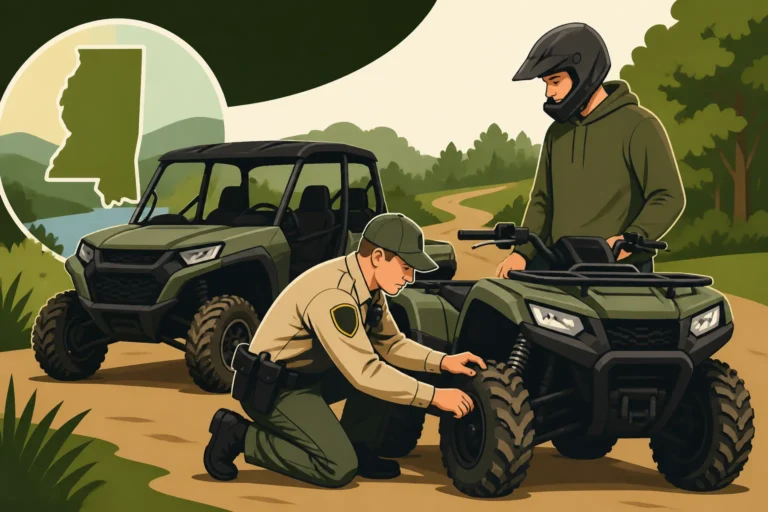
Upon successful completion of both the classroom and practical components of the course, participants will receive their official ATV safety certificate. This small card is a big deal! It's tangible proof that the rider has met the state's educational requirements. It's absolutely essential that any rider under 16 who plans to operate an ATV or UTV on public property carries this certificate with them whenever they ride. Think of it like a driver's license for an off-road machine – if a park ranger or law enforcement officer stops a young rider, they will ask to see it. Not having it can lead to fines or other penalties. Many times, places like state parks will require you to [Showing a Safety Certificate at a State Park Gate] as part of their entry process for young riders. It's a simple step, but easily overlooked. Make sure the certificate is kept in a safe, waterproof place on the machine or on the rider, alongside any other necessary identification. You can even check for [Mississippi Safety Certificate Lookup] if you ever lose yours.
Benefits Beyond Compliance: Why a Safety Certificate Matters
While the primary driver for getting an ATV safety certificate for a young rider in Mississippi is compliance with state law, the benefits extend far beyond simply checking a box. This certification process instills crucial skills and knowledge that can truly make a difference in a rider's experience and safety for years to come.
Enhancing Rider Skills and Accident Prevention
A well-taught ATV safety course doesn't just teach children how to follow rules; it teaches them how to be better riders. The techniques learned, such as proper weight distribution, effective braking, and obstacle avoidance, are fundamental skills that contribute directly to preventing accidents. Think about it: a child who knows how to properly navigate a tricky muddy patch or safely descend a steep decline is far less likely to lose control and crash. These courses help young riders develop a keen sense of awareness of their surroundings and their machine's capabilities and limitations. They learn to make split-second decisions that can avert a potentially serious incident. This proactive approach to safety empowers them, giving them the confidence that comes from knowing how to handle their machine proficiently. Many riders who take these courses later find themselves investing in robust safety components and accessories, often from trusted brands like SuperATV, to further enhance their machine's performance and protection because they understand the value of preparedness.
Potential Insurance Advantages
While Mississippi does not currently mandate ATV insurance, having an ATV safety certificate for your young rider could potentially offer advantages when it comes to insurance policies. Some insurance providers may offer discounts or more favorable terms for riders who have completed an approved safety course. This is because a certified rider is generally considered a lower risk. It demonstrates a commitment to safety and a higher level of knowledge, which can translate into fewer claims. Even if a direct discount isn't available, simply having that documented training can be beneficial in the event of an incident, showing due diligence on the part of the parent or guardian. It's always a good idea to discuss this with your insurance agent when you're looking for coverage, especially for comprehensive policies that cover damage or theft.
Promoting a Safer Riding Community
Finally, encouraging all young riders to obtain their ATV safety certificate contributes to a broader culture of safety within the off-road riding community. When more riders are educated and responsible, it creates a safer environment for everyone on the trails. It sets a positive example for others and fosters a greater respect for the land and for fellow riders. Imagine a trail system where every young rider understands right-of-way, proper spacing, and how to safely pass others. That kind of collective knowledge reduces conflicts, minimizes environmental impact, and makes the overall experience more enjoyable for families and groups. It reinforces the idea that off-road riding is a privilege that comes with responsibilities, not just thrills. This collective effort improves the reputation of off-road enthusiasts and helps ensure that these recreational opportunities remain available for future generations.
Disclaimer
This article is for general informational purposes only and does not constitute professional advice. Laws, prices and regulations vary by location and change over time. Consult a qualified professional for guidance on your specific situation.