Mississippi Rules Riders Get Wrong
It's incredibly frustrating when you hear one thing about ATV or UTV laws from a buddy at the mud park, another from an online forum, and then something completely different when you're talking to a seasoned rider. The truth is, Mississippi's laws around off-road vehicles can be a real head-scratcher, and many riders inadvertently get things wrong, often leading to fines or even more serious trouble. This comprehensive guide is here to clear up the most common misconceptions and equip you with the accurate information you need to ride legally and safely across the Magnolia State.
The Blunt Truth About Riding ATVs and UTVs on Mississippi Roads
Let's just get this out of the way upfront, because it's the single biggest area of confusion and frustration for riders in Mississippi: the general assumption that you can just hop on your quad or side-by-side and cruise down a county road. I've heard it a thousand times, "My neighbor does it all the time!" or "It's fine on back roads, right?" Unfortunately, that's often not the case, and operating under those assumptions can lead to a really bad day.
The Statewide Ban: No Exceptions for Most Riders
Here’s the cold, hard fact: Mississippi law flatly prohibits the operation of ATVs, UTVs, and most other off-road vehicles on public roads, streets, or highways. This isn't some obscure, rarely enforced rule; it's right there in the books. [Mississippi Bans ATVs on Public Roads]. This means those leisurely rides from your house to the hunting camp down a quiet paved road, or quick trips to the corner store, are technically illegal. The state's stance is pretty clear-cut: these machines are designed for off-road use, and that's where they should stay.
There's no blanket "farm road exception" in Mississippi state law, despite what some might wish or believe. Many riders, especially in rural areas, assume that if they're just going a short distance for agricultural purposes, it's okay. Sadly, [Mississippi Has No Farm Road Exception] for this statewide ban. This doesn't mean you can't ever use your machine on agricultural land; it just means that once you hit the public right-of-way, even for a few yards, you're usually breaking the law. It's a bitter pill to swallow for folks who use their machines as essential tools on their property, but the state law doesn't differentiate based on your intent when it comes to public roads.
When Local Ordinances Might Offer a Glimmer of Hope (But it's not for ATVs usually)
Now, here's where things get a tiny bit complicated and often lead to false hope for ATV and UTV owners. While the state bans off-road vehicles from public roads, it does allow individual municipalities – cities and towns – to create their own ordinances regarding the use of certain "low-speed vehicles" or "golf carts" on specific local streets. This is key: [Mississippi Local Ordinances Are the Only Path] if you want to ride anything other than a street-legal vehicle on public pavement.
The critical distinction here is that most of these ordinances are written specifically for golf carts and sometimes Low-Speed Vehicles (LSVs), which have distinct definitions from ATVs and UTVs. Often, these ordinances will dictate specific safety equipment, speed limits (usually 25 or 30 mph on streets posted 30 mph or less), and require drivers to have a valid driver's license and insurance. What you'll find is that most towns that have these ordinances explicitly exclude ATVs and UTVs, or they require very specific modifications that essentially turn them into LSVs. So, if you live in Hattiesburg, you might see golf carts legally puttering around, but that doesn't automatically mean your side-by-side is welcome. It’s absolutely vital to check with your specific city or county government before assuming you can ride on local streets. Don't rely on what you think you saw or what someone told you; get the actual ordinance in writing or directly from city hall.
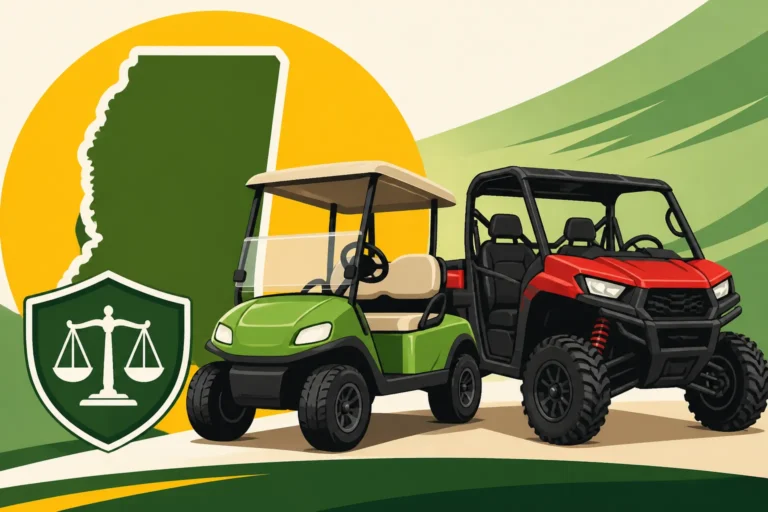
Distinguishing Between ATVs, UTVs, and Golf Carts
The legal definitions are where many of these misunderstandings begin. To the casual observer, a golf cart, a utility side-by-side, and an ATV might all just look like "small off-road vehicles." However, the law often differentiates significantly, and these distinctions are crucial.
- ATV (All-Terrain Vehicle): The state defines an ATV as a motorized off-highway vehicle designed to travel on four low-pressure tires, having a seat designed to be straddled by the operator, and handlebars for steering control. They are generally single-rider machines, though some are designed for two.
- UTV (Utility Task Vehicle) or Side-by-Side (SxS): These are usually defined as motorized off-highway vehicles that have a non-straddle seat, a steering wheel, and are designed for utility or recreational use. They often have roll cages and can carry multiple passengers. While more car-like, they are not considered golf carts or LSVs under state law unless specifically modified and registered as such in very particular circumstances, which is rare for a typical UTV.
- Golf Cart: A motorized vehicle that is designed and manufactured for operation on a golf course for sporting or recreational purposes, and that is not capable of exceeding speeds of 20 miles per hour. This is a very specific definition, and most UTVs, even if they look similar, exceed this speed and are not designed primarily for golf courses.
- LSV (Low-Speed Vehicle): A four-wheeled motor vehicle whose top speed is greater than 20 mph but not greater than 25 mph. LSVs must meet specific federal safety standards, including headlamps, stop lamps, turn signals, taillamps, reflex reflectors, mirrors, a parking brake, and a VIN. While some UTVs can be modified to meet these requirements, it's not a simple process and typically involves a lot more than just adding some turn signals.
Understanding these definitions is the first step to understanding why your particular machine may or may not be allowed on certain roads. Just because a town allows golf carts doesn't mean your [Mississippi Title for a Side-by-Side] allows you to take it on the street.
Understanding Driver and Passenger Requirements: Age, Licenses, and Helmets
Beyond the road use rules, another major area where riders, especially parents and guardians, get it wrong involves who can operate these machines and under what conditions. These rules are in place for safety, and ignoring them can have serious consequences, both legally and physically.
Who Needs a Driver's License or Safety Card?
Here’s a common misconception: "I'm on private land, so I don't need any special training or license." While private land offers more flexibility, state laws still dictate requirements for public land, and even on private land, local rules or park waivers can come into play. On any public land where ATVs are permitted, such as designated trails within National Forests like the Bethel OHV Trails, there are specific requirements.
If you are 16 years of age or older, you must possess a valid driver's license to operate an ATV or UTV on public property. This means if you're planning a ride at a state park or a public trail, you need to have your license on you. For riders under the age of 16, a different rule applies: they must possess a safety certificate issued by a state-approved ATV safety course. This is not optional; [Mississippi Requires a License or a Safety Card] for anyone operating an off-road vehicle on public property. This ensures that younger riders have at least some formal training before heading out onto trails. Many state-approved courses are available, often through local Extension Services or similar programs, using materials borrowed from youth programs like 4-H.
The Hard and Fast Rules for Youth Riders and Helmets
This is a non-negotiable area for safety, and one where the law is very specific. Many parents might allow their younger children to ride without helmets on their own property, thinking it's safe enough. However, state law is very clear on public land: "A person under sixteen (16) years of age shall wear an approved safety helmet when operating or riding as a passenger on an ATV." This applies to both the driver and any passenger. [Mississippi ATV Helmet Law Age] is explicitly set at 16.
An "approved safety helmet" isn't just any old helmet. It typically refers to helmets that meet standards set by the Department of Transportation (DOT), the Snell Memorial Foundation, or the American National Standards Institute (ANSI). This isn't just a suggestion; it's a legal requirement designed to protect young riders from severe head injuries in the event of an accident. While you might feel your child is a proficient rider, accidents can happen quickly, and a proper helmet can be the difference between a minor scare and a life-altering injury.
Passenger Rules: Factory Seats Only!
Another rule often overlooked or intentionally bent is the one about passengers. Many ATVs are designed for a single rider. Yet, you'll frequently see two people squeezed onto a single-seat ATV, or even children riding on the fenders. This is not only extremely dangerous but also illegal on public property.
The rule states that passengers are only allowed on ATVs or UTVs that are specifically designed by the manufacturer to carry more than one person and have a dedicated factory-installed seat for each passenger. If your quad is a single-rider machine, no matter how much space you think there is, it's not legal or safe to carry a passenger on public trails. For UTVs, this means everyone must be in a factory-installed seat with a seatbelt. There are no exceptions for "just a short ride" or "they're really small." The machine's design and [Mississippi State Park Passenger Rules] dictate passenger capacity, not your personal judgment. Overloading a machine or carrying passengers improperly can drastically affect its handling, increasing the risk of rollovers and other accidents. When considering upgrades to your machine for safety or performance, remember that companies like SuperATV offer a vast range of accessories, but none of them override the basic legal requirements for passenger safety.
Equipment and Operating Rules: What the Law Really Says You Need
Beyond who can ride and where, there are also common misunderstandings about what equipment your ATV or UTV needs, even when riding off-road. Many riders assume that as long as the machine runs, it's good to go. However, specific equipment is often required, particularly on public lands.
Spark Arrestors and Noise Limits: Not Just for Parks
You pull up to a trailhead, eager to hit the dirt, only to be turned away because your machine is too loud or lacks a crucial piece of equipment. This happens more often than you'd think. On public lands, such as national forests or state parks, ATVs and UTVs are typically required to be equipped with a U.S. Forest Service-approved spark arrestor. This is a safety device designed to prevent hot carbon particles from escaping your exhaust and potentially starting a wildfire, especially in dry conditions. Many stock machines come with these, but if you've modified your exhaust, you need to ensure it still has one.
In addition to spark arrestors, many public riding areas, including state parks, have strict noise limits. These are usually measured in decibels (dB). A common limit for ATVs is around 90-96 dB. If your machine is significantly louder than that—and many aftermarket exhaust systems can push it well past that—you might be denied entry. This isn't just to be a nuisance; excessive noise can disturb wildlife, impact the experience of other park users, and lead to erosion of public support for off-road riding. Always check the specific rules of the park or trail system you plan to visit, as [Mississippi State Park Spark Arrestor Rules] and noise limits can vary slightly.
Lighting Up for Safety (Even if You're Not on the Road)
While the focus on lighting often comes from the idea of being "street legal," having proper lighting on your ATV or UTV is crucial for off-road safety, especially if you ride at dawn, dusk, or in dense wooded areas. Even if you're never planning to touch a public road, being visible to other riders, hikers, or even emergency personnel is vital.
State law might not mandate specific lighting for all off-road scenarios on private land, but common sense and the rules of many organized parks or events certainly do. At a minimum, a working headlight and taillight are essential. Many riders also add auxiliary lighting, like light bars, for better visibility, especially if they’re riding at night or in very dark conditions. While not a replacement for legal road equipment, high-quality aftermarket lighting from brands like SuperATV can dramatically improve your visibility and ability to see obstacles on the trail, making your ride safer for everyone. Remember, even if the law doesn't explicitly state it for your specific riding area, good lighting is a smart investment.
What to Carry When You Ride: Papers and Proof
Imagine being stopped by a park ranger or deputy on a public trail. What documents are they going to ask for? Many riders simply hop on and go, assuming they only need their machine. But just like driving a car, there are certain papers you should always have with you, especially on public land.
You should carry proof of ownership, such as your [Mississippi Bill of Sale for a Used Machine] or, if applicable, your title documentation. If you're riding a newer machine, you might have an MCO (Manufacturer's Certificate of Origin) for it. If your machine is one of those manufactured after July 2025, you'll eventually need to go through the process to get a proper title, which will then serve as your primary proof of ownership.
For yourself, as discussed earlier, if you're 16 or older, you need your driver's license. If you're under 16, you need your ATV safety certificate. It's a good habit to carry proof of insurance as well, even though Mississippi does not mandate ATV insurance. Many private parks or organized rides do require proof of liability coverage. A deputy or ranger can definitely ask to see these documents. [What a Mississippi Deputy Can Ask to See] includes proof of identity, proof of age (if applicable), and proof of any required certifications. Keeping these documents in a waterproof pouch on your person or securely on your machine can save you a lot of hassle and potential fines.
| Common Misconception | Mississippi Reality |
|---|---|
| "I can ride my ATV on any county road." | False. Mississippi state law generally prohibits ATVs/UTVs on public roads. Local ordinances may allow specific golf carts or LSVs on certain city streets, but almost never ATVs or typical UTVs. |
| "Kids can ride without a helmet on trails." | False. Riders and passengers under 16 must wear an approved safety helmet when operating an ATV/UTV on public property (like state parks or national forest trails). |
| "I don't need a license for trails." | False. On public property, riders 16+ need a valid driver's license. Riders under 16 need a state-approved ATV safety certificate. |
| "I can carry a passenger on my quad." | False. Passengers are only permitted on machines specifically designed by the manufacturer to carry more than one person and equipped with factory-installed seats for each passenger. |
| "My loud exhaust is fine off-road." | Often False. Many public riding areas (e.g., National Forests, State Parks) have strict noise limits (e.g., 90-96 dB) and require a U.S. Forest Service-approved spark arrestor to prevent wildfires. Check the specific park rules before you go. |
| "Farm use exempts me from road rules." | False. There is no statewide "farm road exception" for ATVs/UTVs to operate on public roads. Using your machine for agriculture doesn't override the public road ban. |
| "I don't need papers to ride off-road." | False. On public land, you should carry proof of ownership (bill of sale, title, MCO) and, if required, your driver's license or safety certificate. Many private parks also require liability insurance. |
| "My UTV is just like a golf cart." | False. State law provides specific definitions for ATVs, UTVs, Golf Carts, and Low-Speed Vehicles (LSVs). Your UTV's capabilities often mean it doesn't fit the golf cart or LSV definition for road use. Check the exact [Mississippi ATV and ROV Legal Definitions]. |
Avoiding the Pitfalls: Common Mistakes and How to Stay Out of Trouble
It's easy to get caught up in the excitement of riding, but a little bit of planning and knowledge can save you from a lot of headaches. Many of the mistakes riders make stem from simple assumptions or not doing their homework.
Don't Rely on "Everyone Else Does It"
This is perhaps the biggest trap riders fall into. You see your buddies riding down the road, or you read online that "everyone in this county does it," and you assume it's okay. Unfortunately, what "everyone else does" doesn't change what the law actually says. Just because a deputy hasn't stopped someone yet doesn't mean they won't stop you. [Mississippi Fines for Road Riding] can be levied, and while they might seem small initially, they can add up with court costs, and repeat offenses can escalate. It's far better to be informed and ride legally than to rely on anecdotal evidence and risk a citation.
Research Before You Ride: Private Land vs. Public Trails
The rules for riding on private land that you own or have explicit permission to use are generally much more relaxed than those for public lands or private riding parks. On your own land, you set the rules for age, helmet use, and passenger limits, though it's always wise to prioritize safety and encourage best practices.
However, the moment you venture onto public trails, wildlife management areas (WMAs), or private mud parks, a whole new set of regulations kicks in. WMAs, for example, often have very specific rules about where and when ATVs can be used, usually limiting them to designated roads for game retrieval or specific hunting access, and sometimes only during certain seasons. For a comprehensive guide, check out [Mississippi WMA Road Riding]. Similarly, private mud parks have their own waivers, age limits, helmet requirements, and sometimes even rules about alcohol consumption.
Before you load up your machine and head out, always do your research. Call the national forest ranger district, check the state park's official website, or contact the private park directly. Ask about specific requirements for your machine type (ATV vs. UTV), width limits (Bethel OHV Trails, for instance, has a [Bethel's 43 Miles Are Built for 50-Inch Machines] rule), age restrictions, helmet mandates, spark arrestors, and anything else that might apply. Being prepared means you'll spend more time riding and less time dealing with unwelcome surprises.
The landscape of ATV and UTV laws in Mississippi can feel confusing, but by understanding the core principles—especially the general prohibition on public roads and the specific safety requirements for riders and machines on public land—you can enjoy your off-road adventures safely and legally. Don't let common misconceptions lead you astray; arm yourself with accurate information.
Disclaimer
This article is for general informational purposes only and does not constitute professional advice. Laws, prices and regulations vary by location and change over time. Consult a qualified professional for guidance on your specific situation.