Mississippi WMA Riding Rules
There's nothing quite like the open air and the feeling of adventure that comes with riding your ATV or UTV, but if you've ever tried to figure out where you can legally ride these machines on public land in Mississippi, you've likely run into a wall of confusion. It's frustrating to want to explore our beautiful state only to be met with vague rules or the fear of breaking the law. This guide aims to cut through that complexity, giving you a clear understanding of the specific rules and regulations for riding your ATV or UTV on Mississippi's Wildlife Management Areas (WMAs).
Understanding Mississippi Wildlife Management Areas (WMAs)
Mississippi is home to a fantastic network of Wildlife Management Areas, vast tracts of land managed by the Mississippi Department of Wildlife, Fisheries, and Parks (MDWFP). These areas are primarily set aside for wildlife conservation, providing critical habitat for numerous species, and offering outdoor recreational opportunities like hunting, fishing, and birdwatching. While they are public lands, they are not free-for-all zones, especially when it comes to off-road vehicles. Many riders assume that because it's "public land," they can ride anywhere, but that's a common misconception that can lead to a lot of trouble. The reality is that WMAs have a very specific framework for how and where ATVs and UTVs can be used, and understanding this framework is key to a legal and enjoyable ride.
What Exactly is a WMA?
A Wildlife Management Area, or WMA, is essentially a designated natural space managed with the primary goal of conserving wildlife populations and their habitats. Think of them as living laboratories and crucial sanctuaries, stewarded by the MDWFP. These lands serve multiple purposes, from protecting delicate ecosystems and promoting biodiversity to providing public access for various outdoor activities. You'll find a range of habitats within WMAs, from dense forests and swampy lowlands to open fields and river bottoms, each managed to support specific wildlife. Because these areas are so vital for conservation, they come with a comprehensive set of regulations designed to minimize human impact and ensure the long-term health of the environment and its inhabitants. This is why the rules for off-road vehicles can be stricter than on other private lands you might encounter.
The MDWFP's oversight means that every activity within a WMA, including ATV and UTV riding, is subject to specific rules that might differ significantly from general state laws or the regulations you'd find in a national forest. These rules are put in place to prevent habitat destruction, reduce disturbance to wildlife, and ensure the safety of all visitors, whether they're hunters, hikers, or riders. For example, during certain wildlife breeding seasons or specific hunting periods, access might be restricted entirely, or certain activities might be temporarily prohibited. It's not about making things difficult for riders; it's about balancing diverse recreational interests with the fundamental mission of conservation. Riders who truly understand and respect this purpose are better equipped to navigate the rules and enjoy their time responsibly.
The "Designated Roads Only" Rule
When it comes to riding ATVs and UTVs on Mississippi WMAs, the single most important rule you need to commit to memory is "designated roads only." This isn't a suggestion; it's a strict mandate. It means that your off-road machine is only permitted on roads that have been explicitly marked or officially designated by the MDWFP for vehicular use. You cannot create new trails, cut through fields, ride along creek beds, or explore areas that are not clearly part of the WMA's approved road system. This rule is fundamental to WMA management and is enforced rigorously. If you find yourself wondering if a path is a designated road, err on the side of caution, because venturing off the marked path is a quick way to find yourself in violation.
These designated roads are usually well-maintained enough for four-wheel drive trucks, though they can certainly get muddy and challenging, especially after heavy rains. They are typically former logging roads, administrative routes, or established access points within the WMA. You will often see signs indicating which roads are open and which are closed, or maps at WMA entrances detailing the approved routes. The intent behind this rule is multifold: it minimizes soil erosion, protects sensitive plant life, prevents the spread of invasive species, and reduces noise pollution and disturbance to wildlife. By sticking to these designated paths, riders become partners in conservation rather than potential threats to the WMA's ecological integrity. Ignoring this rule not only harms the environment but also puts your machine, and your wallet, at risk.
Why WMAs Have Specific Rules for Off-Road Vehicles
The specific and often stricter rules for off-road vehicles within WMAs aren't arbitrary; they stem directly from the core mission of wildlife conservation and the need to manage multiple, sometimes conflicting, uses of public land. WMAs are delicate ecosystems, and unrestricted ATV or UTV use can cause significant damage. Consider the impact of tires churning up fragile soils, leading to erosion that silts up waterways and damages fish habitats. The noise from machines can also disturb wildlife, causing stress to animals, disrupting breeding patterns, and driving them away from essential feeding or nesting areas. These are all concerns that the MDWFP takes very seriously, and the rules reflect that commitment.
Furthermore, WMAs are used by a diverse group of outdoor enthusiasts. Hunters need quiet surroundings and undisturbed wildlife for successful seasons. Birdwatchers seek peaceful observation spots. Hikers and nature photographers want to enjoy the natural beauty without constant vehicle noise or trail degradation. Without clear regulations for ATVs and UTVs, these different groups would invariably clash, creating an unpleasant and potentially unsafe environment for everyone. The rules are designed to delineate specific areas and times for certain activities, ensuring that everyone can enjoy the WMA without unduly impacting others or the wildlife that calls these areas home. It’s about creating a harmonious balance where conservation remains paramount, and various recreational activities can coexist responsibly.
Permits, Licenses, and Requirements for WMA Access
Before you even think about loading up your ATV or UTV and heading to a Mississippi WMA, you need to make sure your personal documentation is in order. Unlike some states that might require a separate permit for your machine to ride on public lands, Mississippi's system for WMAs often ties access to other types of licenses, particularly for those who are engaging in hunting or fishing. This can be a point of confusion for riders who might only be looking to explore designated roads and not necessarily participate in a hunt. Understanding what licenses are relevant, and what physical documents you should carry, is crucial for a hassle-free experience.
Required Licenses for Hunters and Anglers
For many who use WMAs, particularly those engaging in hunting or fishing, a valid Mississippi hunting or fishing license is often a prerequisite for general access to the area, regardless of whether you're bringing a vehicle. Even if your primary purpose for riding is simply to scout an area, retrieve game, or access a fishing spot, having the appropriate license is frequently part of the access requirements. This isn't specifically an "ATV permit," but rather a general entry requirement for individuals utilizing the WMA for its intended recreational purposes. It’s always best practice to check the specific WMA regulations, as some areas may have unique requirements or additional permits, like a WMA user permit, for any activity within their boundaries. Don't assume that just because you have a driver's license, you have the right to enter all parts of a WMA.
These licenses are critical because they help fund the conservation efforts that keep WMAs healthy and accessible. When you purchase a hunting or fishing license, you are directly contributing to habitat management, wildlife research, and the enforcement of regulations that protect these valuable resources. Therefore, even if you are using your ATV to get to a deer stand, or haul gear to a fishing spot, and not riding for pleasure, you are still typically considered a user of the WMA's primary resources. [Mississippi Forest Pass Cost] can give you an idea of similar fee structures for other public lands, but for WMAs, the hunting/fishing license is usually the primary gateway. Always keep your license handy, as game wardens are frequently present on WMAs and will check for proper documentation.
No Separate OHV Registration for WMAs
One significant point of clarity for Mississippi riders is that, generally speaking, Mississippi does not have a statewide off-highway vehicle (OHV) registration system. This means you won't need a special "WMA sticker" or a separate OHV registration specific to your ATV or UTV to ride on designated WMA roads. While [Mississippi ATV Titling Starts July 2025] is introducing a new titling requirement for newer machines, this is about proof of ownership and preventing theft, not a registration system for trail access. For now, and for pre-2025 machines, [Mississippi Does Not Register ATVs] at the state level. This can be a relief to many riders who might be accustomed to separate registration requirements in other states or for different types of vehicles.
However, the absence of a statewide OHV registration doesn't mean your machine is exempt from all rules. While your ATV or UTV itself doesn't need a "WMA registration," you as the operator must still comply with all other WMA-specific rules regarding vehicle type, equipment, and where you can ride. This distinction is important: the focus is on responsible operation within the WMA, rather than a bureaucratic hurdle for the machine itself. The lack of a registration requirement simplifies one aspect, but it puts even more emphasis on your understanding and adherence to the WMA's operational guidelines, especially the "designated roads only" rule.
What to Carry While Riding on WMA Roads
Even though you might not need a specific OHV registration for your machine on a WMA, being prepared with the right documentation and gear is still incredibly important. First and foremost, if you are utilizing the WMA for hunting or fishing, you absolutely must carry your valid Mississippi hunting or fishing license. This is your primary form of authorization for being on the WMA and engaging in those activities. Beyond that, it's always wise to have some form of personal identification, like your driver's license or state ID. While [Do You Need a License for an ATV in Mississippi?] addresses general ATV operation, a valid driver's license often fulfills identification requirements on public lands and proves you are legally old enough to operate a motorized vehicle.
Beyond personal identification, having proof of ownership for your ATV or UTV, such as a bill of sale or your new Mississippi title (for those machines that require it after July 2025), is a good idea. While not typically demanded for routine WMA access, it can be invaluable in proving the machine belongs to you if there's ever a question about theft or ownership, especially if you're buying a used machine and need to show provenance. In addition to paperwork, consider carrying a map of the WMA, a fully charged cell phone (though service can be spotty in remote areas), water, and a basic first-aid kit. Remember, WMAs can be remote, and self-sufficiency is key. Being prepared not only keeps you safe but also helps you quickly resolve any questions from WMA staff or game wardens.
Vehicle Restrictions and Equipment on WMAs
Just because you can ride your ATV or UTV on designated WMA roads doesn't mean every machine is suitable or that you can ride without specific equipment. WMAs often have rules that go beyond general state law, particularly concerning safety, environmental impact, and compatibility with other users. These rules are designed to protect the WMA's resources and ensure that off-road vehicles don't create undue hazards or disturbances. Understanding these restrictions and what equipment you need to have on your machine before you even leave your driveway is absolutely vital for a legal and responsible WMA ride. Don't assume your machine is ready to go just because it runs.
Types of Machines Allowed
When it comes to the types of machines allowed on WMA designated roads, generally, full-size ATVs and UTVs (including side-by-sides) are permitted, provided they adhere to all other WMA rules. However, WMAs don't have explicit width or weight limits for the machines themselves like some state or federal trails might, such as [50 Inches Wide and 1,000 Pounds Dry] for some public trails. Instead, the limitation comes from the "designated roads only" rule itself. If a designated WMA road is too narrow for your larger side-by-side, then you simply cannot proceed down that path, even if it's technically a "designated road." The road must be traversable by your vehicle without causing damage to the shoulders or vegetation.
It's also crucial to remember that certain vehicles, like dirt bikes, might have different or more restrictive access rules within some WMAs. While this guide focuses on ATVs and UTVs, always check the specific WMA's regulations for clarity on all types of off-road vehicles. The key takeaway is that your machine must be capable of staying on the designated road without creating new ruts or disturbing the surrounding habitat. If your UTV is exceptionally wide, you might find your access more limited on certain WMA roads compared to a standard-width ATV. Always prioritize staying within the bounds of the marked path, which might mean choosing a different route or even a different WMA if your machine is too large for the available designated roads.
Spark Arrestors and Muffler Requirements
One of the most critical and often overlooked equipment requirements for ATVs and UTVs on WMAs is the presence of a functioning spark arrestor and a properly muffled exhaust system. This is a non-negotiable rule, primarily driven by fire prevention and noise control. A spark arrestor is a device in your exhaust system that traps or destroys hot carbon particles that could otherwise exit the muffler and potentially ignite dry leaves, grass, or other flammable materials along the trail. In Mississippi's hot, dry seasons, preventing wildfires is paramount, and a missing or faulty spark arrestor is a serious risk that WMA staff and game wardens actively look for.
Beyond fire safety, muffler requirements address noise pollution. WMAs are places for wildlife observation and hunting, both of which require a degree of quiet. An excessively loud machine can disturb wildlife, interfere with other users' enjoyment, and create a nuisance. While there isn't usually a specific decibel limit stated for WMAs (unlike some state parks where [State Parks Cap ATV Mufflers at 90 Decibels]), the expectation is that your exhaust system is factory-standard or an aftermarket equivalent that keeps noise levels reasonable. Modifications that make your machine significantly louder are generally frowned upon and could lead to being asked to leave. Before heading out, always ensure your machine's exhaust is in good working order, has a spark arrestor, and isn't excessively noisy.
Lighting and Safety Gear
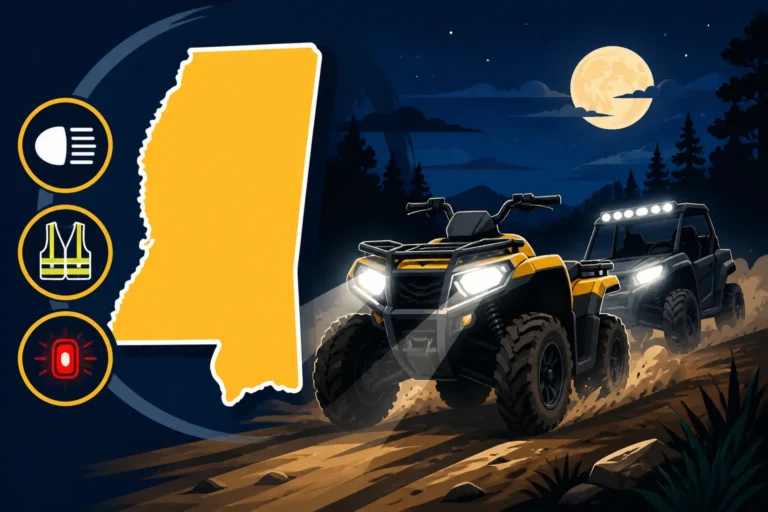
While Mississippi generally doesn't mandate specific lighting for ATVs unless riding on a public road (which WMAs are not), it's a smart practice to ensure your ATV or UTV has functional headlights and taillights, especially if you plan to be out during dawn, dusk, or in heavily forested areas. Visibility is key, both for your safety and for making other WMA users aware of your presence. Even on designated roads, conditions can change rapidly, and being prepared for low light situations is part of responsible riding. Some riders even add aftermarket LED light bars for enhanced visibility, though extreme brightness might be overkill and even disruptive in certain WMA settings.
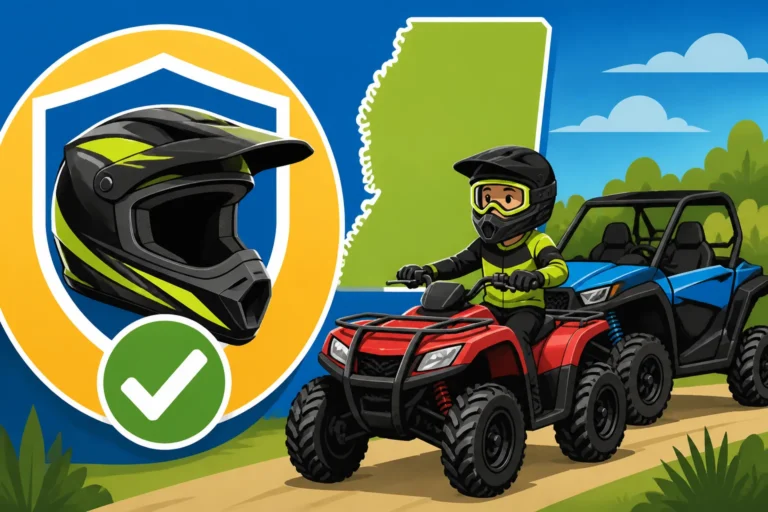
Regarding personal safety gear, [Mississippi ATV Helmet Law Age] dictates that riders under 16 must wear a helmet when operating an ATV, and this rule definitely applies on WMA lands. While not legally required for adults on WMA roads, wearing a helmet is always a strong recommendation for any ATV or UTV rider. Accidents can happen even at low speeds or on seemingly easy terrain. Other sensible safety gear includes eye protection, sturdy over-the-ankle boots, long pants, and gloves. For those tackling more challenging designated roads, a good winch can be a lifesaver if you get bogged down, and durable accessories like SuperATV skid plates can protect the underside of your machine from unseen obstacles. Investing in proper gear isn't just about complying with rules; it's about protecting yourself and your valuable machine while enjoying the WMA responsibly.
Navigating WMA Roads: Gates, Signs, and Closures
Riding on WMA designated roads isn't always as simple as following a GPS. These areas are dynamic, with gates that open and close, signs that convey important information, and seasonal closures that can dramatically alter access. The MDWFP manages these elements to protect resources, accommodate hunting seasons, and respond to environmental conditions like heavy rain or drought. Riders who fail to pay attention to these critical navigational cues can quickly find themselves in violation of WMA rules, potentially facing fines or even vehicle impoundment. Successfully navigating a WMA means being observant, informed, and ready to adapt your plans.
Understanding WMA Road Status
The status of WMA roads is perhaps the most critical piece of information for any rider. Roads within WMAs are not always open year-round. They can be actively managed, with gates that are locked, signs indicating "road closed," or even earthen berms blocking access to prevent vehicles from entering certain areas. A road that was open last week might be closed today due to a change in hunting season, excessive rainfall, or a maintenance project. It is your responsibility as a rider to know the current status of the roads you plan to use. Ignoring a closed gate or driving around a berm is a clear violation and shows blatant disregard for WMA rules. [Mississippi WMA Road Closure Signs] are there for a reason and must be heeded.
Before heading out, always check the MDWFP's official website for the specific WMA you plan to visit. Many WMAs have individual management plans and current condition reports that detail road closures, seasonal restrictions, and any other pertinent information. A quick phone call to the local WMA office or ranger station can also confirm the latest information. Don't rely solely on old maps or past experiences. The fluidity of WMA road status means that even a familiar route might be unexpectedly closed. This constant vigilance is part of being a responsible WMA user and ensures you don't waste a trip or, worse, get into trouble.
Interpreting Signs and Markers
WMAs are usually peppered with various signs and markers, and learning to interpret them is essential for safe and legal riding. You'll encounter signs at WMA entrances detailing general regulations, maps showing designated roads, and specific markers along roadsides. A common sign will explicitly state "Designated Roads Only," reinforcing the primary rule for off-road vehicles. Other signs might indicate "Road Closed," "No Motorized Vehicles Beyond This Point," or "Wildlife Sanctuary – No Entry." Sometimes, you might see small, numbered posts or colored blazes on trees, which are often used for mapping or boundary marking purposes; understand these are not invitations to leave the designated road.
Always slow down and read any sign you encounter. They are there to guide you and enforce the rules. Missing a critical sign can lead you off-limits without realizing it. For instance, you might see signs related to [Mississippi WMA Weapon Restrictions] or special instructions for [Mississippi WMA Deer Retrieval Rules]. These signs often relate directly to vehicle use, instructing you on where you can take your machine for certain purposes or what precautions to take. If a sign's meaning isn't clear, do not proceed until you are certain. It's far better to turn around or find an alternative route than to risk a fine or damage to the WMA. Think of these signs as your silent guides and enforcers of the rules on the ground.
Seasonal Closures and Hunting Seasons
One of the most significant factors affecting WMA access for ATV and UTV riders is the hunting calendar. WMAs are fundamentally managed for wildlife, and hunting seasons are a major component of that management. During specific hunting seasons, especially deer or turkey seasons, many WMAs will implement partial or full closures of certain roads, or even restrict all ATV/UTV access to specific days or hours. This is done to minimize disturbance to game animals, ensure hunter safety, and maintain the quality of the hunting experience. For example, during primitive weapons season, vehicle access might be severely limited to reduce noise and pressure on game.
It's critical to consult the MDWFP's annual WMA regulations and the specific WMA's seasonal access rules well in advance of your trip. These documents will clearly outline when ATVs and UTVs are permitted, if there are any restrictions on carrying firearms (e.g., [Mississippi WMA Weapon Rules for Riders]), and which roads are open during various hunting periods. For instance, you might find that while you can use your ATV to retrieve game on designated roads, you cannot ride it solely for recreation during peak hunting days. [Mississippi Hunting Season Trail Advice] for other public lands offers a similar caution: respecting hunters and understanding the timing is paramount. Planning your ride around these seasonal changes is not only a matter of compliance but also a courtesy to other WMA users and a smart way to ensure you don't arrive to find the gates unexpectedly closed.
Specific WMA Riding Scenarios and Activities
While the "designated roads only" rule is the golden standard for WMA riding, how that rule applies can vary slightly depending on your specific activity. For instance, using your ATV to retrieve a downed deer might have different nuances than simply riding a designated road for recreation. WMAs are multi-use areas, and the MDWFP recognizes that off-road vehicles play a practical role in some hunting and outdoor pursuits. However, these practical uses are still heavily regulated to ensure they align with conservation goals and don't conflict with other WMA visitors. Understanding these specific scenarios can help you avoid common pitfalls.
Using a Quad to Retrieve a Downed Deer or Hog
For many hunters, an ATV or UTV is an invaluable tool for retrieving a downed deer or hog, especially in rugged or remote parts of a WMA. The good news is that WMAs generally allow the use of ATVs and UTVs for this purpose, but with very specific caveats. The most important rule remains: you can only use your machine on designated roads for game retrieval. You cannot drive off-road into the woods or fields, even to reach your downed animal, if there isn't an approved road leading directly to it. This can be a tough pill to swallow when you have a trophy buck on the ground, but the rules are firm to prevent habitat destruction. [Mississippi WMA Deer Retrieval Rules] and [Mississippi WMA Hog Retrieval Rules] explicitly state this limitation.
Many WMAs have designated retrieval points or specific guidelines for accessing remote areas for game. Some might require you to contact WMA staff before venturing off a main road for retrieval, even on a designated path. Always check the specific WMA's regulations for these nuances. If your downed animal is truly off-road, you'll need to physically drag it to the nearest designated road before loading it onto your machine. Using your ATV for retrieval is a privilege, not an absolute right to go wherever you please. Being prepared with a sturdy game cart or sled to minimize dragging distance can be a smart move, ensuring you comply with the "designated roads only" rule even in the heat of the moment.
Weapon Transport and Firearm Rules on WMAs
If you're using your ATV or UTV on a WMA during hunting season, understanding the rules for transporting firearms is absolutely critical. Generally, firearms must be unloaded while on your ATV or UTV and secured in a case or scabbard. They cannot be readily accessible or loaded while the vehicle is in motion or even while you are merely sitting on the machine. This rule is a major safety precaution, preventing accidental discharges and ensuring that hunting is conducted ethically and within designated areas. [Mississippi WMA Weapon Restrictions] are often clearly posted and enforced by game wardens.
Furthermore, some WMAs might have specific "setback" rules, requiring that loaded firearms only be handled a certain distance from designated roads or other public areas, even if you are on foot. When you combine firearm rules with the "designated roads only" rule, it means you can use your ATV to transport your unloaded and cased weapon to a hunting spot along a designated road, but you must then move off the machine and get to your hunting position before loading and preparing to hunt. [Mississippi WMA Firearm Distance Rules] can dictate how far you need to be from a road before you can even load your weapon. These rules are designed to prevent poaching from vehicles and ensure a safe environment for all WMA users, including non-hunters.
Camping and Other Recreational Uses
WMAs are not just for hunting; they often offer opportunities for camping, hiking, birdwatching, and other forms of outdoor recreation. However, your ATV or UTV's role in these activities is usually limited to transportation on designated roads to access campgrounds, trailheads, or picnic areas. You generally cannot use your ATV as a recreational vehicle within a campground or drive it on hiking-only trails. The "designated roads only" rule still applies universally. For instance, you might use your side-by-side to haul camping gear to a designated WMA campsite, but once you're there, the machine should be parked and not used to joyride around the camp area.
Many WMAs have specific rules regarding where camping is allowed, often only in designated primitive camping areas. These areas are typically accessible by vehicle on a designated road. For other recreational pursuits, like birdwatching or photography, your ATV can get you deeper into the WMA to access prime spots, but again, you must park your machine once you reach an appropriate point and proceed on foot into off-road areas. It's important to remember that the primary purpose of WMAs is wildlife management, and all recreational activities must align with that goal. Using your ATV or UTV responsibly, as a utility vehicle for access rather than a recreational toy to roam free, is the expectation.
Consequences of Violating WMA Rules
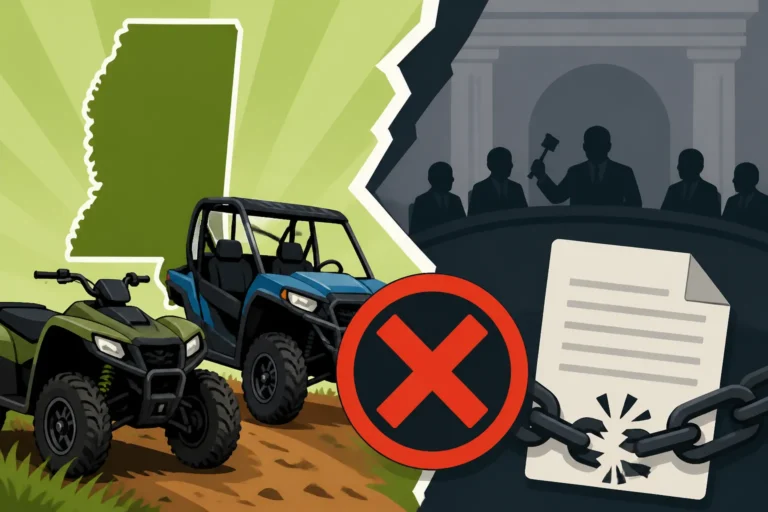
Ignoring or misunderstanding WMA rules for ATV and UTV use can lead to serious repercussions. Unlike a minor traffic infraction, violations on WMAs often carry significant penalties that can impact your wallet, your driving privileges, and even your ability to access public lands in the future. Game wardens and WMA staff are highly trained, knowledgeable about the regulations, and have the authority to enforce them. They take their role as stewards of these vital lands very seriously, and a cavalier attitude toward the rules will not be tolerated. Riders who choose to deviate from the established guidelines should be prepared for the consequences.
Fines and Penalties for Non-Compliance
The most immediate consequence of violating WMA rules, such as riding off a designated road or ignoring a closure sign, is typically a monetary fine. These fines can vary depending on the severity of the infraction and the specific WMA, but they are generally not trivial. A simple "riding off designated roads" citation can easily run into hundreds of dollars, similar to or even exceeding many common traffic tickets. In addition to the base fine, you'll often be responsible for court costs and administrative fees, which can quickly add up. These penalties serve as a deterrent and help fund the enforcement and management efforts within the WMAs.
Beyond the initial fine, some violations might carry additional penalties. For instance, if your actions caused damage to the WMA, such as significant erosion or destruction of vegetation, you could be held liable for restitution to cover the costs of repair and restoration. This is particularly true if you were caught creating new trails or driving through sensitive habitats. Remember, WMAs are protected areas, and any harm you cause to the environment can have long-lasting effects. The MDWFP has a vested interest in protecting these resources, and they will pursue appropriate legal and financial remedies against those who cause damage.
Machine Impoundment and Loss of Access
For more egregious or repeated violations, the consequences can escalate significantly beyond just a fine. Game wardens have the authority to impound your ATV or UTV, meaning they can seize your machine and transport it to a holding facility. Retrieving an impounded machine is not only a logistical nightmare but also incurs towing fees, storage fees, and potentially additional administrative charges, all of which you will be responsible for. This can quickly turn an afternoon ride into a very expensive and aggravating ordeal, making you wish you had stuck to the [Mississippi WMA Designated Roads Only] rule.
In addition to impoundment, severe violations can lead to the loss of your WMA access privileges, or even suspension of your hunting/fishing license. This means you could be temporarily or permanently banned from using any WMA in Mississippi, effectively preventing you from enjoying future outdoor activities on these public lands. Imagine being unable to hunt your favorite spot or access your preferred fishing hole, all because you chose to disregard a simple rule. This kind of consequence is designed to emphasize the seriousness of WMA regulations and to protect the integrity of these vital conservation areas for all law-abiding users. It's a harsh lesson, but one that underscores the importance of responsible conduct.
The Role of Game Wardens and WMA Staff
When you're on a Mississippi WMA, the primary enforcement officers you'll encounter are game wardens, officially known as conservation officers of the MDWFP. These individuals are state law enforcement officers with full arrest powers, specifically trained in wildlife and conservation laws. They are not merely park rangers; they are the front line of defense for Mississippi's natural resources and are empowered to enforce all WMA regulations, as well as state hunting, fishing, and boating laws. Their presence on WMAs is constant, and they are highly vigilant, especially regarding ATV and UTV use. They know the terrain, they know the common infractions, and they are adept at spotting unauthorized activity.
Beyond game wardens, WMA managers and other MDWFP staff also play a crucial role. While they may not have direct enforcement powers in the same way a game warden does, they are responsible for monitoring conditions, setting and posting rules, and educating the public. They work closely with game wardens to identify areas of concern and report violations. If a WMA staff member approaches you with questions or concerns about your riding, treat it as seriously as an interaction with a game warden. Their ultimate goal is to protect the WMA, and your cooperation with their directives is essential. Understanding their authority and showing respect for their role will go a long way in ensuring a positive experience for everyone on the WMA.
Best Practices for Responsible WMA Riding
Being a responsible ATV or UTV rider on a Mississippi WMA isn't just about avoiding fines; it's about being a good steward of the land and a considerate user of shared public resources. Adopting best practices ensures not only your own safety and enjoyment but also the preservation of these beautiful areas for future generations. It’s about more than just knowing the rules; it's about embodying the spirit of responsible outdoor recreation. A few simple habits can make a huge difference in how your presence is perceived and how well the WMA thrives.
Planning Your Ride and Checking Ahead
The single most important best practice for WMA riding is thorough preparation. Never just spontaneously head out to a WMA without doing your homework. Start by checking the MDWFP's official website for the specific WMA you plan to visit. Look for current news, seasonal closures, specific regulations, and maps. Pay particular attention to information regarding [Mississippi Trail Conditions After Rain] or any other weather-related advisories, as muddy conditions can lead to road closures and make designated paths much more challenging. Calling the local WMA office or ranger station can provide invaluable real-time information that might not be immediately updated online.
Print or download a map of the WMA, clearly marking the designated roads open to ATVs/UTVs. Don't rely solely on GPS in areas with spotty cell service. Inform someone of your itinerary, including where you're going and when you expect to return. Pack essentials like water, snacks, a first-aid kit, and necessary tools for your machine. Proper planning reduces the risk of getting lost, encountering unexpected closures, or running into trouble. Think of it as mapping out your adventure beforehand, ensuring you have all the pieces in place for a smooth and legal ride.
Minimizing Environmental Impact
As responsible riders, we all have a role to play in protecting the natural beauty and ecological integrity of WMAs. This means adhering strictly to the "Tread Lightly!" principles. The most fundamental aspect is staying on designated roads. Every time a rider goes off-road, they contribute to soil erosion, damage vegetation, disturb wildlife habitats, and potentially introduce invasive species. Even seemingly small detours can have cumulative negative impacts over time. If a designated road looks too challenging, don't try to go around it by creating a new path; turn back and find an alternative.
Beyond staying on marked paths, practice "leave no trace" principles. Pack out everything you pack in, including trash, broken parts, and even organic waste like fruit peels. Avoid littering at all costs. If you see trash left by others, and it's safe to do so, consider picking it up. Be mindful of stream crossings on designated roads; avoid excessive splashing or churning up sediment, which can harm aquatic life. Consider equipping your machine with durable parts like those from SuperATV that can withstand rugged terrain without breaking and leaving debris. Our actions as riders directly impact the health of the WMA, and by minimizing our footprint, we ensure these areas remain vibrant for everyone and everything.
Sharing the Road and Respecting Other Users
WMAs are shared resources, and it's highly likely you'll encounter other people enjoying the outdoors, including hunters, hikers, birdwatchers, and even horseback riders. As an ATV or UTV rider, it's your responsibility to be a courteous and respectful user of the WMA roads. This means slowing down when you encounter others, especially pedestrians or equestrians, to reduce dust, noise, and potential intimidation. Make eye contact, offer a friendly wave, and yield the right of way. Remember that an ATV or UTV can be loud and disruptive to someone seeking peace and quiet or observing wildlife.
During hunting season, be especially mindful of hunters. Their activities require quiet and undisturbed conditions. If you see a parked truck with a hunter's orange vest hanging from the mirror, consider reducing your speed and engine noise as you pass. Avoiding unnecessary or excessive revving of your engine is also a matter of courtesy. The goal is to coexist peacefully and ensure that all WMA users can enjoy their chosen activity without unnecessary interference. By being respectful and considerate, you help foster a positive image for the entire off-road riding community and contribute to a harmonious atmosphere within our shared public lands.
| Rule Category | General Mississippi State Law (ATVs/UTVs) | Mississippi WMA Specific Rule |
|---|---|---|
| Public Road Use | [Mississippi Bans ATVs on Public Roads] | Designated Roads ONLY |
| State OHV Registration | None (pre-2025); [Mississippi ATV Titling Starts July 2025] is for ownership | No separate OHV registration for WMAs |
| Spark Arrestor | Not explicitly mandated statewide | REQUIRED for all machines on WMAs |
| Muffler Noise | No specific statewide decibel limit | Must be reasonably quiet; no excessively loud exhausts |
| Helmet (Under 16) | [Mississippi ATV Helmet Law Age] required | REQUIRED on WMAs |
| Game Retrieval | Not addressed by state law | Permitted on Designated Roads ONLY |
| Weapon Transport | Not addressed by state law | Unloaded, cased, and secured while on machine |
| Off-Road Riding | Generally allowed on private property with permission | STRICTLY PROHIBITED off designated roads |
| WMA User Permit | Not always required; depends on activity | May require valid hunting/fishing license or WMA-specific user permit for access |
Disclaimer
This article is for general informational purposes only and does not constitute professional advice. Laws, prices and regulations vary by location and change over time. Consult a qualified professional for guidance on your specific situation.