What Posted Land Means for Mississippi Riders
It can be incredibly frustrating to be out on your ATV or UTV in Mississippi, enjoying the peace and quiet of the outdoors, only to suddenly encounter a "No Trespassing" sign or a strip of purple paint on a tree. That sinking feeling of "Am I allowed to be here? What does this even mean?" is something many riders experience. This guide is here to clear up the confusion surrounding "posted land" in Mississippi and help you understand your rights and responsibilities so you can ride confidently and legally.
Understanding "Posted Land" in Mississippi
When you're out exploring on your machine, knowing where you can and cannot legally ride is paramount. "Posted land" is a term you'll hear a lot, and it carries significant weight in Mississippi law. It's not just a suggestion; it's a clear declaration from the landowner.
What Does "Posted" Really Mean?
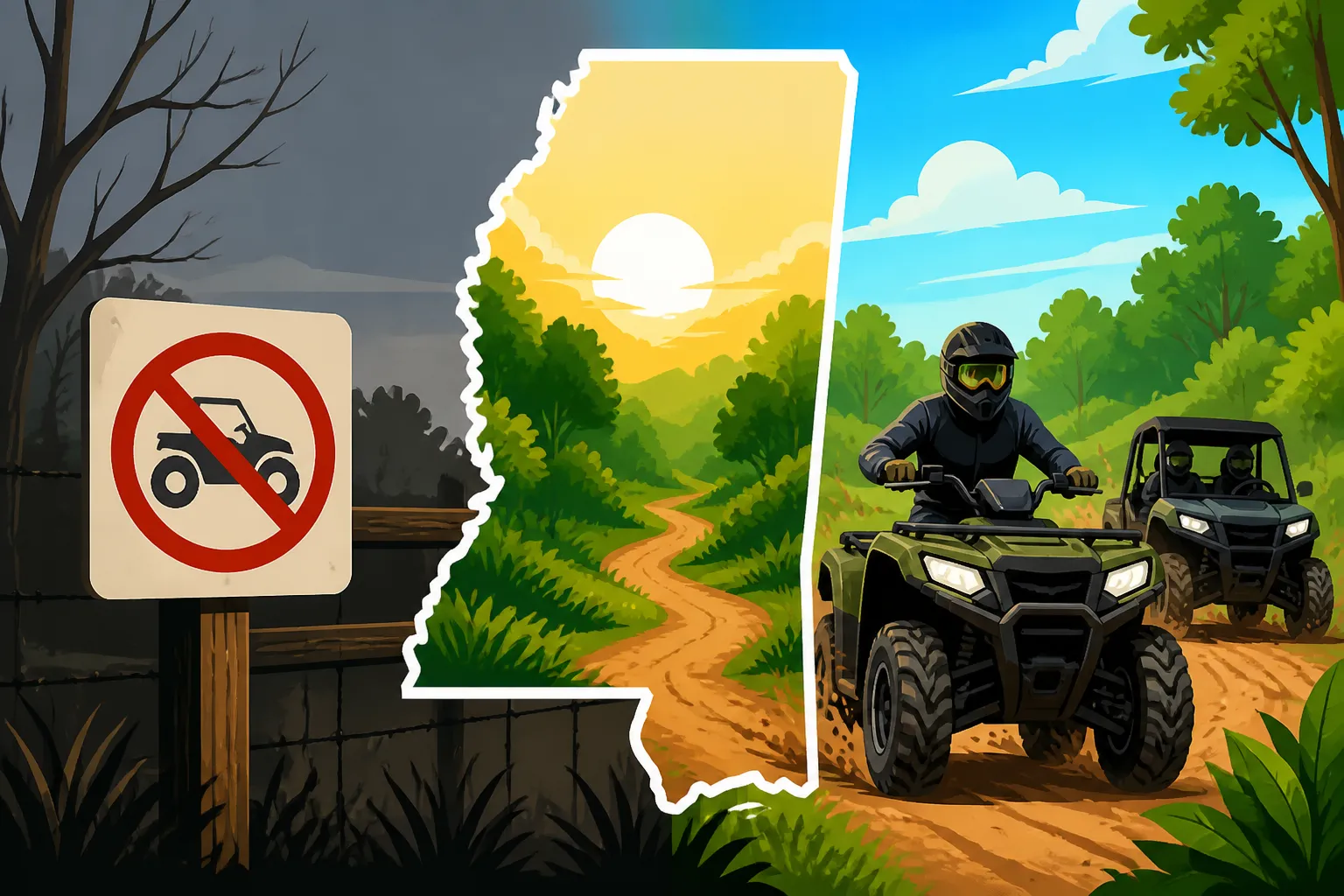
At its core, "posted" land in Mississippi means one thing: private property, and trespassing is prohibited. It's the landowner's way of explicitly communicating that access is restricted. This isn't just a gentleman's agreement; it's a legal notice. When a property is properly posted, it serves as direct warning to anyone who might consider entering without permission. This means if you see a sign, a fence, or even certain paint marks, you are expected to understand that you cannot proceed further onto that land.
Think of it this way: imagine pulling into someone's driveway and seeing a "No Solicitors" sign. You wouldn't expect to walk right up to their door and try to sell them something. "Posted" land signage for off-road vehicles works the same way, but the stakes can be higher than a polite dismissal. Even if a sign looks old and faded, or if it's partially obscured by foliage, the intent is clear. It's on the rider to be observant and understand that such markings indicate private property. Ignoring such a sign, even if you believe it to be outdated, could still land you in trouble, because the owner's intent to restrict access remains.
The Legal Implications of Ignoring Posted Signs
In Mississippi, ignoring posted signs or otherwise trespassing on private property can lead to various legal consequences. It's not just a slap on the wrist. Mississippi law is quite clear: unauthorized entry onto private land that is adequately marked constitutes trespass. This can range from a simple trespass, which might result in a warning or a relatively minor fine, to a more serious charge of criminal trespass, especially if there's intent to commit a crime, property damage is involved, or you repeatedly violate the posting.
Imagine you're taking a shortcut across what looks like an unused field, thinking no one will notice. Suddenly, you're confronted by a landowner or even a local deputy. The consequences could include fines, which can quickly add up, and potentially having your ATV or UTV impounded. Getting a machine out of impoundment is not only costly but a significant hassle, often involving towing fees, storage fees, and administrative charges. Furthermore, a trespass conviction can stay on your record, potentially impacting future opportunities, especially if you ever need to apply for land access for hunting or other recreational purposes. For more details on the severity of such actions, you might want to look into [Mississippi Trespass Law for Riders]. These laws are in place to protect landowners' rights and ensure peace and order, so respecting them is crucial for all riders.
Identifying Posted Land and Respecting Boundaries
Riding responsibly means being vigilant about your surroundings and understanding the different ways landowners in Mississippi mark their property. It's not always a bright red sign, so knowing the subtle cues can save you a lot of grief.
Common Posting Methods in Mississippi
Landowners in Mississippi use a variety of methods to "post" their property. The most obvious, of course, are physical signs. You'll commonly see "No Trespassing," "Private Property," or "Posted" signs affixed to trees, fence posts, or standalone markers. These signs vary greatly in appearance, from professionally printed metal signs that you might find from a company like SuperATV, to handmade wooden placards, or even just painted notices. The key isn't the aesthetic, but the message.
Beyond signs, paint markings are a common and legally recognized method for posting property in many areas. While laws vary by state, Mississippi recognizes certain paint markings as a clear indication of "No Trespassing." The most common color you might encounter is purple paint. When purple paint is marked on trees or posts at regular intervals along a property line, it serves the same legal purpose as a written "No Trespassing" sign. Fences and gates also act as implicit boundaries. Even if there isn't a sign directly on the fence, a closed gate or a clearly defined fence line should signal to a rider that they are approaching private property and should not cross without explicit permission. Always be on the lookout for these visual cues, as they are the landowner's way of communicating their boundaries.
How to Determine Land Ownership Before You Ride
Being a responsible rider means doing your homework before you head out, especially if you're exploring new areas or areas with mixed private and public land. Relying solely on intuition or hoping for the best is a recipe for trouble. One of the most reliable ways to determine land ownership is through county tax assessor maps. These maps are often publicly accessible online through your local county's website, or you can visit the tax assessor's office in person. They provide detailed plats showing property lines, parcel numbers, and owner information.
Another increasingly popular method is using GPS mapping applications on your smartphone or dedicated GPS device. Many of these apps offer layers that display property lines and ownership information, allowing you to see exactly where you are in relation to private parcels in real-time. This can be incredibly helpful when navigating dense woods or areas with less obvious physical boundaries. However, remember that technology isn't infallible, and always cross-reference if possible. Ultimately, the best practice for riding on any private land is to obtain direct, explicit permission from the landowner. If you're unsure, find out who owns the land and ask. For more on this, check out [Written Permission From a Southern Landowner]. A simple conversation can prevent a major headache.
Navigating Access: Permission and Public Lands
Understanding the distinction between private and public land, and how to gain legal access, is fundamental for any ATV or UTV rider in Mississippi. The rules for each are distinct, and respecting them ensures enjoyable and lawful riding.
Getting Permission from Private Landowners
If you want to ride on private land that isn't your own, the golden rule is always to ask for permission. A verbal agreement is a good start, but getting it in writing is always better. When approaching a landowner, be respectful, clearly state your intentions, and be prepared to discuss specific details like when you plan to ride, what areas you'll use, and the type of machine you'll be on. Many landowners are hesitant due to past negative experiences, so presenting yourself as a responsible and courteous individual can go a long way.
A written permission agreement should ideally include the dates of access, the specific areas of the property you're allowed to use, and any restrictions (e.g., no night riding, stick to existing trails). This protects both you and the landowner. Building a positive relationship with landowners can open up long-term riding opportunities. Maybe offer to help with a task on their property in exchange for access. If you're part of a hunting club or lease, ensure you understand the boundaries and any specific rules outlined in your agreement. [What a Hunting Lease Says About ATV Use] often includes detailed stipulations about machine use. Remember, permission is a privilege, not a right, and it can be revoked at any time if trust is broken.
Riding on Public Lands and Designated Trails
While "posted" almost exclusively refers to private land, public lands, such as National Forests and Wildlife Management Areas (WMAs) in Mississippi, have their own set of rules regarding ATV and UTV access. These rules are different from private land trespass laws but are equally important to follow. You won't typically find "No Trespassing" signs on public lands in the same way you would on private property, but there will be specific regulations about where and when you can ride.
For instance, National Forests usually have designated OHV trail systems, like the ones in the De Soto National Forest, where riding is permitted only on marked trails and during specific seasons. You'll often need a special pass, such as the [Mississippi Forest Pass Cost], to access these trails. Similarly, WMAs often restrict ATV/UTV use to designated roads or for specific purposes like game retrieval during hunting season, as detailed in [Mississippi WMA Riding Rules]. You generally cannot simply ride wherever you please on public land. It's crucial to consult the specific rules and maps for the public land you intend to visit. Tools and accessories from companies like SuperATV, such as durable GPS mounts or recovery winches, are excellent for navigating designated trails safely and preparing for unexpected challenges, but they don't give you a free pass to ignore posted signs or public land regulations. Always check with the relevant land management agency before you head out.
Consequences and Prevention for Riders
Riding off-road in Mississippi is an exhilarating experience, but it comes with the responsibility of knowing and respecting land boundaries. The consequences of not doing so can be significant, so understanding them is crucial for every rider.
Potential Penalties for Trespassing
As we touched on earlier, trespassing on posted land in Mississippi carries real penalties. These are not minor inconveniences; they can impact your wallet, your time, and even your future riding opportunities. Fines are the most immediate consequence, and they can vary depending on the severity of the trespass, whether any damage occurred, and if it's a repeat offense. These fines can quickly add up, especially if court costs are included. Beyond monetary penalties, law enforcement has the authority to impound your ATV or UTV. When a machine is impounded, you're not just looking at the trespass fine; you'll also be responsible for towing fees, daily storage fees, and any administrative charges to release your vehicle. This can easily run into hundreds, if not thousands, of dollars.
A trespass charge can also lead to legal action by the landowner, particularly if there was property damage or significant disruption. This could result in civil lawsuits seeking compensation for damages. Furthermore, having a trespass offense on your record could make it much harder to obtain permission from other landowners in the future, effectively limiting your access to private riding areas. It's a serious matter, and the potential repercussions are far greater than the perceived convenience of cutting a corner or ignoring a sign. You can find more information about how these fines are structured in articles like [Mississippi Penalties for Illegal Road Riding], which, while focused on roads, gives you an idea of the court process.
Best Practices for Responsible Riding
To avoid the legal headaches and financial burdens of trespassing, responsible riding practices are your best defense. The cardinal rule is to always err on the side of caution. If you're unsure whether a piece of land is public or private, or if you have permission to be there, do not proceed. Turn around and find an alternative route. Always carry reliable maps, whether physical or digital, and a GPS device that can help you identify property lines. Many dedicated off-road GPS units, or apps on your smartphone, can overlay property boundaries, making it much easier to stay on the right side of the law.
Communicate clearly with your riding group about planned routes and known boundaries. It only takes one rider to wander off course to get the entire group into trouble. Educate yourself on local land ownership patterns and specific ordinances. Some areas might have unique rules, and it’s always wise to check [Mississippi Ordinance Lookups Before You Ride]. Respecting private property isn't just about avoiding penalties; it's about being a good ambassador for the entire off-road community. When landowners see riders who are considerate and lawful, they are more likely to grant permission for access, benefiting everyone. Even if you have advanced gear from SuperATV, like their robust winches or enhanced suspension for challenging terrain, these tools are for safe riding on legal trails, not for navigating forbidden territory.
| Land Type | How It's Posted/Marked | General Rules for ATV/UTV Riders | Consequences of Ignoring |
|---|---|---|---|
| Private Land | "No Trespassing" signs, purple paint on trees, fences, gates, verbal warnings. | Explicit Written Permission REQUIRED. Never enter without it. | Fines, impoundment of machine, legal action, loss of future access. |
| Public Land (National Forests, WMAs) | Designated trail markers, park signage, online maps, brochures, verbal instructions from rangers. | Ride only on designated trails/roads. Follow specific rules for passes, seasons, hours, and machine types. | Fines, exclusion from public lands, potential impoundment, damage to reputation of riders. |
Disclaimer
This article is for general informational purposes only and does not constitute professional advice. Laws, prices and regulations vary by location and change over time. Consult a qualified professional for guidance on your specific situation.