Mississippi Bans ATVs on Public Roads
It’s a frustrating reality for many off-road enthusiasts in the Magnolia State: you’ve invested in a powerful ATV or UTV, you want to enjoy the freedom of the open road, but Mississippi law throws up a significant roadblock. This guide is here to cut through the confusion and plainly lay out the facts about riding ATVs and UTVs on public roads in Mississippi, explaining why a street-legal conversion isn't typically an option and what the actual laws mean for riders.
The Unwavering Reality: Mississippi's Blanket Ban on ATVs and UTVs on Public Roads
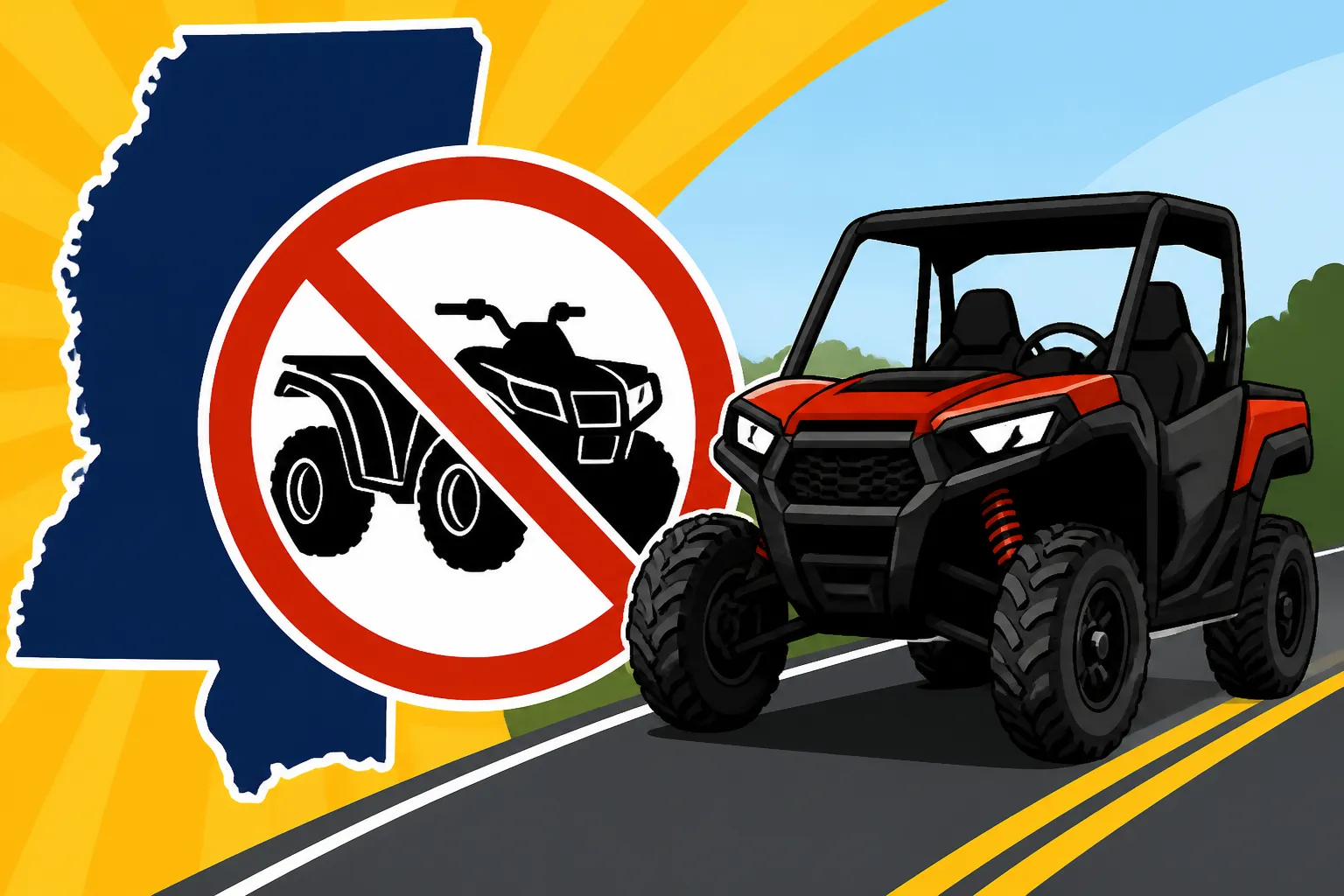
Let's get straight to the point: Mississippi law, as it currently stands, makes it explicitly clear that All-Terrain Vehicles (ATVs) and Utility Task Vehicles (UTVs) are not permitted on public roads. This isn't a gray area with loopholes; it's a foundational principle embedded in the state's off-road vehicle statutes. Many riders, especially those new to the sport or moving from other states, often assume there must be some way to make their machine "street legal," perhaps by adding lights or turn signals. Unfortunately, the state’s approach is far more restrictive than many hope.
What Mississippi Law Explicitly States About Off-Road Vehicles
The core of Mississippi's stance on off-road vehicles on public roads is found in its code, specifically addressing their definition and use. [Mississippi Code Section 63-31-3] is particularly important here, defining ATVs and UTVs as "off-road vehicles" designed for off-highway use. The critical implication of this definition is that because they are not highway vehicles, they are therefore prohibited from highway use. The law simply doesn't provide a pathway for registration or conversion that would allow them to be operated on state, county, or municipal roads. It's a blanket prohibition that leaves very little room for interpretation.
This distinction is crucial because it means that simply adding typical street-legal accessories like headlights, tail lights, mirrors, or even turn signals, which might make a dirt bike or other vehicle street-legal in some jurisdictions, does not change an ATV's or UTV's fundamental classification in Mississippi. The legal framework doesn't offer an "equipment modification" path to road legality for these machines. Riders often express frustration that their UTV, which is large and powerful, seems perfectly capable of handling road speeds, yet remains barred. This points to the legislative intent to keep these machines solely in their designated off-road environment.
Distinguishing Between ATVs, UTVs, and Other Vehicle Types
Understanding the specific legal definitions of different vehicle types is vital, as this is where much of the confusion arises. Mississippi law has specific definitions for ATVs and ROVs (Recreational Off-Highway Vehicles, which often include what we commonly call UTVs or side-by-sides). These definitions typically revolve around factors like width, weight, seating capacity, and design intent. An ATV is usually described as a motorized off-highway vehicle designed to travel on four or more low-pressure tires, having a seat designed to be straddled by the operator, and handlebars for steering. UTVs (or ROVs) are generally characterized by a non-straddle seat, a steering wheel, and often a roll-over protection structure, designed for carrying passengers or cargo in an off-road environment.
The problem for riders is that these definitions place ATVs and UTVs squarely outside the categories of vehicles that are allowed on public roads, such as automobiles, motorcycles, or even low-speed vehicles (LSVs) and golf carts, which have their own specific, narrow allowances. Because ATVs and UTVs don't fit the legal definition of a "street-legal" vehicle, they cannot be registered for road use in the state. This legal classification is the fundamental barrier. So, while you might see a golf cart driving down a city street in certain towns, that doesn't automatically extend to a UTV or an ATV, even if they sometimes share similar appearance characteristics. [Mississippi Golf Cart and LSV Ordinances] often include very specific restrictions on vehicle type.
The Core Reason There's No "Street Legal" ATV in Mississippi
The fundamental reason Mississippi does not permit ATVs or UTVs on public roads is simple: the state’s vehicle code classifies them strictly as off-road vehicles. There is no provision within the existing state statutes for them to be registered, titled, or operated on public highways, streets, or rights-of-way. Unlike some other states that have created specific categories or exemption processes for certain off-road vehicles to gain limited road access, Mississippi has not. This means that any modifications made to an ATV or UTV, no matter how comprehensive, do not alter its legal classification or grant it permission to operate on public roads.
This can be a tough pill to swallow for riders who have invested in high-performance machines or who rely on them for property management and would appreciate the convenience of driving short distances on public roads. The law, however, prioritizes public safety and the distinct operational characteristics of off-road vehicles, which are not designed for road speeds, traditional traffic patterns, or the rigors of highway travel. While you might find aftermarket parts from companies like SuperATV that enhance your machine's performance or utility, these parts, such as upgraded suspension or lighting, do not magically confer street-legal status in Mississippi. [Mississippi Law Flatly Bars ATVs From Public Roads], and that's the ultimate takeaway.
Common Misconceptions and the Lack of Exceptions
Many riders in Mississippi cling to the hope that there's a special circumstance or a specific type of machine that might be exempt from the blanket ban on road use. Unfortunately, many of these hopes are based on common misunderstandings or conflations with laws from other states. It's easy to wish for an exception when the rule feels so limiting, but reality often bites harder than expected.
The Myth of the "Farm Use" Exemption
One of the most persistent myths is the idea that if you're using your ATV or UTV for agricultural purposes, you can legally ride it on public roads, at least for short distances between fields or to access different parts of your property. While it seems logical that a farmer would need to do this, [Mississippi Has No Farm Road Exception] codified in its ATV laws. This means that even if you're traveling from one section of your farm to another, or moving equipment down a county road, technically you are still operating an off-road vehicle illegally on a public thoroughfare.
The lack of a specific farm use exemption is a point of contention for many rural residents. They might argue that their UTV is safer and more practical for these short hauls than a tractor or a pickup truck. However, the law does not make this distinction. Enforcement in rural areas might be less frequent or strict than in urban settings, but the law itself remains clear. Relying on an unwritten "farm use" pass is a gamble that could still result in a citation. Your best bet is always to trailer your machine, even for short distances on public roads, if you want to avoid any potential legal trouble.
Crossing the Road vs. Riding on the Road
Another area of confusion is the difference between riding on a public road and crossing one. Some states allow off-road vehicles to cross a public road at a 90-degree angle, typically at an intersection, to get from one section of private land or trail to another. They often require the crossing to be made safely, yield to traffic, and be done as directly as possible. Mississippi, however, has not explicitly granted such a general right for ATVs and UTVs. While common sense might dictate that a quick crossing is less risky than extended road travel, the state law doesn't carve out this specific exception for off-road vehicles.
The absence of a "crossing" exemption means that even short forays onto public asphalt are technically violations. This can be incredibly frustrating for riders whose property is bisected by a county road or for those trying to access trails on the other side of a highway. Without a specific legal provision, riders attempting to cross a road could still be subject to the same penalties as someone riding recreationally down the street. It’s always best to err on the side of caution and avoid any public road use if you are unsure, or plan routes that entirely avoid public thoroughfares.
Why Golf Cart Ordinances Don't Apply to ATVs
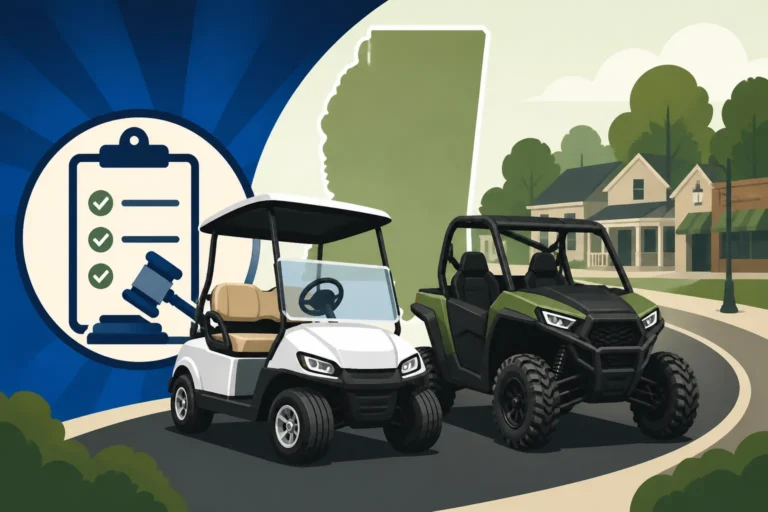
Many Mississippi towns, especially those with residential communities built around golf courses or coastal areas, have enacted local ordinances that allow golf carts and sometimes Low-Speed Vehicles (LSVs) on certain public streets. This often leads ATV and UTV owners to believe that if their local municipality has such an ordinance, it might extend to their machine. This is a significant misunderstanding. [Mississippi Towns That Refuse ATVs on Streets] and [Mississippi Golf Cart Statutes] clearly show a distinction.
These local ordinances are almost always written very specifically to address golf carts and, in some cases, LSVs, based on their design, maximum speed, and safety features. An ATV or a UTV, even one that looks somewhat similar to an LSV, does not meet the legal definition of a golf cart or LSV, and therefore is not covered by these ordinances. Trying to argue that your UTV is "just like a golf cart" to a local law enforcement officer will likely not get you very far. These local laws are precise, and if an ATV or UTV isn't explicitly named as permitted, it remains prohibited under state law, which generally supersedes local allowances for golf carts. Always [Checking If Your Town Has an Ordinance] is good, but remember what it covers.
Understanding the Penalties for Illegal Road Riding
Ignorance of the law is never an excuse, and while the lack of road access for ATVs and UTVs in Mississippi can be frustrating, the consequences of breaking that law can be more than just a slap on the wrist. Riders need to be fully aware of the potential fines, fees, and other problems they could face if caught operating their off-road machine on public roads.
Fines, Citations, and Court Costs
If you're caught riding your ATV or UTV on a public road in Mississippi, you can expect to receive a citation. The specific fine amount can vary by jurisdiction and the discretion of the enforcing officer, but typically, [Mississippi Fines for Road Riding] are set by state statute. While the base fine for this type of infraction might seem relatively low compared to, say, a reckless driving charge, it's important to remember that the total cost will often include court costs, administrative fees, and possibly even surcharges. These added expenses can quickly escalate a seemingly small fine into a more substantial financial burden.
Beyond the immediate financial impact, receiving a citation can also mean a mandatory court appearance, especially if you want to contest the ticket. This takes time away from work or other responsibilities. Furthermore, repeated offenses could lead to more severe penalties. The state's stance is unequivocal: these machines belong off public roads. So, while you might think it's worth the risk for a quick hop down the street, the financial and time costs can quickly outweigh any perceived convenience.
The Risk of Vehicle Impoundment and Recovery Fees
One of the most significant and often overlooked penalties for illegally operating an ATV or UTV on a public road is the risk of having your vehicle impounded. If a law enforcement officer pulls you over and determines you are in violation of the state's off-road vehicle laws, they have the authority to tow and impound your machine. This isn't just an inconvenience; it can be incredibly costly and time-consuming. You’ll have to pay towing fees to the impound lot, as well as daily storage fees for every day your machine sits there. These fees accumulate quickly.
To get your machine back, you'll generally have to pay all outstanding impound fees, provide proof of ownership, and potentially show that you've addressed the reason for the impoundment (i.e., you won't immediately try to ride it on the road again). Imagine your UTV, perhaps a heavily accessorized model from SuperATV, sitting in an impound lot for days or weeks, racking up hundreds of dollars in fees. It's a nightmare scenario that can easily double or triple the initial cost of the citation itself. This potential consequence alone should be a strong deterrent against any thought of road riding.
Insurance Implications After an Illegal Ride
Many ATV and UTV owners carry insurance, even though [Mississippi Has No Insurance Mandate] for off-road machines. This coverage typically protects against damage to your machine, liability in case you injure someone or damage property, and potentially theft. However, if you are involved in an accident while illegally operating your ATV or UTV on a public road, your insurance policy might not cover the damages. Most policies have exclusions for illegal activities or activities performed outside the intended use of the vehicle.
This means that if you crash your machine on a public road, even if you weren't at fault, your insurance company could deny your claim for repairs to your ATV or UTV. Even worse, if you cause damage to another vehicle or injure another person, your liability coverage might also be voided, leaving you personally responsible for potentially massive medical bills and property damage claims. This financial exposure is enormous and rarely worth the risk of a brief, illegal joyride. Always review your policy carefully and understand the limitations, especially concerning road use.
Where You Can Legally Ride Your ATV or UTV in Mississippi
So, if public roads are off-limits, where can you actually enjoy your ATV or UTV in Mississippi? The good news is that there are still plenty of fantastic opportunities for legal and exhilarating off-road adventures across the state. The key is knowing where to look and respecting the rules of the land.
Private Land and Landowner Permission
The most straightforward and widely available option for legal ATV and UTV riding in Mississippi is on private land with the owner's explicit permission. This includes your own property, a friend's farm, or leased hunting land. Many rural residents use their machines extensively on their own acreage for chores, hunting, or simply recreation. When riding on private land, ensure you have obtained clear, written permission from the landowner, especially if it's not your own property. This helps prevent any misunderstandings about trespass, which can lead to legal issues.
When riding on private land, you still have a responsibility to ride safely and ethically. Respect property boundaries, minimize environmental impact, and always ride within your skill level. Some hunting clubs or timber companies lease land for recreational use, and these leases often include specific stipulations about ATV and UTV use, such as designated trails or times when machines are allowed. Always adhere to these agreements. For those who own land, consider creating designated trails and areas for riding to maximize enjoyment and minimize impact.
Designated Trails in National Forests and Private Parks
Mississippi is home to some excellent designated riding areas, both within its national forests and through private mud parks. These are the places where ATVs and UTVs are meant to be ridden and where you can experience true off-road adventure without legal worries.
The Bienville National Forest and De Soto National Forest offer designated OHV (Off-Highway Vehicle) trails, such as the [Bethel OHV Trails in Mississippi]. These trails are specifically designed and maintained for off-road vehicle use, providing miles of challenging and scenic riding. You'll typically need to purchase a special pass for these areas, such as the [Mississippi Forest Pass Cost], and adhere to specific rules regarding machine width, spark arrestors, and operating hours. For example, [Bethel's 43 Miles Are Built for 50-Inch Machines], so wider side-by-sides need to confirm compatibility. These trails are an amazing resource for legitimate off-roading.
In addition to public lands, Mississippi also boasts several popular private mud parks and off-road recreation areas. Locations like [Red Creek Off-Road in Mississippi] or [Meridian OHV Park in Mississippi] provide controlled environments with diverse terrain, from mud pits to sandy trails and even motocross tracks. These parks often have amenities like camping, wash stations (which are essential after a day in the mud!), and sometimes even cabins for rent. They usually charge a day-use or weekend fee and require riders to sign waivers and adhere to park-specific rules, including age restrictions and helmet requirements. These private parks offer some of the best opportunities for group rides, events, and family-friendly off-roading.
| Riding Location Type | Legal Status | Typical Cost | Amenities | Key Restrictions |
|---|---|---|---|---|
| Private Land | Generally Legal (with permission) | Varies (e.g., lease fees, ownership) | None/Variable | Landowner rules, Trespass laws |
| National Forest OHV Trails | Legal (designated trails only) | Annual Pass ($60) / Day Use | Maps, Trailheads | Width limits (e.g., 50"), Spark arrestors |
| Private Mud Parks | Legal (within park boundaries) | Day/Weekend Fees | Camping, Wash Stations, Food Vendors | Park rules, Waivers, Age limits |
| Public Roads | ILLEGAL | (Fines/Impoundment) | N/A | State-wide ban |
Local Ordinances and Their Limited Scope
While state law broadly bans ATVs and UTVs from public roads, a very few, specific municipalities in Mississippi have enacted local ordinances that might create narrow exceptions within their city limits. However, these are exceedingly rare for ATVs and UTVs, and often confused with golf cart ordinances. For instance, while Hattiesburg might allow golf carts on certain streets, this does not extend to UTVs. These ordinances are typically highly restrictive, apply only to specific types of low-speed vehicles (not usually ATVs or UTVs), and only on certain designated streets, often with speed limits of 30 mph or less.
It is absolutely crucial to understand that if such an ordinance exists, it will be extremely specific and likely limited to a few city streets. It will not override state law for county roads or state highways, and it will not apply if your machine doesn't meet the precise definition outlined in the ordinance. Never assume; always verify with the local municipal clerk or police department. [Mississippi Towns That Name Machines They Bar] are more common than those that permit them. The general rule remains: assume ATVs and UTVs are banned from all public roads in Mississippi unless you have confirmed an incredibly specific, narrow, and rare local exception that directly names your type of machine and the specific streets. Even then, you’d need to carry the ordinance with you.
What Every Mississippi Rider Needs to Know
Navigating the rules and regulations for ATVs and UTVs in Mississippi can feel like a minefield. The state's strict stance on road use means riders need to be proactive about understanding the law, practicing safe off-road habits, and considering the broader impact of their actions. Being an informed and responsible rider is the best way to ensure you can continue to enjoy your machine for years to come.
Essential Gear and Safety Considerations for Off-Road Use
Since your ATV or UTV is primarily for off-road adventures in Mississippi, equipping yourself and your machine correctly for that environment is paramount. Safety isn't just about avoiding tickets; it's about protecting yourself and others from injury. Always wear appropriate safety gear, including a DOT-approved helmet (mandatory for riders under 16, but highly recommended for all), eye protection, gloves, long pants, and sturdy over-the-ankle boots. Investing in high-quality gear is just as important as investing in your machine.
For your machine, a few key accessories can significantly enhance safety and enjoyment on the trails. A winch is practically essential for many Mississippi mud and sand environments, helping you or a friend get unstuck. Skid plates protect vital undercarriage components from roots and rocks. Proper lighting, even for daytime riding, increases visibility, especially on dusty trails or in wooded areas. Aftermarket parts from reputable brands like SuperATV can offer significant upgrades to protection, suspension, and overall capability, making your off-road experience safer and more enjoyable. Always perform pre-ride checks on tires, brakes, fluid levels, and controls before hitting the trails.
Staying Informed About Local Regulations and Rule Changes
The regulatory landscape for off-road vehicles can sometimes shift, albeit slowly in Mississippi. It's crucial for riders to stay informed about any potential changes to state laws or the introduction of new local ordinances. While [Mississippi's Failed 2025 Road Access Bill] shows that legislative attempts to open roads have struggled, these efforts can and do re-emerge. Joining local ATV or UTV clubs, following relevant state agencies, or checking official government websites regularly can help you stay current.
Local rules, particularly concerning areas like Wildlife Management Areas (WMAs) or private parks, can also change. [Mississippi WMA Riding Rules] often specify designated roads or trails, seasonal closures, or rules regarding hunting and machine use. Before heading out, especially to a new area, always check the latest regulations for that specific location. A quick phone call to the land manager or park office can save you a lot of trouble and ensure you’re riding legally and safely.
Advocating for Future Road Access
While the current state of affairs for ATV and UTV road access in Mississippi is restrictive, it doesn't mean it will never change. Riders who are passionate about seeing greater road access can become advocates for legislative change. This involves understanding the current laws, educating elected officials about the responsible use of off-road vehicles, and highlighting economic benefits or practical needs (like farmer access) that could be addressed with thoughtful legislation.
Collecting data on rider safety, demonstrating responsible riding practices, and working together as a community are all vital steps. It takes time, persistence, and a unified voice to influence policy. By being responsible owners and riders who respect the land and existing laws, the off-road community in Mississippi can build credibility and potentially pave the way for future discussions about limited, safe road access, similar to what has been achieved in some neighboring states. Until then, remember that the trails and private lands are where your off-road machine truly shines.
Disclaimer
This article is for general informational purposes only and does not constitute professional advice. Laws, prices and regulations vary by location and change over time. Consult a qualified professional for guidance on your specific situation.