Mississippi Accident Reporting for an ATV Crash
It's an unsettling thought, isn't it? One minute you're enjoying the thrill of the trail or getting work done on your property, and the next, something goes wrong. An ATV or UTV crash, whether it's a minor fender-bender with a tree or a more serious incident involving another rider, can leave you shaken and unsure of what to do next. Navigating the aftermath, especially when it comes to reporting, can feel like a tangled mess of confusion. This guide is here to untangle that mess, walking you through the critical steps of Mississippi accident reporting for an ATV or UTV crash, whether it happens on public land, private property, or somewhere in between.
Understanding What Constitutes an "Accident" for Reporting Purposes in Mississippi
When you hear "accident reporting," your mind might immediately jump to car crashes on the highway, with flashing lights and official forms. But off-road vehicles operate in a slightly different legal landscape in Mississippi, which can make the concept of "reporting" a bit murky. It's not always as clear-cut as a two-car collision on a paved road. However, just because specific ATV road rules are minimal, it doesn't mean you're off the hook for reporting when incidents occur. The general principles of injury and property damage still very much apply.
When a Deputy Needs to Be Called Public vs. Private Land
The biggest factor dictating whether law enforcement needs to be called after an ATV or UTV crash in Mississippi is where the incident took place. If your crash happens on a public road or public land—think a designated trail in the De Soto National Forest, a county road you might have been illegally crossing, or even a local park—then calling law enforcement, such as the local sheriff's department or Mississippi Highway Patrol, is almost always the right move. Public property incidents often fall under broader public safety and traffic laws, even if specific ATV statutes are scarce. A deputy or trooper will assess the scene, take statements, and create an official accident report, which can be invaluable for insurance purposes or if there are injuries. It's critical to remember that even if you're just [Crossing a Highway] or riding on a [Mississippi County Road], you're still interacting with public infrastructure, and any incident there is likely to draw official attention.
However, if your crash occurs entirely on private property—your own land, a friend's hunting camp, or a private mud park like Red Creek Off-Road—the immediate need for law enforcement might not be as pressing. In these scenarios, the primary concern is typically safety, followed by communicating with the landowner. If no one is seriously injured and there's no major damage to public infrastructure, a police report might not be strictly necessary from a legal standpoint. That said, if there are significant injuries or substantial property damage that goes beyond your own machine, contacting emergency services (911) is always paramount, regardless of where you are. They can dispatch medical assistance and, if necessary, law enforcement to ensure everyone's safety and document the situation.
Property Damage and Injury Thresholds
Even when you're off the pavement and in the backwoods, the severity of the incident often dictates the necessity of a formal report. In Mississippi, like many places, there are generally thresholds for when an accident must be reported, even for motor vehicles not on public roads. While specific ATV statutes for reporting are sparse, general accident reporting principles for motor vehicles often guide the process.
Consider a scenario where you're riding a powerful UTV, perhaps equipped with a robust SuperATV roll cage, and you misjudge a turn on your friend's hunting lease. You flip the machine, thankfully suffering only minor scrapes thanks to your helmet and safety gear. However, the UTV lands on and takes out a section of a new fence your friend just installed, costing several hundred dollars to repair. Even though this happened on private land, the property damage to someone else's property—your friend's fence—makes documenting the incident important. An insurance company, if involved, will want a detailed account, and a police report, even if just for information, can lend credibility.
Now, imagine a more serious situation: a head-on collision between two ATVs at a private mud park, resulting in one rider needing an ambulance for a broken leg. In this case, even though it's private property, the serious injury immediately triggers the need for emergency services (911). Law enforcement would likely be dispatched to the scene to document the injuries and circumstances, potentially leading to an official report. This report then becomes a critical piece of evidence for medical insurance claims, potential liability claims, and any subsequent legal actions. If you're wondering about [Mississippi WMA Riding Rules], remember that accidents on these public lands would typically fall under the 'public land' scenario, requiring law enforcement notification.
Steps to Take Immediately After an ATV Crash Off-Road or On
The moments immediately following an ATV or UTV crash can be chaotic and disorienting. It's easy to panic, but having a clear, actionable plan can make all the difference in ensuring safety, gathering necessary information, and protecting your interests. This isn't just about adhering to some arbitrary rule; it's about practical steps that can save lives, prevent further harm, and smooth out the often-bumpy road of insurance claims and potential legal issues.
Prioritizing Safety and Assessing the Scene
Your absolute first priority after any crash, regardless of how minor it seems, is the safety of yourself and anyone else involved. First, take a deep breath. Try to remain calm and assess the immediate situation. Are you injured? Is anyone else hurt? Check for severe bleeding, head injuries, or any signs that someone needs immediate medical attention. If you or others are able, try to move to a safer location, away from the immediate hazard of the crashed machine or any ongoing traffic, even if it's just other riders on a trail. If the machine is blocking a trail or causing a hazard, and it's safe to do so, try to get it to the side.
If someone is seriously injured, call 911 immediately. Provide your exact location if possible, or describe landmarks that can help emergency services find you, especially if you're deep in a [Mississippi National Forest Riding Explained]. Even if you don't have cell service, try to send someone for help or use a satellite messenger device if you carry one. It's always a good idea to have a [First Aid on a Long Southern Loop] kit with you, well-stocked for any minor injuries that can be treated on site. Don't move anyone with a suspected neck or back injury unless absolutely necessary for their immediate safety.
Documenting the Incident Thoroughly
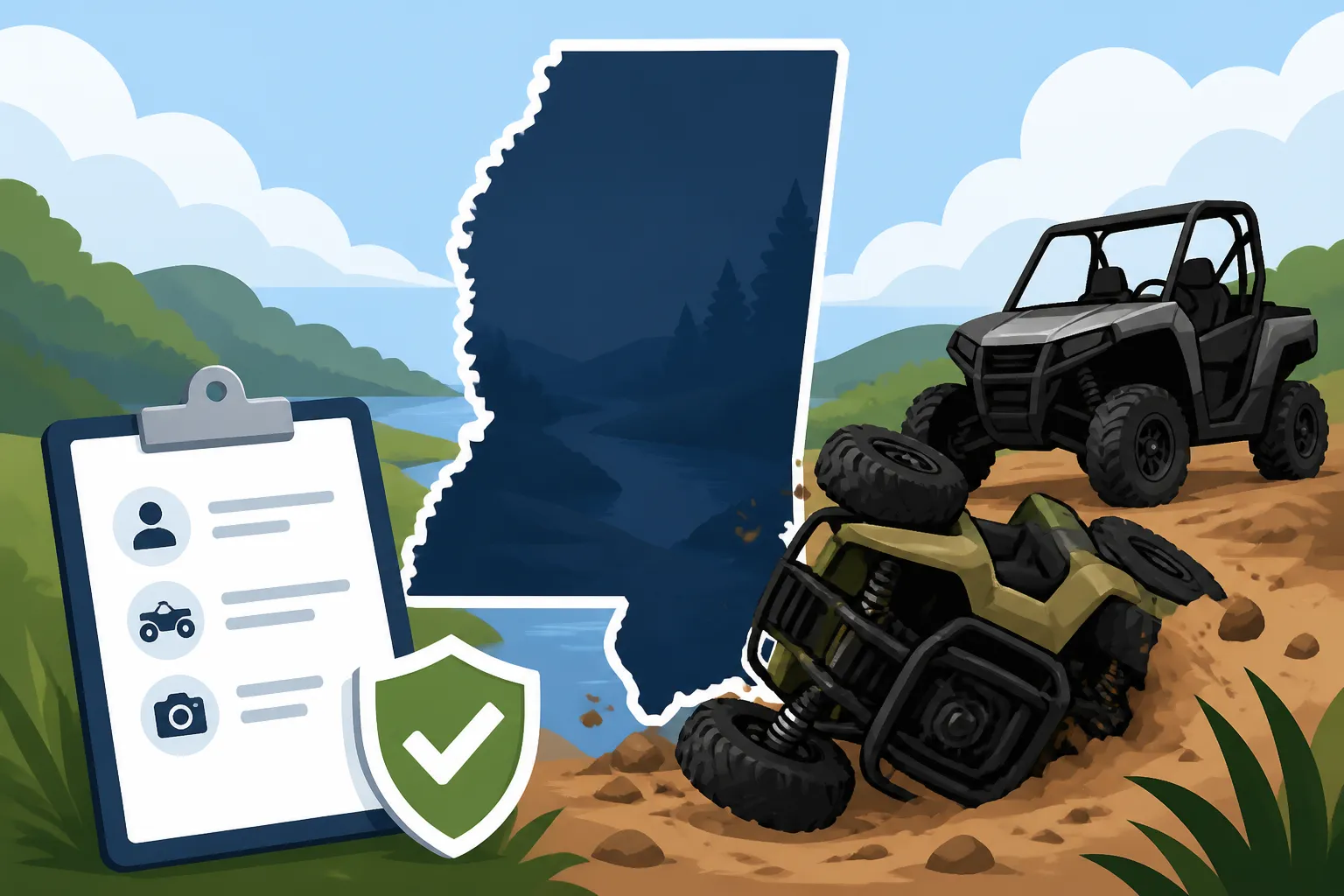
Once immediate safety is addressed, the next critical step is documentation. This is where your smartphone becomes an invaluable tool. Start taking photos and videos of everything. Capture the position of your ATV or UTV, the surrounding terrain, any damage to your machine, any damage to another machine, and any damage to property like fences, trees, or signs. Take photos from multiple angles, wide shots, and close-ups. Don't forget skid marks, debris, or anything else that tells the story of what happened.
If another rider or vehicle was involved, exchange contact information. Get their full name, phone number, address, and insurance information if they have it. If there are any witnesses, get their names and phone numbers too. Ask if they saw what happened and if they'd be willing to provide a statement later. Make a note of the date, time, and specific location of the crash. Write down everything you remember about the incident while it's fresh in your mind. This includes how it happened, who was involved, and any relevant details about the weather or trail conditions. This meticulous record-keeping will be crucial for any insurance claims or legal proceedings that might follow. Quality parts from a brand like SuperATV are often designed for durability, and clear photos of how they performed (or didn't) in an accident can even provide useful feedback for manufacturers, not to mention supporting your claim.
Notifying Authorities and Landowners
The decision of who to notify can be a gray area with off-road vehicle crashes in Mississippi, but a good rule of thumb is: when in doubt, notify.
-
Public Land Incidents: If the crash occurred on public property (a WMA, national forest, or a public road, even if you were just crossing it), and there are injuries or significant property damage, call the local sheriff's office or state patrol. They will investigate and create an official report. Even if there are no injuries, but substantial property damage to public land (like damaging a trail marker or a bridge), it's courteous and often legally required to notify the appropriate authorities. Remember, riding illegally on a public road could also result in citations for [Mississippi Penalties for an Illegal Road Ride].
-
Private Property Incidents: If the crash happened on private land, your first call, after ensuring safety, should be to the landowner. This is especially true if you were on someone else's property, whether it's a private hunting lease, a farm, or a designated mud park. They need to be aware of what happened, especially if there's damage to their property or if they need to report it to their own insurance. Many private parks, such as some [Mississippi Private Mud Parks], have their own accident reporting procedures or require you to sign a waiver that outlines what to do in case of an incident. Adhering to these rules is crucial for maintaining your access and avoiding further complications. If you were on private land without permission, you could also face charges under [Mississippi Trespass Law for Riders].
By taking these steps, you not only address the immediate consequences of the crash but also lay the groundwork for a smoother resolution, whatever comes next.
Dealing with Insurance Claims and Legalities After an Off-Road Crash
The dust has settled, the initial shock has passed, and you've documented everything you can. Now comes the often-dreaded part: dealing with insurance and potential legal ramifications. It's a layer of complexity that many off-road enthusiasts might not think about until they're in the thick of it, but understanding these elements beforehand can significantly reduce stress and ensure you're making informed decisions.
Why ATV Insurance Matters Even When Not Required
One of the biggest misconceptions in Mississippi is that because ATV insurance isn't mandated by state law for off-road use, it's unnecessary. Nothing could be further from the truth. While you won't get a ticket for not having it, a crash is precisely when you realize the immense value of a good policy. Think about it: if you cause an accident on a public trail and injure another rider, or if you accidentally damage a landowner's property, who is going to pay for the medical bills or the repairs? Out of pocket, those costs can quickly skyrocket into thousands, even tens of thousands of dollars.
This is why many experienced riders choose to carry comprehensive coverage. [Why Mississippi Riders Still Buy ATV Insurance] becomes clear when you consider scenarios like:
- Liability Coverage: This protects you if you're found at fault for an accident that injures another person or damages their property. It covers their medical bills, lost wages, and property repair.
- Medical Payments Coverage: This can help cover your own medical expenses, regardless of who was at fault, a huge relief if you're looking at hospital visits and recovery time.
- Collision Coverage: This pays for damages to your ATV or UTV if you hit something or another vehicle, or if it rolls over.
- Comprehensive Coverage: This protects against non-collision incidents like theft, fire, vandalism, or damage from natural disasters. Imagine your machine, perhaps tricked out with SuperATV upgrades, getting stolen from your shed; comprehensive coverage would be your savior.
Without insurance, you are personally responsible for all these costs. It's a gamble many riders wish they hadn't taken after an unfortunate incident.
Navigating the Claims Process
If you have insurance, contacting your provider should be one of your top priorities once the immediate aftermath of the crash is handled. Most policies require you to report an accident within a specific timeframe, often as soon as reasonably possible. Delaying could potentially jeopardize your claim.
When you call your insurance company, they will ask for all the details you meticulously collected: date, time, location, description of what happened, names and contact information of other parties involved and witnesses, and photos/videos of the damage. Be honest and factual in your description, sticking to what you know for certain. Avoid speculating or admitting fault. The insurance company will then assign an adjuster to your claim who will investigate further, review your documentation, and determine coverage. This process can sometimes take several weeks, especially if there are disputes about fault or extensive damage to assess.
If the other party involved in the crash is uninsured or unwilling to cooperate, your own uninsured/underinsured motorist coverage (if you have it) might come into play. Otherwise, pursuing legal action against them personally might be your only recourse, which can be a lengthy and expensive process.
Understanding Potential Legal Ramifications
An ATV or UTV crash, particularly one involving injuries or significant property damage, can sometimes lead to legal consequences beyond insurance claims.
- Citations and Fines: If your crash occurred on public roads or land where ATVs are prohibited, or if reckless driving contributed to the accident, law enforcement might issue citations. These could range from trespassing to reckless endangerment. For instance, if you were riding illegally on a public street and crashed, you could face [Mississippi Penalties for an Illegal Road Ride]. Similarly, if alcohol or drugs were involved, you could be charged under [Mississippi DUI Law and Off-Road Machines].
- Civil Liability: If you are found to be at fault for the accident, you could be sued by the injured party for their medical expenses, lost wages, pain and suffering, and property damage. Your liability insurance would typically defend you and cover these costs up to your policy limits. Without it, you would be personally on the hook.
- Landowner Disputes: If the accident occurred on private property, especially a hunting lease or timberland, you might face issues with the landowner regarding property damage or liability for injuries sustained on their land. Always understand the terms of access to private land, and if you're on someone else's property, ensure you have [Written Permission From a Southern Landowner] to avoid additional legal issues.
It’s always wise to consult with an attorney if you’re facing serious injuries, significant property damage, or potential legal charges after a crash. They can help you understand your rights and navigate the complex legal landscape.
Preventing Future Off-Road Accidents and Enhancing Safety
While understanding what to do after an ATV or UTV crash is crucial, the best strategy is always prevention. Off-road riding is an inherently adventurous activity, but many accidents can be avoided with proper preparation, maintenance, and a responsible approach. Taking proactive steps not only keeps you and your riding buddies safe but also protects your investment in your machine, ensuring more years of enjoyable trail riding.
Regular Machine Maintenance and Safety Checks
A well-maintained machine is a safer machine. Just like you wouldn't drive your car on bald tires, you shouldn't take your ATV or UTV out without ensuring it's in top working order. Before every ride, especially a long one or one into challenging terrain, perform a basic pre-ride inspection.
- Tires: Check tire pressure and inspect for any cuts, punctures, or excessive wear. Proper tire pressure affects handling, traction, and suspension.
- Brakes: Test both front and rear brakes to ensure they are responsive and effective. Check brake fluid levels.
- Fluids: Verify oil, coolant, and hydraulic fluid levels.
- Lights: Ensure all lights, including headlights, taillights, and brake lights, are working. This is especially important if you plan on [Mississippi Rules for Riding After Dark].
- Throttle: Confirm the throttle operates smoothly and returns to the idle position freely.
- Chain/Belt: Inspect the drive chain or belt for proper tension and wear.
- Steering: Check for any looseness or excessive play in the steering.
- Suspension: Look for leaks or damage to shocks.
- Frame and Fasteners: Visually inspect the frame for cracks and ensure all nuts and bolts are tight.
Investing in high-quality, durable parts and accessories can also contribute significantly to safety. For example, upgrading to reinforced A-arms, robust tie rods, or a heavy-duty winch from a reputable brand like SuperATV can enhance your machine's resilience and capability, helping you navigate tough spots safely or recover from sticky situations without turning into a bigger problem.
Rider Training and Awareness
Skill and experience are huge assets in off-road riding, but they can always be honed. Formal rider training, especially for new or younger riders, provides invaluable safety techniques and builds confidence. In Mississippi, while not universally mandated for adults, safety courses are strongly encouraged, especially for youth. [Mississippi Safety Course Certificates] are often required for riders under a certain age on public lands, like those in national forests, and teach fundamental skills like proper braking, turning, hill climbing, and emergency maneuvers. This knowledge helps riders react instinctively and correctly when unexpected situations arise.
Beyond formal training, continuous awareness is key:
- Know Your Limits: Don't push yourself or your machine beyond your skill level or its capabilities. Gradually increase the difficulty of trails and maneuvers.
- Understand the Terrain: Pay attention to changing trail conditions—mud, rocks, roots, water crossings. Adapt your riding style accordingly.
- Weather Conditions: Be mindful of how rain, humidity, or extreme temperatures can affect both the trail and your physical endurance.
- Stay Hydrated and Rested: Fatigued riders make mistakes. Ensure you're well-rested and hydrated, especially during long rides in Mississippi's heat.
And of course, always wear appropriate safety gear, including a DOT-compliant helmet (which is required for riders under 16 in Mississippi, as per [Mississippi ATV Helmet Law Age]), eye protection, gloves, long pants, a long-sleeved shirt, and over-the-ankle boots.
Group Riding Etiquette and Planning
Riding with others is often more fun and significantly safer than riding alone. However, group riding requires its own set of rules and etiquette to prevent accidents.
- Ride with a Buddy: Never ride alone, especially in remote areas. If something happens, you'll have someone to help or go for help.
- Communicate: Establish hand signals or use helmet communicators to stay in touch, especially regarding hazards, turns, or stops.
- Maintain Distance: Keep a safe following distance from the rider in front of you. Dust, sudden stops, or thrown debris can be dangerous.
- Staggered Riding: When riding on wider trails, a staggered formation allows each rider to have more space and a better view of the trail ahead.
- Ride Sweepers: Designate a lead rider who knows the trail and a "sweeper" who rides at the back to ensure no one gets left behind or is in trouble.
- Pre-Plan Routes: Before heading out, discuss the route, potential hazards, and rendezvous points. Let someone not on the ride know your plans and estimated return time.
- Carry Recovery Gear: A well-equipped group might carry a shovel, tow straps, and a winch (a SuperATV winch can be a lifesaver for getting unstuck) to handle common trailside emergencies.
By prioritizing these preventative measures, riders can significantly reduce the likelihood of experiencing a crash and ensure that their off-road adventures remain safe and enjoyable for years to come.
Disclaimer
This article is for general informational purposes only and does not constitute professional advice. Laws, prices and regulations vary by location and change over time. Consult a qualified professional for guidance on your specific situation.