Mississippi DUI Law and Off-Road Machines
Mississippi's backroads, dense forests, and sprawling private lands offer incredible opportunities for ATV and UTV enthusiasts to let loose and enjoy the thrill of off-road riding. But a common, and unfortunately dangerous, misconception is that the rules of the road, especially those concerning driving under the influence (DUI), somehow don't apply once you leave the pavement. This couldn't be further from the truth, and a momentary lapse in judgment can lead to severe legal and financial consequences. This guide will clarify Mississippi's DUI laws as they pertain to ATVs and UTVs, the serious penalties involved, and how to protect yourself and your riding passion.
What Mississippi's DUI Law Says About Off-Road Machines
It's a common refrain among off-road riders, "I'm not on a public road, so it doesn't count!" This line of thinking is not only misguided but can land you in a world of trouble. Mississippi's DUI statutes are broad, encompassing a wide range of "motor vehicles" and "places" that extend far beyond your typical asphalt highway. The legal framework is designed to prevent impaired operation of any motorized vehicle, regardless of whether it has a license plate or is primarily designed for dirt and mud.
The Broad Reach of Mississippi's DUI Statute
When you dig into Mississippi's legal code, you'll find that the definition of a "motor vehicle" for DUI purposes is quite encompassing. It doesn't discriminate between a sedan, a farm tractor, or a powerful side-by-side. If it has an engine and can move under its own power, it's generally considered a motor vehicle. This means your quad or UTV, which brings so much joy on the trails, is also subject to the same strict DUI laws that apply to your daily driver. This isn't unique to Mississippi; many states take a similar stance because the danger of impaired operation isn't confined to paved roads. The risk of injury to yourself, your passengers, or others on the trail remains high, perhaps even higher, given the unpredictable terrain.
The spirit of the law is to ensure safety, and operating a machine like an ATV or UTV while impaired significantly compromises that safety. Imagine trying to navigate a challenging mud bog, a rocky climb, or even a simple turn on a winding trail after consuming alcohol. Your reaction time, judgment, and coordination are all diminished, turning a fun ride into a potential disaster. The law recognizes this inherent danger, no matter the vehicle or the environment. It's not about punishing off-roaders; it's about protecting everyone. Understanding [Mississippi ATV and ROV Legal Definitions] helps clarify what machines fall under these rules, but for DUI purposes, the law is far-reaching.
"Public Property" vs. "Private Land" Nuances
Here's where it gets a little tricky, and often where riders get caught off guard. While you might assume "private land" is a free-for-all, the reality is far more complex. Mississippi's DUI laws typically apply on "public roads and highways," but the definition of "public" can sometimes extend to areas that feel private. This can include designated trails within state or national forests, wildlife management areas (WMAs), and even certain private lands where public access is permitted. For example, if you're riding in a national forest area, or on roads within a [Mississippi WMA Riding Rules], those are absolutely considered public for the purposes of DUI enforcement. Remember, [Mississippi Law Flatly Bars ATVs From Public Roads], but that doesn't mean those non-public roads are free of DUI enforcement.
What about truly private property, like your own backyard or a friend's hunting lease? Generally, law enforcement needs a reason to be on private property, such as a complaint or an observable violation. However, if they are called to the scene of an accident on private land, or if you're operating your machine in a way that creates a public nuisance or trespasses, they can and will investigate. Even on private land, if you're driving recklessly or dangerously while impaired, you can face consequences. Furthermore, many [Mississippi Private Mud Parks] have their own strict rules against impaired riding, and while they might not call the sheriff for a DUI, they can certainly kick you out and ban you for life. So, while the immediate legal hammer might be less likely on your own secluded acreage, the underlying danger, and the potential for civil liability, remains very real.
Implied Consent for All Drivers
Mississippi has an "implied consent" law, which means that by operating a motor vehicle, you are considered to have given consent to a chemical test of your blood, breath, or urine if arrested for DUI. This applies whether you're in a car or on an ATV. If you refuse to take a test when requested by law enforcement, you can face immediate penalties, including suspension of your driver's license (yes, even if you were on an ATV and even if you don't drive a car).
Refusal to submit to a test can be used against you in court, often making your situation worse. It's a common tactic people try, thinking it will prevent evidence, but it usually just adds another layer of legal trouble. Understanding that this law extends to your off-road machine is crucial. Just because you're out on the trails doesn't mean you're exempt from the rules that govern implied consent, proving once again that your fun machine is treated with the same seriousness as any other vehicle under the law. Always consult the [Mississippi Sheriff's Office About Road Riding] or local authorities if you have specific questions about enforcement in your area.
The Consequences of an Off-Road DUI in Mississippi
A DUI conviction, regardless of whether it happened on an ATV, UTV, or car, carries a heavy burden. It's not just a slap on the wrist; it can profoundly impact your life, your finances, and your ability to enjoy the very pastime that led to the charge. Many riders are shocked to learn that an off-road DUI can have the same, or nearly the same, severe penalties as a DUI on a paved highway.
Legal Repercussions Beyond Losing Your Driving License
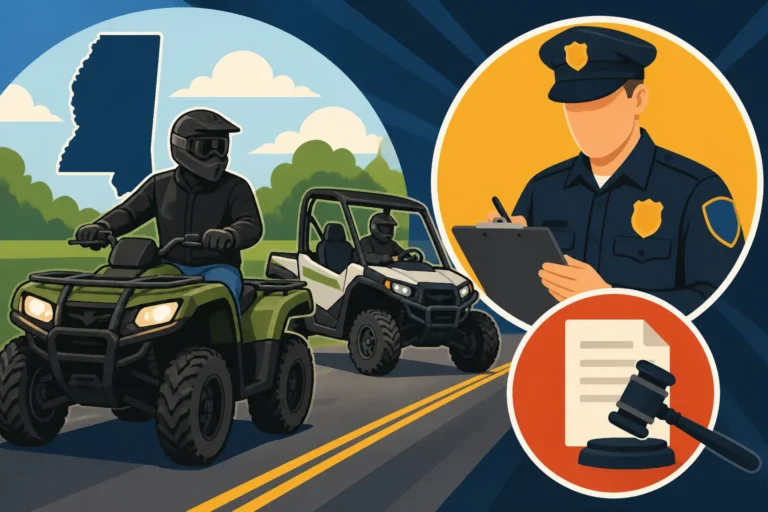
A DUI conviction in Mississippi carries a range of legal penalties that escalate with subsequent offenses. For a first offense, you could face significant fines, jail time (even if suspended), and mandatory participation in an alcohol safety education program. But here's the kicker for off-roaders: your regular driver's license will be suspended. It doesn't matter that you weren't in your truck; the state sees it as impaired operation of a motor vehicle. This is a huge frustration for many, who find themselves unable to drive to work or run errands because of an incident that happened on a dirt trail.
Beyond license suspension, there are other serious possibilities. In some cases, your ATV or UTV could even be impounded or subject to forfeiture. Imagine losing your prized machine because of a poor decision. Furthermore, a DUI conviction becomes part of your criminal record, which can impact future employment opportunities, housing applications, and even your ability to travel internationally. It's a black mark that follows you, far beyond the initial fines and jail time. Don't underestimate the power of these consequences. Even an [Mississippi Accident Reporting for an ATV Crash] on private land could lead to such scrutiny if alcohol is involved.
Impact on Your Ability to Ride and Own Off-Road Machines
A DUI conviction can cast a long shadow over your off-road future. While the state might not explicitly ban you from owning an ATV, the indirect impacts can be severe. First, good luck getting affordable insurance. Many insurance companies view DUI convictions as a major red flag, leading to skyrocketing premiums or even outright refusal to cover you. This is why [Why Mississippi Riders Still Buy ATV Insurance] is so important, even when it's not mandated. You might find yourself having to pay exorbitant rates for even basic liability coverage, making the hobby much more expensive.
Secondly, many organized riding events, private parks, and even hunting clubs have rules against individuals with DUI convictions or those known for impaired riding. You might find yourself barred from your favorite mud park or unable to join a riding group because of your past actions. The off-road community often values safety and responsibility, and a DUI goes against that ethos. It can also complicate financing a new machine; lenders might see you as a higher risk. The dream of upgrading your rig with some awesome SuperATV components might become a distant one if you're seen as a liability.
Financial and Personal Costs
The financial burden of an off-road DUI can be staggering. Beyond the initial fines, you'll likely face court costs, attorney fees (which can be thousands of dollars), ignition interlock device installation and monthly fees (if required for your license reinstatement), and increased insurance premiums for years. These costs quickly add up, easily reaching into the tens of thousands of dollars. It's a bill that far outweighs the cost of any good time you thought you were having.
Then there are the personal costs. The stress of court dates, the embarrassment, the potential strain on relationships, and the loss of personal freedom due to license suspension are all significant. It can be a profoundly disruptive and upsetting experience. The impact on your reputation within your riding community and your personal life should not be underestimated. This isn't just a monetary hit; it's a deeply personal one that can take years to recover from.
| Off-Road DUI Consequences in Mississippi | First Offense (General) | Second Offense (Within 5 years) | Third Offense (Within 5 years) |
|---|---|---|---|
| Fines | $250 – $1,000 | $600 – $1,500 | $2,000 – $5,000 |
| Jail Time | Up to 48 hours (min 10) | 5 days – 1 year | 1 year – 5 years |
| License Suspension | 90 days – 1 year | 2 years | 5 years |
| Ignition Interlock Device | Possible | Required | Required |
| Alcohol Safety Program | Mandatory | Mandatory | Mandatory |
| Vehicle Forfeiture/Impoundment | Possible | Possible | Likely |
| Criminal Record | Yes | Yes | Yes |
Note: Penalties can vary based on specific circumstances, blood alcohol content, and judicial discretion. This table provides general guidance.
Protecting Yourself and Your Riding Privileges
Given the serious consequences, the best approach is always prevention. Protecting yourself and your ability to enjoy off-road riding responsibly is paramount. It involves making smart choices before you ever hit the trails and understanding the rules of engagement, whether on public or private land.
The "No Alcohol" Rule on Any Machine
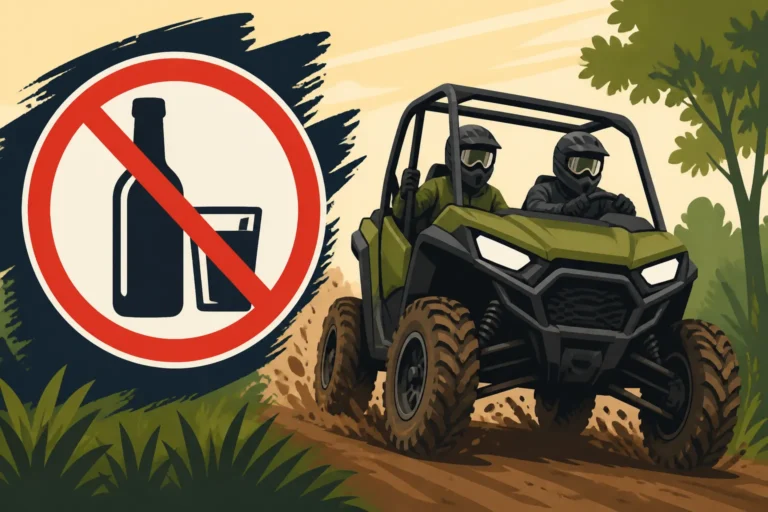
This is the simplest, most straightforward advice: if you're going to operate an ATV or UTV, don't consume alcohol. Period. Even a single drink can impair your judgment, and the challenging terrain of off-road riding demands your full attention and quick reflexes. Unlike a car on a predictable paved road, off-road conditions are constantly changing. A sudden rut, an unexpected obstacle, or a steep incline requires uncompromised focus.
Think about it this way: you invest in good safety gear, maybe some upgraded suspension from SuperATV for better handling, and durable tires for traction. All these efforts are to make your ride safer and more enjoyable. Why would you then intentionally compromise the most critical safety system – your own mind and body – with alcohol? Make a pact with yourself and your riding buddies: machines and alcohol don't mix. Save the celebrations for after the ride, when everyone is safely off their machines and done for the day. This is particularly true if you're riding in areas like [Mississippi WMA Riding Rules], where game wardens are often present and highly aware of safety issues.
Designated Drivers and Safe Riding Practices
If your group plans to have alcohol during an outing, ensure there's a clear separation between drinking and riding. This might mean having designated drivers for the off-road machines, just like you would for a car. Or, even better, designate an "end time" for riding and then switch to social activities where alcohol might be present. This completely eliminates the temptation to ride after you've had a few.
Safe riding practices extend beyond avoiding alcohol. Always wear appropriate safety gear, including a helmet (especially for young riders, as per [Mississippi Helmet Law for Riders Under 16]), goggles, gloves, and sturdy boots. Ride within your skill level and the capabilities of your machine. Never ride alone, and always let someone know your riding plan and expected return time. Regular maintenance of your machine, ensuring brakes, tires, and steering are in top condition, is also a vital part of safe riding. A well-maintained machine, perhaps with quality parts you've sourced from SuperATV, is a safer machine.
Understanding Local Ordinances and Property Rules
While state law sets the baseline, local ordinances and private property rules can add additional layers of complexity. Many cities and counties in Mississippi have specific rules regarding ATV and UTV use, often strictly prohibiting them on public roads, as detailed in [Mississippi Bans ATVs on Public Roads]. Even if you're not on a "road" per se, understanding what local law enforcement (like the [Mississippi Sheriff's Office About Road Riding]) considers public access is key.
For private land, especially popular spots like [Mississippi Private Mud Parks] or hunting leases, the property owner or organizer often has explicit rules about alcohol consumption and riding. These rules are usually designed to ensure the safety of all patrons and protect their property from damage. Violating these rules can lead to immediate expulsion, fines, or even a permanent ban. Always check the rules of the specific area you're riding in. When you pay to enter a park, you're agreeing to their terms, and those terms almost universally frown upon impaired riding. Ignorance of these rules is not an excuse, so do your homework before you load up and head out.
Common Misconceptions and Local Nuances
The world of off-road riding, especially in a state like Mississippi with its unique landscape and less comprehensive ATV-specific statutes, often breeds a lot of assumptions. Many of these assumptions, particularly concerning DUI, are simply incorrect and can lead riders down a path of regret. Let's clear up some of the most common misunderstandings.
The "It's Just a Field" Fallacy
One of the most persistent myths is that because you're "just in a field," or on a remote logging road far from civilization, you're somehow invisible to the law. This couldn't be further from the truth. In Mississippi, game wardens, county deputies, and even state troopers routinely patrol rural and remote areas, including private timberlands (often with landowner permission), WMA lands, and even seemingly isolated fields. They are specifically trained to identify and address violations, including impaired operation of vehicles.
An accident on private land, especially one involving injury or property damage (like hitting a gate or fence, which could also fall under [Mississippi Trespass Law for Riders]), can quickly bring law enforcement to your location. Furthermore, if your riding activity leads to a [Mississippi Noise Complaints About Quads] from a nearby property owner, that's another invitation for an officer to investigate. The idea that "no one will ever know" is a dangerous fantasy. If you're operating a motorized vehicle, regardless of where, you are still accountable for your actions, and officers are equipped to enforce DUI laws in these settings just as they would on a main road.
Different Rules for Different Machines? No.
Some riders mistakenly believe that because an ATV or UTV is "different" from a car, it has different DUI rules. This is generally not the case in Mississippi. The legal definitions of "motor vehicle" for DUI purposes are broad enough to encompass virtually any self-propelled machine. It doesn't matter if you're on a four-wheeler, a side-by-side, a dirt bike, or even an off-road golf cart – if you're impaired, you're liable.
The law focuses on the act of operating a motorized vehicle while impaired, not on the specific type of vehicle. While there are distinct [Mississippi ATV and ROV Legal Definitions] for titling and specific road use (or lack thereof), these distinctions rarely offer an escape from DUI charges. The bottom line is, if you're driving anything with an engine, the expectation is that you do so soberly and responsibly. There are no special loopholes for your weekend toy. Even if you've got your machine decked out with all the best upgrades from SuperATV, it doesn't grant you immunity from the law.
The Role of Property Owners and Event Organizers
While state and local law enforcement handles criminal charges, private property owners and event organizers have their own set of powers. If you're riding at a private mud park, a sanctioned trail ride, or even on a friend's land, the owner or event organizer can set and enforce rules that are often stricter than state law. This includes zero-tolerance policies for alcohol while riding.
If you are found to be riding under the influence at a private park, the park management can immediately eject you, ban you from future entry, and even call law enforcement if they believe a crime has been committed. These are businesses and individuals who have a vested interest in maintaining safety and a good reputation. They don't want to deal with [Mississippi Accident Reporting for an ATV Crash] due to impaired riders, nor do they want the liability. So, even if you managed to avoid a state DUI charge on private land (a big "if"), you could still lose your riding spot and face other civil repercussions. It's a reminder that responsible riding is a multi-faceted commitment, respected by legal authorities and private entities alike.
Disclaimer
This article is for general informational purposes only and does not constitute professional advice. Laws, prices and regulations vary by location and change over time. Consult a qualified professional for guidance on your specific situation.