Mississippi Low-Speed Vehicle Statutes
It’s a common frustration many off-road enthusiasts share: you love your ATV or UTV, and you just wish you could legally zip it down the county road for a quick trip to the store or a neighbor’s house. In Mississippi, the rules for ATVs and UTVs on public roads are notoriously strict, leading many folks to wonder if there’s some loophole or way to "make" their machine street legal. This often brings up the topic of Low-Speed Vehicles, or LSVs. But here’s the crucial thing: an LSV is a distinct category of vehicle, not just an ATV or UTV with a few extra bells and whistles bolted on. This guide will walk you through exactly what Mississippi’s Low-Speed Vehicle statutes entail, clarify the critical differences, and help you understand what you can and can’t do on the roads.
Understanding Low-Speed Vehicles LSVs in Mississippi
When you start looking into getting a vehicle on the road, the terminology can feel like a maze. In Mississippi, the legal definitions are very precise, and mixing them up can lead to headaches, fines, and even safety hazards. Let's start by getting a clear picture of what an LSV actually is in the eyes of the law.
What Defines an LSV?
A Low-Speed Vehicle (LSV) is a motor vehicle, typically an electric vehicle, that is designed for operation at speeds between 20 and 25 miles per hour. It’s important to note that these aren't just golf carts that someone decided to make a bit faster. True LSVs are manufactured to meet federal safety standards for low-speed vehicles, which include specific requirements for their construction and features. Think of them as purpose-built, small, neighborhood electric vehicles. They often have an enclosed cabin, proper seating, and are clearly intended for short-distance travel on paved surfaces.
Unlike your robust, off-road ATV or side-by-side, an LSV isn't built for tearing through mud pits or climbing steep, rocky trails. Its design is focused on road-worthiness within a very specific speed range. They're built from the ground up to be safe at modest speeds on public streets, which is a stark contrast to the rugged, high-performance design of most off-road machines.
Key Differences from ATVs and UTVs
This is where many riders get tripped up, and it’s a vital distinction to grasp. The biggest difference between an LSV and an ATV or UTV comes down to their fundamental design, intended use, and the legal framework that governs them. An ATV, by definition, is an "all-terrain vehicle" designed for off-road use, characterized by its straddle seating and handlebars. A UTV, or utility terrain vehicle (sometimes called a side-by-side or ROV), offers side-by-side seating, a steering wheel, and is also primarily designed for off-road work or recreation.
Neither ATVs nor UTVs are manufactured to meet federal motor vehicle safety standards for on-road use, even at low speeds. While some UTVs can be quite large and have features like turn signals or seatbelts, these are often for convenience or safety off-road, or to comply with rules in other states. In Mississippi, they don't magically transform an off-road vehicle into a road-legal one. [Mississippi ATV and ROV Legal Definitions] clearly outline what these machines are and where they belong. Trying to modify an ATV or UTV to meet LSV standards is usually a costly, if not impossible, endeavor because the core chassis and design are simply not compatible with on-road certifications.
Why the Distinction Matters
Understanding the difference isn't just about legal semantics; it has real-world consequences. If you operate an ATV or UTV on a public road in Mississippi, believing it's an LSV because you added some lights, you're likely breaking the law. This can result in fines, your vehicle being impounded, and potential liability issues if an accident occurs. Insurance companies also draw a clear line here. An ATV insurance policy, even if it has some road coverage for crossing, will not treat your machine as a street-legal LSV. If you’re involved in an incident, your coverage might be denied, leaving you on the hook for damages.
Moreover, the safety implications are significant. LSVs are built with specific braking, steering, and crash-test standards for low-speed road use. ATVs and UTVs, while incredibly capable off-road, handle differently on pavement, have different tire types, and often lack the same stability or protective structures for road collisions. Don't put yourself or others at risk by blurring these critical lines. Knowing what you truly own and what it's legally classified as can save you a lot of trouble and ensure your safety.
Mississippi's LSV Equipment Requirements
Operating any vehicle on public roads comes with a set of mandatory equipment requirements designed to ensure safety for everyone. For Low-Speed Vehicles in Mississippi, these standards are specific and mirror many of the features you’d expect on a traditional car, albeit adapted for lower speeds. It's not enough for an LSV to just go slow; it has to be visible, controllable, and equipped to signal its intentions.
Essential Safety Features
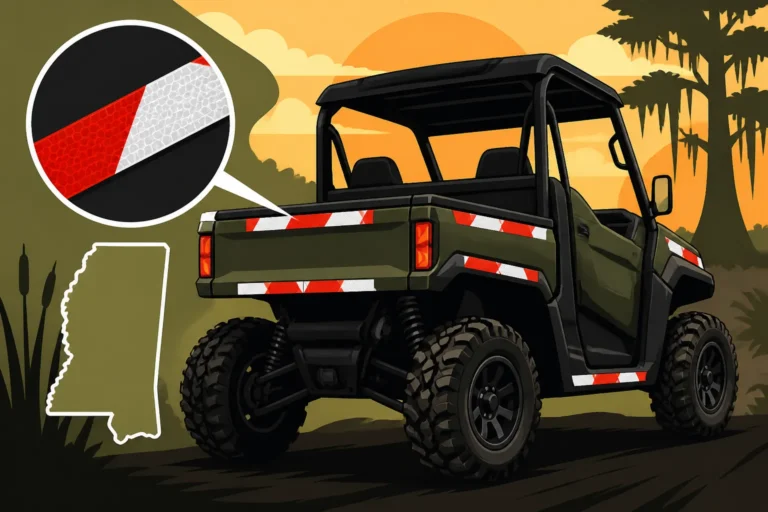
Any vehicle legally classified as an LSV in Mississippi must come equipped with a specific array of safety features. These aren't optional add-ons; they are fundamental requirements for roadworthiness. You're looking at things like headlamps that properly illuminate the path ahead, taillamps and brake lights that clearly signal your presence and deceleration, and functional turn signal lamps for both front and rear. Reflective devices are also a must, enhancing visibility, especially during dawn, dusk, or adverse weather conditions.
Beyond lighting, LSVs require at least one rearview mirror, giving the driver a clear view of traffic behind them. Seatbelts are mandatory for all seating positions, ensuring occupants are secured in case of a sudden stop or impact. A windshield is also required to protect occupants from road debris and wind, along with a parking brake to keep the vehicle stationary when parked, preventing accidental rollaways. While companies like SuperATV offer fantastic accessories to enhance off-road machines, it’s critical to remember that adding these types of parts to an ATV or UTV does not magically transform it into a federally compliant LSV. A true LSV comes from the manufacturer with these features installed and certified for on-road use.
Speed and Braking System Standards
The very definition of an LSV is tied to its speed capabilities. In Mississippi, an LSV must be capable of a minimum speed of 20 miles per hour, but it cannot exceed a maximum speed of 25 miles per hour. This speed range is what differentiates it from a regular golf cart (which typically tops out below 20 mph) and from full-speed automobiles. The vehicle’s manufacturer must certify that it meets this speed criterion.
Equally important are the braking systems. An LSV's brakes must be robust enough to bring the vehicle to a complete stop within a specified distance, typically 20 feet from a speed of 20 mph, without veering. This ensures that even at its modest top speed, the driver has adequate control to avoid hazards. These braking performance standards are part of the federal requirements that LSV manufacturers must adhere to, providing a layer of safety that simply isn't present in off-road vehicles.
VIN and Certification
For an LSV to be legally operated on Mississippi roads, it must possess a proper Vehicle Identification Number (VIN) and be certified by its manufacturer to meet all applicable federal motor vehicle safety standards (FMVSS) for low-speed vehicles. This certification is crucial. It’s what distinguishes a legitimate, road-legal LSV from a golf cart or a modified off-road vehicle. The VIN allows the vehicle to be tracked, registered, and titled, just like any other road-going automobile.
When purchasing an LSV, you should expect to receive a Manufacturer's Certificate of Origin (MCO) or a clear title indicating its classification as a low-speed vehicle. This documentation is essential for getting it properly registered with the state. Without this official certification and VIN, any claims of "street legality" for a low-speed vehicle are likely unfounded and will cause issues when you try to apply for a title and registration. This process is very different from [Mississippi Does Not Register ATVs], which emphasizes the strict off-road nature of those machines.
Where LSVs Can Be Operated in Mississippi
While LSVs are designed for road use, they aren't free to roam everywhere a standard car can. Their unique design and speed limitations mean specific rules govern where they can legally be driven in Mississippi. Understanding these restrictions is paramount for safe and lawful operation, especially when coming from the perspective of an ATV or UTV rider who faces much stricter road bans.
Road Types and Speed Limits
In Mississippi, Low-Speed Vehicles are generally permitted on public roads where the posted speed limit is 30 miles per hour or less. This rule is designed to ensure that LSVs, with their maximum speed of 25 mph, can safely integrate with other traffic without impeding flow or creating dangerous speed differentials. You'll typically find them operating comfortably in residential neighborhoods, certain community areas, or on smaller, local streets.
However, this isn't a blanket permission for every road under 30 mph. Local municipalities have the authority to impose further restrictions or even ban LSV use on specific roads within their jurisdiction, even if the state law would otherwise permit it. This means that while state statutes provide the general framework, the specific rules for your town or county could be more restrictive. It's always a good idea to check local ordinances before you plan your route.
Crossing Higher Speed Roads
There will inevitably be times when an LSV needs to cross a road with a posted speed limit higher than 30 mph to get from one permissible street to another. Mississippi law generally allows LSVs to cross these higher-speed roads. However, such crossings must be done as directly and safely as possible. This isn't an invitation to drive on a 45 mph highway, but rather to traverse it at an intersection to continue your journey on an appropriate low-speed street.
When making these crossings, extreme caution is necessary. Drivers of LSVs must yield to all other traffic on the higher-speed road and ensure they have ample time and space to cross safely. The limited acceleration and top speed of an LSV mean that these crossings require extra vigilance and judgment to prevent accidents. This is a very different scenario from [Mississippi Rules for Crossing a Highway] on an ATV, which is generally prohibited outright.
Local Control and Ordinances
This is perhaps one of the most critical aspects of LSV operation in Mississippi. While state law sets the baseline, individual cities, towns, and counties have significant authority to regulate LSVs within their borders. Many municipalities have passed their own ordinances that dictate where LSVs can and cannot be driven, and some may even have additional equipment requirements beyond state law. For example, some towns might explicitly list the types of streets where LSVs are permitted, or they might restrict their use to certain hours of the day.
It is absolutely essential for any LSV owner to research and understand their local ordinances. What's legal in one town might be forbidden just a few miles down the road. You might find that [Hattiesburg's Cart Ordinance in Mississippi] allows LSVs on certain streets, while [Ocean Springs' Cart Rules in Mississippi] might be entirely different, perhaps even listing specific brands or types of low-speed vehicles that are allowed or prohibited. Always contact your local city clerk's office or check their official website for the most current information. Relying solely on state law without checking local rules is a common mistake that can lead to unexpected tickets and frustrations.
Titling, Registration, and Insurance for LSVs in Mississippi
Bringing any vehicle onto public roads in Mississippi requires proper documentation, and Low-Speed Vehicles are no exception. Unlike the less formal status of off-road machines, LSVs are treated much like other road-legal vehicles when it comes to state bureaucracy. This means they need to be properly titled, registered, and typically insured.
The Titling and Registration Process
If you've purchased a new LSV from a dealer in Mississippi, they will usually handle the initial title application paperwork for you. For a used LSV, or one brought in from out-of-state, you'll need to apply for a Mississippi title yourself. The process is very similar to titling a car. You'll need your Manufacturer's Certificate of Origin (MCO) for a new vehicle, or the previous owner's properly assigned title for a used one, along with a bill of sale and proof of identity. You’ll take these documents to your county tax collector's office.
The tax collector will process your application, and you'll pay a state title fee, which is a modest amount, separate from any sales tax. You'll also pay any applicable sales tax, which for vehicles like LSVs in Mississippi is 7 percent. This process is a clear departure from ATVs, where [Mississippi ATV Titling Starts July 2025] is a relatively new concept, and before that, most ATVs weren't titled at all. LSVs, as road-going vehicles, have always fallen under the standard titling procedures. After your title is processed, you'll receive a license plate for your LSV, which is another key differentiator from an ATV, as [Mississippi Issues No License Plate] for off-road machines.
Insurance Requirements
Because Low-Speed Vehicles are allowed on public roads, they typically fall under the same insurance mandates as other motor vehicles. This means you will generally need to carry at least the state-mandated minimum liability insurance coverage. This coverage protects you financially if you are at fault in an accident and cause injury or property damage to others.
It's always a good idea to discuss your LSV insurance needs with an insurance agent to ensure you have adequate coverage, not just the minimum. Consider comprehensive and collision coverage to protect your own investment. While [Mississippi Has No Insurance Mandate] for off-road vehicles like ATVs used exclusively on private land, the moment a vehicle is authorized for public road use, insurance becomes a critical and often legally required component of ownership. Don't risk operating an LSV on public streets without proper insurance; the financial consequences of an accident can be devastating.
Dealer Purchases vs. Private Sales
When acquiring an LSV, whether from a dealer or a private seller, the paperwork and procedures differ slightly. Buying from a licensed dealer often simplifies the process significantly. Dealers are typically well-versed in the requirements and will prepare all the necessary forms, including the MCO (for new vehicles) or title transfer, bill of sale, and sales tax documentation. They'll also often submit the title application on your behalf, making it a smoother transaction. You should expect to pay a [Mississippi Dealer Documentary Fees], which cover their costs for handling this paperwork.
If you're buying an LSV from a private seller, the responsibility for ensuring all paperwork is correct falls squarely on your shoulders. You'll need to make sure the seller provides a properly assigned title (not just a bill of sale, though a bill of sale is also good to have), and that any liens on the title have been released. You'll then take these documents to the county tax collector to apply for a new title in your name and register the vehicle. Always be diligent when buying privately, and verify the VIN on the vehicle matches the VIN on the title before completing the transaction. This helps avoid potential issues with stolen vehicles or fraudulent sales.
Common Misconceptions and Practical Advice
The desire to ride off-road machines on public roads is strong, but it's often fueled by misconceptions. Clarifying these common misunderstandings is crucial for anyone navigating the world of ATVs, UTVs, and LSVs in Mississippi. Let's tackle some of the biggest myths and offer practical advice to keep you on the right side of the law and safe.
"Making" an ATV/UTV Street Legal
This is perhaps the most persistent myth in the off-road community: the idea that you can simply add a few accessories to your ATV or UTV and magically make it "street legal" in Mississippi. I've heard countless stories of folks spending a fortune on turn signals, horns, mirrors, and even windshields for their side-by-sides, only to find out they still can't legally ride on public roads. Let me be clear: in Mississippi, you cannot "make" an ATV or UTV street legal by adding aftermarket parts. The state law flatly [Mississippi Bans ATVs on Public Roads] and defines them as off-road vehicles.
The fundamental issue is not the accessories you add, but the vehicle's original manufacturer certification and design. ATVs and UTVs are not built to federal motor vehicle safety standards for road use, even at low speeds. Their chassis, suspension, tires, and braking systems are optimized for off-road terrain, not asphalt. An LSV, by contrast, is manufactured to meet these specific federal standards for low-speed road operation. Adding a blinker kit from, say, SuperATV, is great for safety and signaling on private property or designated trails, but it does not change the legal classification of your machine. A sheriff's deputy isn't going to care if your UTV has a horn; they'll care that it's an off-road vehicle on a public road, which is illegal.
The Role of Aftermarket Parts
Aftermarket parts, from companies like SuperATV, play a huge role in enhancing the performance, safety, and utility of ATVs and UTVs. They offer everything from lift kits and heavy-duty axles to lights, mirrors, and enclosures. These products are fantastic for customizing your off-road experience, whether you're tackling extreme mud, needing more ground clearance for farm work, or simply wanting better visibility on your hunting lease.
However, it's vital to understand their specific purpose. These parts are designed to improve your off-road machine as an off-road machine. They do not confer street-legal status in Mississippi. For example, adding a full windshield to your side-by-side might make your ride more comfortable in cold weather or protect you from branches, but it doesn't transform your UTV into an LSV that can legally drive on the street. Use aftermarket parts to make your off-road vehicle better at what it's designed for, not to try and circumvent state laws regarding road access.
Researching Local Rules
While Mississippi state law is very clear about the prohibition of ATVs and UTVs on public roads, and sets the general framework for LSVs, local ordinances are incredibly important for LSV owners. Many towns and cities in Mississippi have taken it upon themselves to create specific rules regarding golf carts and LSVs. What might be allowed in one community could be prohibited in another.
Before you make any assumptions or hit the road in your LSV, take the time to conduct thorough research. Start by checking your city's official website for municipal codes and ordinances. If you can't find what you're looking for online, call your local city clerk's office or even the local police department (for non-emergency questions) to inquire about the specific rules for LSVs in your area. Asking your county supervisor about [Mississippi Rules for Riding a County Road] might give you some insight, but it's the municipal level that often has the most granular rules. Ignoring local ordinances can lead to unexpected fines and a lot of inconvenience. A little homework upfront can save you a lot of trouble down the line.
Here's a quick comparison of key aspects between these vehicle types in Mississippi:
| Feature | ATV (All-Terrain Vehicle) | UTV (Utility Terrain Vehicle) | LSV (Low-Speed Vehicle) |
|---|---|---|---|
| Primary Intended Use | Off-road recreation, utility tasks, hunting | Off-road recreation, utility tasks, work, hunting | On-road transportation (short distances, low speed) |
| Seating Arrangement | Straddle seat | Side-by-side seating, steering wheel | Side-by-side seating, steering wheel, sometimes enclosed |
| Road Legality (MS) | Generally not street legal (except specific crossings) | Generally not street legal (except specific crossings) | Generally is street legal on roads ≤ 30 mph |
| Min/Max Speed | Varies greatly (often 30+ mph) | Varies greatly (often 30+ mph) | Min 20 mph, Max 25 mph |
| Manufacturer Cert. | Not certified for federal motor vehicle safety standards | Not certified for federal motor vehicle safety standards | Certified to federal low-speed vehicle safety standards |
| Titling (MS) | [Mississippi ATV Titling Starts July 2025] (voluntary) | [Titling a Side-by-Side in Mississippi] (voluntary after 2025) | Required (similar to cars) |
| Registration/Plate | No registration or license plate | No registration or license plate | Required, issued license plate |
| Insurance (MS) | Not mandated for off-road use, but recommended | Not mandated for off-road use, but recommended | Required (similar to cars for liability) |
| Required Equipment | Basic lights/spark arrestor for trails, varies | Basic lights/spark arrestor for trails, varies | Headlights, taillights, brake lights, turn signals, mirrors, seatbelts, windshield, parking brake |
Disclaimer
This article is for general informational purposes only and does not constitute professional advice. Laws, prices and regulations vary by location and change over time. Consult a qualified professional for guidance on your specific situation.