Mississippi Local Ordinances Are the Only Path
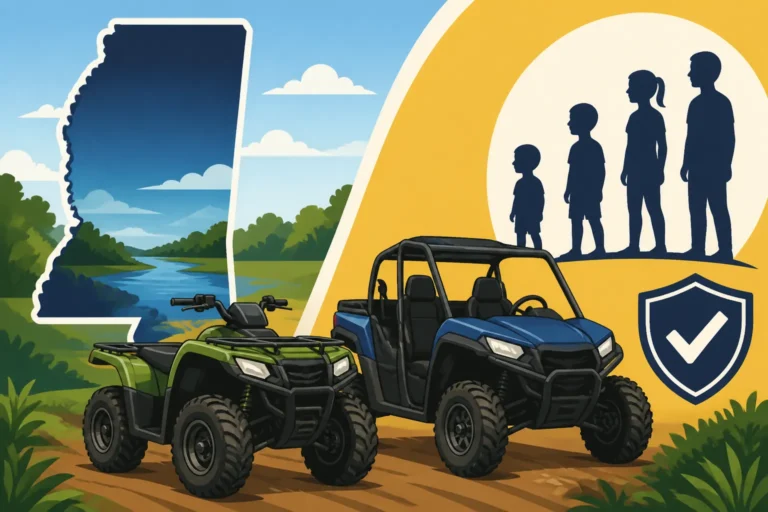
Oh, the age-old question that frustrates so many Mississippi ATV and UTV riders: "Can I just hop on the road for a minute?" It’s a common dream for many of us – to connect trails, pop over to the gas station, or simply get from one hunting camp entrance to another without having to load up the machine on a trailer. But if you’ve tried to navigate the laws, you know it’s a murky, often disappointing, mess. This guide is going to clear up the confusion and explain why, in Mississippi, if you want to legally ride your ATV or UTV on a public road, local ordinances are truly your only path.
The Hard Truth: Mississippi State Law Says No to Public Road Riding
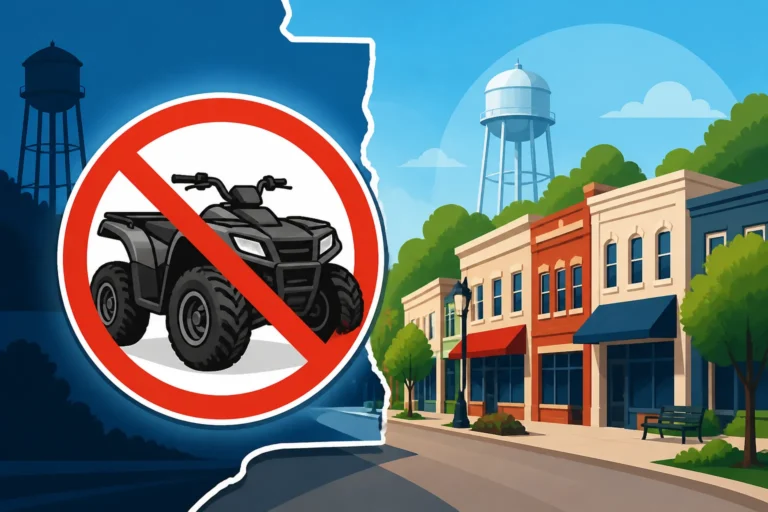
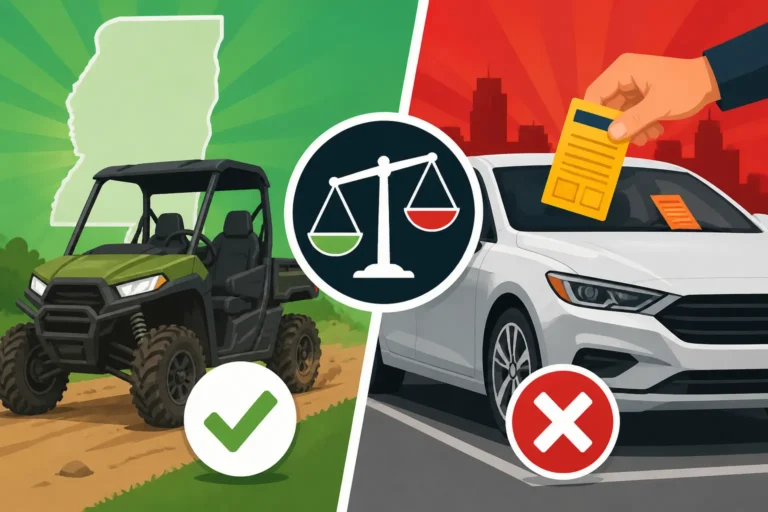
Let's get straight to it. If you've ever tried to make sense of Mississippi's statewide laws regarding ATVs and UTVs on public roads, you've likely come away feeling bewildered and frustrated. The overarching truth, the one that catches so many riders off guard, is that the state of Mississippi, at a fundamental level, says a resounding "no" to operating these machines on its public roadways. It doesn't matter if it's a quiet backroad, a bustling city street, or a state highway; the general rule from the state's perspective is: stay off.
Why the Statewide Ban is So Frustrating for Riders
This blanket ban creates a genuine headache for folks who just want to enjoy their machines responsibly. Think about it: you've got this powerful, versatile vehicle, perfect for navigating various terrains, and yet you're essentially tethered to private land or designated off-road parks. The convenience factor alone makes this rule a major point of contention. Imagine you're out riding trails, and you just need to cross a short stretch of road to get to another trail system, or maybe you're out at the hunting camp and the nearest store for ice is just a mile down the county road. Instead of a quick, easy trip, you're faced with the cumbersome task of loading your machine onto a trailer, driving a short distance, unloading, and then repeating the process in reverse. It completely interrupts the flow of your day and often feels utterly unnecessary for a quick jaunt.
Adding to the frustration is the fact that many riders move to Mississippi or have friends in neighboring states where the rules are entirely different. Alabama, for instance, has different provisions for ATVs on county roads, and Arkansas has specific classifications that might allow certain machines on public roads under certain conditions. This regional disparity can lead to a lot of confusion, as riders might assume what's legal in one state applies in another. They bring their machines, their expectations, and their riding habits, only to hit a brick wall when they realize Mississippi's state law is far more restrictive. It’s disheartening to feel like your machine, which is perfectly capable of safely traversing a short paved stretch, is being unfairly restricted, especially when you see similar vehicles on roads elsewhere.
What the Mississippi Code Actually Says (and Doesn't Say)
When you dig into the actual Mississippi Code, specifically [Mississippi Code Section 63-31-3], you'll find that it's surprisingly brief and, to many riders, frustratingly devoid of nuance. The law defines off-road vehicles (which includes ATVs and UTVs) and then explicitly states that they cannot be operated on public streets, roads, or highways. It doesn't offer a long list of exceptions, carve-outs for specific uses, or detailed conditions under which you might be able to get a pass. It's a very straightforward prohibition.
What the code doesn't say is almost as important as what it does. It doesn't provide for state-level registration that would allow road use. It doesn't differentiate between a massive side-by-side with full turn signals and a small youth quad. It simply says no. This lack of detail means there's no statewide pathway to make your machine "street legal" in the way a car or motorcycle is. You can bolt on all the turn signals, mirrors, and horns you want – and many companies like SuperATV offer excellent kits for these accessories – but under state law, those additions don't magically grant you permission to ride on public roads. This stark reality means that any hope for road access must come from a completely different level of government: your local city or county. The provisions under [Mississippi ATV Road Rules Under 63-31-3] are clear: the state has drawn a line.
Understanding Local Ordinances: Your City or County's Power
Given the strict statewide ban on ATVs and UTVs on public roads, it's easy to feel like there's no hope. However, there's a glimmer of possibility, a silver lining that many riders don't fully understand: the power of local government. While the state says a broad "no," your specific city or county can, under certain circumstances, create its own rules that override or create exceptions to the state law within its own geographical boundaries. This distinction is absolutely crucial for any rider hoping to get some street time.
How a Local Ordinance Can Create Exceptions
The key here is that cities and counties in Mississippi have the authority to pass ordinances that govern activity within their municipal or county limits. When it comes to ATVs and UTVs, this means that a local governing body – your city council, board of aldermen, or county board of supervisors – can choose to adopt a specific ordinance that allows for the operation of certain types of off-road vehicles on designated public roads. This isn't just a suggestion; it's a legally binding local law that, when properly enacted, provides the only loophole in the statewide prohibition. Without such a local ordinance, you are squarely under the thumb of state law, and that means no public road riding.
This local autonomy is why you might hear conflicting information from different towns or counties. What's allowed in Hattiesburg might be strictly forbidden in Gulfport, or what's fine on a gravel road in rural Pike County might get you a ticket in downtown McComb. Each local government gets to decide for itself. This fragmented approach can be frustrating, as it means you need to do your homework every time you venture into a new area. But for those dedicated to getting their machines on certain roads, it means there's a path forward, even if it's a local, often narrow, one.
The Specifics: What an Ordinance Might Allow
When a local government does decide to pass an ordinance, it often comes with very specific parameters about what is and isn't allowed. It's rarely a free-for-all. Often, these ordinances start with specific attention to golf carts and Low-Speed Vehicles (LSVs), which are generally easier for municipalities to regulate for road use due to their inherent design for slower speeds and residential areas. [Hattiesburg's Cart Ordinance in Mississippi] is a prime example of a city taking the initiative to allow certain types of vehicles on its streets, typically focusing on golf carts and sometimes LSVs, with explicit rules about where and how they can be operated.
However, some progressive communities might extend these allowances to include UTVs (side-by-sides) and, less commonly, traditional ATVs. When they do, the ordinances will detail:
- Vehicle Type: Is it golf carts only? Does it include UTVs? Are ATVs explicitly excluded or included? [Ocean Springs' Cart Rules in Mississippi], for instance, might name specific types of machines they permit or bar.
- Road Type: Are only residential streets allowed? Can you ride on county roads? What about collector roads? Often, ordinances specify [Streets Posted at Thirty or Lower] miles per hour, making it clear that machines are not allowed on faster, higher-traffic routes.
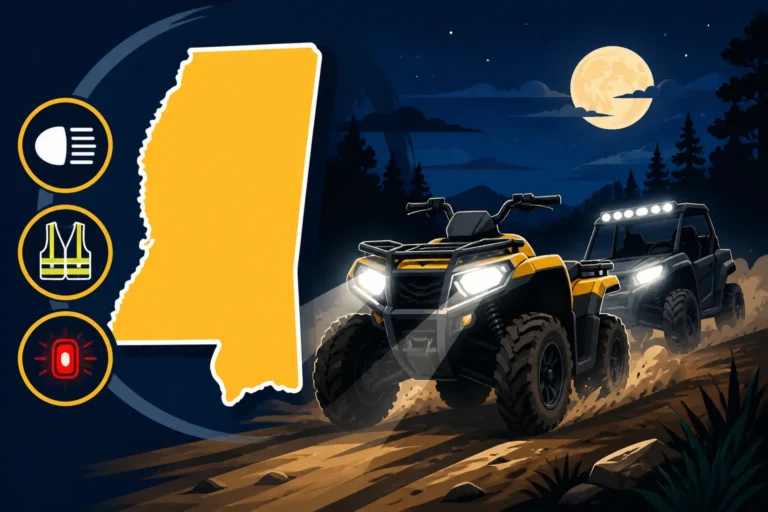
- Safety Equipment: Even if not required by state law, an ordinance will almost certainly mandate things like headlights, taillights, turn signals, mirrors, and sometimes even windshields. These are often things riders will purchase from aftermarket providers like SuperATV to ensure their machine is compliant.
- Time of Day: Some ordinances restrict riding to daylight hours only, or between specific times.
- Operator Requirements: Driver's license, age restrictions, and sometimes even proof of insurance might be required by the local ordinance, even though the state doesn't mandate ATV insurance.
Understanding these specifics is paramount. Just because a town allows "off-road vehicles" doesn't mean all off-road vehicles are allowed, nor does it mean they're allowed everywhere within that town. You truly need to read the fine print of each individual ordinance.
What to Look For in a Local Ordinance (and How to Find One)
So, you've heard that a neighboring town or your own community might have an ordinance allowing some road riding. That's fantastic news! But before you load up your machine and hit the pavement, you absolutely must do your due diligence. Relying on hearsay or a quick glance at a social media post could land you in serious trouble. Understanding what makes a robust, rider-friendly ordinance and knowing exactly where to find that crucial information is your next big step.
Key Elements of a Rider-Friendly Ordinance
A well-crafted, rider-friendly local ordinance will be clear, comprehensive, and address several key areas. When you're reviewing a potential ordinance, or if you're thinking about advocating for one in your own community, here are the essential elements you'll want to see explicitly covered:
- Permitted Machine Types: The ordinance should clearly list which types of off-road vehicles are allowed. Does it just cover golf carts, or does it extend to UTVs (side-by-sides)? Are traditional ATVs included, or are they specifically excluded? The language here is critical; don't assume. For instance, if you have a powerful side-by-side like those equipped with SuperATV accessories for enhanced performance, you need to ensure the ordinance's definition of "off-road vehicle" or "UTV" actually covers your machine.
- Designated Roadways: Where, precisely, can you ride? Most ordinances will specify certain streets or roads. This might be all municipal streets posted under a certain speed limit (like [Streets Posted at Thirty or Lower]), or it might be confined to specific zones like residential areas. Highways, state routes, and often even main thoroughfares are typically off-limits.
- Operating Restrictions: Look for details on speed limits (often mirroring the posted speed limit of the street or a maximum lower than that), hours of operation (daylight hours are common), and whether crossing certain roads (like state highways) is permitted.
- Required Safety Equipment: Even if your machine is not factory street-legal, an ordinance will often mandate specific equipment additions. This commonly includes headlights, taillights, brake lights, turn signals, a horn, and mirrors. Many riders turn to aftermarket providers like SuperATV for these essential conversion parts to meet local requirements. Some ordinances might even require windshields or seatbelts for all occupants.
- Operator Requirements: Will you need a valid driver's license? Is there an age minimum for operators? Sometimes, local ordinances will even require proof of insurance, even though Mississippi state law doesn't mandate ATV insurance.
- Permitting/Registration: While Mississippi does not register ATVs statewide, some local ordinances might require a local permit or registration sticker specific to that city or county to operate on their roads. This helps local law enforcement track compliant vehicles.
The more detailed and explicit an ordinance is on these points, the better. Vague language can lead to confusion and potential legal issues. This is why [Mississippi Local Ordinances Are the Only Path] is so important—it underlines that this local document is your legal roadmap.
Researching Your Local Rules: Where to Start
Finding these local ordinances requires a bit of detective work, but it's a critical step before you ever consider riding on a public road. Here's where to start:
- City Clerk or County Chancery Clerk's Office: This is often the most reliable source. The city clerk (for municipal ordinances) or the county chancery clerk (for county-wide ordinances) is the official custodian of all local laws. You can call or visit their office and specifically ask about ordinances pertaining to "off-road vehicles," "ATVs," "UTVs," "golf carts," or "Low-Speed Vehicles" on public roads. They might be able to print out the relevant sections or direct you to where they are published.
- Local Police or Sheriff's Department (Non-Emergency Line): While they enforce the laws, they are generally not the creators of them. However, a friendly call to their non-emergency line can often yield valuable information. They can usually tell you if an ordinance exists, what its general provisions are, and where to find the official document. Be specific in your questions.
- City/County Websites: Many local governments publish their codes and ordinances online. Search your city's or county's official website for sections related to "vehicles," "traffic," or "motorized recreation." Look for a "code of ordinances" or "municipal code" section. This can be a treasure trove, but sometimes these online databases are not perfectly up-to-date, so always cross-reference if possible. For comprehensive searches, refer to [Mississippi Ordinance Lookups Before You Ride].
- Local Public Meetings: Attending city council or county supervisor meetings can be insightful. While you might not find a direct answer to your question, you'll learn about local priorities and have an opportunity to ask during public comment periods.
The absolute importance of written confirmation cannot be overstated. Don't rely on "I heard that…" or "my buddy told me…". Get a copy of the actual ordinance. Read it thoroughly. If you have any doubts, contact the city or county attorney's office for clarification. Knowing the exact wording of the law is your best defense and your surest way to ride legally and safely.
The Limitations and Pitfalls of Local Road Access
While local ordinances offer a glimmer of hope for Mississippi riders seeking to use their ATVs or UTVs on public roads, it’s critical to understand that this "path" is often a narrow, winding one fraught with limitations. It’s not a blank check to ride anywhere, and misunderstanding these boundaries can lead to frustrating and expensive consequences.
Why You Can't Just Assume "Street Legal" Anywhere
Here's where many riders get tripped up: a local ordinance, by its very nature, only applies to that specific jurisdiction. If the City of Hattiesburg passes an ordinance allowing UTVs on certain streets, that allowance stops precisely at the Hattiesburg city limits. The moment your tire crosses into an unincorporated county area or another municipality, you are immediately back under the jurisdiction of state law, which, as we've discussed, broadly prohibits ATVs and UTVs on public roads. This means your "street legal" status is incredibly localized and temporary.
This fragmented legal landscape creates immense frustration for riders. Imagine you're riding in a town with an ordinance, enjoying the ability to access local businesses or connect to trails, and then you hit a city limit sign. Suddenly, you're faced with an immediate decision: turn back, or risk a ticket. This patchwork of rules makes it impossible to simply say your ATV or UTV is "street legal" in Mississippi; it's only "street legal in specific areas, under specific conditions." This is why knowing the [Mississippi Rules for Riding a County Road] and [Mississippi Rules for Riding a City Street] is so vital, and why they differ so much. You might have added turn signals and a horn from SuperATV, but those accessories only make you compliant within an ordinance, not universally legal statewide.
Common Restrictions and Enforcement
Even within an area that has a permitting ordinance, you'll almost certainly encounter a host of restrictions designed to prioritize safety and minimize conflict with traditional vehicle traffic. These are not just suggestions; they are enforceable laws that local law enforcement will be looking for.
- Speed Limits: Most ordinances will cap the speed for ATVs/UTVs, often at 25 or 30 MPH, and usually prohibit them on any road with a higher posted speed limit. This means no zipping down main arteries.
- Time of Day Restrictions: Many ordinances restrict road operation to daylight hours only. Riding after dark, even with headlights, might be prohibited.
- No Highways or Major Road Crossings: State highways, interstates, and often even significant four-lane local roads are almost universally off-limits. Some ordinances might allow for direct crossings of certain roads, but never riding on them for any distance.
- Helmet Laws: While state law mandates helmets for riders under 16, a local ordinance might extend this to all ATV/UTV riders on public roads, regardless of age.
- Passenger Rules: Just like the state's off-road rules, many ordinances will stipulate that passengers are only allowed if the machine is designed by the manufacturer for multiple occupants and has appropriate seating and safety restraints.
- Insurance: Even though the state doesn't require ATV insurance, a local ordinance might mandate liability coverage for road use. It's always a smart idea to carry [Mississippi Why Riders Still Buy ATV Insurance] anyway, regardless of road rules.
Local law enforcement, from city police to county deputies, are the primary enforcers of these ordinances. They are well aware of the rules (or lack thereof) in their specific jurisdictions. If you're stopped and found to be in violation, the consequences can range from a warning to a significant fine. [Mississippi Fines for Road Riding] can vary, but a citation can quickly put a damper on your day and your wallet. You could face additional court costs, and in some severe or repeated cases, your machine could even be impounded. Understanding these [Mississippi Penalties for an Illegal Road Ride] is crucial for avoiding costly mistakes. Simply having some aftermarket parts from SuperATV, like a full street-legal kit, isn't enough; you must be operating within the specific confines of the local law.
Advocating for Change: When Local Rules Aren't Enough
The reality of Mississippi's ATV and UTV laws can be a tough pill to swallow for many riders. The limited, piecemeal approach of local ordinances, while a valid path in specific areas, often doesn't meet the broader needs or desires of the riding community. This often leaves riders asking: why isn't there a statewide solution? And what can we, as a community, do about it?
The Struggle for Broader Road Access
The idea of making ATVs and UTVs street legal statewide in Mississippi isn't new; it's a conversation that resurfaces regularly, particularly among riding enthusiasts and the powersports industry. Unfortunately, efforts to introduce broader, state-level road access legislation have historically faced significant hurdles. For example, you might have heard about [Mississippi's Failed 2025 Road Access Bill], which, like others before it, aimed to provide some form of statewide framework for allowing these machines on certain public roads.
Why do these bills often fail? There are several complex reasons:
- Safety Concerns: Legislators often express concerns about public safety, particularly regarding the speed differential between off-road vehicles and traditional automobiles, the lack of traditional safety features on many ATVs, and the potential for increased accidents.
- Infrastructure Issues: There are questions about how ATVs/UTVs would integrate into existing road infrastructure, particularly on narrower, older roads or in high-traffic areas.
- Opposition from Various Groups: Sometimes, opposition comes from unexpected corners – rural residents concerned about noise or property damage, environmental groups, or even some segments of the insurance industry.
- Lack of Unified Support: While riders strongly desire road access, mobilizing a unified front across the entire state to push for legislative change can be challenging.
- Legislative Priorities: Often, ATV road access bills simply get overshadowed by other legislative priorities in a busy session, failing to gain enough traction before committees adjourn.
This continuous struggle means that, for the foreseeable future, statewide road access for ATVs and UTVs in Mississippi remains an elusive goal. The challenges are significant, and overcoming them requires a sustained, coordinated effort that extends beyond individual frustration.
How Riders Can Get Involved Locally
Since a statewide solution seems distant, the most impactful path for change remains at the local level. If you're passionate about expanding road access for ATVs and UTVs, or even about refining an existing ordinance in your area, getting involved in your local government is your most effective strategy.
Here's how riders can advocate for change:
- Attend City Council or County Supervisor Meetings: These are public forums where local laws are discussed and voted upon. Showing up demonstrates your interest and allows you to hear discussions firsthand. Many local ordinances, even those that simply allow golf carts, started because residents brought the idea to their local government.
- Speak During Public Comment Periods: Most meetings have a segment for public comment. This is your opportunity to respectfully present your case. Focus on the benefits:
- Economic Impact: How allowing machines on certain roads could benefit local businesses (gas stations, restaurants, stores) by making them more accessible to riders.
- Safety Features: Highlight how modern UTVs are equipped with many safety features (seatbelts, roll cages, lights, turn signals – perhaps even with aftermarket additions from companies like SuperATV) and how riders are responsible.
- Community Connectivity: Explain how it allows residents to use their machines for practical purposes within their community, like getting to neighborhood amenities.
- Responsible Riding: Emphasize that riders are committed to safety, adhering to speed limits, and respecting other road users.
- Present a Well-Researched Proposal: Don't just complain; offer solutions. Research ordinances from other Mississippi towns or even neighboring states that have successfully implemented road access. Show what works elsewhere and how it could be adapted for your community. Include proposed restrictions on speed, road types, and equipment to address common safety concerns.
- Form a Local Riding Group or Association: There's strength in numbers. A formal group can represent a larger voice, coordinate efforts, and establish credibility with local officials. They can also organize safety clinics and promote responsible riding habits.
- Communicate Directly with Officials: Write letters, send emails, or request meetings with your local aldermen, council members, or supervisors. Share your experiences, express your needs, and provide constructive feedback. Keep your tone respectful and solution-oriented.
Remember, advocating for change takes time, persistence, and a willingness to engage constructively with your local leaders. By demonstrating a commitment to safety and community benefit, riders can gradually influence local policy and expand the limited pathways available for ATV and UTV road access in Mississippi.
State Law vs. Typical Local Ordinance Provisions
To summarize the key differences and help you understand what to expect, here's a comparison of Mississippi's general state law for ATVs/UTVs on public roads versus what a typical local ordinance might allow:
| Feature | Mississippi State Law (General) | Typical Local Ordinance Provisions (Varies by Location) |
|---|---|---|
| Road Access | PROHIBITED on all public streets, roads, highways. No exceptions. | ALLOWED on specific, designated public roads (e.g., residential streets, roads < 30 MPH). Highways and state routes almost always prohibited. |
| Vehicle Types | Defines ATVs/UTVs as off-road vehicles. | May specify golf carts, LSVs, UTVs (side-by-sides). ATVs (quads) less commonly included. Often defines size/weight limits. |
| Required Equipment | No state-level mandates for road-use equipment (since road use is banned). | Headlights, taillights, brake lights, turn signals, mirrors, horn, seatbelts, windshield. Riders often use aftermarket kits from companies like SuperATV. |
| Operator Requirements | Driver's license required for off-road operation on public land. Age limits for certain public land riding. | Valid driver's license often required. Age limits may vary or match state law for road driving. |
| Helmet Law | Required for riders under 16 on public property. | May extend helmet requirement to all riders on public roads, regardless of age. |
| Insurance | Not required by state law for ATVs/UTVs. | May require liability insurance for road operation. |
| Registration/Permit | No state ATV/UTV registration. | May require a local permit or registration sticker specific to that city/county. |
| Speed Limits | Not applicable (road use banned). | Often capped at 25-35 MPH, or limited to roads with posted speeds under a certain threshold. |
| Time of Operation | Not applicable (road use banned). | Often restricted to daylight hours only. |
| Enforcement | State Troopers, County Deputies. | City Police, County Deputies. |
| Penalties | Fines, possible impoundment for illegal road use. | Fines, possible impoundment, revocation of local permit for violations. |
Disclaimer
This article is for general informational purposes only and does not constitute professional advice. Laws, prices and regulations vary by location and change over time. Consult a qualified professional for guidance on your specific situation.