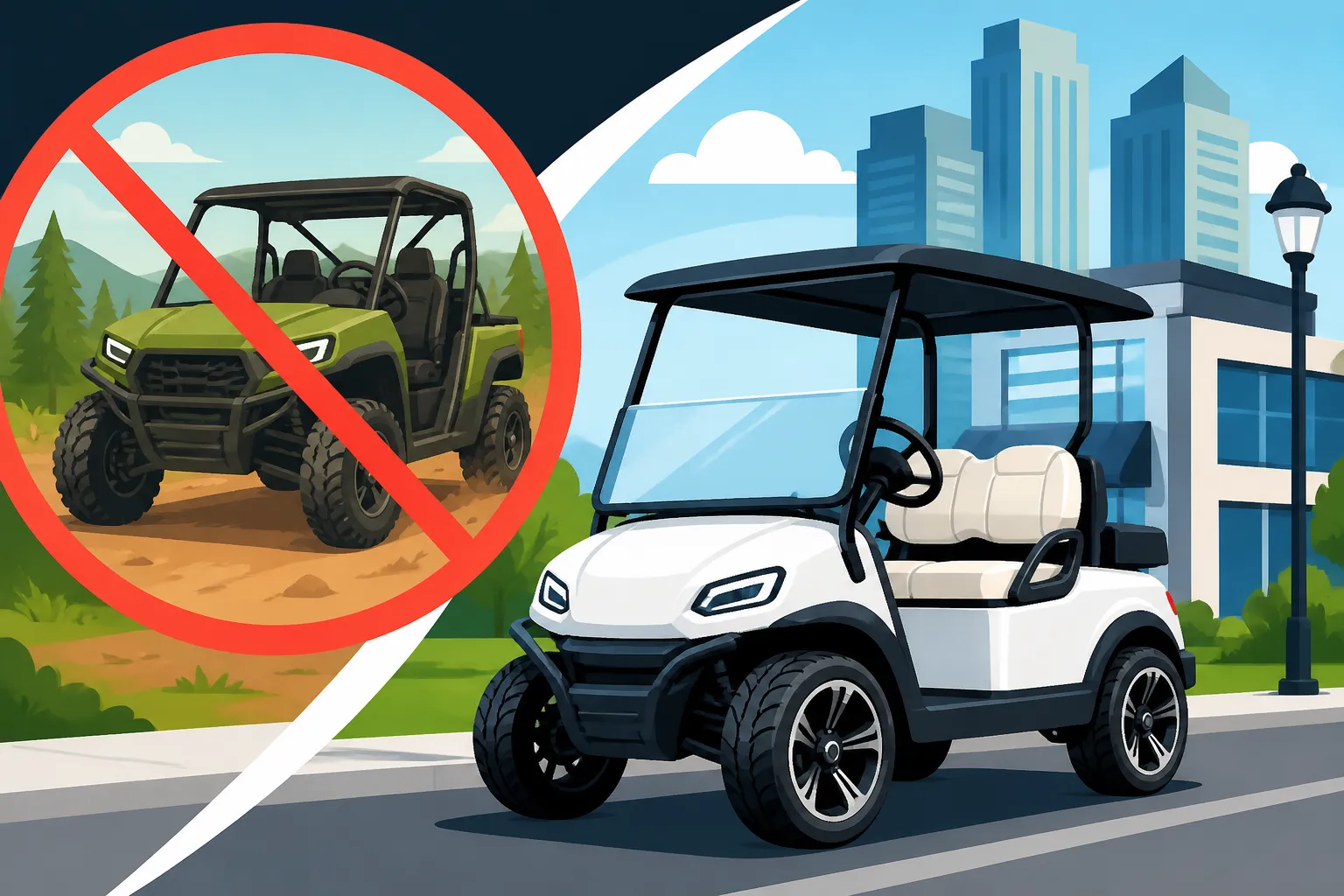
Golf Carts That May Not Leave City Limits
Navigating the rules for riding golf carts in Mississippi can feel like trying to solve a puzzle with missing pieces. You might see your neighbors cruising around town in their golf carts, but then hear whispers about someone getting a ticket just a few miles down the road. It's frustrating when you just want to enjoy your machine, but the laws seem to change from one town to the next, especially when it comes to understanding exactly where your golf cart can and cannot go. This guide aims to clear up that confusion, focusing specifically on why some Mississippi golf carts are restricted to city limits and what that means for you as a rider.
Understanding Mississippi's General Stance on Off-Road Vehicles on Public Roads
Mississippi has a pretty clear, and for many riders, frustrating, state-level stance when it comes to off-road vehicles like ATVs and UTVs on public roads. The state law, in general, prohibits these machines from being operated on public roads and highways. This creates a baseline of restriction that impacts everything from a mud-ready quad to a utility side-by-side. It’s important to understand this foundation because it helps illustrate why golf carts sometimes get treated differently, and why local ordinances become so incredibly important.
The State Law Baseline
The foundational truth in Mississippi is that [Mississippi Law Flatly Bars ATVs From Public Roads]. This isn't a suggestion; it's a direct prohibition. The state legislature has, for years, maintained a strict separation between vehicles designed for off-road use and those intended for public roadways. For anyone hoping to use their powerful UTV or nimble ATV to run errands or simply traverse a short stretch of blacktop between trails, this statewide ban can be a real headache. It means that, without specific legal exceptions or local ordinances, taking your ATV or UTV onto a county road or state highway is a violation, potentially leading to fines and other penalties.
This blanket ban exists for several reasons, primarily safety. ATVs and UTVs are not typically designed with the same safety features as passenger vehicles. They lack things like turn signals, brake lights, headlights (that meet road standards), seatbelts (in many older ATVs), and crumple zones. Their tires are often designed for maximum off-road traction, not for smooth asphalt at higher speeds, which can make them unstable. So, while you might feel perfectly capable of handling your machine, the state views the combination of these factors as a significant risk to both the rider and other motorists, which is why [Mississippi Bans ATVs on Public Roads].
Where Golf Carts Diverge
Now, here's where golf carts start to carve out their own niche, often to the confusion of riders who own more traditional ATVs or UTVs. While the state's broad prohibition often sweeps in "off-road vehicles," golf carts are sometimes given special consideration, not by statewide law for general public roads, but through local city and town ordinances. This distinction is absolutely critical. A golf cart isn't inherently "street legal" across Mississippi just because it's a golf cart. Its legality depends almost entirely on whether the specific city or town you're in has passed an ordinance allowing them on their municipal streets.
This local discretion comes from the fact that golf carts are generally considered low-speed vehicles, inherently less powerful and often perceived as less of a traffic hazard than a high-performance ATV or a large, lifted side-by-side. Many communities, especially those with an abundance of golf courses, retirement communities, or coastal tourist areas, see golf carts as a convenient, eco-friendly, and sometimes even charming mode of local transportation. Because of this, they've petitioned their local governing bodies – city councils or boards of aldermen – to create specific rules for their use, often limited strictly to the lower-speed streets within their jurisdiction. It's a localized solution to a localized need, rather than a statewide endorsement.
What a "City Limits Only" Golf Cart Ordinance Means for You
When a city or town in Mississippi passes an ordinance allowing golf carts on its streets, it almost always comes with the explicit stipulation that their use is confined to the municipal boundaries. This isn't just a suggestion; it's the core of the ordinance. For riders, understanding this limitation is paramount because crossing that invisible line can turn a pleasant, legal ride into a ticketable offense. It means your freedom to cruise is literally dictated by the map boundaries of the town you're in.
Navigating City Boundaries
The idea of "city limits only" means exactly what it sounds like: once you pass that "Welcome to [Your Town]" sign or the boundary marker on a specific road, your golf cart is likely no longer welcome or legal on the public road. This can be tricky to navigate in practice. Imagine you live just outside the city line but want to drive your golf cart into town for groceries or to visit a friend. Unless there's a specific, designated route or exception in the ordinance, you cannot legally do so. You'd need to trailer your cart into town, which defeats the convenience factor entirely. This is why many riders living in unincorporated areas, even those immediately adjacent to a golf-cart-friendly town, find themselves frustrated. They can see the town, but they can't legally drive their cart there.
Furthermore, these boundaries can sometimes cut through neighborhoods or even run down the middle of a street. It's not always a clear, straight line. This means you need to be acutely aware of your local geography. Relying on GPS apps designed for cars might not always show these nuanced municipal lines, so a good old-fashioned map or asking local authorities is often the best bet. Getting pulled over for being "just a few feet" outside the legal zone is still getting pulled over, and ignorance of the boundary is rarely an acceptable excuse. Your golf cart might be perfect for zipping around within city limits, but you'll need a truck and trailer if you want to take it to the next town over, even if that town also has its own golf cart ordinance.
The Impact on Riding Off-Road
The "city limits only" rule predominantly applies to public street use, but it also indirectly impacts how you might think about off-road riding with your golf cart. If your golf cart is equipped and modified for some light off-road use, perhaps with a SuperATV lift kit or more aggressive tires, you might be tempted to take it onto nearby dirt roads or trails. However, if those dirt roads or trails are outside city limits, or if they are considered public roads, even unpaved ones, the general state ban on off-road vehicles on public roads likely kicks in.
This means that while your golf cart might be perfectly legal on the paved streets of Hattiesburg or Ocean Springs (if they have an ordinance), taking it onto an adjacent county-maintained gravel road could put you in violation of state law regarding ATVs/UTVs on public roads. Even if your cart feels more like an ATV than a traditional golf cart due to its modifications, for legal purposes, it's still subject to these distinctions. This creates a kind of legal tightrope: street legal within the designated city, but potentially illegal on public roads outside those bounds, regardless of whether they are paved or unpaved. Always remember that private property is different; with landowner permission, you can typically ride wherever you like off-road, but the moment you hit public ground, the rules change drastically.
Key Factors in Mississippi Golf Cart Ordinances
Beyond the "city limits only" restriction, Mississippi's local golf cart ordinances often include a host of other specific requirements that riders must meet to legally operate their machines on city streets. These factors are put in place to ensure safety, maintain traffic flow, and differentiate golf carts from other off-road vehicles. It’s not just about having a golf cart; it’s about having a golf cart that meets the town’s specific criteria for street use.
Speed and Equipment Requirements
A common thread in almost all golf cart ordinances is a speed limit, often around 20-25 mph, to distinguish them from regular vehicles and even from what are legally defined as Low-Speed Vehicles (LSVs), which can go up to 25 mph. Beyond speed, these ordinances will invariably list specific equipment requirements that your golf cart must possess to be deemed "street legal" within that particular municipality. These aren't just suggestions; they are mandatory safety features designed to make your cart more visible and predictable to other drivers.
Typical equipment requirements often include:
- Headlights: Clearly visible from a certain distance, especially for night use.
- Taillights/Brake Lights: To signal deceleration and increase rear visibility.
- Turn Signals: Essential for communicating turns to other traffic.
- Windshield: Providing protection from debris.
- Rearview Mirror/Side Mirrors: To give the driver an adequate view of traffic behind and to the sides.
- Seatbelts: For all occupants, if the cart is so equipped.
- Horn: For alerting pedestrians or other vehicles.
Some ordinances might also specify [Mississippi Lighting Rules on a Machine] or even require modifications like speed restrictors to ensure the cart doesn't exceed the designated low-speed limit. If you've accessorized your cart with aftermarket parts, perhaps from a brand like SuperATV, make sure those additions don't inadvertently violate any local rules or, conversely, can help you meet requirements for lights or mirrors. It’s crucial to review the specific ordinance for your town before taking your golf cart onto its streets.
Driver Licensing and Age Restrictions
Another significant aspect of local golf cart ordinances revolves around who can legally drive these machines on public streets. While a golf cart is not a full-fledged automobile, cities often impose requirements to ensure drivers have a basic understanding of traffic laws and are mature enough to operate a vehicle safely in mixed traffic. It's not uncommon for ordinances to mandate that a golf cart driver must possess a valid driver's license. This prevents very young or unlicensed individuals from operating golf carts on streets where other vehicles are present.
Some ordinances might even specify age minimums that align with or are slightly different from state laws regarding minors driving other types of vehicles. For example, a town might allow a 14-year-old with a learner's permit to drive an ATV on private land, but require a full driver's license for a golf cart on its streets. This distinction reinforces the idea that while golf carts are low-speed, they are still operating in a public environment with other vehicles, and thus require a certain level of driver responsibility. Always check the specific age and license requirements in your city's ordinance; don't assume they are the same as for private property or other off-road machines.
Insurance and Other Practical Considerations
While [Mississippi Has No Insurance Mandate] for ATVs and UTVs in general, some local golf cart ordinances may, in fact, require proof of liability insurance for golf carts operating on their public streets. This is a common way for municipalities to mitigate risk in case of an accident involving a golf cart. If you cause damage or injury while operating your cart on city streets, having insurance protects both you and potential victims, preventing costly legal battles or out-of-pocket expenses. Even if insurance isn't mandated by your local ordinance, it's always a wise practical consideration to carry liability coverage.
Beyond insurance, other practical considerations often arise. Parking, for instance, might be covered. Can you park a golf cart in a regular parking space? Are there designated golf cart parking areas? Noise levels could also be a factor, particularly if your golf cart is modified or if the community is sensitive to noise complaints. Some ordinances might even touch on passenger limits, ensuring that the number of people on the cart doesn't exceed its designed capacity. Before you outfit your golf cart with heavy-duty accessories or a sound system from a company like SuperATV, make sure these modifications comply with any local noise or weight restrictions. It truly pays to read the full ordinance to avoid any unwelcome surprises.
How to Research Your Local City's Golf Cart Rules
Given the patchwork nature of golf cart regulations in Mississippi, the single most important piece of advice is to never assume what's allowed. What's legal in one town might be completely forbidden just down the road. This means proactive research is your best friend when it comes to riding your golf cart on public streets. Don't rely on hearsay or what you've seen others doing; get the official word directly from your local authorities.
Checking with City Hall or Police Departments
The most direct and reliable way to ascertain the specific golf cart rules for your area is to contact your city hall or local police department. These are the entities responsible for enforcing the ordinances, and they should be able to provide you with accurate, up-to-date information. Don't be shy about asking questions; they would much rather educate you than write you a ticket.
When you contact them, be prepared to ask specific questions:
- Does the city have an ordinance allowing golf carts on public streets?
- If so, what are the exact boundaries for operation (i.e., "city limits only," or specific streets)?
- What are the required safety equipment features (lights, mirrors, signals, etc.)?
- Are there any speed restrictions?
- Do drivers need a valid driver's license? Are there age restrictions?
- Is liability insurance required?
- Are there any specific hours of operation or restrictions on certain roads?
Request a copy of the actual ordinance if possible. Sometimes, the clerk might provide a summary, but having the full text allows you to read all the nuances and avoid misunderstandings. This due diligence ensures you're fully informed and can enjoy your golf cart without worrying about breaking any rules. Remember, [Mississippi Title Questions Clerks Hear] are often about basic legalities, and the same goes for golf cart questions.
Online Resources and Local Forums
While direct contact with city officials is the gold standard, you can often start your research online. Many municipalities now post their full code of ordinances on their official city websites. A quick search for "[Your City Name] golf cart ordinance" or "[Your City Name] municipal code" might lead you directly to the relevant document. Be cautious, though; always try to find the official government site and verify the date the ordinance was last updated. Laws can change, so an outdated document isn't helpful.
Local community forums, Facebook groups, or neighborhood associations can also be good places to gather anecdotal information or ask for pointers on where to find the official rules. However, always treat information from these sources as a starting point, not as definitive legal advice. What one person thinks the rule is, or what they believe they saw someone doing, might not align with the actual written law. Use these resources to help you formulate your questions for city hall or the police, but always get the final confirmation from official sources. This combination of online searching and direct inquiry will give you the most comprehensive understanding of [Mississippi Towns With Cart Ordinances] and their specific nuances.
Comparing Off-Road Vehicle Road Legality in Mississippi
To further clarify the distinctions we've discussed, here's a general comparison of how different types of off-road vehicles are typically treated regarding public road legality in Mississippi. This table highlights why golf carts, even with "city limits only" restrictions, occupy a unique legal space.
| Vehicle Type | General State Road Legality (Mississippi) | Common Local Ordinance Status (e.g., "City Limits Only") | Typical Equipment Requirements for Road Use (if allowed) |
|---|---|---|---|
| ATV | Generally Illegal on public roads statewide. | Extremely Rare (state law usually supersedes). | N/A (not typically allowed) |
| UTV/Side-by-Side | Generally Illegal on public roads statewide. | Very Rare (state law usually supersedes). | N/A (not typically allowed) |
| Golf Cart | Generally Illegal on state/county roads. | Commonly Allowed within specific city limits. | Headlights, Taillights, Brake Lights, Turn Signals, Mirrors, Windshield, Horn. Often speed-restricted. |
| Low-Speed Vehicle (LSV) | Legal on roads 35 mph or less, statewide. | No specific "city limits only" restrictions, as statewide law defines its use. | Same as golf cart (often factory-equipped to meet standards), VIN, title/registration. |
| Dirt Bike | Generally Illegal on public roads statewide. | N/A (not designed for street use). | N/A (not typically allowed) |
It's clear from this comparison that golf carts, due to local ordinances, have a distinct advantage over ATVs and UTVs when it comes to public street access in Mississippi. However, this privilege comes with specific conditions, most notably the "city limits only" rule, which is designed to keep them on slower, local streets where they pose less of a risk. LSVs, by contrast, are a different class of vehicle entirely, with statewide recognition and often more stringent factory specifications and registration requirements.
Navigating Restrictions and Ensuring Compliance
Living within the constraints of a "city limits only" golf cart ordinance means adopting a mindset of informed compliance. It's not about finding loopholes or pushing boundaries; it's about understanding the rules and adhering to them for your safety, the safety of others, and to maintain the privilege of operating your golf cart on city streets. These ordinances exist to allow local enjoyment while mitigating risks, and respecting them is key to their continued existence.
For example, if you reside in a small town that has gone through the effort to create a golf cart ordinance, that ordinance is a direct reflection of the community's desire to allow certain low-speed vehicles while still maintaining order. If riders consistently violate the "city limits only" rule or disregard equipment requirements, it could lead to the ordinance being revised or even revoked. No one wants to see their recreational opportunities curtailed because a few individuals decided the rules didn't apply to them.
Always keep a copy of your city's ordinance, either a physical printout or an easily accessible digital version, with you when you ride. This isn't just for proof if you're stopped by law enforcement; it's also a constant reminder of the specific conditions under which you are allowed to operate. Ensure your golf cart is properly maintained, and all required safety equipment is in working order. Check your lights, horn, and mirrors regularly. If your town requires insurance, make sure your proof of insurance is current and readily available. Staying on top of these details allows you to enjoy your ride with peace of mind.
The ability to use a golf cart on public streets, even if it's confined to city limits, is a special allowance in a state that largely restricts off-road vehicles from roads. By being responsible, informed, and compliant, you contribute to a safe riding environment and help preserve the local privileges that make golf cart ownership so enjoyable in many Mississippi communities. Ignoring these local stipulations can lead to fines, inconvenience, and potentially jeopardize the future of golf cart access for everyone in your area.
Disclaimer
This article is for general informational purposes only and does not constitute professional advice. Laws, prices and regulations vary by location and change over time. Consult a qualified professional for guidance on your specific situation.