Disputing a Southern Citation
It's incredibly frustrating, isn't it? You're out enjoying the beautiful Mississippi backroads or trails on your ATV or UTV, thinking you're doing everything right, and suddenly, blue lights are flashing. A citation for something you thought was perfectly legal can be a real headache, especially if you're left wondering what you even did wrong or if there's any way to fight it. This guide is here to walk you through the process of understanding and potentially disputing a Southern ATV citation, offering practical advice on how to navigate the justice system.
Understanding Your Citation and Local Laws
Getting a citation for your ATV or UTV can feel like a punch to the gut. One minute you're having a blast, and the next you're holding a piece of paper that could mean fines, court costs, and a whole lot of wasted time. It's crucial to understand what that ticket actually signifies and how Mississippi's laws apply to off-road vehicles.
What the Ticket Means for You
First things first, don't just ignore it. That citation isn't going to disappear, and ignoring it can lead to much bigger problems, like warrants for your arrest or even a suspension of your driver's license (even if the ATV itself isn't a licensed vehicle, the legal system can still impact your driving privileges). Usually, these citations are issued for violations related to where you're riding, like being on a public road, or for failing to meet certain equipment or age requirements. Common reasons for getting pulled over and cited include riding on paved county roads or city streets, having a child under 16 without a helmet, or riding on private land without explicit permission. Each of these carries its own set of potential penalties.
When a deputy hands you that ticket, it typically specifies the exact statute or ordinance you're accused of violating. This is incredibly important information because it's the foundation of any defense you might build. It's not just a general "illegal riding" charge; it's usually tied to a very specific section of the law. Make sure you get all the details right at the scene, including the officer's name, badge number, and the precise location where you were stopped. These details can sometimes reveal inconsistencies later on if you decide to dispute the ticket.
Deciphering Mississippi's ATV Road Rules
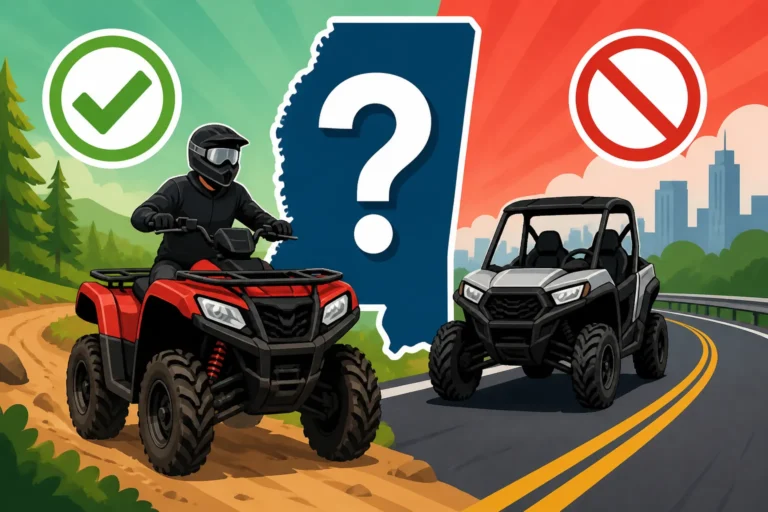
Here in Mississippi, the state law is pretty clear and, frankly, quite restrictive when it comes to riding ATVs and UTVs on public roads. The default position is that it's just not allowed. [Mississippi Law Flatly Bars ATVs From Public Roads], and this isn't just a suggestion; it's the law. Many riders, especially those new to the state or those who have ridden in other states with different regulations, are often surprised by how strict Mississippi is on this front. There isn't a blanket "farm use" exception that applies to all public roads, for instance, which is a common misconception.
This strict ban means that even crossing a paved road to get from one section of your property to another, or to access a different trail, can potentially land you a ticket. The law typically doesn't make distinctions for short distances or minimal traffic. It's about the presence of the vehicle on the public right-of-way. It’s also important to remember that these laws apply to all types of off-road vehicles, whether it's a quad, a side-by-side, or even some dirt bikes that aren't street-legal. Understanding this fundamental prohibition is the first step in knowing whether you even have a plausible defense if your citation is for road riding.
The Role of Local Ordinances
Now, while state law is firm, there's a little bit of wiggle room at the local level. Some cities and counties in Mississippi have taken it upon themselves to create specific ordinances that do allow for limited ATV or UTV use on certain public roads. However, this is far from universal, and these ordinances are usually very specific, outlining designated streets, speed limits, times of day, and even types of machines allowed. For example, you might have heard about [Hattiesburg's Cart Ordinance in Mississippi], which permits golf carts on certain city streets, but this typically doesn't extend to ATVs or UTVs. Similarly, some towns, like [Ocean Springs Names the ATV Brands It Bars], explicitly list vehicles that are not allowed.
The key takeaway here is that you cannot assume your town or county has such an ordinance just because a neighboring one does, or because you see other people riding. Ignorance of the law is rarely an excuse that holds up in court. If you were cited on a public road, one of your first investigative steps should be to check if the specific municipality or county where you received the ticket has any active ordinances that would have made your ride legal. This means a direct call to the city clerk's office or the county administrator to inquire. Without a valid local ordinance covering your situation, the state's blanket ban will likely apply, making it a tougher battle to fight in court.
Gathering Your Evidence for a Strong Defense
If you've decided to contest your citation, the next crucial step is to meticulously gather all the information and evidence that could support your case. Simply showing up in court and saying, "I didn't know," isn't going to cut it. You need to present a clear, compelling argument backed by facts.
Documenting the Incident
The moments immediately after receiving a citation are critical for gathering evidence. Memories fade, and details become blurry, so acting quickly can make a big difference. The first thing you should do, if it's safe and permissible, is to take photos or even a video of the exact location where the stop occurred. This includes road signs, lack of signs, landmarks, and the condition of the road itself. Was it clearly a public paved road, or was it a dirt path on private property that merely looked like a public right-of-way? Was there signage indicating "No ATVs" or "Private Property"?
Beyond visual documentation, make a note of the time of day, weather conditions, and any other relevant environmental factors. Jot down everything you remember about your interaction with the officer: what was said, what questions were asked, and how the citation was issued. Did the officer check your vehicle's VIN or measure its width? If there were any witnesses, collect their names and contact information. Their testimony could be invaluable in corroborating your account. Don't forget to review the citation itself for any errors, such as a misspelled name, incorrect date, or a wrong statute number. Even minor errors can sometimes be leveraged in your defense, though they often aren't enough to get a case dismissed outright. Remember, when a deputy stops you, [What a Mississippi Deputy Can Ask to See] usually includes proof of identity and, depending on the circumstances, potentially ownership of the machine.
Researching the Laws and Ordinances
This is where you put on your detective hat. You need to know the exact law you're accused of breaking. Take that statute number or ordinance reference from your ticket and look it up. Don't rely on hearsay or what a friend told you. The official source is paramount. For state laws, you can usually find these online through the Mississippi Legislature's website. For local ordinances, you'll need to contact the city or county clerk's office. Many municipalities have their ordinances published online, but sometimes you might need to go in person. This is why [Mississippi Ordinance Lookups Before You Ride] is so important, but it's equally critical after you've been cited.
Pay close attention to the wording of the law. Does it define "all-terrain vehicle" in a way that truly encompasses your machine? Are there any specific exceptions or conditions mentioned that might apply to your situation? For example, some ordinances might allow ATVs for agricultural purposes on specific roads, or they might permit crossings at certain intersections. If you can find an applicable exception or a flaw in how the law is written or applied to your case, that forms the cornerstone of your defense. Print out copies of all relevant statutes and ordinances to bring with you to court; don't just assume the judge or prosecutor will be intimately familiar with every local rule.
Machine Compliance and Gear
Your machine's setup and your personal gear can also be part of your defense, especially if the citation involves equipment violations or specific riding requirements. For instance, if you were cited for riding on public land that requires a spark arrestor, you'll want to have proof that your machine was equipped with one. This might involve a photo of the spark arrestor, an owner's manual showing it's standard equipment, or even a receipt for an aftermarket one. Reputable brands like SuperATV offer a wide range of aftermarket parts that can help ensure your machine meets specific requirements, from proper lighting to compliant exhaust systems, giving you peace of mind and potentially a stronger defense if an equipment check comes into play.
Similarly, if the citation involves a helmet law, particularly for a rider under 16, you'll need to show that the helmet met the required standards. [Mississippi Safety Certificates as an Alternative] to a driver's license for young riders on certain public lands also comes into play here. If the citation was related to your machine's dimensions, such as a width limit, be prepared to show documentation (like a manufacturer's spec sheet) or even bring measurements to prove your machine was within limits, such as [Mississippi ATV Width Limit of 50 Inches]. Having your machine's documentation, like the bill of sale or title, can also be important, especially if the citation involves ownership or improper registration, though [Mississippi Does Not Register ATVs] at the state level. Always have your paperwork with you when riding, as [Carrying Papers on a Southern Back Road] can save you a lot of hassle.
Navigating the Southern Justice System
Dealing with the court system can be intimidating, especially if you’ve never had to dispute a citation before. It's not like the movies, and knowing what to expect can reduce a lot of the stress.
Deciding Whether to Fight or Pay
Before you even step foot in a courtroom, you need to make an informed decision: Is it worth fighting this ticket, or is it better to just pay the fine? This isn't a simple question, as it involves weighing several factors. Consider the severity of the offense. What are the potential fines and court costs? [Mississippi Fine Ranges for Road Riding] can vary, but generally, the direct financial cost for a minor ATV violation isn't astronomical, perhaps similar to a parking ticket. However, then you add [Mississippi Court Costs for a Citation], which can sometimes exceed the fine itself.
Beyond the money, think about the time commitment. Disputing a citation means at least one court appearance, possibly more if there are continuances. This means taking time off work, arranging childcare, and potentially driving to a courthouse that might not be close to home. Then there's the stress and effort of preparing your defense. If the fine is minimal and your evidence is weak, or if the law is undeniably against you, paying the citation might be the most pragmatic choice, even if it stings a bit. On the other hand, if you genuinely believe you were in the right, the law was misapplied, or the officer made a mistake, fighting it can be worthwhile to avoid setting a precedent or accepting guilt for something you didn't do.
Your First Court Appearance (Arraignment)
Your citation will specify a date and time for your initial court appearance, often called an arraignment. This isn't usually the trial itself; it's simply where you formally enter your plea. When you arrive, be on time, dress respectfully (business casual is a good rule of thumb), and be prepared to wait. You'll likely be in a courtroom with many other people who are also there for various minor infractions.
When your name is called, you'll approach the bench. The judge will typically read the charge against you. This is your moment to formally enter a plea of "not guilty." If you plead guilty, the case is closed, and you'll be instructed on how to pay your fine and court costs. If you plead "not guilty," the court will then schedule a trial date. This is also your opportunity to ask for a continuance if you need more time to gather evidence or consult with an attorney. Don't try to argue your case or present your evidence at the arraignment; that's for the trial. Just state your plea clearly and respectfully.
Preparing for Your Hearing
Once you've pleaded not guilty and a trial date is set, the real work begins. This is your chance to present all the evidence you've meticulously collected. Organize your photos, videos, written notes, copies of laws, and any witness statements in a clear, logical manner. It can be helpful to create a binder or folder with tabs for each piece of evidence. If you have witnesses, make sure they are aware of the court date and are prepared to attend and testify.
Think about how you'll present your case. What's your main argument? Are you claiming you weren't on a public road, that an ordinance allowed you to be there, or that the officer was mistaken about an equipment requirement? Practice what you'll say, but don't memorize a speech word-for-word; you want to sound natural and credible. Be prepared to respectfully question the officer's testimony if it conflicts with your evidence. The prosecutor will likely call the ticketing officer to testify, and you'll have an opportunity to cross-examine them. Focus on facts, not emotions. Even if you're feeling frustrated, maintaining a calm and respectful demeanor in court is crucial.
Common Defenses and How to Present Them
When you stand before the judge, your goal is to poke holes in the prosecution's case or present an affirmative defense that justifies your actions. There are several angles you can take, depending on the specifics of your citation.
Misidentification or Mistake of Fact
Sometimes, it’s simply a matter of mistaken identity or a misunderstanding of the facts on the ground. Perhaps the officer cited the wrong person, or the machine described in the ticket wasn't actually yours. This can happen in groups of riders or if an officer relies solely on a quick glance. If you can prove you weren't the person operating the ATV at the time of the alleged offense, or that the machine cited wasn't yours, you might have a strong defense. This often requires solid alibis, witness testimony, or clear documentation linking you to a different location or machine.
Another angle under "mistake of fact" could be the officer's misinterpretation of the location. Maybe you were technically on private property, but it looked like a public road. Perhaps there's a disputed property line, or a private road leads directly into a public one without clear demarcation. If you can provide maps, property deeds, or surveyor's notes that demonstrate the location was not, in fact, a public thoroughfare as alleged, this can be a very effective defense. The burden is on the prosecution to prove you violated the law, and if you can create reasonable doubt about the facts, you stand a good chance.
Lack of Specific Ordinance or Signage
As discussed earlier, Mississippi's state law broadly bans ATVs from public roads. However, local ordinances can create exceptions. If you were cited for road riding and you've done your homework to confirm that a valid local ordinance permits ATV use on that specific road at that time, you have a strong defense. You would present the printed copy of the ordinance as evidence. It's hard for a court to uphold a state law violation if a more specific local law provides an exception.
Furthermore, sometimes charges related to restricted areas or specific rules (like speed limits on a designated ATV trail) rely on proper signage. If an area was restricted but no "No Trespassing" signs were visible, or if a rule was in effect but not clearly posted, you might argue that you had no reasonable way of knowing you were violating a rule. This defense isn't always a slam dunk, as some laws are presumed to be known, but if the issue is about a specific local rule in a less obvious context, it can be effective.
Technicalities and Due Process
While judges generally prefer to focus on the substance of the alleged offense, sometimes technical errors on the citation or procedural missteps during the stop can lead to a dismissal. Did the officer accurately record your name, address, or vehicle information? Was the date and time correct? Was the correct statute number cited? Sometimes, a clerical error is just that, and the judge might allow it to be amended, but significant errors could warrant a dismissal.
More serious due process arguments revolve around whether your constitutional rights were violated. Was the stop lawful? Did the officer have reasonable suspicion or probable cause to pull you over? Were you properly informed of your rights (if applicable)? These are more complex legal arguments that often require the expertise of an attorney. If you believe your rights were infringed upon, it's definitely worth consulting with legal counsel.
Equipment Compliance
If your citation was related to an equipment issue – perhaps a lack of proper lighting, a spark arrestor, or your machine exceeding certain dimension limits – you can defend this by showing your machine was, in fact, compliant. For example, if you were cited for a loud exhaust, but your machine has a stock muffler within legal decibel limits, you could present manufacturer specifications or even a sound test result. For specific width limits, like those on designated national forest trails, having aftermarket parts from companies like SuperATV that help keep your machine compliant can be a great asset. They offer components designed to enhance performance while adhering to regulations, such as narrow A-arms or specific tire sizes. Having receipts or product specifications for compliant parts is essential evidence.
It's also worth noting that [Mississippi Spark Arrestor Requirements] might apply in certain riding areas. If you were on public land requiring one, and you can show that your machine either came with one from the factory or you installed an approved aftermarket spark arrestor, that charge should be dismissed. Similarly, if the citation claims your vehicle was too wide for a particular trail, but you've installed SuperATV offset wheels or smaller A-arms to meet the required [50 Inches Wide and 1,000 Pounds Dry] or [65 Inches and 2,000 Pounds] limits, presenting that evidence can be crucial.
What to Expect After the Hearing
The courtroom experience doesn't end when you finish presenting your case. There are still some steps and potential outcomes to consider.
The Judge's Decision
After both sides have presented their case, the judge will make a decision. This might happen immediately, or the judge might take a short recess to consider the evidence. In some cases, especially if it's a complex matter, the judge might even take the case "under advisement" and issue a written decision later. When the decision is announced, it will typically be one of three outcomes:
- Guilty: The judge finds that the prosecution proved beyond a reasonable doubt that you violated the law.
- Not Guilty: The judge finds that the prosecution did not meet its burden of proof, or your defense created enough reasonable doubt.
- Reduced Charge or Dismissal: In some instances, especially if you've presented a compelling argument or if there's a technicality, the judge might reduce the charge to a lesser offense with a smaller penalty, or even dismiss the case entirely.
Whatever the outcome, it's important to remain respectful of the court's decision. If you are found guilty, the judge will typically explain the next steps regarding fines and fees.
Consequences of a Guilty Verdict
If the judge finds you guilty, the immediate consequence will be the imposition of fines and court costs. You'll be given instructions on how and when to pay these. [Paying a Justice Court Fine] typically involves going to the court clerk's office or sometimes paying online, but make sure you understand the exact procedure and deadline to avoid further penalties. Failure to pay can lead to late fees, collection actions, or even more severe legal repercussions.
While most ATV citations in Mississippi don't carry points against your driver's license (since an ATV isn't a highway-registered vehicle), a conviction still goes on your record. While it might not affect your auto insurance directly, it could be relevant if you ever face more serious charges related to off-road vehicle use or other legal issues. It's also a financial hit, potentially impacting your budget for future rides or machine upgrades from SuperATV.
Appealing a Decision
If you are found guilty and firmly believe the judge made an error in applying the law or interpreting the evidence, you typically have the right to appeal the decision to a higher court. The process for appeal varies, but it generally involves filing a notice of appeal within a strict timeframe (often 10 or 30 days) and paying additional court fees. An appeal is not a new trial where you present new evidence; rather, the higher court reviews the record of the original trial to see if any legal errors were made.
Appeals can be complex and are almost always best handled with the assistance of an attorney experienced in appellate law. It's a significant commitment of time and money, and there's no guarantee of a different outcome. Before deciding to appeal, carefully consider the strength of your original case, the nature of the alleged error, and the potential costs involved versus the benefits of overturning the original verdict.
Learning from the Experience
Whether you win or lose your case, the experience of disputing a citation is a valuable one. It forces you to become more familiar with the laws governing ATV and UTV use in Mississippi. Use this knowledge to prevent future citations. If you were found guilty of road riding, for example, take that as a clear sign that you need to be more diligent about where you ride. Always double-check local ordinances before venturing onto unfamiliar paths, and stick to designated trails like [Bethel OHV Trails in Mississippi] where the rules are clearer.
Consider investing in proper safety gear and ensuring your machine is always compliant with any applicable regulations, whether that's having the correct spark arrestor, lights, or even dimensions if you ride in areas with specific width restrictions. Companies like SuperATV offer parts that not only enhance performance but also help you meet these regulations, like suspension kits that can adjust your machine's stance. Being informed, prepared, and respectful of the law will make your riding experiences much more enjoyable and keep you out of the courtroom.
Disclaimer
This article is for general informational purposes only and does not constitute professional advice. Laws, prices and regulations vary by location and change over time. Consult a qualified professional for guidance on your specific situation.