Streets Posted at Thirty or Lower
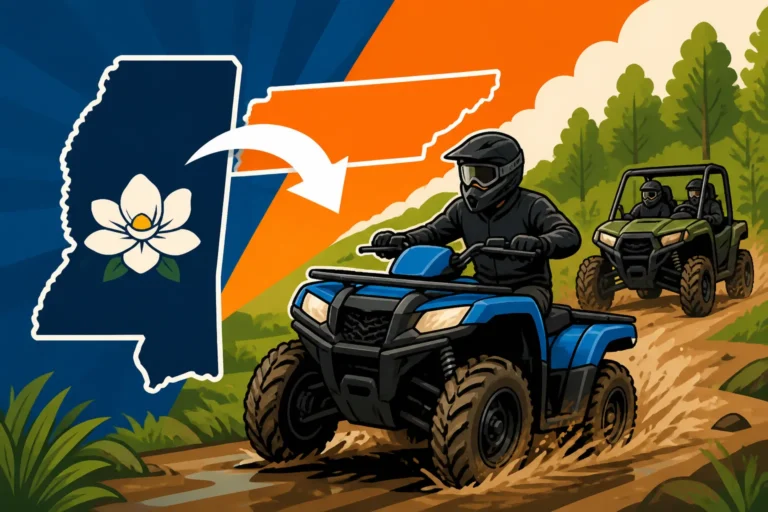
Riders in Mississippi often feel frustrated and confused about where they can legally take their ATVs and UTVs. The dream of cruising down a quiet county road to a friend's house or hitting a local ice cream shop on your side-by-side often bumps up against a wall of conflicting information and strict state laws. This guide will cut through that confusion, explaining precisely when and where you might be able to ride your off-road machine on streets posted at 30 mph or lower, thanks to the very specific conditions created by local ordinances.
The Harsh Reality: Mississippi's State-Level ATV Road Ban
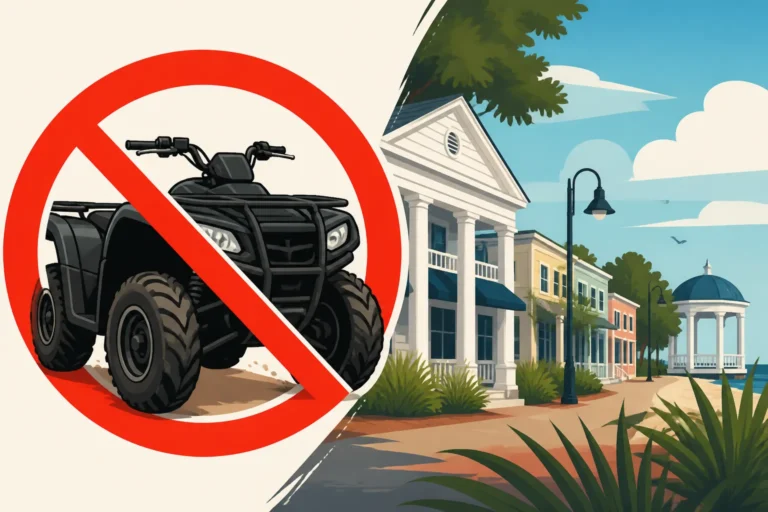
Let's be blunt: for the vast majority of public roads in Mississippi, riding an ATV or UTV is simply not allowed. This isn't a vague suggestion; it's a clear legal directive from the state. Many riders, especially those new to the Magnolia State or coming from other areas with more lenient laws, find this rule incredibly restrictive. It means no casual trips to the gas station, no quick runs into town for supplies, and certainly no joyrides on state highways. The core frustration here is that these machines are so versatile, yet their use on public thoroughfares is severely limited.
Why State Law Is So Strict
Mississippi's state law is designed primarily to keep off-road vehicles off public roads, treating them differently from cars, trucks, and even motorcycles. The intent behind this is rooted in safety concerns and the nature of these machines. ATVs and UTVs often lack the same safety features as road-going vehicles, like turn signals, rearview mirrors, proper lighting for night driving, or even the basic crash protection of a car. Their suspension, tire design, and steering are optimized for off-road terrain, not for high-speed asphalt or sharing lanes with heavy traffic. The state views these differences as potential hazards to both the ATV/UTV rider and other motorists, leading to a blanket prohibition rather than a complex system of exceptions.
This strict stance also simplifies enforcement for law enforcement officers. Without a clear ban, every stop would involve an officer trying to determine if a specific machine met an exhaustive list of safety criteria, which would be a nightmare to regulate consistently across all 82 counties. So, while it feels limiting to riders, the state's approach prioritizes clear rules and public safety as defined by the characteristics of off-road vehicles.
What the State Law Actually Says
The backbone of Mississippi's ATV road restriction is found in its code. Specifically, [Mississippi Code Section 63-31-3] outlines the definitions and limitations for off-road vehicles, clearly stating that they are not designed for use on public streets. This section, along with [Mississippi Bans ATVs on Public Roads], makes it unequivocally clear that, by default, your ATV or UTV cannot be operated on state-maintained roads, federal highways, or even most county roads. The law defines these machines by their design for off-road use, usually having four low-pressure tires and a seat designed to be straddled by the operator. Side-by-sides, or UTVs, often fall under a similar umbrella due to their off-road design and characteristics.
It's crucial to understand that this state law provides no "farm road exception" or "crossing the street" loophole for ATVs, which is a common misconception in many rural areas. While a local sheriff might sometimes look the other way for a farmer crossing a quiet road for legitimate agricultural purposes, this is a matter of discretion, not a legal right. Relying on such discretion can put you at risk of a citation and potential fines. The state law is quite thin on specific exceptions for ATV road use, emphasizing the off-road nature of the machines.
The Glimmer of Hope: Local Ordinances for Low-Speed Streets
Despite the broad state-level ban, there's a specific pathway for ATVs and UTVs to legally access certain public roads in Mississippi: local ordinances. These are laws passed by individual cities, towns, or even counties that create specific rules for certain types of vehicles on their roadways. However, this isn't a free-for-all. These local ordinances are almost exclusively focused on golf carts and, sometimes, low-speed vehicles (LSVs) or even UTVs, and they typically come with very strict conditions, including speed limits on the permitted streets.
How Local Ordinances Create Exceptions
When a city or town passes an ordinance allowing golf carts or certain UTVs on its streets, it's essentially carving out a narrow exception to the state's general prohibition. These ordinances are born out of a desire to accommodate residents, often in areas like coastal towns or retirement communities, where golf carts and UTVs are a popular mode of local transportation. They understand that these machines can serve a practical purpose for short trips within a limited geographic area. The municipality takes on the responsibility of setting specific rules, often related to the types of machines allowed, the hours of operation, required safety equipment, and, critically, the speed limits of the roads they can use.
It's important to remember that these ordinances are highly localized. What's allowed in one town, like [Hattiesburg's Cart Ordinance in Mississippi], might be completely different, or nonexistent, in the next town over. This means that just because you see a UTV driving on a city street in one part of Mississippi doesn't mean it's legal in your hometown. Always check with your local municipality directly.
Understanding the "30 MPH or Lower" Rule
The most common thread running through many of these local ordinances is the restriction on the speed of the streets where ATVs, UTVs, or golf carts can operate. You'll frequently find language specifying that these machines are only permitted on "streets posted at thirty or lower." This 30 mph limit is a critical safety threshold. It ensures that the off-road vehicles, which are not designed for higher speeds or interactions with fast-moving traffic, are confined to less congested, slower-speed environments. On these slower streets, drivers have more time to react, and the speed differential between the off-road vehicle and other cars is minimized, reducing the risk of serious accidents.
This rule means you won't be taking your UTV on a major arterial road, even within city limits, if that road has a speed limit of 35 mph or higher. The intent is to keep these machines off roads where they could become a hazard. Think of it more like a neighborhood access vehicle than a general-purpose street vehicle. The designation of "streets posted at thirty or lower" is a fundamental component of the legal framework in many towns that permit such use.
Finding Out About Your Local Rules
So, how do you know if your specific town or county has such an ordinance? This is where it gets a bit like detective work, but it's absolutely essential. The first and most reliable step is to contact your local city hall, town clerk's office, or county administrator's office. Many municipalities will have their ordinances available online on their official website, but sometimes they can be hard to find or may not be the most up-to-date. When calling, ask specifically about [Mississippi Golf Cart and LSV Ordinances] and any rules pertaining to UTVs or side-by-sides. Don't assume anything based on what you see others doing, or what you read on social media.
Here’s a small table illustrating how local rules might differ even within the same state:
| Municipality Example | Vehicle Type Often Permitted | Speed Limit Restriction | Common Conditions |
|---|---|---|---|
| Hattiesburg | Golf Carts | 30 mph or lower streets | Registration, Insurance |
| Ocean Springs | Golf Carts, some LSVs | 30 mph or lower streets | Specific equipment, No ATVs |
| Rural County X | None generally | N/A | State law applies (no road use) |
| Town Y (Small) | Golf Carts, some UTVs | 25 mph or lower streets | Driver's license, Daylight only |
As you can see, the specifics can vary wildly. Some towns, like [Ocean Springs' Cart Rules in Mississippi], might even specifically exclude ATVs from their allowances, focusing solely on golf carts or LSVs. Therefore, verifying the exact text of the ordinance for your intended riding area is non-negotiable.
What Qualifies as a "Street Legal" Machine Under Local Rules?
Even if your local municipality has an ordinance allowing ATVs or UTVs on certain low-speed streets, your machine isn't automatically street legal. These local rules almost always come with a list of required equipment and often specific driver requirements. Ignoring these can still lead to a citation, even if you're technically on an approved street. The idea is to make these off-road machines as safe as possible when sharing space with traditional road traffic.
Equipment Requirements Beyond Factory Standards
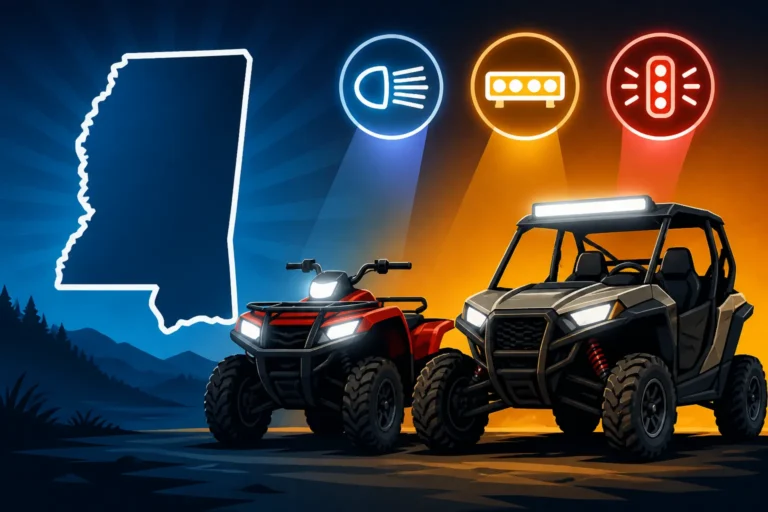
Most local ordinances that permit UTVs or golf carts on streets with speed limits of "30 mph or lower" will require specific modifications or additions to your machine. These aren't just suggestions; they are often mandatory for operating legally. Common requirements typically include:
- Headlights and Taillights: Operational and visible from required distances.
- Brake Lights: Functioning lights that illuminate when the brakes are applied.
- Turn Signals: Front and rear turn signals, just like a car, to indicate your intentions. Many aftermarket kits, like those from SuperATV, are available to add these to your UTV.
- Rearview Mirrors: At least one, but often two, allowing you to see traffic behind you.
- Horn: An audible warning device.
- Windshield: Often required, made of safety glass or a similar material.
- Seatbelts: For all occupants, and in good working order.
- Parking Brake: A functional parking brake.
- Spark Arrestor: Especially important in wooded areas or near fields, to prevent fires.
It's critical to review the specific ordinance for your area to ensure your machine meets all the stated requirements. Simply having a UTV that runs isn't enough; it needs to be equipped to street-legal standards as defined by local law.
Driver Requirements for Public Road Use
Beyond the machine itself, the person operating it on public roads under a local ordinance will also likely face specific requirements. These are usually in place to ensure that anyone driving on the street is capable and responsible. Common driver requirements include:
- Valid Driver's License: Almost universally, you will need a valid, unrestricted driver's license to operate an ATV or UTV on any public road, even those governed by local ordinances. This is not about special permits for off-road vehicles, but rather the general requirement to drive on public thoroughfares. [Mississippi Driver's License on Public Property] is a good reference point for general rules.
- Age Restrictions: Even if you have a license, some ordinances might have specific age restrictions, or rules about younger passengers.
- Insurance: While [Mississippi Has No Insurance Mandate] for off-road vehicles specifically, many local ordinances will require proof of liability insurance for any machine operated on their streets. This protects you and others in case of an accident. It's always a good idea to have insurance, regardless of legal requirements.
- Safety Training/Education: Less common, but some ordinances might encourage or even require a basic safety course completion.
These requirements ensure that the privilege of using these machines on public streets is granted to those who can operate them safely and responsibly, similar to any other vehicle.
Important Limitations of Local Ordinances
Even with a favorable local ordinance, there are significant limitations you absolutely must understand. These aren't just minor details; they define the boundaries of your riding freedom:
- Jurisdictional Limits: An ordinance only applies within the specific city or county limits that passed it. As soon as you cross into an area without such an ordinance, or onto a state or federal highway, you revert back to the statewide ban. This means you can't just ride from one town to the next if they don't both have compatible ordinances.
- Vehicle Specificity: Many ordinances are written narrowly to cover "golf carts" or "low-speed vehicles (LSVs)" and might not extend to traditional ATVs or even all UTVs. Don't assume your side-by-side qualifies if the ordinance only mentions golf carts. [Why a Cart Ordinance Does Not Cover a UTV] highlights this common pitfall.
- Time and Day Restrictions: Some ordinances limit usage to daylight hours only, or prohibit use during specific events or parades.
- No State Highway Access: Even the most permissive local ordinance cannot override state law regarding state highways or federal routes. These remain off-limits, no matter what local rules say. You might be able to cross a state highway at an intersection, but not travel on it.
- Enforcement Discretion: While an ordinance provides legal backing, law enforcement still has discretion. If you're riding erratically, unsafely, or being a nuisance, you can still face consequences.
Understanding these limitations is key to staying out of trouble and respecting the local rules. The idea is limited local access, not a free pass to drive anywhere.
Practical Considerations for Riding on Approved Streets
If you've done your homework, confirmed a local ordinance that applies to your machine and location, and equipped your ATV or UTV appropriately, you're ready to hit those low-speed streets. However, being legal is only one part of the equation. Being responsible and safe are equally, if not more, important.
The Importance of Insurance and Safety Gear
Even if an ordinance doesn't explicitly mandate it, obtaining proper insurance for your ATV or UTV is a smart move. Accidents happen, and if you're involved in a collision on a public street, even a low-speed one, you want to be protected from potential liability. A good policy can cover property damage, medical expenses, and even legal fees if something goes wrong. Talk to your insurance provider about extending your coverage for limited street use.
Beyond insurance, never skimp on safety gear. Helmets are always a good idea, especially for riders under 16, as per [Mississippi Helmet Law for Riders Under 16]. Eye protection, sturdy boots, and long pants are also highly recommended. Remember, even at low speeds, a collision or rollover can cause serious injury. Companies like SuperATV also offer various safety accessories, from mirrors to windshields, that can enhance your visibility and protection when venturing onto paved surfaces.
Respecting Local Residents and Enforcement
When riding your ATV or UTV on public streets, even legally, you are a guest in a shared space. It’s absolutely vital to be a good neighbor and respect the community. This means:
- Obeying Traffic Laws: All traffic laws, including stop signs, yield signs, and speed limits (even if your machine can go faster than 30 mph, stick to the posted limit), apply to you just as they would to a car.
- Keeping Noise Down: Many ATVs and UTVs can be loud. Be mindful of residential areas and avoid excessive engine revving or aftermarket exhausts that create too much noise, particularly in the evenings or early mornings. Noise complaints can lead to ordinances being revisited or stricter enforcement.
- Staying on Designated Streets: Do not venture onto private property, sidewalks, or unapproved streets. Stick strictly to the roads where the ordinance permits your machine.
- Interacting Respectfully with Law Enforcement: If you are stopped by a deputy or police officer for an [Mississippi Equipment Checks by Deputies] or any other reason, be polite, cooperative, and have all your documentation (driver's license, proof of insurance, and if possible, a copy of the local ordinance) readily available.
Your behavior directly impacts how the community, and ultimately local officials, view ATV and UTV use on their streets. Being a responsible rider helps maintain the privilege for everyone.
Preparing Your Machine for the Street
Before you ever leave your driveway to ride on a street under a local ordinance, give your machine a thorough check-over, focusing on components critical for street use. This goes beyond the usual pre-ride inspection for a trail day.
- Tires: Ensure your tires are properly inflated and that the tread is in good condition. Aggressive mud tires might be great for the trails but can wear quickly and handle poorly on pavement, potentially compromising stability and braking.
- Brakes: Test both front and rear brakes to ensure they are fully functional and provide strong, consistent stopping power. Riding on pavement often requires more precise braking than off-road.
- Lights and Signals: Double-check all required lighting – headlights, taillights, brake lights, and turn signals – are working correctly. Ensure they are clean and clearly visible. This is especially important if you anticipate being out near dusk or dawn, even if the ordinance specifies "daylight only" use.
- Fluid Levels: Check your oil, coolant, and brake fluid. Street riding can put different stresses on your engine and cooling system than slow trail crawling.
- Steering and Suspension: Ensure your steering feels tight and responsive, and there are no unusual noises or play in the suspension. Road irregularities, even at low speeds, can be unforgiving if your steering is loose.
Taking these preparatory steps ensures your machine is not only legally compliant but also safe and reliable for the specific demands of street riding. It’s about being proactive to prevent issues and ensure a smooth, enjoyable ride on those limited, low-speed streets where your ATV or UTV is finally allowed to roam.
Disclaimer
This article is for general informational purposes only and does not constitute professional advice. Laws, prices and regulations vary by location and change over time. Consult a qualified professional for guidance on your specific situation.