Mississippi Rules for Passengers on a Quad
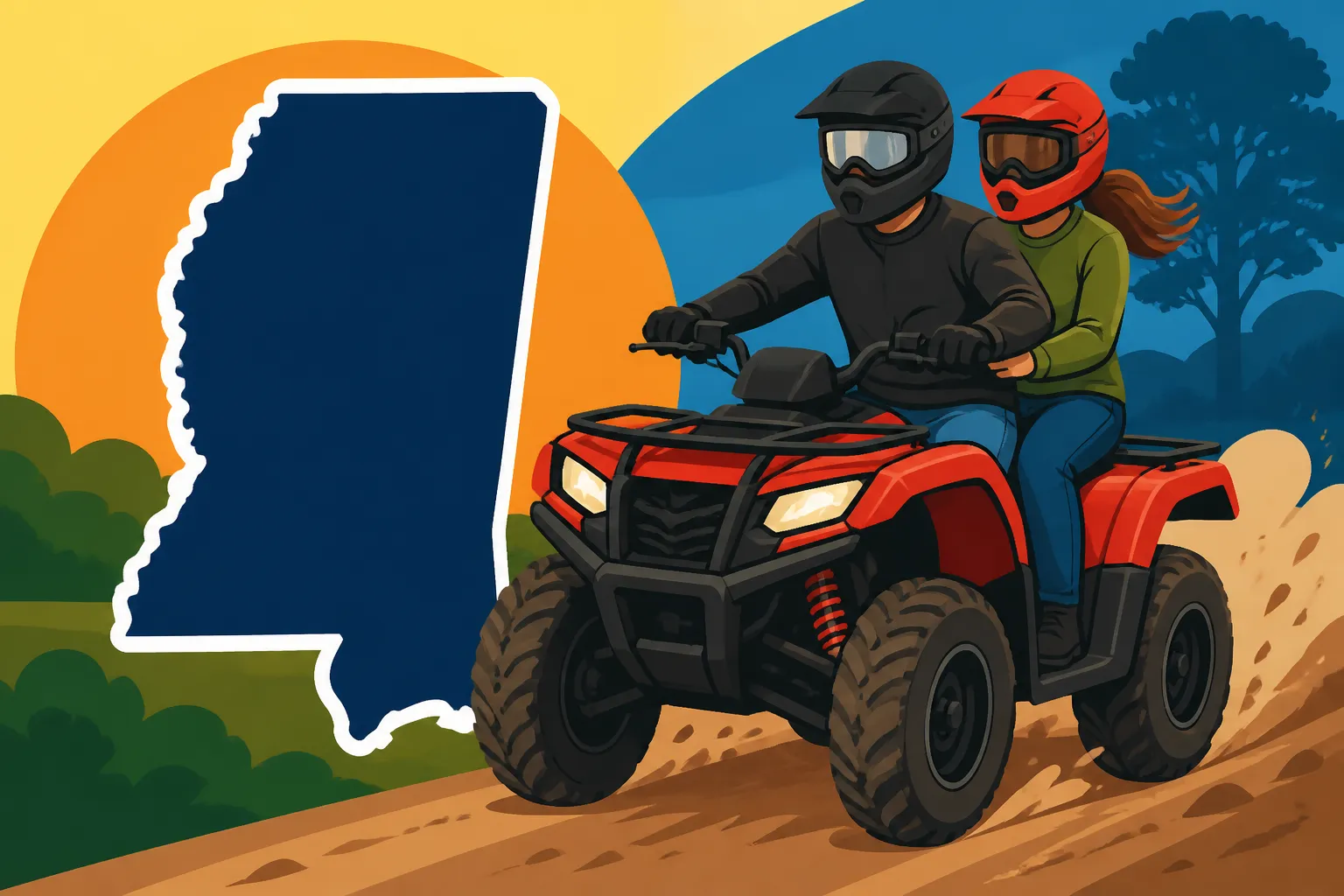
The desire to share the exhilaration of an off-road adventure with a loved one or a friend is a natural one. We picture the wind in our hair, the sights and sounds of the Mississippi wilderness, and that shared sense of freedom. But for many ATV owners in the Magnolia State, the idea of taking a passenger brings with it a knot of uncertainty: what exactly are the rules? Is it even legal to carry someone on your quad? This common frustration stems from a lack of crystal-clear regulations, leaving riders to wonder about safety, legality, and potential consequences. This comprehensive guide will untangle the complexities of Mississippi’s laws regarding ATV passengers, helping you understand both the letter of the law and the crucial safety considerations.
The State Law: What Mississippi Says About ATV Passengers
It's completely understandable to feel a bit lost when you're trying to nail down specific regulations for carrying passengers on your ATV in Mississippi. Unlike some states with highly detailed off-road vehicle codes, Mississippi's statutes tend to be rather concise. This brevity can be both a blessing and a curse. On one hand, it might seem to offer more operational freedom. On the other, it creates ambiguity, leaving responsible riders questioning what's truly permissible and, more importantly, what's truly safe.
The Bare Bones of Mississippi's Law
When you dive into the Mississippi Code that pertains to off-road vehicles (Chapter 31 of Title 63, specifically), you'll quickly realize that the state's main focus is on defining what constitutes an ATV, where it can be operated (primarily off-road, with strict prohibitions on public roads), and what basic equipment might be required for youth. What you won't find is a bold, unequivocal statement that says, "No passengers allowed on a single-rider ATV." This silence often leads riders to a common, yet potentially risky, assumption: if it's not expressly forbidden, it must be allowed.
However, relying solely on the absence of a direct prohibition can be a dangerous game, especially when considering the design intent of most ATVs and the serious implications of an accident. The statutory definitions, such as those found in [Mississippi ATV and ROV Legal Definitions], inherently classify many ATVs as single-operator vehicles. While the law might not explicitly ban a passenger, it doesn't endorse unsafe modifications or operations either. The very design of a quad—a single saddle seat, a single set of footpegs, and a suspension tuned for one rider—speaks volumes about its intended use, a fact that can carry significant weight in legal and insurance contexts.
Interpreting "Factory Designed" and Machine Definitions
Here's where the nuances of the law, combined with common sense and safety standards, start to provide some clarity, even without an explicit passenger ban. The concept of "factory designed" seating is paramount. Most traditional ATVs, the kind commonly referred to as "quads," are manufactured as single-rider machines. This isn't just an arbitrary choice by the manufacturer; it's based on extensive engineering and testing to ensure stability, handling, and safety for one operator. The compliance labels affixed to these machines often clearly state their single-rider designation.
When a Mississippi deputy, an insurance adjuster, or a court system looks at an incident involving an ATV with a passenger, they will undoubtedly consider whether the vehicle was being operated according to its original design. If a machine is not "factory designed" for a passenger, then adding one, even if not explicitly outlawed by a specific statute, moves into a gray area of operating the vehicle outside its intended, safe parameters. This can have profound implications for liability. The advice to only allow [Passengers Only on a Factory Two-Seat Machine] isn't just a suggestion; it’s a direct nod to safe operation and design intent.
Consider the physics: adding a second person, especially on a rear rack or an improvised seat, drastically shifts the ATV's center of gravity. This impacts everything from braking distance and steering responsiveness to the likelihood of a rollover. These are not minor changes; they fundamentally alter the safe operational characteristics of the machine. The state's brief ATV laws implicitly rely on manufacturers' safety guidelines and the common understanding of vehicle design for safe operation.
Why No Explicit Passenger Ban?
It's a really valid question, and one that often causes frustration for riders: why doesn't Mississippi just spell it out clearly, like "no passengers on quads"? Part of the answer lies in the broad categories of off-road vehicles. The state's general off-road vehicle law, exemplified by sections like [Mississippi Code Section 63-31-1], aims to cover a wide range of machines, from dirt bikes to multi-passenger side-by-sides. Crafting an exhaustive list of prohibitions for every conceivable scenario for every type of machine can be incredibly complex.
Instead, Mississippi's legal framework for off-road vehicles, particularly in its limited section, tends to be less prescriptive on operational specifics like passenger rules, relying more on the foundational definitions and overarching principles of safe operation. This doesn't mean "anything goes." It means that while a specific "no passenger on ATV" line might not exist, a law enforcement officer has the discretion to intervene if they observe unsafe operation. For example, if carrying a passenger leads to reckless handling or creates an unsafe vehicle condition, the operator could still face citations under general public safety laws. This approach is consistent with why [Mississippi's Road Ban Lists No Exceptions] for ATVs; the law focuses on broad principles rather than minute operational details for every scenario.
Understanding "Factory Designed" Seating for ATVs and UTVs
The concept of "factory designed" is the linchpin when it comes to passenger rules for off-road vehicles in Mississippi. It's not merely a legalistic term but a fundamental safety principle that differentiates how various machines can safely and legitimately accommodate multiple riders. Attempting to circumvent this design by adding improvised seating or aftermarket solutions can introduce significant risks and potential legal entanglements.
Quads vs. Side-by-Sides: A Clear Difference
Let's cut through the confusion right away: a standard, traditional ATV (often called a quad) is almost universally designed for one rider. Period. It has a single saddle seat, handlebars for steering, and footpegs meant for one person. Any space on the rear rack is meant for cargo, not for another human being, regardless of how comfortable it might look. The entire machine—from its weight distribution to its suspension and steering geometry—is engineered for the dynamic of a single operator. Adding a passenger completely throws off these finely tuned characteristics, making the machine inherently less stable and significantly harder to control, especially over varied terrain or during sudden maneuvers.
Side-by-sides, or UTVs/ROVs, are a completely different animal in this regard. These machines are purpose-built to carry multiple occupants. They feature actual bucket seats or bench seats, complete with seatbelts, and typically include a roll cage for enhanced safety. Their wider stance and more robust suspension systems are designed from the ground up to accommodate the weight and movement of additional passengers safely. When the law, safety organizations, or manufacturers refer to "factory designed" seating for multiple occupants, they are invariably talking about side-by-sides. If you need clarity on the various classifications of these vehicles, reviewing [What the Law Counts as an Off-Road Vehicle] can be incredibly helpful.
Aftermarket Add-ons and the Law
This is where many riders venture into a gray area that can become problematic. The aftermarket for ATVs and UTVs is vast, offering everything from performance upgrades to cosmetic enhancements. Among these are accessories like bolt-on rear seats or passenger "pods" designed to attach to the cargo rack of a single-rider ATV. While these products might appear to solve the passenger dilemma, they generally do not transform a single-rider ATV into a "factory designed" multi-passenger vehicle in the eyes of the law or safety standards.
Even if an aftermarket product, perhaps from a well-known supplier like SuperATV, is manufactured with high quality and seems sturdy, it cannot fundamentally re-engineer your ATV's core design. Your quad's frame, suspension, braking system, and stability profile are still calibrated for one operator. Installing an aftermarket seat doesn't change these fundamental engineering principles. In the event of an accident, utilizing such an add-on could be interpreted as operating the vehicle outside its intended design and safety specifications. This could complicate insurance claims and potentially increase your liability, even in the absence of a specific Mississippi statute directly banning aftermarket passenger seats on ATVs. The bottom line is that while aftermarket parts can enhance your ride, they rarely alter the vehicle's fundamental safety rating for passenger capacity.
What a Deputy Looks For
When a Mississippi deputy encounters riders with passengers, whether on public lands where ATVs are occasionally permitted (like designated trails within a wildlife management area) or if they're responding to a complaint, their focus is on public safety and adherence to the spirit of the law. They're not just looking to ticket for a specific violation; they're assessing the overall safety of the situation.
Here’s what a deputy might consider:
- Machine Type and Seating: Is it clearly a side-by-side with appropriate seating and seatbelts, or is it a quad with a passenger perched precariously on a cargo rack or an aftermarket add-on? The distinction in terms of safety and design intent is usually quite evident.
- Passenger's Position and Security: Is the passenger secured safely within the vehicle (with a seatbelt in a UTV)? Are they holding on properly, or are they struggling to maintain balance? Are their limbs exposed to potential hazards?
- Operator's Control and Visibility: Is the operator struggling to control the machine due to the added weight or the passenger's movement? Is the passenger obstructing the operator's view?
- Age of Passengers: The presence of young children immediately brings additional scrutiny, primarily regarding helmet use, which is strictly mandated for riders and passengers under the age of 16. [Mississippi ATV Helmet Law Age] is a critical piece of legislation here.
While a deputy may not have a specific "no passenger on a quad" line item on a citation form, they certainly have the authority to issue tickets for reckless operation, unsafe vehicle modification, or operating a vehicle in a manner that endangers public safety. The lack of an explicit passenger ban doesn't provide blanket permission to operate unsafely; it places a higher burden of responsibility on the operator to ensure safety.
| Feature | Single-Rider ATV (Quad) | Multi-Rider UTV (Side-by-Side) |
|---|---|---|
| Primary Design | For one operator | For multiple occupants |
| Seating Arrangement | Single saddle seat | Bucket seats or bench seating |
| Control Interface | Handlebars | Steering wheel |
| Passenger Protection | Minimal, relies on operator skill | Roll cage, seatbelts, sometimes doors |
| Stability (with multiple occupants) | Significantly compromised | Engineered for stability with multiple riders |
| Aftermarket Seating | Available but typically not "factory designed" for passengers | Standard factory seating; aftermarket mostly for style/comfort |
| Manufacturer Guidance | Strongly advises against passengers on single-rider models | Designed for and encourages use of all factory seats |
Specific Rules and Safety for Youth Passengers
When children are involved, the stakes become even higher. Carrying young passengers on an ATV or UTV introduces not only additional legal requirements in Mississippi but also profound ethical and safety considerations that every responsible adult must prioritize. It's not just about what the law permits; it's about what ensures the greatest protection for our most vulnerable riders.
The Under-16 Helmet Mandate
This rule is one of the clearest and most critical in Mississippi's off-road vehicle statutes. Any person, whether they are operating or riding as a passenger on an ATV, who is under the age of 16, must wear an approved safety helmet. There are no exceptions to this rule. The helmet must meet recognized safety standards, such as those established by the U.S. Department of Transportation (DOT), indicating it has passed rigorous testing. This applies universally, whether the child is driving a youth-model ATV on private land or simply riding along in a side-by-side on a designated trail. It is the explicit responsibility of parents, guardians, and supervising adults to ensure this law is strictly followed.
Ignoring the helmet law for minors is not only an egregious safety lapse that could lead to devastating head injuries but also a clear violation that can result in legal penalties. This mandate underscores the state's acknowledgment of the significant risks involved in off-road riding, particularly for children whose developing bodies are more susceptible to injury. Even if you're riding exclusively on private property, this rule still applies. For further details on what constitutes an approved helmet, it's wise to consult [Mississippi Helmet Standards for Young Riders].
Supervising Young Passengers
Beyond just wearing a helmet, proper supervision is paramount when children are riding as passengers. If you're carrying a child in a side-by-side, ensure they are correctly seated, buckled in with the vehicle's seatbelts, and instructed to keep their hands and feet inside the vehicle at all times. Due to their smaller size, children might instinctively try to reach out or shift their position, which can be extremely dangerous on bumpy or uneven terrain. Using appropriately sized seating, booster cushions, or other child-restraint systems specifically designed for UTVs can help keep them secure and properly positioned.
For the much riskier scenario of carrying a child as a passenger on a single-rider ATV (despite manufacturer warnings and general safety recommendations), supervision becomes even more critical, almost to the point of impossibility for true safety. A child’s smaller hands and less developed grip strength make it very difficult for them to hold on securely, especially during sudden bumps, turns, or accelerations. Safety organizations almost universally advise against this practice precisely because of the inherent instability and the child's inability to adequately protect themselves. This is why resources outlining [Mississippi Rules for a Child Passenger] often lean heavily on warnings and best practices.
When a Child is a Passenger, Not a Driver
It's important to distinguish between a child operating an ATV and a child riding as a passenger. Mississippi law has certain age guidelines and requirements, such as needing a safety course certificate for children under 16 to operate an ATV on public lands where allowed. However, a child riding as a passenger on a machine does not need to meet these operator requirements; their primary legal mandate is the helmet. This difference is key to understanding [Mississippi ATV Age Requirements].
However, the absence of an operating permit or safety course requirement for a child passenger does not lessen the burden of responsibility on the operator of the ATV or UTV. As the adult in control, you are fully responsible for the safety and well-being of any child passenger. This means exercising extreme caution, choosing appropriate terrain, maintaining very slow speeds, and constantly monitoring the child's comfort and security. It means recognizing the limits of your machine, your abilities, and the inherent risks. When in doubt, the safest decision is always to err on the side of caution and not put a child in a potentially hazardous situation. Even if your [Mississippi Safety Course Certificates] didn't cover passenger specifics, the core safety principles they teach are directly applicable here.
Safety and Liability: Considerations Beyond the Written Law
While Mississippi's specific statutes on ATV passengers might seem sparse, acting as a responsible rider means looking beyond the bare minimum of the law. When you choose to carry a passenger, especially on an ATV not designed for two, you're entering a high-stakes arena where safety and legal liability are paramount. Understanding these broader implications is essential for safeguarding yourself, your passengers, and your financial future.
The Risks of Carrying Passengers Improperly
Let's be unequivocally clear: carrying a passenger on a single-rider ATV is an inherently high-risk endeavor. The design specifications of these machines simply do not account for the presence of a second person.
- Elevated Rollover Risk: The most immediate and significant danger is the dramatic increase in rollover potential. Adding a passenger, particularly one who shifts their weight (which is almost unavoidable on uneven terrain), raises the machine's center of gravity and severely compromises its stability. Simple turns, navigating rough trails, or even slight inclines/declines can easily lead to a loss of control and a rollover.
- Compromised Handling and Control: With the added weight and altered balance, your ATV will handle very differently. Braking distances will increase, acceleration will be sluggish, and steering will feel less precise and responsive. Your ability to react quickly to unexpected obstacles or changes in the trail environment will be significantly impaired, making evasive maneuvers far more difficult.
- Increased Exposure to Hazards: Passengers on single-rider ATVs often lack proper handholds and footrests, leaving them vulnerable. They are more exposed to hazards like low-hanging branches, flying debris from the tires, or even contact with the machine's moving parts. Their precarious position offers little to no protection in the event of a collision or rollover.
- Operator Fatigue: The additional effort required to control an ATV with an improperly carried passenger can lead to rapid operator fatigue. Fatigue, in turn, impairs judgment and reaction time, creating a dangerous cycle that escalates accident risk.
These risks are not abstract; they are documented realities in ATV accident statistics and are consistently highlighted in manufacturer warnings and safety guidelines. Even reputable aftermarket companies like SuperATV, while offering products to enhance machines, always stress the importance of operating within safe parameters and manufacturer specifications. No aftermarket part can fundamentally change the engineering of a single-rider ATV to safely accommodate a passenger.
Insurance Implications for Passenger Injuries
This is a critical area that many riders unfortunately overlook. Unlike passenger vehicles, Mississippi does not legally mandate ATV insurance. This means that [Mississippi Has No Insurance Mandate] for off-road machines. As a result, many riders choose not to carry coverage, especially if they primarily use their ATV on private land. However, if you carry a passenger, and that passenger is injured, you could be held personally and financially liable for their medical bills, lost wages, and pain and suffering. This isn't just a worst-case scenario; it's a very real financial exposure that could lead to significant personal debt or even the loss of assets.
If you do have an ATV insurance policy, it's absolutely vital to understand its specific clauses regarding passenger coverage. Many standard ATV policies are underwritten with the assumption that the machine is a single-rider vehicle. If you were carrying a passenger on a quad not designed for two, your insurance provider might argue that you were operating the vehicle outside its intended use or in a negligent manner, which could lead to a denial of coverage for your passenger's injuries. This would leave you directly responsible for potentially massive costs. Conversely, if you are carrying passengers in a factory-designed side-by-side with everyone properly secured, your liability coverage is much more likely to function as intended. This is a conversation you absolutely need to have with your insurance agent before you ever take a passenger along, highlighting why many riders carefully consider [Why Mississippi Riders Still Buy ATV Insurance].
Practical Safety Tips for Riding with Others
If you choose to carry a passenger (and again, we strongly recommend this only be done on a machine explicitly designed for it, like a UTV), or if you choose to proceed on a quad despite the inherent risks, adhering to strict safety protocols is non-negotiable.
- Thorough Passenger Briefing: Before setting off, verbally brief your passenger on riding procedures. Instruct them precisely where to hold on, how to keep their feet and hands secure, and how to lean with you into turns. Emphasize the importance of following your cues and avoiding sudden, unexpected movements.
- Essential Protective Gear for All: Ensure that both you and your passenger wear complete, appropriate safety gear. This includes a DOT-approved helmet (mandatory for anyone under 16), eye protection, sturdy over-the-ankle boots, long pants, and long-sleeved shirts or jackets, and gloves.
- Conservative Riding Style: Drastically alter your riding style. Avoid aggressive maneuvers, high speeds, challenging terrain, steep inclines or declines, and sharp turns. Stick to flat, open, and predictable trails. Your priority is smooth, controlled movement, not thrill-seeking.
- Constant Communication: Maintain regular verbal communication with your passenger throughout the ride. Frequently check in to ensure they are comfortable, secure, and not experiencing any distress.
- Pre-Ride Vehicle Inspection: Conduct a comprehensive pre-ride inspection every time you intend to carry a passenger. Pay close attention to tire pressure, brake function, fluid levels, and ensure that any passenger seating (on a UTV) is securely fastened and seatbelts are fully functional.
- Acknowledge Limits: Be acutely aware of your own riding skill limits and, more importantly, the limits of your machine when carrying an additional load. If at any point the machine feels unstable, or you feel uncomfortable or out of control, stop immediately and re-evaluate. It is always better to postpone a ride or make alternative arrangements than to risk an accident.
- Consider a Dedicated Multi-Rider Machine: If carrying passengers is a frequent or essential part of your riding experience, seriously consider investing in a side-by-side (UTV) or a purpose-built two-up ATV, which some manufacturers offer. These machines are engineered specifically to accommodate the dynamics, weight, and safety needs of multiple occupants, providing a far safer and more responsible option than adapting a single-rider quad.
By conscientiously prioritizing safety and thoroughly understanding the significant implications of carrying passengers on your ATV or UTV, you can make more responsible decisions and ensure that your shared off-road adventures remain enjoyable and, most importantly, free from harm.
Disclaimer
This article is for general informational purposes only and does not constitute professional advice. Laws, prices and regulations vary by location and change over time. Consult a qualified professional for guidance on your specific situation.