Golf Carts Only on Streets Posted 30 mph
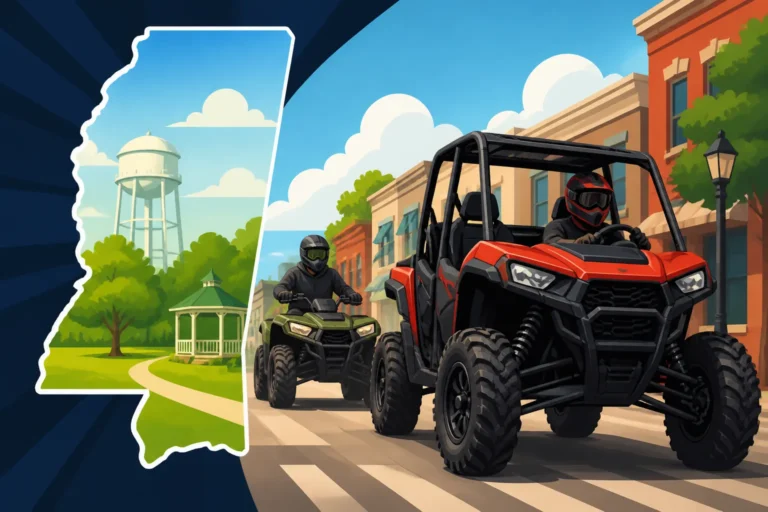
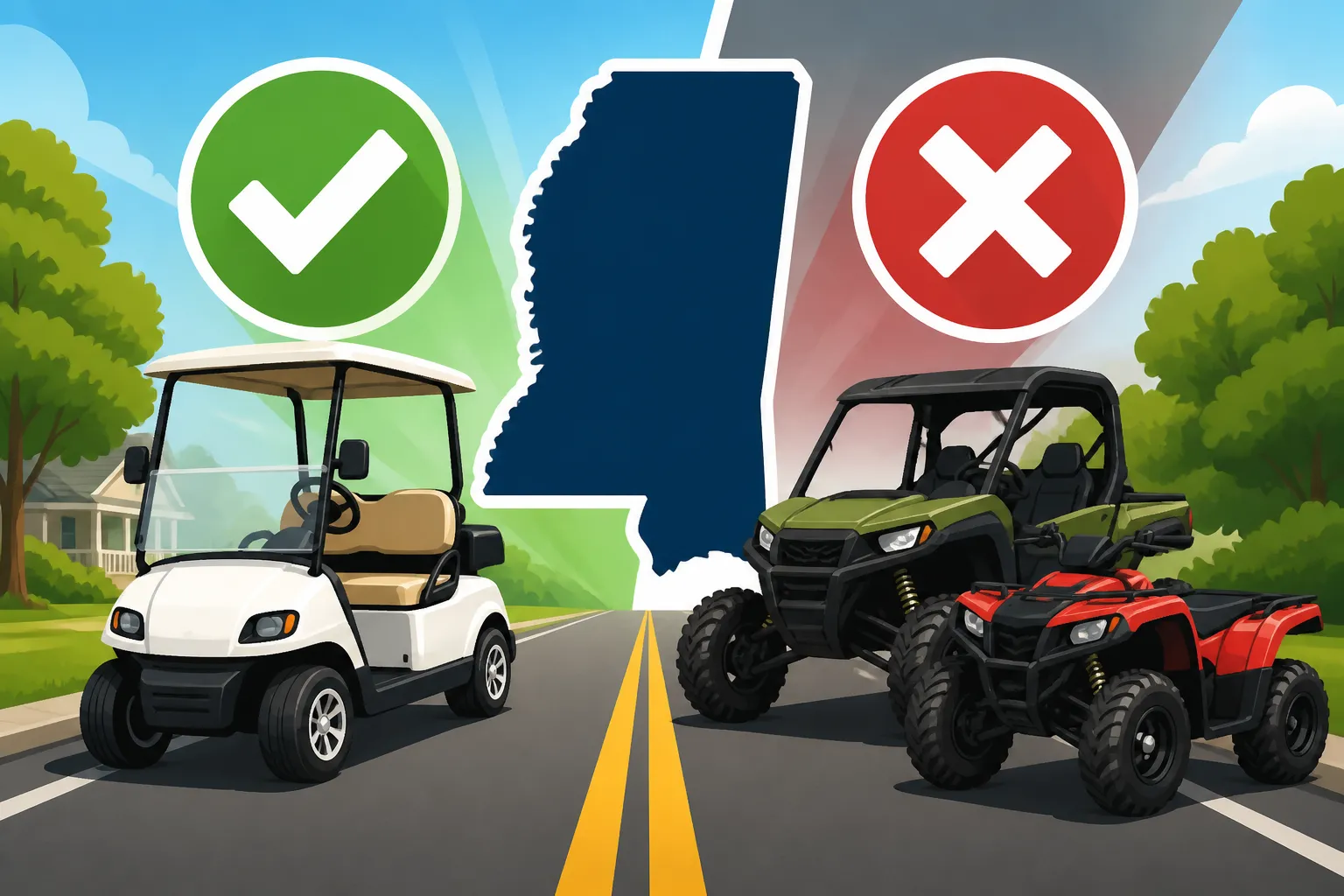
It's a common sight in many charming Mississippi towns: golf carts zipping along the streets, sometimes even with families heading to dinner or neighbors visiting friends. You might even own an ATV or a side-by-side, wondering why your machine, which seems perfectly capable, can't enjoy the same freedom. This guide dives deep into Mississippi's specific laws regarding off-road vehicles on public roads, tackling the frustrating reality that golf carts often get a pass where ATVs do not, and what that means for riders like you.
The Harsh Reality: Mississippi's Blanket Ban on ATVs on Public Roads
Let's get straight to the point because it's the biggest hurdle for ATV and UTV owners in Mississippi: with very few and specific exceptions for crossing, Mississippi state law flatly prohibits the operation of ATVs and UTVs on public roads. This isn't just a suggestion; it's a legal directive that has left many riders feeling confused and restricted, especially when they see other types of small vehicles enjoying road access.
What the State Law Actually Says
The core of Mississippi's stance on ATVs on public roads is found primarily in two brief but powerful sections of state law: Mississippi Code Section 63-31-1 and 63-31-3. These sections define what an "all-terrain vehicle" or "off-road vehicle" is and, more importantly for our discussion, explicitly state that these machines are not to be operated on the public streets, roads, or highways of the state. It doesn't matter if it's a gravel road winding through the countryside, a quiet subdivision street, or a bustling city thoroughfare – the state law draws a hard line.
Many riders, understandably, find this frustrating. They invest significant money in their machines, often equipping them with lights, mirrors, and turn signals, thinking these additions might qualify them for road use. However, the state's legal framework doesn't base road legality on accessories; it's based on the fundamental classification of the vehicle itself. The law makes no allowances for speed, size, or perceived safety features when it comes to the general prohibition.
Why a Title Doesn't Grant Road Access
A common misconception that trips up many ATV owners, especially with Mississippi's new titling requirements starting in July 2025 for newer machines, is the idea that obtaining a title somehow makes their ATV or UTV "street legal." You might think, "If the state is going to title my machine, surely that means I can ride it on the road, right?" Unfortunately, this couldn't be further from the truth. The purpose of a title is primarily for establishing ownership, recording liens, and facilitating sales, much like a title for a boat or a piece of heavy equipment. [Mississippi ATV Titling Starts July 2025]
A title in Mississippi does not, and will not, confer the right to operate your ATV or UTV on public roads. The titling process is a separate administrative function from vehicle registration for road use. A titled ATV in Mississippi still operates under the same road restrictions as an untitled one. It's a distinction that often catches new owners off guard, leading to fines and disappointment when they discover their newly titled machine is still confined to off-road use. [Mississippi Does Not Register ATVs]
The "Farm Road" Exception That Isn't
Another persistent myth that circulates among rural riders is the idea of a "farm road exception" where ATVs are supposedly allowed on public roads for agricultural purposes. While some states do have provisions for farmers to use ATVs on public roads to move between fields or access remote parts of their property, Mississippi does not have a state-level farm road exception in its ATV laws. This is a critical point that can lead to significant issues if a rider assumes such an exception exists here.
Riders might rationalize their road use by saying they're just going from one hunting camp to another, or moving hay across a small county road. While these activities are practical and often necessary for farm and land management, using public roads for them, even briefly, remains illegal under current state law. Without a specific legislative carve-out, deputies are within their rights to issue citations for any ATV or UTV operating on a public road, regardless of the owner's intention or destination. This lack of a specific exception underscores the strict interpretation of the state's blanket ban. [Mississippi Has No Farm Road Exception]
Golf Carts vs. ATVs: Understanding the Legal Divide
The frustration often boils over when ATV and UTV owners see golf carts freely navigating town streets while their more robust machines are relegated to private land or dedicated trails. This isn't a matter of fairness in the eyes of the law, but rather a distinction in how these vehicles are defined and regulated. The key lies in the fact that golf carts fall into a different legal category, often granted specific local permissions that simply don't extend to ATVs.
Defining a Golf Cart Under Mississippi Law
In Mississippi, a "golf cart" is a distinctly defined vehicle, often characterized by its original design for golf courses and its inherent speed limitations. Typically, golf carts are designed to travel at speeds no greater than 20-25 mph and are not built with many of the safety features found on conventional automobiles. This classification is crucial because it separates them from the "off-road vehicle" category that ATVs and UTVs fall into.
The state's approach allows municipalities the flexibility to create ordinances specifically for golf carts, recognizing their lower speed and different primary purpose. This legal framework permits towns to control where, when, and how golf carts can be operated on their local streets, under the condition that those streets are typically posted at 30 mph or less. Without this distinct classification, golf carts would likely fall under the same broad restrictions as other off-road vehicles. [Mississippi Golf Cart Statutes]
The Power of Local Ordinances for Golf Carts
The reason you see golf carts on streets in places like Hattiesburg or Ocean Springs is almost always due to a specific local ordinance passed by that city's governing body. These ordinances are local laws that override the general state prohibition for golf carts within their municipal limits. For instance, a town might decide that golf carts can be operated on city streets posted 30 mph or less, during daylight hours, and with certain safety equipment. This gives residents a recreational and convenient mode of transportation for short trips within town.
These local ordinances are a direct reflection of a community's desire to allow specific, low-speed vehicles to be part of their local traffic flow. They are carefully crafted to define eligible vehicles, often specifying speed limits, required safety features like lights and mirrors, and even age restrictions for drivers. However, it's vital to remember that these ordinances are specific to golf carts and do not automatically extend to other types of off-road vehicles. Each town has its own rules, and what's allowed in one city might be strictly forbidden in another. [Hattiesburg's Cart Ordinance in Mississippi]
Why These Ordinances Don't Apply to ATVs
Here's the frustrating kicker for ATV and UTV enthusiasts: the local ordinances that allow golf carts on public streets almost universally do not apply to ATVs or UTVs. While both are off-road machines in many people's minds, the law sees them differently. ATVs and UTVs are typically more powerful, designed for higher speeds, and are generally classified as "off-road vehicles" or "recreational off-highway vehicles" (ROVs) by the state. This classification places them under the blanket state ban for public road use, regardless of local golf cart ordinances.
Some towns, in an effort to be crystal clear, will even explicitly state in their golf cart ordinances that ATVs and UTVs are not included. Ocean Springs, for example, is known for naming specific types of machines it bars from its streets, making the distinction unambiguous. So, while you might have added every imaginable piece of safety gear, from a full windshield to advanced turn signals, or even an aftermarket roll cage from a company like SuperATV, it doesn't change the underlying legal classification that keeps your machine off public roads in Mississippi. The legal framework simply doesn't provide the same pathway for local governing bodies to permit ATVs or UTVs on streets in the same way they can for golf carts. [Why Ocean Springs Refuses to Register ATVs]
Navigating Local Ordinances: A Rare and Narrow Path for UTVs?
Given the strict state-level ban on ATVs on public roads, many UTV owners wonder if there's any hope for their larger, often more utility-focused machines. While the path is incredibly narrow and rare, there are specific categories of vehicles that, under certain circumstances, might gain limited road access through local ordinances. This usually involves understanding the distinction between an ROV (a UTV) and a Low-Speed Vehicle (LSV), and recognizing that such opportunities are exceptions, not the rule.
The Elusive "Low-Speed Vehicle" (LSV) Category
Mississippi law does recognize a category of vehicle called a "Low-Speed Vehicle" (LSV). An LSV is typically defined as a four-wheeled vehicle with a top speed greater than 20 mph but not greater than 25 mph. Unlike golf carts, which are often factory-limited to around 20 mph, LSVs are designed for slightly higher speeds and usually come equipped with specific safety features required for limited road use, such as headlights, tail lights, turn signals, stop lights, a rearview mirror, seat belts, and a vehicle identification number (VIN).
The crucial difference for UTV owners is that an LSV is typically manufactured as an LSV, meeting federal safety standards for that classification. It's not simply a UTV that has been modified. While some aftermarket companies, including those that offer extensive UTV accessories like SuperATV, sell components that might look like they make a UTV street-legal (such as turn signal kits or DOT-approved windshields), these modifications generally do not change the vehicle's original classification as an off-road vehicle in the eyes of the state. A UTV, even one with every bell and whistle, rarely meets the stringent definition and manufacturing requirements of a true LSV, which would allow it to be registered and operated on specific public roads where permitted by local ordinance. [Mississippi Low-Speed Vehicle Statutes]
Checking for Local UTV/ROV Ordinances
If you're determined to explore every avenue for road access for your UTV or ROV, your only real hope lies in the possibility of a local ordinance specifically addressing UTVs/ROVs in your particular town or county. However, let's be realistic: such ordinances are exceedingly rare in Mississippi. While many towns have golf cart ordinances, very few extend these privileges to ATVs or UTVs, for the reasons we've already discussed regarding their differing classifications and capabilities.
To check for such an ordinance, you would need to contact your local city clerk's office, the county board of supervisors, or your local law enforcement agency. Be very specific in your questions: "Does our city/county have an ordinance that permits the operation of Recreational Off-Highway Vehicles (ROVs) or UTVs on public streets?" Don't ask about "ATVs" generally, as they are typically treated even more restrictively than UTVs due to their inherent design. Even if an ordinance exists, it will likely be highly restrictive, specifying speed limits, types of roads, hours of operation, and required safety equipment. These rules are far from universal, so always check with your specific locality.
The Limits of Local Control for ATVs
It's important to understand the hierarchy of laws here. State law provides the overarching prohibition on ATVs (and by extension, most UTVs) on public roads. Local governments can pass ordinances that grant more freedom, but only for categories of vehicles where the state has given them that authority (like golf carts or sometimes LSVs). For general ATVs and ROVs, the state has been very clear.
This means that while a town could potentially pass an ordinance allowing ROVs, it would have to be carefully constructed to not conflict with the broader state statutes, which is a significant legal challenge. The state's position is firm: ATVs are off-road vehicles. Therefore, unless a legislative change happens at the state level to broaden local authority for ATVs and UTVs, or a specific UTV somehow meets the legal definition of an LSV and is properly registered as such, your off-road machine will remain off the road. The existing state law, which is only two sections long, provides very little flexibility for local jurisdictions to permit general ATV or UTV road use. [Mississippi's ATV Law Is Only Two Sections Long]
Consequences of Illegal Road Riding in Mississippi
Given the strict prohibition, it's crucial to understand the very real and potentially expensive consequences of operating an ATV or UTV illegally on Mississippi's public roads. Many riders, either out of ignorance or frustration, take the risk, only to find themselves facing fines, court appearances, and even the loss of their machine. It’s simply not worth the gamble when the law is so clearly defined.
Fines, Citations, and Court Costs
The most immediate consequence of being caught riding an ATV or UTV on a public road in Mississippi is receiving a citation. While the state law itself specifies a relatively modest fine range for this offense, typically up to $50, this is often just the beginning of the financial impact. When you receive a citation, you're usually required to appear in Justice Court or Municipal Court, and these courts invariably add their own "court costs" on top of the base fine.
These court costs can easily double or even triple the amount you initially expect to pay. What starts as a $50 fine can quickly become $150 or more once all the administrative fees are factored in. This can be a rude awakening for riders who assume the penalty is minimal. Furthermore, depending on the jurisdiction, repeated offenses could lead to escalating fines or other penalties, making it an increasingly costly habit. [Mississippi Fine Ranges for Road Riding]
Potential for Machine Impoundment
Perhaps the most severe and impactful consequence, beyond the monetary fines, is the potential for your ATV or UTV to be impounded. Law enforcement officers have the authority to impound vehicles that are being operated illegally, especially if the operation poses a safety risk or is a repeated offense. Imagine your machine, which could represent thousands of dollars in investment, being hauled away on a tow truck.
The impoundment process is not only a major inconvenience but also adds significantly to your financial burden. You would be responsible for the towing fee, daily storage fees at the impound lot, and possibly administrative fees from the law enforcement agency. These costs can quickly add up, sometimes exceeding the value of the machine itself, especially for older or less expensive models. Retrieving your machine from impound can be a lengthy and frustrating process, requiring proof of ownership and payment of all accrued fees, on top of any fines from the citation itself. [When an ATV Gets Impounded After a Stop]
Insurance and Liability Nightmares
Beyond the legal penalties, riding an ATV or UTV on a public road in Mississippi also opens up a terrifying world of insurance and liability issues. Most standard ATV insurance policies are designed to cover off-road use, not incidents that occur on public roads. If you're involved in an accident while riding your ATV illegally on a public street, your insurance company could very well deny your claim. [Mississippi Has No Insurance Mandate]
This means you would be personally responsible for all damages – to your own machine, to any other vehicles involved, and to any property. More critically, you would be liable for any medical expenses incurred by yourself, passengers, or other parties. If serious injuries occur, this could amount to hundreds of thousands or even millions of dollars in damages, potentially leading to devastating financial ruin. Without valid insurance coverage for road incidents, you are exposing yourself to an incredible level of personal financial risk that far outweighs the convenience of a short road ride. [Why Mississippi Riders Still Buy ATV Insurance]
Crossing Public Roads: The Only Exception to the Rule
While Mississippi maintains a firm stance against the general operation of ATVs and UTVs on public roads, there is one very specific and limited exception that is often misunderstood: the ability to cross a public road. This is not an open invitation to ride on the road, but rather a narrow allowance for moving from one piece of private property to another when a public road separates them.
Crossing as Directly and Safely as Possible
The key principle for crossing a public road with an ATV or UTV in Mississippi is to do so as directly and safely as possible. This means you should approach the road, stop, look both ways, and proceed straight across to the other side without veering down the road or traveling any unnecessary distance along the roadway. The intent is not to use the road as a thoroughfare, even for a short stretch, but simply to bridge the gap between two legal off-road areas.
Think of it like moving a piece of farm equipment across a busy highway – you do it quickly, carefully, and without prolonging your presence on the main road. This often means finding the narrowest point of the road to cross, minimizing the time your machine spends in active traffic lanes. The emphasis is always on safety, for yourself and for other road users who may not anticipate an off-road vehicle in their path.
Yielding to All Traffic
When you approach a public road to cross it with your ATV or UTV, you are absolutely required to yield to all oncoming traffic. This is not a suggestion; it's a critical safety and legal mandate. You must ensure the way is clear and that your crossing will not impede or endanger any vehicles already on the road. This means waiting patiently for a safe opening, even if it takes a few minutes.
Attempting to cross when traffic is too close, or failing to yield, could not only lead to a dangerous accident but also result in further citations or charges if law enforcement witnesses the infraction. The burden of ensuring a safe crossing falls entirely on the ATV/UTV operator, and any incident resulting from a failure to yield will likely be attributed to the off-road vehicle operator. Always assume that the public road traffic has the right-of-way.
No Cruising, Just Crossing
It bears repeating: the allowance is strictly for crossing, not for "a little bit of road riding" to get to the next trail. There is no legal grace period for traveling a certain distance down the road before or after a crossing. The moment your wheels touch the public road, your operation is scrutinized. If you are caught traveling any significant distance along the road, even if you argue you were "just getting to the next crossing point," you are likely to be cited for illegal road use.
This distinction is crucial for understanding the limited nature of this exception. It's designed for practical access to adjacent private property, not for extending your riding area onto public infrastructure. Adhering strictly to the "crossing only" rule is the only way to potentially avoid legal trouble when your off-road adventures necessitate briefly traversing a public thoroughfare. Always err on the side of caution and keep your time on the pavement to an absolute minimum.
Planning Your Rides: Local Resources and Avoiding Trouble
Understanding the legal landscape is the first step, but practical application requires knowing where you can ride and how to gather reliable information. Instead of guessing or relying on hearsay, proactively seeking out official resources and planning your routes will save you a lot of headache and potential fines.
Connecting with Local Authorities
When in doubt about a specific area or a potential riding route, the absolute best course of action is to directly contact local authorities. This could mean calling the non-emergency line of the Sheriff's Office in the county you plan to ride, or the Police Department if you're close to a specific municipality. For state roads or major highways, the Mississippi Highway Patrol might be able to offer clarification on crossing specific roads.
When you call, be polite and specific. State that you own an ATV or UTV and are trying to understand the local rules for operation, particularly regarding road access or crossings in a particular area. While you might encounter varying levels of knowledge, most agencies will be able to point you to the relevant local ordinances or confirm the state's general ban. Getting this information directly from law enforcement can prevent misunderstandings and legal trouble down the line. [Asking Your County Supervisor Where You Can Ride]
Utilizing Official Trail Maps and Resources
For those looking to ride legally and safely, Mississippi actually offers some fantastic off-road opportunities. The key is to seek out designated riding areas and use their official maps and rules. Places like Bethel OHV Trails in the De Soto National Forest offer miles of marked trails where ATVs and UTVs are not only permitted but encouraged. Private mud parks and off-road parks also provide controlled environments where you can enjoy your machine without worrying about public road laws.
These official resources will clearly delineate riding areas, often provide trail difficulty ratings, and list specific rules for operation within their boundaries. Stick to these designated areas and their marked trails. Do not assume that just because an area looks like a trail or a logging road, it's open to off-road vehicles. Always verify with official maps or contact the land manager (e.g., USDA Forest Service for National Forests) before venturing out. [Mississippi ATV Trails: Where to Ride]
Staying Informed About Law Changes
Mississippi's laws, like any state's, can change over time. What's true today might be different tomorrow, although significant changes regarding ATV road access are typically widely publicized. It's a good practice to periodically check reliable sources for updates, such as the official Mississippi Legislature website or news reports from reputable local media.
You might hear about proposed bills or legislative efforts to change ATV laws, such as past attempts to introduce more road access. It’s important to distinguish between a proposed bill and an actual law. Until a bill is passed by both legislative chambers and signed into law by the governor, the current laws remain in effect. Don't base your riding decisions on rumors or wishful thinking; always confirm any potential changes through official channels. Staying informed helps you advocate for your interests and, more importantly, ensures you remain compliant with the law. [Mississippi Senate Bill 2258 and What It Would Have Done]
| Vehicle Type | State Road Access (General) | Local Ordinance Potential | Primary Purpose | Example Towns with Ordinances |
|---|---|---|---|---|
| ATV | No (State-wide ban) | Extremely Rare/None | Off-road recreation, utility | None known for ATVs |
| UTV/ROV | No (State-wide ban) | Extremely Rare/None | Off-road recreation, utility | None known for UTVs |
| Golf Cart | No (State-wide ban) | Yes (Common) | Golf courses, short-distance transport | Hattiesburg, Ocean Springs |
| Low-Speed Vehicle (LSV) | Yes (Limited) | Yes (Common, if registered as LSV) | Neighborhood transport (street-legal) | Many towns with LSV statutes |
Disclaimer
This article is for general informational purposes only and does not constitute professional advice. Laws, prices and regulations vary by location and change over time. Consult a qualified professional for guidance on your specific situation.