Mississippi Rules for an Out-of-State Machine
Hitting the trails or heading to a mud park in a new state with your ATV or UTV can be a bit nerve-wracking. You’ve probably got a machine you love, maybe even customized with some awesome gear, but you’re likely wondering, "What are the rules going to be like in Mississippi? Will my out-of-state plates even matter?" This guide is here to clear up the confusion and help you confidently bring your off-road machine to the Magnolia State, making sure you know exactly what to expect.
Navigating Mississippi's Off-Road Landscape as a Visitor
It's a common concern for many of us who love to ride: packing up the rig, trailering the ATV or side-by-side a few states over, and then realizing you have no idea what the local laws are. Mississippi might seem a bit quiet on the ATV rule front compared to some other states, and that's often where the confusion begins. But rest assured, bringing your machine here as a visitor isn't overly complicated once you understand the core principles. The biggest thing to remember is that Mississippi's state laws concerning ATVs and UTVs are remarkably thin, focusing almost entirely on where you can't ride rather than a complex registration system for where you can.
The Simple Truth About State-Level ATV/UTV Law
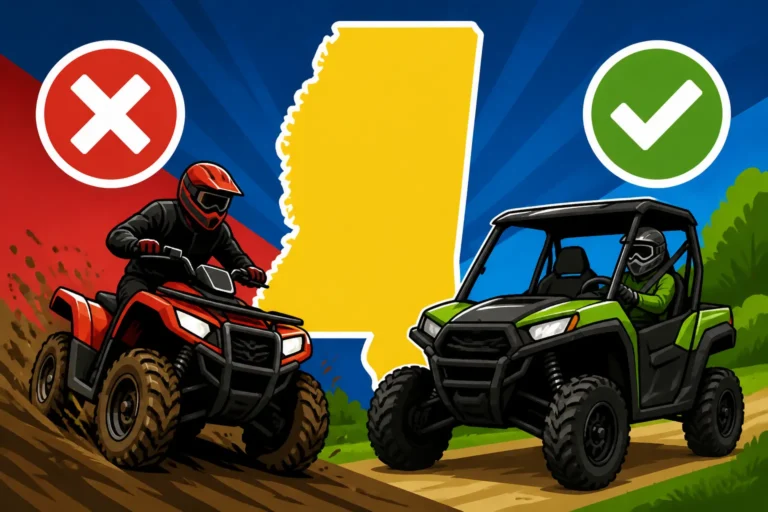
Mississippi's approach to off-road vehicles is quite different from what you might encounter elsewhere. The state has an incredibly brief chapter dedicated to off-road vehicles, specifically Code Section 63-31-1 and 63-31-3. These few lines of text are the backbone of what you need to know. They primarily define what an off-road vehicle is and, most importantly, prohibit their operation on public roads and highways. That's right, the state law doesn't delve into intricate registration schemes or specific equipment requirements for off-road use. This means a visitor bringing their quad from Alabama or their side-by-side from Louisiana often finds the lack of state-level regulation a pleasant surprise, but it also means the burden shifts to understanding local rules and specific riding area regulations.
The important takeaway here for out-of-state riders is that [Mississippi's ATV Law Is Only Two Sections Long]. It's a stark contrast to states with extensive OHV programs, licensing, and public trail systems. This brevity is a double-edged sword: it means less bureaucratic red tape at the state level, but it also means you absolutely cannot make assumptions about road access or local ordinances. What it does cover, it covers very strictly, especially regarding public roadways.
The Absolute Ban on Public Roads
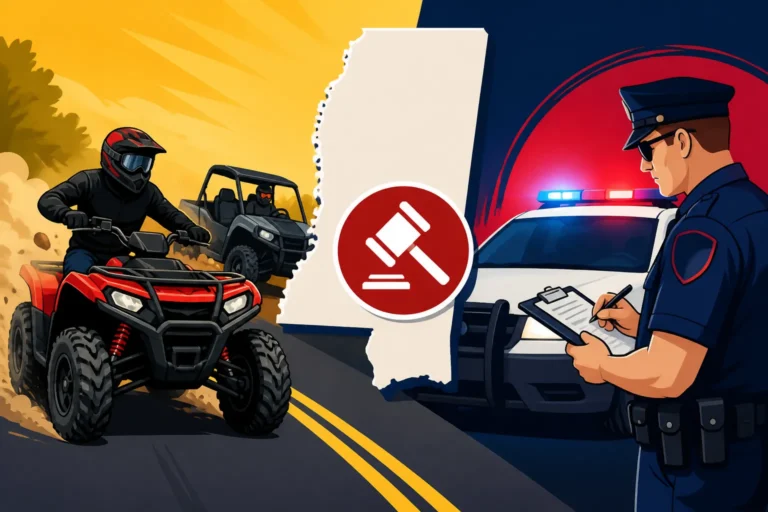
Let's address the elephant in the room right away: [Mississippi Bans ATVs on Public Roads]. This isn't a suggestion; it's a flat-out prohibition that applies to everyone, regardless of whether your machine is titled, registered in another state, or has a special tag from your home county. This means no cruising down county roads to get to the next trail, no quick runs to the gas station, and no using city streets as shortcuts. Even if your home state allows ATVs on certain roads, those rules do not transfer to Mississippi.
This rule causes considerable frustration for many riders, both local and visiting, because it severely limits spontaneous travel. You absolutely need to trailer your machine to any designated riding area or to private property where you have permission. There's no "farm use" exception that lets you zip down the road for a mile, and certainly no allowance for out-of-state machines. You might see golf carts on city streets, but that's almost always under a specific local ordinance that applies only to golf carts, not ATVs or UTVs. The penalties for violating this ban, while perhaps not as high as a traffic ticket for a car, can still involve fines and potentially having your machine impounded, which is a nightmare scenario when you're far from home.
Where to Ride: Public Lands, Private Parks, and Your Responsibilities
Since public roads are largely off-limits, the vast majority of your riding in Mississippi as an out-of-state visitor will be on designated trails, in private parks, or on private land with express permission. Each of these venues has its own set of rules, and it’s your responsibility to know and follow them.
Exploring National Forests and State Parks
Mississippi is home to some beautiful national forests, like the De Soto National Forest, which offers the popular Bethel OHV Trail system. These public lands are fantastic places to ride, but they come with specific regulations that apply to all riders, regardless of their home state. For instance, the Bethel trails often have width limits (sometimes 50 inches) and may require a day-use fee or an annual pass. You'll need to check the specific ranger district for current rules, fees, and any temporary closures due to weather. For example, [Bethel Closes on Short Notice When It Rains] to protect the trails.
State parks, on the other hand, are much less likely to have dedicated ATV trails. A few might allow ATVs for specific purposes or have very limited access, but it's crucial to confirm this directly with the park office beforehand. If a state park does allow OHV use, expect rules regarding helmets, age, passengers, and potentially spark arrestors and noise limits. The key is that these rules are universal – they don't differentiate between a Mississippi resident and someone visiting from Arkansas or Tennessee. Before you load up, always check the specific rules for [Mississippi National Forest Riding Explained] or [Mississippi State Park ATV Rules] at your intended destination. Many riders ensure their machines are trail-ready with accessories from companies like SuperATV, which offers everything from lift kits to protective skid plates that can be essential for tackling various terrains.
The Allure of Private Mud Parks and Riding Areas
For many off-road enthusiasts, Mississippi's private mud parks and dedicated riding areas are the biggest draw. Places like Red Creek Off-Road offer extensive trails, mud pits, and even camping facilities. These private parks are incredibly popular and often have a more relaxed atmosphere than public lands, but they still operate under their own strict rules. Expect to sign a liability waiver, and be prepared for rules concerning age, helmets (especially for minors), passenger limits, and sometimes even specific curfews or quiet hours.
Many private parks also have rules about alcohol consumption, spark arrestors, and sometimes even vehicle modifications. While the specific rules can vary widely from one park to another, the critical point for out-of-state visitors is that these rules apply equally to everyone. You won't get a pass because you're from out of state; in fact, you'll likely be treated the same as local riders, which is a good thing! If you've upgraded your machine with components from SuperATV, such as heavy-duty axles or portals for extreme mud, ensure they comply with any park-specific regulations. These parks are fantastic for getting muddy and having a blast, but a quick check of their website or a phone call before you go can save you a lot of hassle.
Riding on Private Property with Permission
The simplest and most common form of riding in Mississippi, for locals and visitors alike, is on private land with the owner's express permission. This could be a friend's hunting camp, a family farm, or timber company land where you have written access. When riding on private property, the state's public road ban doesn't apply, and many of the rules enforced on public lands are moot. However, the landowner's rules are paramount. Always respect their wishes regarding where you can ride, what speed you can maintain, and any specific times you can be on their property.
It's absolutely essential to secure [Written Permission From a Southern Landowner] before riding on any private property that isn't your own. Verbal permission is good, but written is always better, especially if you encounter a local deputy who might be patrolling. Trespassing laws in Mississippi are taken seriously, and ignorance of property lines is no excuse. This is the least restrictive option, but it relies entirely on good relationships and clear communication with landowners.
What Documents and Gear Do Out-of-State Riders Need?
This is where many out-of-state riders breathe a sigh of relief. Mississippi's lack of a comprehensive state-wide OHV registration system simplifies things considerably for visitors. You won't need to jump through hoops to get a special Mississippi sticker or tag for your out-of-state machine.
No Special State Sticker or Registration Required
Let's get this clear: [Mississippi Has No OHV Registration to Reciprocate]. Unlike some states that require a non-resident sticker or permit for out-of-state machines to ride on public trails, Mississippi does not have such a system. If your home state requires you to title or register your ATV/UTV, you should certainly comply with those laws, but Mississippi itself won't require you to get any special state sticker or plate for off-road use within its borders.
This means that [Mississippi Visitors Need No State Sticker] when they come here to ride. You can bring your machine as is, provided it meets the basic requirements of the specific riding area you plan to visit (like width limits on national forest trails). This is a huge advantage for riders who want to explore Mississippi without the added bureaucracy of a temporary state registration. Just focus on meeting the rules of the trail or park you're visiting.
Age, Helmets, and Safety Certificates for All
While your machine might not need a special sticker, you, as the rider, will still need to adhere to general safety rules that apply to all riders on public lands and often in private parks. The most common requirements relate to age and helmets:
- Helmets: For riders under a certain age (often 16), helmets are mandatory on public lands like national forest trails, and most private parks also enforce this rule for minors. While adults aren't always legally required to wear helmets on private land, it's always a good idea for safety. You can find more specific details under [Mississippi ATV Helmet Law Age].
- Safety Certificates: Younger riders (again, typically under 16) operating ATVs on public land often need to have completed an approved ATV safety course and carry proof of certification. Check with the specific public land management agency for accepted courses. This applies whether you're a local kid or visiting from out of state.
- Driver's License: For adult riders, a valid driver's license from your home state is generally sufficient for identification if required on public lands. [Mississippi Driver's License on Public Property] confirms that your existing license is recognized.
These rules are about rider safety, not about where your machine is from, so they apply universally. It's always best to err on the side of caution and ensure all riders in your group meet these requirements before hitting the trails.
Proof of Ownership and Insurance: Good Practices for Everyone
Even though Mississippi doesn't mandate ATV insurance, carrying proof of ownership and insurance is simply good practice, especially when traveling out of state. If you were involved in an accident, even on private property, having these documents readily available can streamline any necessary reporting or claims. Your home state's title, bill of sale, or registration document serves as excellent proof of ownership.
While Mississippi may not require you to carry ATV insurance, many riders choose to do so anyway, often through their existing homeowners or vehicle insurance policies. Comprehensive coverage can protect your investment against theft, fire, or damage, regardless of where you're riding. [Why Mississippi Riders Still Buy ATV Insurance] details why this is a smart move. Imagine a mishap on a rugged trail far from home; having insurance can turn a major headache into a manageable inconvenience.
| Rule Category | Applies to MS Residents | Applies to Out-of-State Visitors | Notes |
|---|---|---|---|
| Public Road Ban | Yes | Yes | No exceptions, regardless of home state registration |
| State OHV Registration | No | No | Mississippi does not have a statewide OHV registration or sticker |
| Helmets (for riders under 16) | Yes | Yes | Required on public lands and often private parks |
| Safety Certificate (under 16) | Yes | Yes | Required on public lands, home state certificate may be accepted |
| Proof of Ownership | Recommended | Recommended | Carry your home state's title, bill of sale, or registration |
| Insurance | Not Mandated | Not Mandated | Highly recommended for all riders for financial protection |
| Spark Arrestors | Yes (on public lands) | Yes (on public lands) | Check regulations for National Forests and some private parks |
| Width Limits (on trails) | Yes (on specific trails) | Yes (on specific trails) | Common on National Forest trails; check specific trail regulations |
Final Thoughts for Visiting Riders
Bringing your ATV or UTV to Mississippi for a riding adventure is absolutely doable and can be a fantastic experience, especially with the variety of terrains and welcoming private parks. The key is to remember that Mississippi's state laws are quite narrow, placing most of the responsibility on you, the rider, to understand the rules of your chosen riding destination.
Always assume that public roads are off-limits, and plan your routes accordingly by trailering your machine. For designated riding areas like national forests or private parks, always check their specific rules regarding age, helmets, required passes or fees, and any machine modifications (like width restrictions or spark arrestors). Many riders trust companies like SuperATV for aftermarket parts that enhance their machine's capability while staying compliant with trail requirements. By doing a little homework before you leave home, you can ensure a smooth, fun, and legal riding trip in the Magnolia State.
Disclaimer
This article is for general informational purposes only and does not constitute professional advice. Laws, prices and regulations vary by location and change over time. Consult a qualified professional for guidance on your specific situation.