Mississippi Ordinance Lookups Before You Ride
It's incredibly frustrating, isn't it? You've got your ATV or UTV, you're ready to hit the trails or maybe even just run down to the corner store, but then you're hit with a wall of confusion about where you can legally ride. Mississippi's laws around off-road vehicles on public roads are notoriously sparse at the state level, leaving many of the "can I ride here?" questions up to individual cities and counties. This guide is here to walk you through the essential steps to figure out exactly what the local rules are before you even think about firing up that engine.
The Maze of Mississippi's ATV/UTV Laws: Why Local Rules Dominate
You'd think there would be a clear, statewide answer about riding your ATV or UTV on public roads in Mississippi, wouldn't you? Unfortunately, that's just not the reality we live in here in the Magnolia State. This lack of clear, universal guidance often leaves riders scratching their heads, feeling like they're navigating a legal maze with no map. It's a common source of frustration, and for good reason – you want to be a responsible rider, but the rules aren't always easy to find.
The State's Hands-Off Approach to Off-Roaders
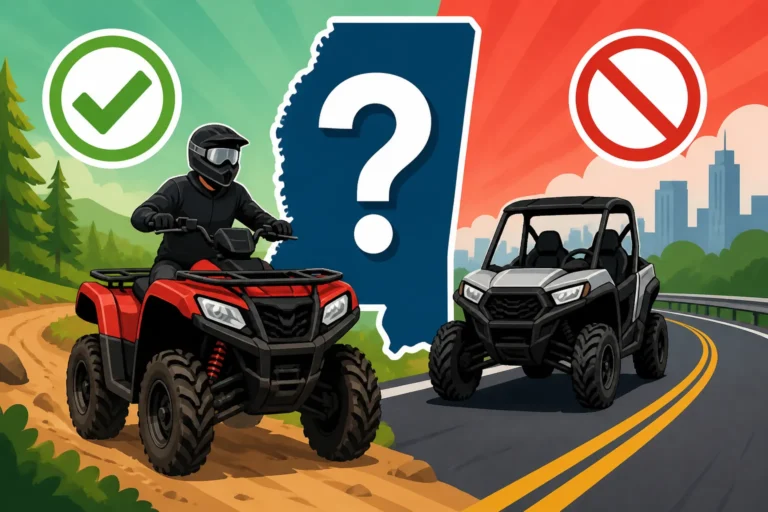
Mississippi state law regarding off-road vehicles (ORVs) like ATVs and UTVs is remarkably brief and, for many, quite restrictive. If you ever look at [Mississippi's Thin Off-Road Vehicle Chapter], you'll quickly notice it's only two short sections long. What these sections boil down to is a pretty clear prohibition: [Mississippi Bans ATVs on Public Roads]. There are virtually no exceptions written into state law for riding on county roads, city streets, or even crossing a highway. This broad ban means that unless a local government steps in to create an exception, you're generally stuck riding on private land or designated off-road parks. It's a challenging starting point for anyone hoping to use their machine for more than just dirt adventures.
This state-level stance puts the onus squarely on local municipalities to create any avenues for street-legal ATV or UTV use. For a rider, this translates into a highly fragmented landscape of regulations, where what's perfectly fine in one town might lead to a hefty ticket just a few miles down the road in the next county over. This patchwork of rules makes it incredibly difficult to know where you stand, especially if you travel across different jurisdictions with your machine.
The Power of Local Jurisdictions
Because state law largely forbids ATVs and UTVs on public roads, the only real path to legal street use comes through local ordinances. These are laws passed by city councils, boards of aldermen, or county supervisors that can carve out exceptions to the general state prohibition. This is why [Mississippi Local Ordinances Are the Only Path] if you're hoping to ride on anything other than private property or dedicated trails. You might find that a town like Hattiesburg has a specific ordinance for golf carts that doesn't quite apply to your UTV, or Ocean Springs might have entirely different rules.
The challenge here is that these local ordinances vary wildly. Some towns might allow golf carts on certain low-speed streets but explicitly prohibit ATVs or UTVs, while others might not have any specific ordinance at all, leaving the state-level ban firmly in place. This local control means your riding plans absolutely hinge on what your specific city or county has decided. Without a local ordinance specifically allowing it, you're unfortunately still under the state's blanket ban for public road use. It's a system that demands diligence from riders to avoid legal trouble, and frankly, it often feels like you need to be a part-time legal researcher just to enjoy your machine.
Your Detective Work: How to Uncover Local ATV/UTV Ordinances
Given that local rules are the ultimate decider for street legality in Mississippi, your biggest task is to actually find those rules. This isn't always as simple as a quick Google search, and it can feel a bit like you're playing detective. But trust me, taking the time to do this legwork before you ride can save you a whole lot of headache, potential fines, and even the impoundment of your beloved machine. It's an essential step for any responsible off-road enthusiast in Mississippi.
Starting with Your County and City Clerks
The most reliable place to start your search is directly with the source: your local government. Both your city clerk (if you live within city limits) and your county chancery clerk or board of supervisors' office are the official keepers of local laws and ordinances. Don't be shy about calling them or, even better, paying them a visit during business hours. When you call, be very specific about what you're looking for. Ask: "Does the city (or county) of [Your City/County Name] have any ordinances regarding the use of ATVs, UTVs, or off-road vehicles on public streets or roads?"
It's important to be prepared for a few scenarios. First, they might direct you to a specific section of their municipal code. Second, they might tell you they do have an ordinance, but it only applies to golf carts, which, as we'll discuss, isn't the same thing as your ATV or UTV. Third, and this is quite common, they might simply tell you, "No, we don't have anything like that." In that last case, it usually means the state's blanket ban on ATVs and UTVs on public roads remains in full effect. Always try to get a copy of any relevant ordinance, even if it's just a printout or a link to their online code. This physical or digital proof can be invaluable for your records and understanding.
Online Searches and Official Websites
In today's digital age, many cities and counties are putting their official codes and ordinances online. This can be a goldmine for your research, but it requires knowing where to look and what terms to use. Your first step should be to visit the official website for your city and county government. Look for sections typically labeled "City Clerk," "Ordinances," "Municipal Code," "Legal Department," or "Board of Supervisors." Many larger cities will have a searchable database of their code.
When searching, use keywords like "ATV," "UTV," "off-road vehicle," "side-by-side," "golf cart" (as sometimes the ORV rules are nestled within those), and "street legal." For instance, you might type "Jackson Mississippi ATV ordinance" into their site's search bar, or use a general search engine. Be aware that not all smaller towns will have their full code digitized, and sometimes it can be hidden deep within government meeting minutes or resolutions. This is where the direct call or visit to the clerk's office really comes in handy. Remember, [How to Check If Your Town Has an Ordinance] often involves a combination of digital and direct inquiry. You might find some [Mississippi Towns With Cart Ordinances] that don't cover ATVs.
Reaching Out to Local Law Enforcement
While not the official source of ordinances, local law enforcement – your city police department or county sheriff's office – can provide practical insights into how these rules are actually enforced. Before calling, remember to use their non-emergency number. Explain that you're trying to understand the local rules for ATVs/UTVs on public roads. Deputies and officers are often on the front lines and deal with these situations regularly. They might be able to tell you if an ordinance exists, or, importantly, if they routinely ticket riders for street use because no local ordinance permits it.
It's crucial to understand that law enforcement's role is to enforce the law, not necessarily to interpret every nuanced detail of an ordinance. They might not be able to cite the exact code section, but their practical knowledge of what typically happens on the streets can be very illuminating. However, always prioritize what you find directly from the clerk's office or in the official municipal code, as that is the definitive legal text. What law enforcement tells you is valuable for understanding enforcement patterns, but the written ordinance is the final authority.
Decoding the Rules: What to Look For in an Ordinance
Once you've successfully tracked down a local ordinance (fingers crossed!), the real work begins: understanding what it actually says. These documents can be dense and filled with legal jargon, but don't let that intimidate you. You're looking for specific pieces of information that will directly impact how and where you can ride your machine. Paying close attention to these details will ensure you stay on the right side of the law and make the most of your riding opportunities.
| Category | Key Questions to Ask | Examples of What to Look For |
|---|---|---|
| Applicable Vehicles | Does it specifically mention ATVs, UTVs, side-by-sides? | "Off-Road Vehicles (ORVs) including ATVs and UTVs…" or "Golf carts only." |
| Permitted Roads/Areas | Which streets or areas are open? Are any restricted? | "Streets with posted speed limits of 35 mph or less." "Only within city limits." |
| Operating Hours | Are there time restrictions for riding? | "Sunrise to sunset," "No operation after 10 PM." |
| Driver Requirements | Do you need a driver's license? A safety course? What about age limits? | "Valid driver's license required." "Riders under 16 must have a safety certificate." |
| Equipment | What accessories or safety features are required? | "Headlights, taillights, turn signals, seatbelts, rearview mirror." |
| Speed Limits | Are there specific speed limits for ORVs on public roads? | "Not to exceed 25 mph," "Adhere to posted speed limits." |
| Passenger Rules | Can you carry passengers? How many? | "Passengers only on factory-designated seats." "No more than one passenger per seat." |
| Insurance | Is liability insurance mandated for street use? | "Proof of liability insurance required." "Minimum coverage limits…" |
| Permits/Fees | Do you need a special permit or pay a fee to operate on streets? | "Annual permit required," "Registration sticker fee of $X." |
| Penalties | What are the consequences for violating the ordinance? | "Fine of $X," "Vehicle impoundment possible." |
Permitted Machines and Areas
This is often the first and most critical detail: does the ordinance even apply to your machine? Many local ordinances you might find are specifically written for golf carts, not ATVs or UTVs. It's vital to know the difference. [What the Law Counts as an Off-Road Vehicle] can differ significantly from a low-speed vehicle like a golf cart. An ordinance might state "golf carts are permitted on city streets," but if it doesn't explicitly mention ATVs, UTVs, or side-by-sides, then your machine is likely not covered. As we've discussed, [Why a Cart Ordinance Does Not Cover a UTV] is a common point of confusion that can lead to unexpected tickets.
Next, look closely at where you're allowed to ride. Most ordinances that permit ORV use on public roads will specify certain types of streets (e.g., those with speed limits under 35 mph), certain districts, or even specific routes. They might also explicitly prohibit riding on state highways, primary arteries, or within certain congested areas. Some ordinances might restrict use to only specific hours of the day. For example, if you've added a SuperATV lift kit or wider tires, be mindful of any width restrictions that might apply to certain roads, although these are more common on trails than city streets. Understanding these geographical and temporal limitations is key to legal riding.
Operating Hours, Equipment, and Age Requirements
Beyond where and what, ordinances will often detail how you can operate your machine. Look for specific operating hours – many local rules will restrict street use to daylight hours or until a certain time in the evening. This means that even with an ordinance, you might not be able to cruise around after dark.
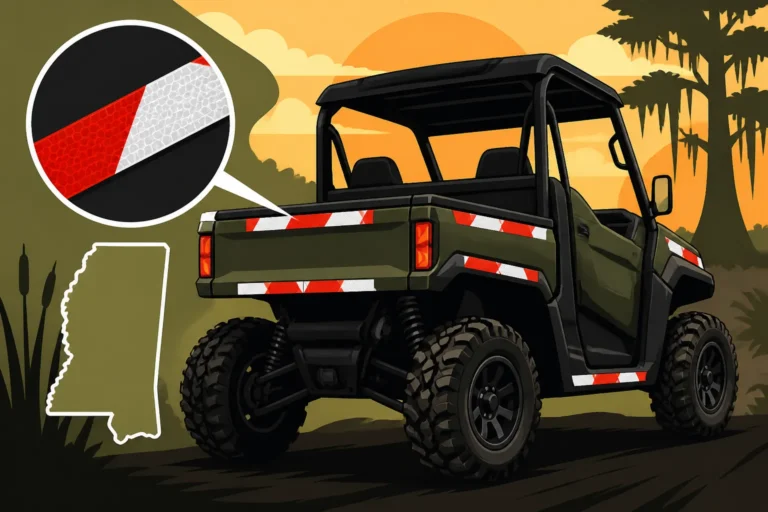
Equipment requirements are another big one. If an ordinance allows street use, it will almost certainly demand specific safety equipment. This can include headlights, taillights, brake lights, turn signals, a horn, rearview mirrors, and a slow-moving vehicle (SMV) sign. Some might even require specific tires or a windshield. You'll want to ensure your machine, perhaps enhanced with SuperATV accessories, meets all these demands. Age and licensing requirements are also frequently included. Many ordinances will demand that the operator possess a valid driver's license, and some might even require a safety course certificate, especially for younger riders. For example, [Mississippi Helmet Law for Riders Under 16] might apply to public street use if the ordinance doesn't supersede it with different rules. It's also worth checking if [Mississippi Requires a License or a Safety Card] for these specific situations.
Penalties for Violations
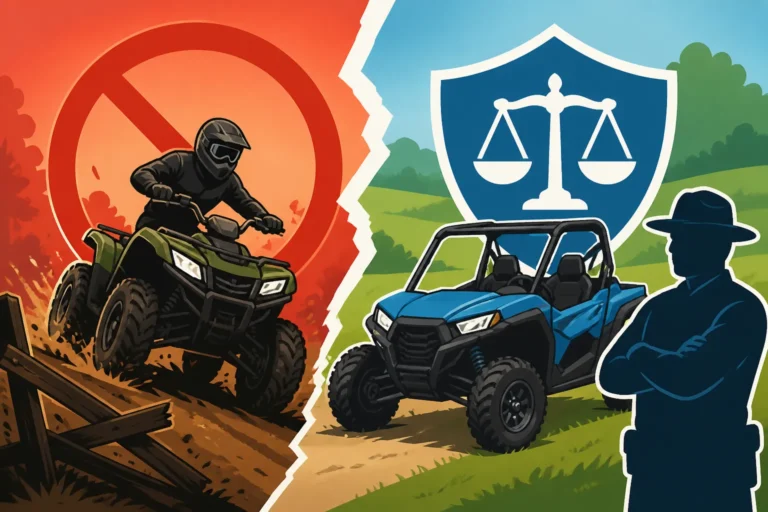
Finally, and this is where the rubber meets the road (pun intended), every ordinance will outline the penalties for non-compliance. These can range from monetary fines to more serious consequences like vehicle impoundment. Understanding the potential repercussions is crucial. [Mississippi Fines for Road Riding] can vary, but generally, local ordinances will set their own specific fine schedules. Some may classify violations as misdemeanors, which can carry additional legal baggage.
If your machine is found operating outside the bounds of the ordinance – or on public roads where no ordinance exists – you could be facing a ticket and a fine. More severely, law enforcement has the authority to impound your vehicle, which means additional costs for towing and storage on top of any fines. This is precisely why doing your homework beforehand is so vital. It's far better to know the rules and make necessary adjustments to your machine or your riding habits than to learn them the hard way through a ticket or the loss of your vehicle.
Navigating the Unknown: When There's No Ordinance (and What Happens Then)
It's a common scenario: you've diligently followed all the steps, called the clerks, scoured the websites, and talked to local law enforcement, only to find… nothing. No specific local ordinance addressing ATVs or UTVs on public roads. When this happens, it can be incredibly confusing and lead to a false sense of security for some riders. However, it's crucial to understand what this lack of local rules actually means for you in Mississippi.
The Default State Law Position
When a city or county in Mississippi doesn't have a specific ordinance allowing ATVs or UTVs on public roads, the default position of state law automatically kicks in. And as we've already established, that state law is pretty clear: [Mississippi Bans ATVs on Public Roads]. This means that in the absence of a local exception, you are, by state law, prohibited from riding your ATV or UTV on any public road, street, or highway within that jurisdiction. This isn't just a suggestion; it's the letter of the law.
Many riders mistakenly believe that if there's no specific local ban, it means it's allowed. Unfortunately, in Mississippi, the opposite is true. The state's general prohibition holds unless a local entity explicitly says otherwise. So, if your city clerk tells you they have no ATV ordinance, what they're effectively telling you (whether they realize it or not) is that the state ban is still in full force. This is a critical distinction and often a source of great disappointment for riders hoping for more freedom.
The Risk of Riding Without Clear Rules
Riding an ATV or UTV on a public road in a jurisdiction with no permissive ordinance carries significant risks. Because the state ban is active, you are essentially breaking the law. [What Happens When a Deputy Stops You Riding] can range from a warning (if you're lucky) to a citation, significant fines, and potentially even the impoundment of your machine. Law enforcement officers, whether city police or county sheriffs, are bound to enforce state law if no local ordinance provides an exception.
The penalties can vary, but even a small fine is an unwanted expense, and the hassle of retrieving an impounded vehicle is a major headache. Furthermore, if you're involved in an accident while riding illegally on a public road, your insurance coverage could be jeopardized, leaving you personally liable for damages or injuries. It's simply not worth the risk. Even if your SuperATV accessories make your machine feel more road-worthy, the legal reality dictates otherwise without the proper local permission.
Advocating for Local Access
If you find that your city or county has no ordinance allowing ATVs or UTVs on public roads, and you believe there's a need for such access (perhaps for utility, recreation, or to connect trails), you're not entirely out of options. You can become an advocate for change. This involves reaching out to your local city council members, board of aldermen, or county supervisors. Attend public meetings, express your concerns, and present a reasoned argument for why a local ordinance should be considered.
When advocating, come prepared with examples of other towns (even out-of-state ones) that have successfully implemented sensible ORV ordinances. Focus on safety measures, responsible riding, and potential economic benefits. Gather other like-minded riders in your community to show broad support. While there's no guarantee of success, engaging with your local government is the only way to potentially shift the landscape and carve out legal riding opportunities where none currently exist. It takes patience and persistence, but it's a powerful way to make your voice heard and possibly create new avenues for responsible ATV and UTV use in your community.
Disclaimer
This article is for general informational purposes only and does not constitute professional advice. Laws, prices and regulations vary by location and change over time. Consult a qualified professional for guidance on your specific situation.