Winches for a Buried Southern Machine
A machine that sinks into Mississippi clay or bogs down in a sandy rut can turn a fun ride into a long, tiring recovery. A winch helps, but using one without a plan can damage your ATV, UTV, or the trail—and put people in danger. This guide explains how to choose, prepare, and use a winch for a buried Southern machine.
Why Mississippi terrain can bury an ATV or UTV
Mud, sand, and water crossings create different problems
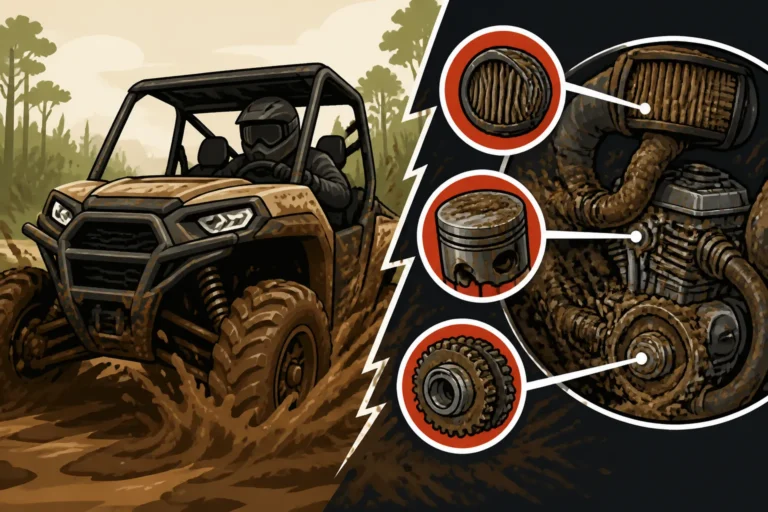
Mississippi riding conditions can change quickly. A trail that feels firm on the first pass may soften after rain or after several machines churn through it. In clay, tires can dig down until the belly of the ATV or UTV rests on the ground. At that point, spinning the tires harder often makes the hole deeper rather than helping the machine climb out.
Sand behaves differently. A tire can sink and push loose material behind it, especially if the rider keeps applying throttle without gaining traction. Water crossings add uncertainty: a shallow-looking puddle may conceal a rut, soft bottom, or submerged obstruction. Before you try to pull out, look for hazards you can safely identify from solid ground. Don’t wade into water or mud if you can’t see the bottom or assess the footing.
The best recovery depends on the problem. A machine resting on its frame may need the tires cleared and a straight, controlled pull. One stuck at an angle may need a different anchor or a careful change in direction. If the machine is in deep water, leaning over, or caught near a steep bank, a simple winch pull may not be safe. Stop and reassess instead of adding more force.
Spinning tires can turn a small problem into a recovery
When a machine loses momentum, it’s tempting to keep the throttle open and hope the tires find grip. That can work briefly on loose ground, but if the machine is stationary, wheelspin can dig a deeper hole, pack mud around the tires, or throw debris. The spinning wheels may also put extra strain on components.
Start by letting off the throttle and checking whether the machine is stable. If the tires are buried, clear loose material from around them with a shovel or another appropriate tool, keeping your hands and feet away from pinch points. If the machine can move under its own power, use gentle throttle and a direct path rather than sudden bursts. If it cannot, a winch or another planned recovery method may be safer.
A winch is not a substitute for reading the ground. Before leaving home, check conditions and access information for the place you intend to ride. Mississippi Trail Riding After Heavy Rain offers a useful reminder that weather can change the riding surface and the condition of a trail. For riding-area planning, start with Mississippi ATV Trails: Where to Ride and check the specific property’s rules before your trip.
A winch is one part of a recovery kit
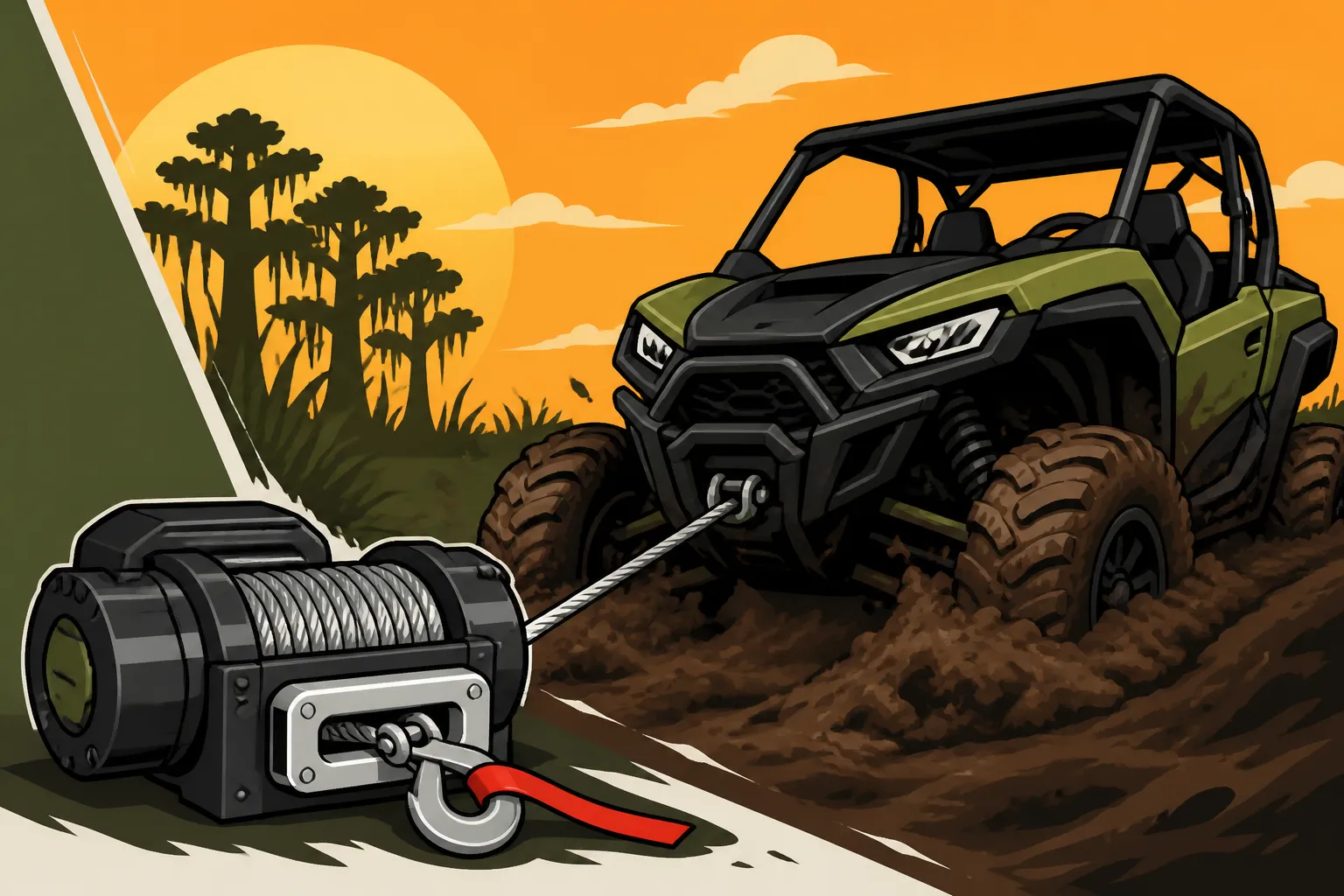
A winch is most useful when you already have the equipment and know-how to use it. A basic recovery kit may include gloves, a tree-saver strap, a suitable recovery point, a winch-line dampener, and a way to clear material from around the tires. A snatch block can help redirect a pull or change the mechanical advantage, but it also changes the forces on the line and anchor. Use it only when you understand the setup and the equipment’s limits.
Carry gear that matches your machine and the places you ride. A compact kit that fits your ATV may not be enough for a heavier UTV, while a bulky kit can be difficult to access when the machine is stuck. Keep the winch remote and recovery gear somewhere you can reach without climbing into an unstable position.
A map or offline navigation option is useful too. If you’re riding unfamiliar forest roads or a large trail system, knowing where you are can help you describe your location to a riding partner or emergency contact. onX Offroad can help riders plan routes and orient themselves, but a mapping app does not replace posted signs, landowner permission, or current access information. Keep a paper backup or another navigation option if your route may take you beyond reliable cell coverage.
Choosing and checking a winch before you ride
Match the winch to the machine and the job
Don’t choose a winch by looking only at the machine’s advertised weight. Recovery can involve more force when an ATV or UTV is buried, angled, loaded with gear, or resting against an obstacle. Mud suction and the shape of the pull can make a stuck machine harder to move than one sitting on firm ground. Follow the winch and vehicle manufacturers’ guidance when selecting equipment, and make sure the mounting system and electrical components are appropriate for your machine.
Consider where and how you ride. A rider who stays on maintained routes and carries minimal gear may have different recovery needs from someone who rides deep mud with a loaded UTV. If you regularly ride with others, agree on a recovery plan before anyone gets stuck. A passenger should not be left guessing where to stand or what to do while the driver operates a winch.
| Recovery item | What it helps with | Check before the ride |
|---|---|---|
| Winch and mount | Pulls the machine toward a suitable anchor | Confirm the mount is secure and the winch follows the manufacturer’s instructions |
| Winch line | Connects the winch to the anchor or recovery point | Look for cuts, fraying, kinks, corrosion, or other visible damage |
| Tree-saver strap | Protects an appropriate tree anchor from direct line contact | Check for tears, worn stitching, or damaged hardware |
| Winch-line dampener | Helps reduce line movement if the line fails | Make sure it is designed for the recovery setup and positioned as directed |
| Gloves | Protect hands during handling | Use gloves suitable for the line and inspect them for damage |
| Shovel | Clears mud or loose material around tires | Secure it so it cannot shift while riding |
| Snatch block | Can redirect a line or alter the pull | Check its rating and use it only with a correctly planned setup |
A winch’s capacity is only one part of the system. The mount, line, shackles, straps, anchor, and recovery points all need to be appropriate for the load and used as intended. If one component is questionable, don’t assume the strongest-looking part makes the whole setup safe.
Inspect the line, mount, and electrical connections
Check the winch before the riding day, not after you’re already stuck. Look at the line for visible wear and make sure it winds onto the drum cleanly. A line that has been poorly spooled, damaged, or trapped under another layer may not feed properly when you need it. If you find damage, follow the manufacturer’s instructions for repair or replacement rather than improvising.
Inspect the winch mount and accessible fasteners for looseness or signs of movement. Look over the fairlead, hook or connector, and any recovery accessories you plan to use. If the setup has been exposed to mud and water, clean and inspect it as directed by the manufacturer. Electrical connections and the winch’s controls should be in sound working order, and you should know how to stop the winch quickly.
Before riding, test the controls in a safe area without a load, following the equipment instructions. Make sure the driver and any riding partner understand what each control does. It’s much easier to learn how to use a remote when you’re parked on firm ground than when your machine is sinking and everyone is tired.
Plan for the trail, not just the machine
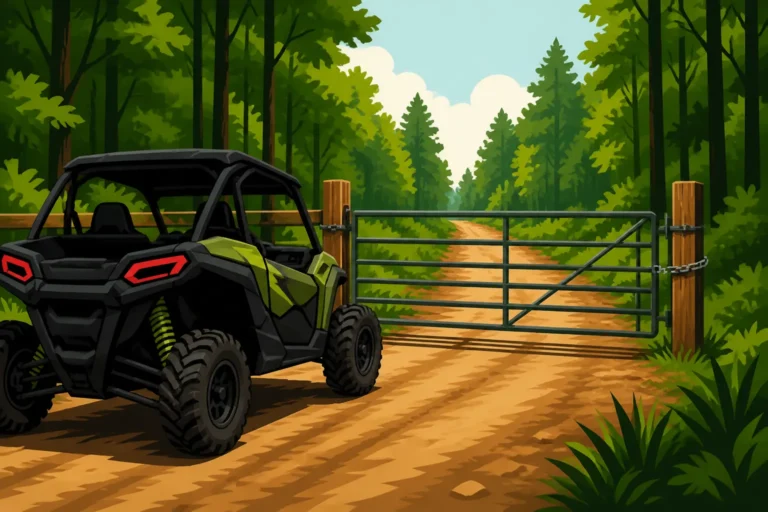
A winch adds recovery capability, but it doesn’t grant permission to ride anywhere. Check that the route is open to your type of machine, confirm any width or equipment limits, and stay on authorized roads and trails. For example, riders comparing routes and machines can review Bethel’s Width Limit in Mississippi before loading a vehicle that may not fit a particular trail.
For unfamiliar routes, onX Offroad may help you review the route and keep track of your position. Treat digital maps as a planning aid, not an official determination that a road is open or that you may cross private land. Confirm access with the land manager or property owner, and obey closure signs and gates. The same common-sense preparation applies to navigation: download or save the information you need before entering an area with weak service.
How to winch a buried machine safely
Stop, assess, and prepare the pull
First, stop the machine and make sure it is stable. Check whether it is leaning, whether the ground is crumbling, and whether the tires or frame are against an obstacle. Keep passengers away from the recovery area. If the machine is in an unsafe position, or the anchor and pull direction are uncertain, don’t rush into a winch pull.
Choose a pull path that moves the machine toward firm ground without dragging it across sharp objects, trees, or other hazards. Whenever possible, pull in line with the winch and the machine’s intended recovery point. Avoid pulling from a part of the machine that is not designed for recovery. A trailer hitch ball, rack, bumper accessory, or convenient-looking frame section may not be a safe anchor point.
Find an anchor suitable for the recovery and use the right attachment method. If using a tree, protect it with a tree-saver strap rather than wrapping the winch line directly around the trunk. Don’t use a damaged tree, a loose post, or a vehicle that is not properly positioned and secured. If you can’t identify a suitable anchor, stop and consider another method or ask for help.
Keep people clear of the line and pinch points
Before operating the winch, make sure everyone knows where to stand. Keep people well away from the line, the anchor, and the machine’s path. Nobody should straddle the line, stand over it, or place hands near the winch drum, fairlead, or any connection under tension. A winch line can move suddenly if a connection or component fails.
Use a winch-line dampener according to its instructions. It can help reduce the movement of a line if it breaks, but it does not make a dangerous setup safe. Keep the operator in a position where they can see the machine and the pull while remaining clear of the line. If you cannot safely observe the setup, pause and reposition rather than operating by guesswork.
Communicate clearly. One person should direct the recovery so that the driver and winch operator aren’t responding to conflicting instructions. Agree on a stop signal before tensioning the line. If anyone sees a shifting anchor, a damaged strap, a line snag, or an unsafe change in the machine’s position, stop the pull immediately.
Apply tension slowly and watch the whole setup
Take slack out of the line gradually, following the winch manufacturer’s operating instructions. Once tension is on the line, pause and check the anchor, attachment points, line path, and machine position. If anything shifts, releases, or begins to bind, stop before continuing.
Make the pull in controlled increments instead of holding the winch switch continuously. The driver should follow the operator’s agreed directions and avoid sudden throttle that could jerk the line. If the machine starts moving, keep the path as straight and predictable as possible. Don’t let anyone push or pull by hand near the wheels, line, or moving components.
If the winch strains, the line stops moving, the machine shifts dangerously, or the anchor shows signs of failure, stop. Don’t keep increasing force just because the machine has not moved. Reassess the obstacle, clear material if it’s safe, or change the recovery plan. A difficult recovery is a reason to slow down, not a reason to take a bigger risk.
After recovery and before the next ride
Check the machine and winch before driving away
Once the machine is on stable ground, release tension carefully and disconnect the line according to the equipment instructions. Keep hands clear of the drum and connection points while the line is moving. Rewind the line neatly, using the manufacturer’s procedure, and check it again for damage or contamination.
Look over the machine for mud packed around the tires, frame, radiator area, or other components. Check for loose parts, damaged controls, displaced bodywork, or signs that a recovery point moved. If the machine was submerged or exposed to a significant amount of water, follow the manufacturer’s maintenance guidance before riding farther. Don’t assume everything is fine simply because the engine restarts.
Clean and inspect the recovery gear once you’re back at camp or home. Mud and grit can hide damage, and a strap that looks usable from a distance may have worn stitching or cuts. Replace or service damaged parts before the next outing. If the recovery felt unusually difficult, think through why: the anchor may have been poor, the pull angle awkward, or the machine’s route unsuitable for its size.
Know when not to winch
A winch is not the right answer for every situation. Don’t attempt a pull if the machine is close to a drop-off, is submerged in unsafe water, is unstable on a steep slope, or is tangled in a way you can’t safely inspect. Likewise, don’t improvise with unknown straps, unrated hardware, or an anchor you don’t trust.
If you ride alone, think carefully about the consequences of getting stuck. A recovery that would be manageable with a second person may be risky without help, especially in a remote area or where phone service is unreliable. Share your route and expected return time with someone before you leave. Use onX Offroad or another navigation option to help keep track of your route, while remembering that digital navigation can’t guarantee service, trail access, or rescue.
For a group ride, set expectations in advance: who will operate the winch, where everyone should stand, and when the group will stop rather than attempting a recovery. Good preparation includes checking local rules and conditions, not just packing equipment. Checking Trail Conditions Before You Load the Trailer and Mississippi Trail Etiquette Locals Expect can help shape a safer plan before you reach the trailhead.
Protect the trail while getting unstuck
A recovery can cause damage beyond the machine. Avoid dragging a winch line across vegetation or using a tree as an anchor without an appropriate protective strap. Don’t create a new route around a muddy spot by driving through brush or crossing a closed area. If the only way out would damage the trail or put people at risk, stop and seek help from the land manager or property owner.
After rain, trails may be especially vulnerable to rutting. Repeated wheelspin and unnecessary winching can deepen damage and make the route harder for everyone who follows. Check for closures and follow posted directions instead of assuming a trail is usable because it appears on a map. Mississippi Trail Conditions After Rain is worth reviewing before a wet-weather outing, and Mississippi National Forest Riding Explained can help you think through the importance of riding only where access is allowed.
A winch works best as part of a calm recovery plan: select equipment that suits the machine, inspect it before the ride, choose a safe anchor, keep people clear, and stop when the setup becomes uncertain. That approach won’t prevent every machine from getting buried, but it can make a difficult moment safer for the rider, the group, and the trail.
Disclaimer
This article is for general informational purposes only and does not constitute professional advice. Laws, prices and regulations vary by location and change over time. Consult a qualified professional for guidance on your specific situation.