Bethel’s Width Limit in Mississippi
Bethel’s 50-inch width limit can turn a fun trail day into a frustrating trip if you discover at the gate that your machine is too wide. This guide explains what the limit means, how to check your ATV or UTV before loading up, and what to confirm about trail access, passes, and conditions so you can plan a ride without relying on guesswork.
What Bethel’s 50-inch width limit means
The limit is a trail-access rule, not a statewide vehicle measurement
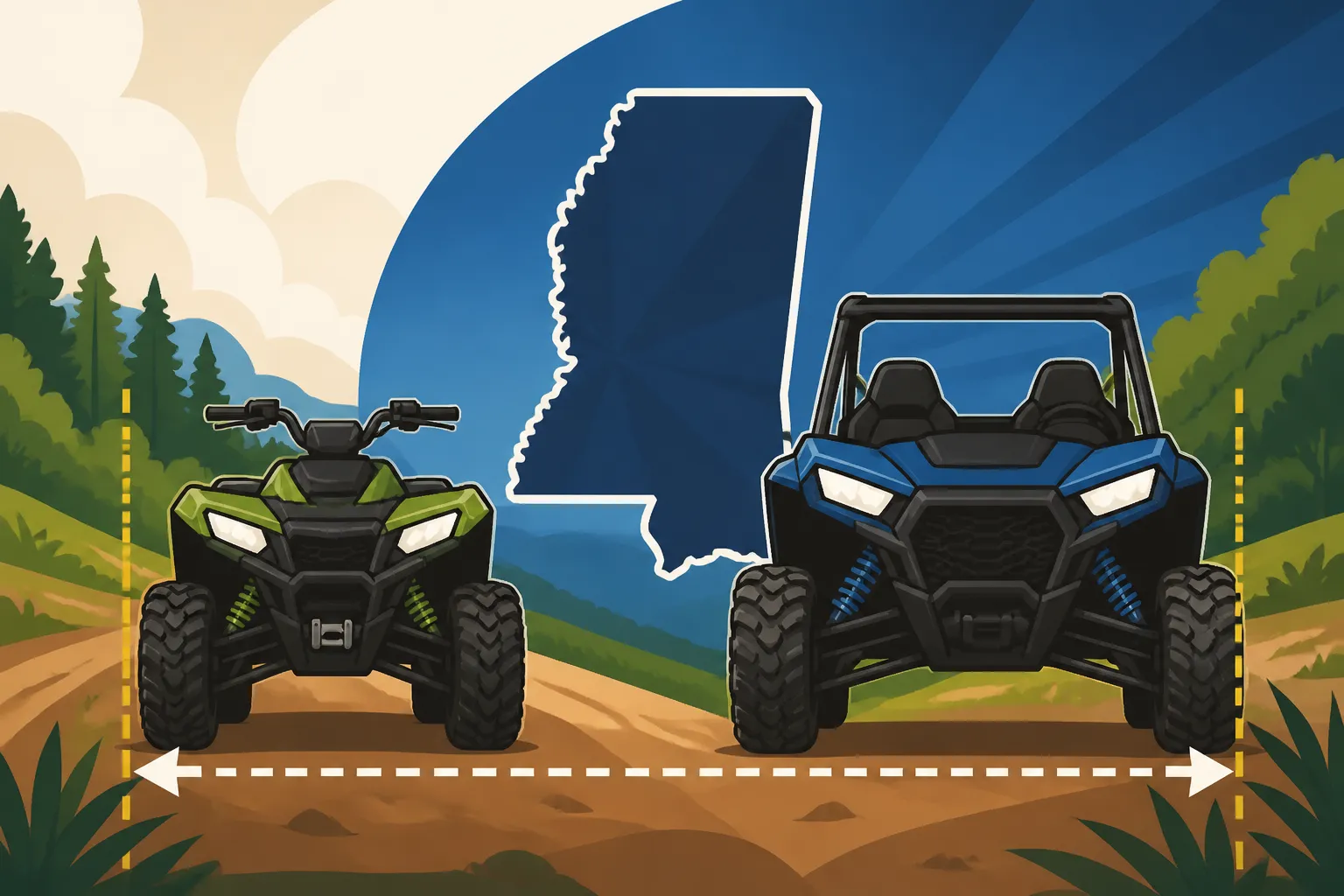
Bethel’s width restriction is a practical access requirement for the trail system: machines must fit within the 50-inch limit to use the trails where that restriction applies. It is not a universal Mississippi rule saying every ATV or UTV must be 50 inches wide. State vehicle definitions and a particular trail’s access rules address different questions, so one should not be used as a substitute for the other.
That distinction matters if you own a wider side-by-side. A machine can be a legal off-road vehicle under a state definition and still be too wide for a specific trail. Likewise, having a title, insurance, or a trail pass does not automatically override a width restriction. Before heading out, check the rules for Bethel itself and confirm that your particular machine is permitted.
If you are comparing places to ride, look beyond broad descriptions such as “ATV trail” or “OHV area.” Check the specific width limits and vehicle types for each destination. [Mississippi Trails With Width Limits] and [Mississippi Trails That Allow Side-by-Sides] can help you think through what to verify before choosing a route.
Why a narrow trail system sets a vehicle-width limit
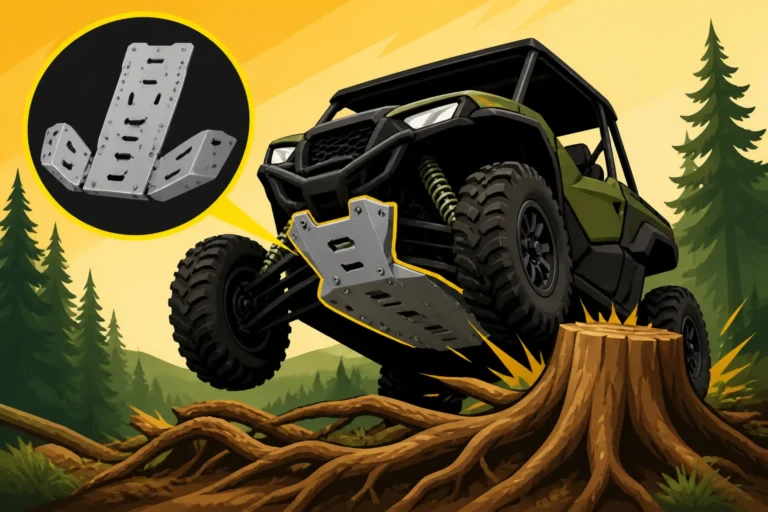
A width restriction generally reflects the physical shape and intended use of the trails. Narrow routes, tight turns, trees, berms, and uneven edges can make a wide machine difficult to maneuver even when it technically fits between obstacles. On a wooded trail, the problem may not be an obvious gate or narrow entrance. It can be a turn where the outside tire approaches a ditch, a tree squeezes the bodywork, or a trail edge drops away.
The limit also helps keep riders on routes suited to the machines using them. A wider vehicle that can force its way through a tight spot may damage the trail edge or vegetation, or create an awkward passing situation for another rider. These issues are especially important on a shared trail where sight lines are short and the ground may be soft or uneven.
Bethel’s mileage and general trail character are useful planning details, but they do not mean every machine can use every route. [Bethel's 43 Miles in Mississippi] provides related context on the trail system, while [Bethel's 43 Miles Are Built for 50-Inch Machines] is a useful reminder that the mileage is intended for machines that meet the width requirement.
How the trail limit differs from a machine’s advertised class
Manufacturers may describe a vehicle as a compact UTV, recreation side-by-side, or trail model. Those labels can help you compare machines, but they are not a substitute for the width measurement in the trail rules. Two machines marketed for similar uses may differ in width, and a model’s trim level or installed accessories can change how it fits.
It is also easy to confuse a trail’s 50-inch limit with a legal definition used elsewhere. Mississippi has ATV and ROV categories with their own criteria, while Bethel’s width requirement is about access to that trail system. A machine’s classification does not guarantee that it meets every trail’s dimensions. If you need to sort out the difference between the vehicle category and the trail restriction, [Mississippi ATV and ROV Legal Definitions] offers relevant background.
How to check whether your machine fits
Start with the exact model and configuration
Look up the width for the exact make, model, year, and trim of your ATV or UTV. Do not rely on a measurement for a similar model or assume that a dealer listing covers every configuration. A factory roof, different wheel package, or other equipment may affect the measurement or the way the vehicle moves through a narrow section.
If you bought the machine used, ask the seller about changes made after purchase. Wider wheels, tires, spacers, fender extensions, or other modifications can make the machine different from its original specification. The vehicle’s manual, manufacturer specifications, and the trail operator’s definition of width are better references than a casual estimate based on appearance.
If the published specification is close to the limit, treat that as a reason to check carefully, not as permission to assume it will pass. A small measurement difference can matter at a gate or in a tight section. When information is unclear, contact the trail office or the managing agency before driving to the trailhead.
Measure the widest point you will actually take on the trail
A practical check is to measure the machine in its riding configuration, at its widest point. Park it on level ground, set the wheels straight, and measure across the outermost points on both sides. Make sure you know whether the trail’s rule refers to the vehicle’s overall width or uses another stated measurement. If the rule is not clear, ask the manager rather than guessing.
Think through the items that could affect width: tires, wheel spacers, fender flares, nerf bars, mirrors, or other attachments. Some items may not change the measurement used by a particular trail, but they can still catch on trees or make a narrow turn harder to manage. The safest approach is to compare the official specifications with the machine as it is currently equipped and then confirm any uncertainty with the trail manager.
A tape measure at home is far less stressful than trying to settle the question at the entrance. Write down the measurement and keep the model details handy on your phone. If you use onX Offroad to plan a route, you can keep trail notes and machine details together, but use the managing agency’s rules to confirm whether your vehicle is allowed.
Check changes made after your last ride
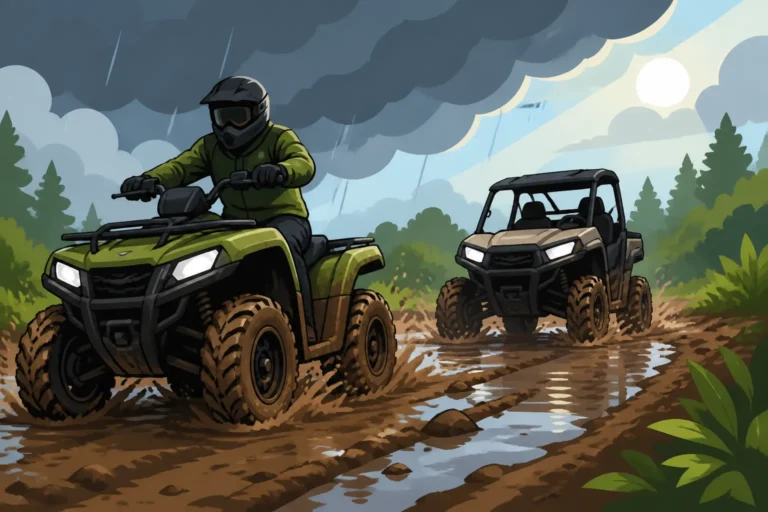
A machine that fit last season may no longer fit after a tire or suspension change. Before a trip, take a quick look at anything that could extend beyond the original body width. This is especially helpful if the machine has been modified for mud riding or utility work, where wider tires and added equipment may be common.
Do not forget that a trailer’s dimensions and the vehicle’s dimensions are separate concerns. A machine may meet Bethel’s width limit but still need careful positioning and secure tie-downs for transport. Check the trailer, loading approach, and straps before leaving home so that a last-minute equipment issue does not derail the ride.
What to confirm before you leave home
Verify current access and trail conditions
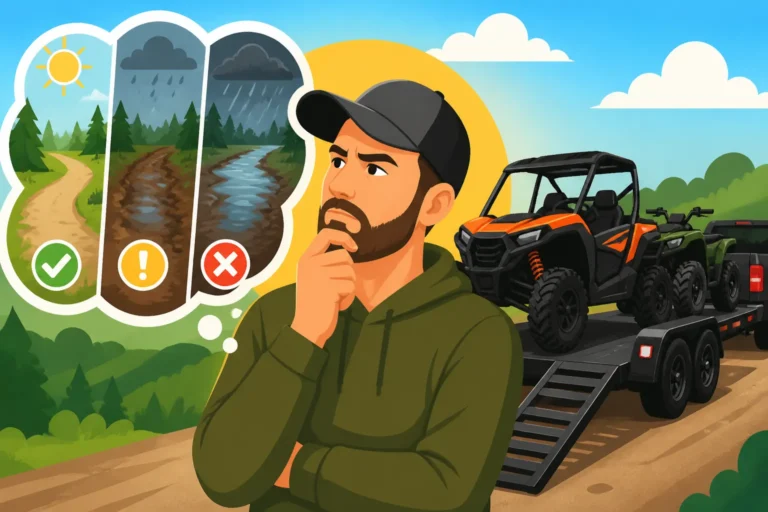
A machine that meets the width limit still needs an open, suitable trail. Weather can change conditions quickly, especially after heavy rain, and managers may close or restrict routes to protect the surface or address safety concerns. A route shown on a map is not proof that it is open for riding on the day you arrive.
Check the official trail or forest information before loading the trailer, and call the appropriate office if the status is uncertain. Pay attention to road access, parking, operating rules, and any notices about temporary closures. [Checking Trail Conditions Before You Load the Trailer] is a helpful planning topic, particularly when you are travelling a long distance or coordinating with a group.
A mapping app can support your preparation, but it should not be treated as the final authority on closures or permitted routes. onX Offroad can help with route planning and keeping track of riding areas, while official information is the place to confirm current access rules. Save the relevant contact details before you leave, since cell service can be unreliable in wooded areas.
Confirm the pass and other requirements
Do not assume that the width limit is the only requirement. Check whether riders need a pass, what that pass covers, and whether there are separate rules for age, licensing, safety equipment, or vehicle operation. Requirements can differ between public trail systems, state parks, private riding areas, and wildlife management land.
For National Forest riding, confirm which pass applies and what it covers rather than assuming one permit opens every road or trail. [Mississippi National Forest OHV Passes] and [The 50-Inch Width Limit Written Into the Pass] are relevant topics to review as you sort out the relationship between trail access and machine dimensions. A pass does not make a machine that exceeds the width limit eligible for a restricted trail.
Make a small checklist for each rider and machine: proof of any required pass, identification or other required documents, safety gear, and a plan for the day. That may feel fussy when you are eager to ride, but it is much easier to check these items at home than to discover a missing requirement at the entrance.
Plan around the route, not just the destination
If you are riding with friends, ask each person for the machine’s exact width and configuration before the group sets a date. One wider UTV can affect the plan for everyone if the chosen trail system does not allow it. Sorting this out early gives the group time to choose a suitable location or split into different riding plans without anyone feeling pressured at the gate.
Use a map to understand the general area and your route to the trailhead, but confirm that the route you intend to ride is open to your vehicle type. onX Offroad may help you organize a route and identify nearby roads or riding areas; still, check official notices and local rules before relying on any mapped line as an authorized trail.
Also plan for the drive home. Mud, rain, and trail use can make loading more difficult, so bring the right tie-downs, gloves, and cleanup supplies. If you expect poor cell service, save maps and important contact details for offline use where available, and tell someone where you plan to ride.
Choosing a suitable machine and riding plan
Compare your machine with the trail requirement
Use the table below as a starting point. The final decision should be based on the exact rules for the route and the machine as equipped, not on a general label such as “ATV” or “side-by-side.”
| What to check | Why it matters | What to do |
|---|---|---|
| Published width for your exact model | Similar trims can have different dimensions | Check the manufacturer’s specification for the correct year and trim |
| Modifications and accessories | Added parts may change the machine’s overall width or clearance | Measure the machine as equipped and ask how the trail defines width |
| Trail’s stated limit | A trail restriction can be narrower than a vehicle’s legal classification | Confirm the current Bethel rule with the managing agency |
| Pass and access rules | A pass may be required but does not waive machine limits | Check what the pass covers and which routes it applies to |
| Current closures and conditions | Weather and maintenance can affect access | Check official notices close to your departure |
A machine under the limit is not automatically a good fit for every riding situation. Ground clearance, turning radius, tire condition, rider experience, and weather all affect how comfortable it is on a route. A compact machine driven carefully may be easier to handle than a vehicle that is technically within the limit but poorly suited to the terrain or the rider.
If your machine exceeds the limit, do not assume that removing one accessory will solve the problem unless the trail manager confirms that the measurement is based on that accessory. Do not attempt to squeeze through a restricted entrance or ride a route that is posted for narrower machines. Choose a destination that explicitly accommodates your vehicle instead.
Think about the whole group
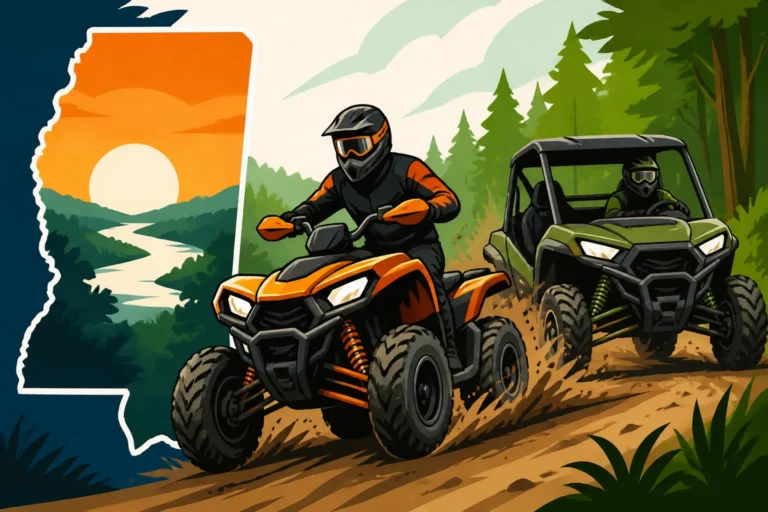
A group ride works best when the route fits every machine and rider. Before setting a meeting time, collect the width and model information for each vehicle. That simple check can prevent an awkward situation where one rider is turned away or feels pressured to try a trail that is not suitable for their machine.
If you have a mix of ATVs and UTVs, choose a location based on the most restrictive access rule in the group. Ask whether the route allows the vehicle type, not just whether the width is within range. A side-by-side that meets a width limit may still be subject to other restrictions, and rules can differ by trail system.
Plan a backup option in case weather or a closure changes the day’s route. Keep the second choice somewhere the group can reach without a major detour, and check its rules before leaving. onX Offroad can help you organize possible riding areas and route notes, but confirm each destination’s access with its official manager.
Ride with room for other trail users
A machine that fits within the limit still needs to be operated with care. Stay on authorized routes, slow down where visibility is limited, and give other riders space to pass safely. On a narrow path, avoid stopping in a blind turn or blocking an entrance while the group sorts out directions.
Respect posted signs, gates, and temporary closures. Riding around a barrier can damage the trail and create access problems for everyone. If you encounter a trail condition that seems unsafe or a restriction that is unclear, stop in a safe place and check with the appropriate office rather than trying to work around it.
Trail etiquette is also part of keeping access open. Pack out trash, avoid spinning tires unnecessarily, and be considerate around other visitors and nearby camps. [Mississippi Trail Etiquette Locals Expect] provides more context for the habits that make shared riding areas safer and more enjoyable.
Common mistakes to avoid
Assuming every UTV is too wide or every ATV is narrow enough
It is tempting to decide based on vehicle type alone: “It’s a UTV, so it must be too wide,” or “It’s an ATV, so it must fit.” Neither shortcut is reliable. Models vary, modifications matter, and a trail’s actual rule is what determines access.
Check the exact machine rather than relying on the badge, body style, or a friend’s experience with a different model. If a companion says their UTV made it through, find out whether it was the same year, trim, tires, and route. A report about one vehicle does not guarantee that another configuration qualifies.
Treating a map or old trip report as an access guarantee
Maps and rider reports can be useful for getting oriented, but they can become outdated or omit restrictions. A line marked as a trail does not necessarily mean every vehicle may use it, and a route that was open during one visit could be closed later.
Use maps for planning and official information for access decisions. onX Offroad can be one tool for understanding the general layout, but verify trail status, permitted vehicle width, and pass requirements with the managing agency before setting out. This is especially important after storms or when travelling to an unfamiliar trailhead.
Waiting until the gate to ask about the width limit
Questions are easier to resolve before the trailer is loaded. If the official measurement is unclear or your machine is close to the limit, ask the trail manager in advance and be specific about the model and modifications. A vague question such as “Are UTVs allowed?” may not produce the answer you need.
Keep a note of the response and any relevant rules, but remember to check again for closures or changed conditions before the trip. For a broader look at planning around the system, [Mississippi Trail Closures After a Storm] is a useful related read. A little preparation helps avoid wasted travel and makes it easier to choose a trail that suits your machine.
Disclaimer
This article is for general informational purposes only and does not constitute professional advice. Laws, prices and regulations vary by location and change over time. Consult a qualified professional for guidance on your specific situation.