Skid Plates for De Soto’s Pine Roots and Stumps
A ride through De Soto National Forest can turn rough quickly when a trail crosses exposed pine roots, hidden stumps, or uneven ground. Those obstacles can strike the underside of an ATV or UTV before the driver has time to react. This guide explains what skid plates protect, how to choose and inspect them, and how to ride with less risk of costly underbody damage.
Why De Soto trails can be hard on an ATV or UTV
Roots and stumps create low, hard impacts
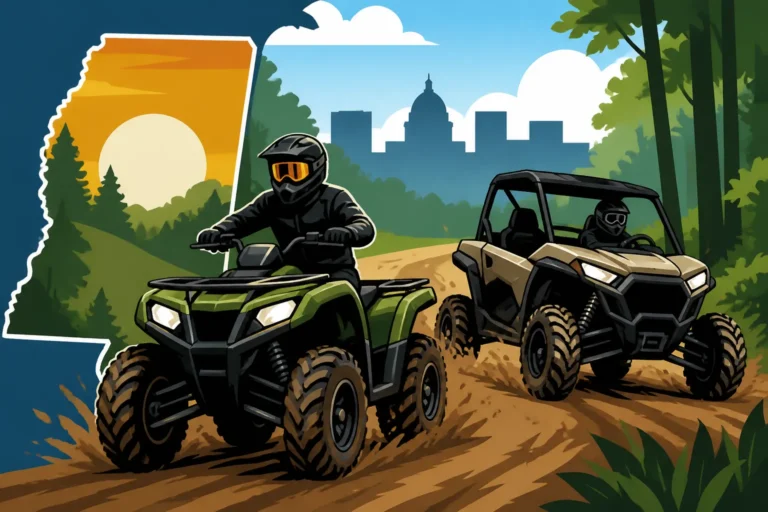
In the pine country of southern Mississippi, a trail can look smooth until a root or stump interrupts the track. Roots may sit just under pine straw or sand, while a cut stump can be hard to spot when vegetation, mud, or uneven light hides its outline. A machine’s front end may clear an obstacle while the center or rear underside catches it.
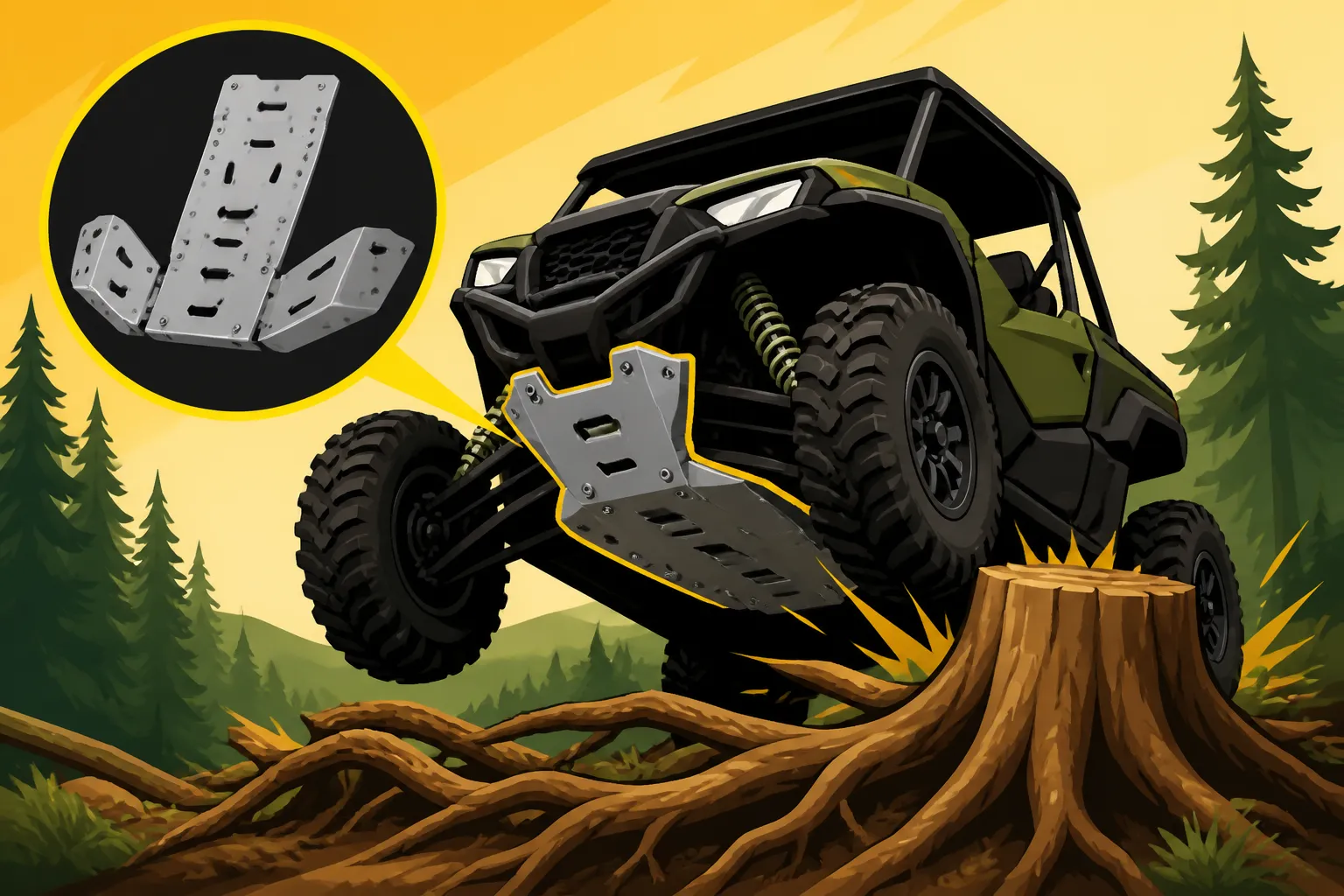
The impact does not have to be dramatic to matter. A sharp strike can scrape the frame, damage a vulnerable component, or loosen hardware. Repeated contact with roots and rough ground can also wear away protective coatings and expose metal to moisture and debris. A skid plate provides a sacrificial barrier between the trail and parts of the machine, but it cannot make every obstacle harmless.
The risk varies by machine and route. Ground clearance, wheelbase, tire size, suspension setup, load, and how the rider approaches an obstacle all affect what contacts the ground. A longer side-by-side may bridge a depression differently from a compact ATV, while cargo or passengers can change how much clearance remains.
A skid plate protects specific areas, not everything
“Skid plate” can describe several different protective panels. A belly plate covers some or much of the underside; other pieces may shield the front, rear, A-arms, or drivetrain components. Coverage differs by model and kit, so do not assume that a plate advertised for a machine protects every component beneath it.
Think through the places most likely to meet an obstacle on your rides. The center underside may be at risk when crossing a ridge or stump, while lower suspension parts can be exposed when navigating ruts or uneven trail edges. Check the machine’s owner information and the plate maker’s fitment details to see which areas are covered and which remain exposed.
A plate is not a substitute for choosing a suitable route. If a stump, washout, or deeply rutted section looks beyond your ability or your machine’s clearance, turn around or find another legal route. It is also important to ride only where access is allowed. Start with Mississippi National Forest Riding Explained and verify designated routes before heading out.
Choosing skid plates for a Mississippi machine
Match the plate to the exact make and model
The safest starting point is the exact machine—not a general label such as “mid-size ATV” or “four-seat UTV.” Fitment can vary by model, year, trim, and installed accessories. Before buying, compare the manufacturer’s compatibility information with the identification details on your machine. If anything is unclear, ask the plate manufacturer or a knowledgeable dealer to confirm the fit.
Check what the kit includes. Some options cover only the central underside; others may add protection for vulnerable front or rear areas. Look for a clear coverage diagram or installation instructions so you can see where the panels end, how they attach, and whether routine service requires removing them. A panel that does not fit correctly can rattle, rub, interfere with a component, or leave gaps where you expected protection.
Also account for existing equipment. A winch, aftermarket bumper, lift, altered suspension, or other modification may affect fitment. Even when the product is listed for your machine, confirm that the full setup is compatible before installation. Keep the instructions and any hardware notes with your maintenance records.
Compare material, coverage, and maintenance needs
Different plate materials and designs involve trade-offs. A rigid plate may offer a different balance of impact resistance, weight, noise, and cost than a more flexible option. The right choice depends on your machine, riding style, and the manufacturer’s specifications. Avoid choosing on material name alone: thickness, shape, attachment points, coverage, and the quality of the fit all matter.
| What to compare | Why it matters | What to check |
|---|---|---|
| Fitment | Poor fit can create gaps or interfere with parts | Exact make, model, year, and modifications |
| Coverage | A belly plate may not shield suspension or other exposed areas | Which components each panel covers |
| Material and design | Affects durability, weight, noise, and upkeep | Manufacturer specifications and care instructions |
| Mounting method | Affects installation and service access | Hardware, attachment points, and removal steps |
| Cleaning access | Sand, mud, and pine debris can collect underneath | Drainage openings and inspection access |
More coverage is not automatically better for every rider. Panels can collect sand, mud, pine straw, or small debris, so inspect how the design drains and how you will clean it. Consider whether you can reach drain plugs, check for leaks, or perform routine service without removing the entire system. If the maker recommends particular cleaning or inspection steps, follow them.
Consider the terrain you actually ride
A rider who mostly uses maintained routes may have different protection needs from someone who regularly crosses rocky, root-filled, or deeply rutted ground. De Soto’s sandy stretches can also hide uneven surfaces, so suspension movement and ground clearance matter alongside plate coverage. For local terrain context, see Mississippi Coast and De Soto National Forest Riding and Tires for Southern Sand.
An app can help with trip planning, but it should not be treated as permission to ride a route. For example, onX Offroad can be one layer of planning information when you are reviewing an area or organizing a ride. Cross-check route access, restrictions, and closures with official forest information and posted signs. The same principle applies to any mapping tool: a displayed line does not necessarily mean a route is open to motorized use.
Before loading the machine, check current route conditions and access rules. Rain can change trail surfaces, and a route that was passable on a prior visit may be muddy, damaged, or closed later. Mississippi Trail Conditions After Rain and Checking Trail Conditions Before You Load the Trailer are useful starting points.
Install and inspect skid plates carefully
Prepare before installation
Read the instructions for your exact kit before removing factory parts or loosening hardware. Work on a stable, level surface with the machine shut off and secured according to the owner’s manual. If lifting the machine is necessary, use suitable equipment and follow the manufacturer’s safety guidance; never rely on an improvised support.
Lay out the panels and hardware before starting. Compare the pieces with the instructions, check that the mounting points are accessible, and confirm whether any factory guards need to be removed or retained. Do not force a panel into place or substitute hardware without the maker’s direction. An installation that seems “close enough” can leave a loose edge or create contact with moving parts.
If the job involves unfamiliar mechanical work, ask a qualified technician to install it. This is especially sensible if the machine has been modified or if a plate appears to require cutting, drilling, or changes to factory components. Keep a record of the kit and installation details so the next person servicing the machine knows what is fitted.
Check mounting points after rides
Before a ride, look for loose fasteners, cracks, bent edges, or signs that a plate has shifted. After striking a root or stump, stop when it is safe and inspect the underside rather than assuming the plate absorbed the impact without issue. A protective panel can hide damage behind it, so unusual noise, vibration, fluid spots, or a change in handling deserves attention.
Routine checks are particularly helpful after muddy rides. Sand and debris can pack around panels or collect at mounting points. Clean the underside as directed by the machine and plate manufacturers, then check for trapped material, damaged fasteners, and fresh scrape marks. For more on post-ride cleanup, see Washing Sand Out of a Southern Machine.
Pay attention to what the marks tell you. A scrape near the center may point to repeated contact with a ridge; damage to a lower edge can suggest the machine is approaching obstacles at an angle that catches the panel. That information can help you adjust your line, reduce speed, or reconsider whether a route suits your machine.
Ride to avoid underbody damage
Slow down and choose a deliberate line
A skid plate is a backup layer, not an invitation to hit obstacles. Approach uncertain ground slowly enough to assess it. Look for exposed roots, stump edges, deep ruts, loose sand, and abrupt changes in elevation. If you cannot tell what is under the surface, avoid charging through simply because another machine passed earlier.
On an ATV, body position and smooth throttle can help you manage modest obstacles, but the right technique depends on the machine and the terrain. In a UTV, communicate with passengers and make sure the driver can see the route clearly. Avoid sudden turns or high-speed impacts, especially when the ground is uneven or visibility is limited.
If a passage looks too tight, steep, or damaged, do not feel pressured to follow a group through it. Turn around where it is safe, or let the group know you are choosing a different route. Protecting the machine—and the people on it—is more important than keeping pace.
Plan around closures and changing conditions
Check the route before you leave, and confirm that motorized access is allowed for your machine. Follow posted signs and barriers, and do not ride around a closed gate. A map app such as onX Offroad may help you prepare and keep track of a planned route, but use official information for current access decisions. It can be useful to save an offline map where service may be limited, while still carrying any required official map or pass information.
For public-land access requirements, review Mississippi Forest Pass Coverage. A pass or map does not override a closure, posted restriction, or local rule. Likewise, a route line shown in an app should not be taken as proof that a road is open to ATVs or UTVs.
Bring basic recovery and communication supplies suited to the trip, and let someone know where you plan to ride. If a machine becomes stuck or damaged, avoid creating a bigger problem by attempting a recovery that exceeds your equipment or experience. For recovery planning, Winches for a Buried Southern Machine covers considerations beyond simply choosing a winch.
Use a simple pre-ride checklist
Before riding, take a few minutes to confirm that the machine and route are ready:
- Confirm the plate fits the machine and is securely mounted.
- Check for loose hardware, cracks, and damage from the last ride.
- Review official route access, closures, and conditions.
- Carry the required pass or documentation for the riding area.
- Tell your group about any machine limitations or planned route changes.
- Bring tools and recovery equipment appropriate for the route.
- Recheck the underside after any significant impact.
The best protection combines a properly fitted plate with careful route choices and regular inspection. On De Soto’s pine-rooted trails, slowing down to read the ground can prevent the kind of impact that no panel is designed to make consequence-free.
Disclaimer
This article is for general informational purposes only and does not constitute professional advice. Laws, prices and regulations vary by location and change over time. Consult a qualified professional for guidance on your specific situation.