Snorkels for a Southern Water Crossing
A Mississippi creek crossing can look harmless from the bank and still send water into an ATV’s air intake, belt housing, or electrical connectors. A snorkel can raise certain intake openings, but it does not make a machine waterproof or turn deep water into a safe route. This guide explains what a snorkel protects, what it does not, and how to plan a crossing more carefully.
What an ATV or UTV snorkel does
Engine intake and CVT snorkels serve different purposes
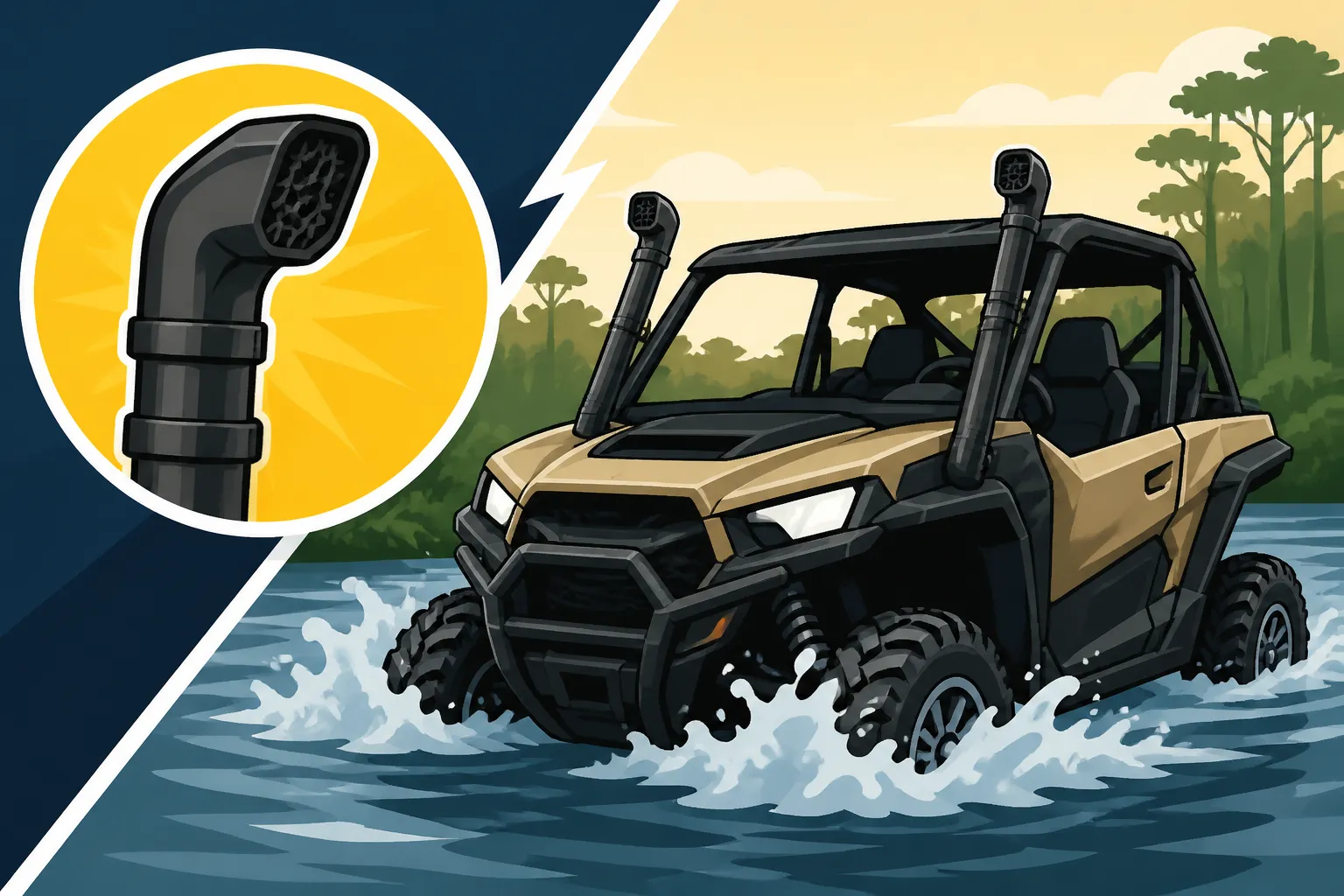
An engine snorkel moves the air intake opening higher than its original position. That can reduce the chance of the engine drawing water in when a crossing sends water over a low factory intake. If water enters the engine’s intake and reaches the cylinders, it can cause severe damage. Raising the intake may help reduce that risk, but only within the limits of the machine’s design and the conditions on the trail.
Many ATVs and UTVs also have a belt-driven CVT transmission. The CVT housing typically has its own intake and exhaust airflow openings, separate from the engine’s air intake. A CVT snorkel routes those openings higher so the belt housing is less exposed to water and debris. An engine snorkel alone does not necessarily protect the CVT, and a snorkeled CVT does not protect the engine.
The exact setup varies by make and model. Before buying a kit, identify where your machine’s engine intake and CVT openings are, and check whether the kit is designed for your specific model. A universal-looking pipe arrangement may not match the machine’s airflow requirements or fit safely around its frame and bodywork.
A snorkel is not a waterproofing system
Even a well-installed snorkel leaves other vulnerabilities. Water can reach electrical connectors, sensors, wheel bearings, brakes, differential vents, or other components. Some differentials and gearcases have low-mounted breather tubes; if water enters through a submerged breather, it can contaminate the lubricant. A snorkel kit may include extensions for some breathers, but do not assume it covers every component.
Seals and gaskets also have limits. A machine that is briefly splashed is in a different situation from one that sits submerged in moving water. Pressure, current, water temperature, hidden holes, and the angle of the machine can all change what gets wet. Even if the intake opening stays above the surface, water may enter elsewhere.
A snorkel should therefore be treated as one part of a water-risk plan, not permission to ride through any crossing. If you ride in wet conditions, learn your owner’s manual’s limits and inspect the machine afterward. For broader trail preparation in the state, Mississippi ATV Trails: Where to Ride can help frame the difference between a mapped destination and permission to ride a particular route.
How to choose and install a snorkel carefully
Match the kit to the machine and the way you ride
Start with your make, model, engine size, and year. A kit intended for a different model may have different routing, fittings, or intake requirements. Look for instructions that clearly identify the machine it fits and explain which openings the kit relocates. If the product description is vague about whether it covers the engine intake, CVT intake, CVT exhaust, or breathers, ask the seller or a qualified mechanic before ordering.
Think honestly about your usual riding. If you mostly travel dry forest roads and occasionally cross a shallow, familiar puddle, a full snorkel setup may be more modification than you need. If your regular routes include wet, muddy terrain, the machine’s factory intake locations and CVT exposure deserve closer attention. But the better answer may still be to avoid a crossing whose depth or bottom you cannot assess.
Installation quality matters as much as the kit. Poorly secured pipes can rub against hot or moving parts, interfere with steering, or crack after repeated vibration. Incorrect routing can create sharp bends or restrict airflow. Sealing every joint is also important, but sealant does not compensate for a bad fit or a poorly chosen design. If the job involves cutting panels, changing intake paths, or rerouting multiple hoses, a technician familiar with your machine can help prevent costly mistakes.
| Component or area | What a snorkel may help with | What still needs attention |
|---|---|---|
| Engine air intake | Raises the intake opening above its original position | Proper fit, airflow, seals, and water depth |
| CVT housing | Raises the belt housing’s intake and exhaust openings when included in the setup | Correct routing and post-ride inspection |
| Differential or gearcase breathers | May be extended by some kits | Check whether each breather is included and where it ends |
| Electrical parts and connectors | Usually not protected by intake snorkels | Connector condition, seals, and exposure to water |
| Bearings, brakes, and suspension parts | Not protected by a snorkel | Cleaning, inspection, and maintenance after wet rides |
Test the installation before relying on it
After installation, inspect every hose and joint while the machine is parked. Check for loose clamps, pinched tubing, exposed openings, contact with hot exhaust parts, and interference with steering or suspension movement. Make sure the intake openings are secure and positioned as the instructions specify. If you notice an unusual change in engine performance, belt behavior, or airflow, stop and investigate rather than assuming the snorkel is working correctly.
Do not use a deep crossing as your first test. A safer shakedown begins on dry ground: confirm the machine starts and runs normally, then inspect the installation again after a short ride. Water testing, if appropriate at all, should be conservative and take place only where riding is permitted, the bottom is known, and the water is shallow enough to avoid putting people or equipment at risk. A test should never involve deliberately submerging the machine.
Also remember that adding a snorkel can alter the machine’s appearance and may affect warranty coverage, emissions equipment, or the way a dealer handles a repair. Ask the manufacturer or dealer about the implications for your particular machine before cutting panels or changing factory intake components. Keep the installation instructions and any maintenance notes with your service records.
Planning a Southern water crossing
Check the route, permission, and conditions first
In Mississippi, a creek crossing is not automatically part of a legal or open route just because it appears on a map or someone has ridden it before. Confirm that the trail or road is open to your type of machine and that you have permission to be there. Land boundaries, gates, seasonal restrictions, and weather-related closures can change what is accessible.
Mapping tools such as onX Offroad can help you plan a route and review mapped land boundaries, but a map is not a substitute for posted signs, current landowner permission, or official access information. Use it to prepare, then verify that the specific road or trail is open and that riding is allowed. In the De Soto National Forest area, for example, check the applicable district’s access information and conditions before loading the trailer; Mississippi National Forest Riding Explained offers related guidance.
Rain can change a familiar crossing in a short time. Water may rise, current may strengthen, and debris can obscure holes or washouts. A route that seemed manageable during a dry spell can be unsafe after heavy rain. Check Mississippi Trail Conditions After Rain and Checking Trail Conditions Before You Load the Trailer before setting out, and be willing to choose another trail when conditions are uncertain.
Assess the crossing from the bank
Stop before entering the water. Look for signs of current, submerged branches, soft banks, and a visible exit point on the far side. Do not assume that a clear surface means a safe bottom. Silt, vegetation, and dark water can conceal deep holes, rocks, or debris. If you cannot see or otherwise confidently assess the route across, turn around rather than probing with the machine.
Avoid crossing alone, and do not let the pressure to keep up with a group rush the decision. A passenger or riding partner should stay clear of the water’s edge and be ready to call for help if something goes wrong. Do not tie a recovery line to a person or stand downstream of a machine that may shift in the current. A winch can help with some recoveries, but it is not a reason to enter water beyond your ability to manage; Winches for a Buried Southern Machine explains why recovery gear still needs careful use.
onX Offroad may help you identify an alternate route when a planned crossing looks questionable, but confirm the alternate route’s access and condition before taking it. Keep a paper or offline map available as a backup, especially in areas where cell service can be unreliable. In remote areas, a mapped route does not guarantee someone can reach you quickly if the machine becomes stuck.
Ride within the machine’s limits
There is no single safe water depth for every ATV or UTV. The manufacturer’s guidance, machine setup, ground clearance, current, bottom conditions, and rider experience all matter. If water approaches the intake openings or covers more of the machine than the manual permits, do not proceed. A snorkel raises certain openings; it does not remove the machine’s depth limits.
If a crossing is shallow and lawful to ride, use a controlled pace and avoid sudden acceleration, sharp turns, or stopping in moving water. The goal is not to create a large bow wave or splash water over the machine. Never follow another rider blindly: their machine, line, and clearance may be different from yours. If you are unsure about depth or footing, the prudent choice is to back out and find another route.
After the crossing and common mistakes to avoid
Inspect and clean the machine promptly
After a wet ride, look for water or mud around the airbox, snorkel connections, CVT openings, electrical connectors, and any extended breathers. Follow the owner’s manual for checking the engine air filter and CVT housing. Do not keep riding if the engine behaves unusually, the belt slips, warning lights appear, or you suspect water has entered a critical component. Shut the machine off and seek qualified help if you are uncertain what to inspect.
Water and fine Mississippi sand can work into places that are easy to overlook. Rinse mud away with appropriate care rather than directing high-pressure spray at seals, bearings, electrical connectors, or intake openings. Clean and dry the machine according to the manufacturer’s instructions, and check lubricants if the machine was exposed to water beyond ordinary splashing. Washing Sand Out of a Southern Machine covers the cleanup side of riding in sandy terrain.
If water entered the engine intake, do not try to restart the machine. Starting an engine that has taken in water can make the damage worse. Turn it off, keep it off, and arrange an inspection by a qualified mechanic. If the machine was submerged or the water reached the drivetrain or electrical system, explain what happened and how long it was exposed when you seek service.
Avoid the shortcuts that cause expensive trouble
A common mistake is assuming that a snorkel makes a machine “submersible.” It does not. Another is extending only the engine intake while leaving the CVT openings and breathers at their original height. Some riders also route snorkel pipes in a way that restricts airflow, or skip the careful inspection needed after installation.
Do not treat a route someone posted online as proof that it is open, permitted, or safe today. onX Offroad can support route planning, but check official conditions and signs, and get permission for private land. Respect closures, gates, and landowners; local access depends on riders behaving responsibly. For good shared-trail habits, see Mississippi Trail Etiquette Locals Expect.
Finally, do not let expensive equipment make a poor crossing feel acceptable. A snorkel, winch, and recovery strap can reduce some risks, but none can reveal a hidden washout or guarantee traction on a slippery bank. The safest crossing is often the one you skip.
Disclaimer
This article is for general informational purposes only and does not constitute professional advice. Laws, prices and regulations vary by location and change over time. Consult a qualified professional for guidance on your specific situation.