Mississippi Riding Near Perkinston
Perkinston can look like an easy starting point for a Mississippi ATV or UTV ride, but nearby does not always mean open, legal, or suitable for your machine. Private parks, designated forest trails, and ordinary roads each have different rules. This guide explains how to plan a ride near Perkinston, check access and conditions, and avoid arriving with the wrong machine or paperwork.
Understand the riding options near Perkinston
Perkinston sits in Stone County, within reach of the pine woods and rural routes of south Mississippi. The area’s appeal is easy to understand: forest scenery, sandy ground, muddy stretches, and room to get away from busy roads. But those features do not mean every track or dirt road is an authorized ATV route.
For a wider overview of destinations and riding types around the state, start with Mississippi ATV Trails: Where to Ride. Before you load up, sort nearby options into three categories: private riding parks, designated off-highway vehicle trails on public land, and roads or land where riding may be prohibited unless you have specific permission.
Private parks and managed riding areas
Red Creek Off-Road is a destination associated with the Perkinston area. A managed riding park can be a practical choice if you want a defined place to ride rather than trying to interpret a network of forest roads. The park sets its own admission, operating, machine, safety, and camping rules, so check those directly before making the drive. See Red Creek Off-Road in Mississippi for more on this destination.
Private parks can be especially useful for families and groups because everyone can start from the same entrance and ask staff about current conditions. That does not mean every park suits every rider. A narrow trail system, deep mud, steep approaches, or a machine-width restriction can make a location a poor fit for a wide side-by-side or a beginner.
Treat information from old posts, ride photos, and word of mouth as a starting point, not confirmation. Hours, closures, gate procedures, available facilities, and acceptable vehicle types can change. Call or check the park’s own information before driving from Perkinston, Wiggins, Gulfport, or farther away.
Public forest trails are not the same as forest roads
The De Soto National Forest is a major outdoor landscape in this part of Mississippi, but a road through the forest is not automatically an ATV trail. Public-land access is governed by designated routes, closures, vehicle limits, permits or passes where applicable, and posted signs. A route that looks rideable on a phone map may still be closed to your machine.
That distinction matters because riders sometimes follow a visible track, a social-media route, or a line on a navigation app without confirming its status. A trail can cross land with a different manager, run behind a closed gate, or be intended for another kind of recreation. Review Mississippi National Forest Riding Explained before assuming a forest route is open to ATVs or UTVs.
A useful planning habit is to identify the managing agency for each place you intend to ride. A private park can answer questions about its property. A forest office can clarify public-land access and designated routes. If you cannot establish who manages a trail or whether your machine is allowed, do not treat uncertainty as permission.
Match the machine to the trail
A route that works well for a small quad may be frustrating or impassable in a full-size side-by-side. Width is only one factor. Ground clearance, tire setup, turning room, water depth, rider experience, and the trail’s surface all affect whether a particular machine is a sensible choice.
Near Perkinston, the temptation may be to choose a destination first and figure out the machine later. Reverse that order. Know your vehicle’s actual width and the restrictions at the riding area before you commit to a route. For a comparison of destination types, see [Mississippi Trails That Allow Side-by-Sides].
Check width, clearance, and vehicle restrictions
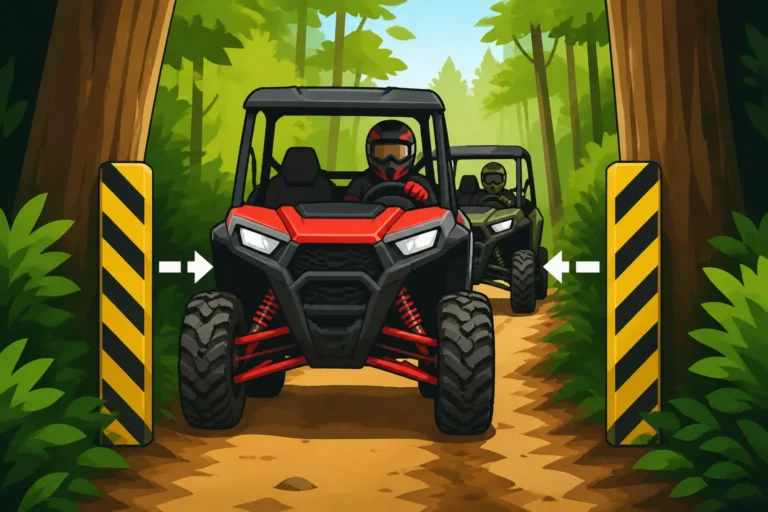
Do not estimate your machine’s width from its model name or from how it looks beside another vehicle. Accessories such as larger tires, wheel spacers, fender extensions, or aftermarket parts may affect the overall measurement. If a trail or park has a width limit, confirm how the operator measures it and whether the restriction applies to your exact setup.
Ground clearance also matters in south Mississippi. Roots, ruts, soft shoulders, and water-carved depressions can catch a low machine even when the trail is not especially steep. A short walk to inspect an unfamiliar obstacle can be safer and cheaper than trying to power through it and damaging a skid plate, suspension component, or belt.
Ask about the entire riding area rather than one trail name. A park might have routes suited to several machine sizes, or the whole property might be restricted to narrower vehicles. Similarly, public trails may have specific equipment or width requirements. Confirm those details with the manager before you trailer down.
Be realistic about mud, sand, and water
South Mississippi’s sandy and damp conditions can change how a trail feels from one section to the next. Firm sand may be manageable for a new rider, while a wet rut or concealed hole can stop a machine abruptly. Deep mud can also turn a casual group ride into a recovery job, especially if several vehicles enter the same soft section one after another.
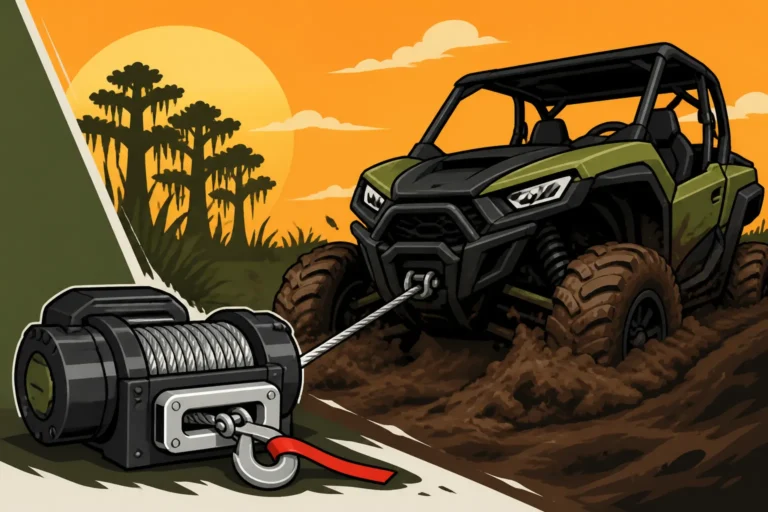
A snorkel, winch, or aggressive tire is not a substitute for judgment. These additions may help in certain situations, but they do not make every water crossing safe or every muddy trail appropriate. If you cannot see the bottom, estimate the depth, or identify a safe exit, turn around rather than letting group pressure decide for you.
Keep a conservative plan for mixed-experience groups. Agree that anyone can opt out of an obstacle without being mocked or left behind. A beginner who is comfortable on dry, open ground may not be ready for a deep rut; an experienced rider may still be unfamiliar with a particular machine’s limits. The best route is one the least experienced person can ride safely.
| Riding option | Best fit | What to confirm before leaving |
|---|---|---|
| Private park near Perkinston | Riders who want a managed destination and a defined entrance | Operating status, machine restrictions, safety rules, available facilities, and current trail conditions |
| Designated national forest trail | Riders prepared to follow public-land rules and route designations | Open routes, vehicle limits, pass or permit requirements, closures, and posted restrictions |
| Unverified dirt road or track | Not a dependable riding plan | Land ownership, written permission, road status, and whether motorized recreation is allowed |
Plan for conditions and navigation
A ride can be spoiled before the first mile if a gate is closed, heavy rain has changed the trail, or a group arrives without knowing where its intended route begins. In wooded areas, mobile coverage may be unreliable, and a phone battery can drain quickly while running navigation. Make a plan that still works if the screen goes dark.
It is reasonable to use digital maps to prepare, but treat them as planning tools rather than proof of access. A marked line on a map cannot tell you whether a route has a temporary closure, whether a private landowner has granted permission, or whether a vehicle restriction applies.
Check conditions before trailering
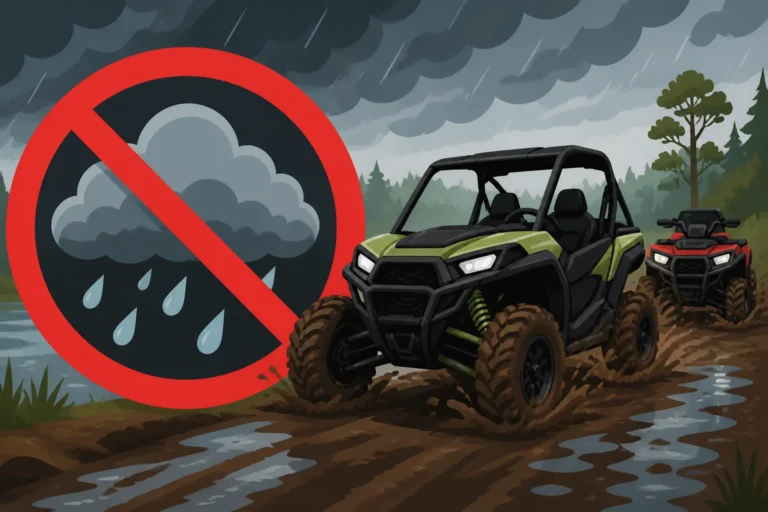
Rain can have different effects across nearby properties. One trail may drain well while another becomes slick, rutted, or unsafe. A park might close a section or its entire property, while a forest route may be affected by a road closure, storm damage, or seasonal restriction. Check the relevant manager’s current information close to departure and again if weather changes during the drive.
This is particularly important when traveling from outside Stone County. A family leaving from Hattiesburg or a group coming from the Mississippi Gulf Coast may have several hours invested in loading machines, hitching a trailer, and packing gear. A quick status check can prevent a wasted trip. Use Mississippi Trail Conditions After Rain and [Checking Trail Conditions Before You Load the Trailer] as planning references.
Have a backup destination, but verify that option separately. “The other place is nearby” is not enough if it has different vehicle limits, is closed, or requires a separate pass. Before departing, make sure every driver knows the primary entrance, backup plan, and meeting point if the group gets separated.
Use maps without confusing them for permission
A navigation app such as onX Offroad can help you study terrain, organize a planned route, and keep track of where your group is. It is useful to compare the route you have in mind with official trail information and the location’s own guidance. Download or save what you need before you enter a dead zone, and bring a backup way to navigate.
Still, a mapped line should not be treated as legal authorization. Digital data can be incomplete or out of date, and a screen may not show a newly posted closure or a gate that is shut on the ground. If a map and a sign conflict, obey the sign and seek clarification from the land manager rather than proceeding.
onX Offroad may also help a group share a planned route or locate a meeting point, but do not rely on a single person’s phone as the only navigation plan. Save a paper map where available, keep the address or coordinates of the trailhead, and tell someone at home where you plan to ride and when you expect to check in.
Prepare for weak service and changing plans
Cell coverage can be inconsistent in wooded areas. Before leaving town, charge phones and navigation devices, download maps for offline use when the app supports it, and keep a vehicle charger or power bank available. Do not assume that a text message will go through from every part of the ride area.
Group rides benefit from a simple check-in routine. Choose a stopping point where everyone can regroup, decide what to do if someone is delayed, and make sure the last rider knows the plan. A small mechanical issue becomes more stressful when the group has no agreed meeting location or one rider has gone ahead without telling anyone.
Also prepare for ordinary problems: a flat tire, a dead battery, heat, insects, or a machine that needs recovery. Carry water, basic tools, a first-aid kit, and communication options suited to the group and the terrain. For a larger ride, ask the destination about its recovery procedures and whether its staff can assist if a vehicle becomes stuck.
Get the rules, access, and paperwork right
A title, bill of sale, or other ownership record can help establish that a machine belongs to you, but paperwork does not automatically grant access to a trail. Likewise, a trail pass does not make an ATV legal on every road in the county. Keep those questions separate: ownership and titling, riding-area access, and public-road use each have their own rules.
Before leaving home, confirm requirements with the specific park or land manager. For broader background on forest access, read [Mississippi Forest Pass Coverage]. If you are carrying a machine on a trailer, make sure the trailer and tow vehicle are ready for the trip as well.
Confirm where you may ride
Do not assume you can ride an ATV from your lodging, home, or a gas station to the trailhead along a public road. Mississippi’s road rules and local ordinances are separate from a park’s rules and forest access requirements. A machine being titled or insured does not, by itself, make it street-legal.
The safest plan is to trailer the machine to a confirmed riding location and unload only where that location permits it. If a route includes a road crossing or a segment that appears to connect two trails, ask the manager whether that connection is authorized. Never use a public road as an informal shortcut based only on another rider’s tracks.
Written permission matters when riding on private land. A logging road, field track, or path beside a creek may look open, but appearance does not establish permission. Confirm the landowner’s consent and any limits on where, when, or how you may ride. If there is a gate, sign, or clear indication that access is restricted, do not bypass it.
Keep proof of ownership and required documents handy
Take the documents your riding destination requires, and keep them protected from water and mud. Depending on the situation, useful records may include proof of ownership, a title or bill of sale, identification, a pass or permit, and any required safety-course documentation for a young rider. Ask the park or agency what it expects rather than relying on another person’s checklist.
It is smart to keep a digital copy of important records as a backup, but a phone photo may not satisfy every requirement. Bring originals or accepted copies where the destination calls for them. Store paperwork in a sealed pouch or another protected place, not loose in a cargo bed where rain and spray can ruin it.
Before departure, check that the machine identification information is readable and that your paperwork matches the vehicle. A mismatch can become an avoidable headache at a gate, during a theft inquiry, or if you need to explain ownership. For information about titling requirements, consult the relevant Mississippi guidance rather than assuming riding access and title rules are the same issue.
Make the ride comfortable for the whole group
The best Perkinston-area outing is not necessarily the one with the deepest mud or longest route. For some groups, a few hours at a managed park with a clear return point is a better day than an ambitious forest loop. Consider the experience of the youngest or least confident rider, the machines in the group, and how much time you actually have.
A little preparation also helps protect the places people come to enjoy. Stay on authorized routes, avoid spinning tires near trail edges, pack out trash, and give other visitors space. In a wooded area, a small mistake can damage a trail, disturb wildlife, or create a problem for land managers and future riders.
Choose a ride that suits children and beginners
Start with a short, familiar route and build confidence gradually. Explain how the group will handle stops, turns, and obstacles before the machines start. Children should ride only on an appropriately sized machine and under the supervision and requirements that apply at the particular destination.
Do not treat a child’s enthusiasm as evidence that a route is suitable. A passenger seat, helmet, and adult nearby do not make a machine safe if it is not designed for passengers or if the child cannot hold on properly. Check both the manufacturer’s guidance and the riding location’s passenger rules.
With a new rider, model calm decisions. Stop well before a difficult obstacle, talk through the options, and allow the rider to bypass it. Forcing a nervous person into a muddy section can turn a pleasant day into a frightening one. A route that ends with the group smiling and ready to come back is a better first ride than a dramatic recovery story.
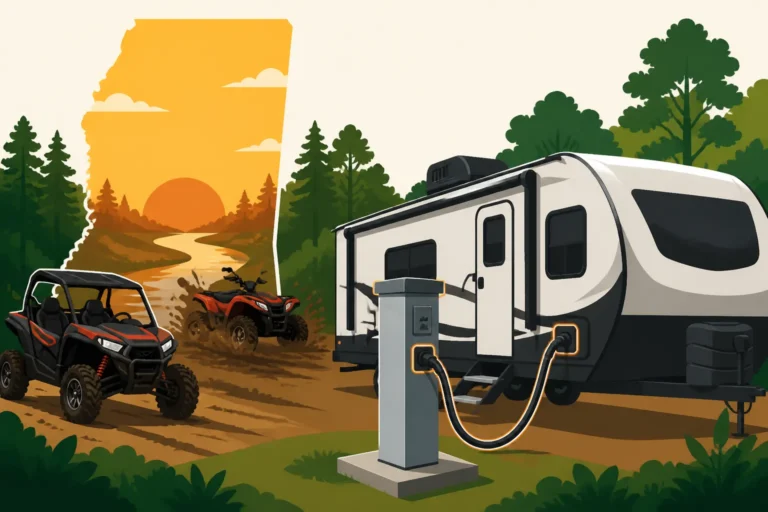
Think about camping, food, and facilities
If you plan to stay overnight, verify that the place you intend to camp actually allows it and that the trail access works with your itinerary. A nearby campground is not automatically connected to an ATV route, and a riding park’s overnight options may have separate rules or booking requirements. See [Mississippi Trails With Camping] while comparing possible plans.
Pack as though services may be farther away than you expect. Bring drinking water, snacks, sun protection, insect repellent, and a change of clothes. Summer heat and humidity can wear down riders before the machines show any problem, while wet gear can make the drive home miserable.
Set a clear end time and fuel plan. If a group is riding several machines, do not assume every vehicle has the same range or fuel needs. Identify a safe point to stop, refuel where allowed, and check everyone’s condition. A deliberate break is easier than discovering late in the day that a rider is dehydrated or a machine is running low far from the staging area.
Leave the area better than you found it
Keep machines on authorized trails and avoid creating new tracks around puddles or blocked sections. Going around a wet spot can widen a trail, damage vegetation, and make future erosion worse. If the route looks unsafe or closed, stop and contact the manager rather than carving a new path.
Respect other users and nearby residents. Slow down near campsites, parking areas, and trailheads, and keep noise under control. Secure loose gear, pick up food wrappers, and do not leave straps, cans, or broken parts behind. If you encounter a logging crew, hunters, hikers, or another group, pause and give them room to pass safely.
For a simple Perkinston trip plan, select a confirmed destination, verify its current status and machine rules, map the route to the entrance, and pack documents and essentials before loading. If you want to add a second riding area, confirm that it is open and appropriate rather than assuming it is interchangeable with the first. That small bit of planning is what makes the day feel like an outing instead of a scramble.
Disclaimer
This article is for general informational purposes only and does not constitute professional advice. Laws, prices and regulations vary by location and change over time. Consult a qualified professional for guidance on your specific situation.