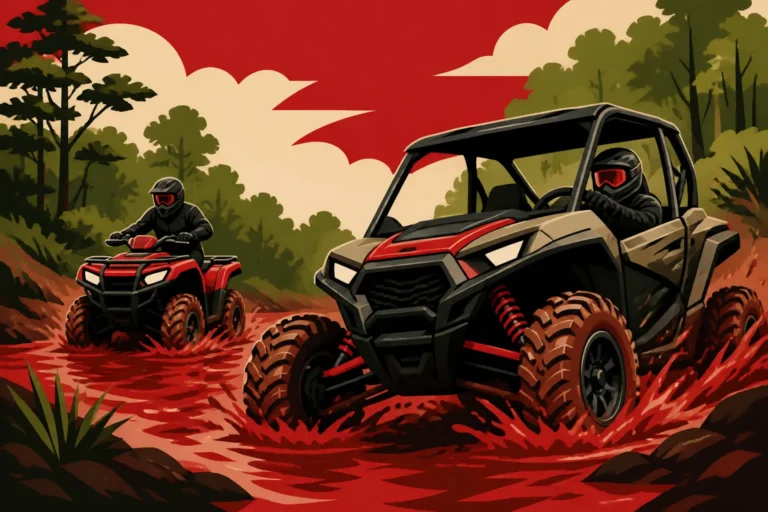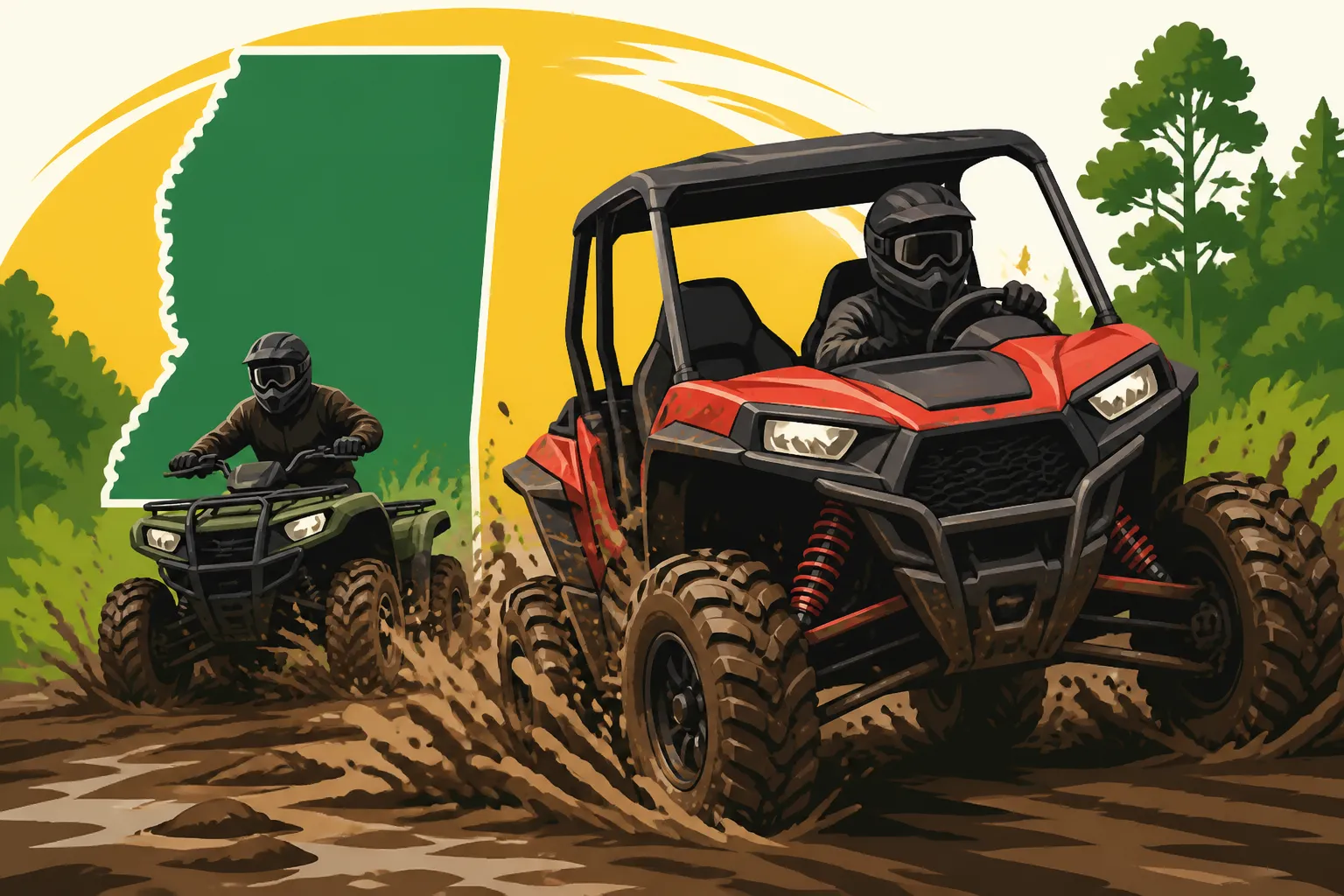
Mississippi Parks With Mud Pits
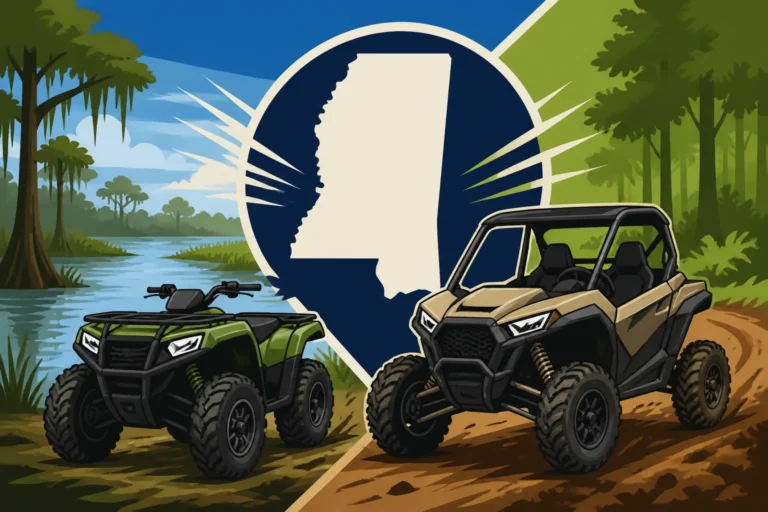
Finding a Mississippi riding spot with a real mud pit can take more than a quick map search. Some places are private parks with changing hours and rules; others are forest trails where mud is part of the terrain, not a designated pit. This guide explains where to start, what to confirm before towing your machine, and how to ride responsibly.
What Counts as a Mississippi Park With Mud Pits
A mud park is different from a muddy trail
A dedicated mud park typically has areas intended for riding through mud, water, or other challenging terrain. Those features may include purpose-built pits, natural wet areas, or routes that become muddy after rain. The layout and difficulty can vary considerably, even within one park, so the word “mud” alone does not tell you whether a route will suit your ATV, UTV, or experience level.
A forest trail can also be muddy, but that does not make it a mud park. Public riding areas often have designated routes and operating rules; riding off-trail or turning a wet trail into a pit can damage the land and may violate access rules. Before treating any puddle or low area as a place to play, check whether the land manager allows that kind of riding.
This distinction matters when planning a trip. A family looking for a controlled place to try a shallow mud pit has different needs from an experienced group seeking difficult, deep-mud obstacles. Ask the park what its terrain is actually like rather than relying on a social media post or a broad label in a map app.
Private riding parks and public trail systems serve different needs
Private parks may offer designated mud features, day-use riding, events, camping, or other amenities, but the details can change. They may also have waivers, age limits, sound rules, machine restrictions, or specific opening schedules. Call or check the park’s own notices before loading up, especially after heavy rain or before a long drive.
Public trail systems are usually better approached as trail networks, not as places to seek out unofficial mud holes. For example, [Mississippi National Forest Riding Explained] can help clarify the difference between riding on designated forest routes and assuming every wet area is open for vehicle use. A pass or trail permit, where required, does not automatically authorize riding wherever the ground looks passable.
For a broader starting point, [Mississippi ATV Trails: Where to Ride] can help you compare the state’s riding options. Keep your expectations specific: “I want a maintained trail suitable for a stock machine” is a more useful question than “Where is the mud?” It helps staff direct you to the right area and warn you about conditions that may be unsuitable.
Mississippi Places to Investigate for Mud Riding
Red Creek Off-Road
Red Creek Off-Road is one Mississippi name riders may encounter while looking for private off-road recreation. Before making plans, confirm directly whether the park is open, what areas are available to your type of machine, and whether mud features are currently accessible. Conditions, schedules, and operating rules can change, and an old listing or a past visitor’s account may no longer describe what you will find at the gate.
Ask practical questions before you go: Are ATVs and side-by-sides both allowed? Are there width or sound restrictions? Are children permitted on the same routes as adults? Is camping available, and does it need to be arranged in advance? If your goal is specifically to ride in a mud pit, ask whether there is a designated pit and whether it is open under the conditions you expect.
It is also worth checking whether the park’s current rules require a waiver, protective equipment, or proof of insurance. Private operators can set conditions for entry that differ from public-land rules. The overview in [Mississippi Private Mud Parks] can help you think through the kind of questions to ask before choosing a destination.
Mudslangers and other private-park leads
Mudslangers Off Road Trails is another name that may come up in a search for Mississippi mud riding. Treat any online description as a lead, not as confirmation of current access. Contact the operator or consult its official information for the latest details on operation, terrain, permitted machines, fees, and whether there is a mud feature suitable for your group.
When you call, describe your machine plainly. A compact youth ATV, a narrow trail quad, and a wide four-seat UTV can have very different access needs. If you ride a side-by-side, ask about width limits, turning room, trail layout, and whether the park has routes that avoid tight wooded sections. A machine that fits through the entrance may still be unsuitable for a particular trail or pit.
Do not assume an event, video, or photograph proves that a park is open for ordinary day riding. It may show a private event, a one-time gathering, or a feature that is closed at other times. Before you set out, compare your options using [Mississippi Private Parks With Camping] if you also need an overnight plan, and confirm every important detail with the park itself.
| Riding option | What it may offer | What to confirm before leaving |
|---|---|---|
| Private mud park | Designated mud features or challenging wet terrain | Current opening, permitted machines, pit access, rules, and fees |
| Public forest trail system | Marked or designated routes through forest terrain | Which routes are open, pass requirements, machine limits, and closures |
| Wildlife management area | Access on specific roads under applicable management rules | Whether riding is allowed on that road and whether seasonal restrictions apply |
| Informal land or private property | Access only when the owner or manager permits it | Written permission, boundaries, allowed routes, and conditions |
Why a forest trail is not a substitute for a mud pit
Mississippi’s public forest riding options can be excellent for trail-oriented trips, but a trail ride and a mud-park outing are not interchangeable. A public route may be narrow, sensitive to rain, or closed when conditions are poor. A muddy stretch on a designated road is not an invitation to widen it, bypass a closure, or carve a new path through the woods.
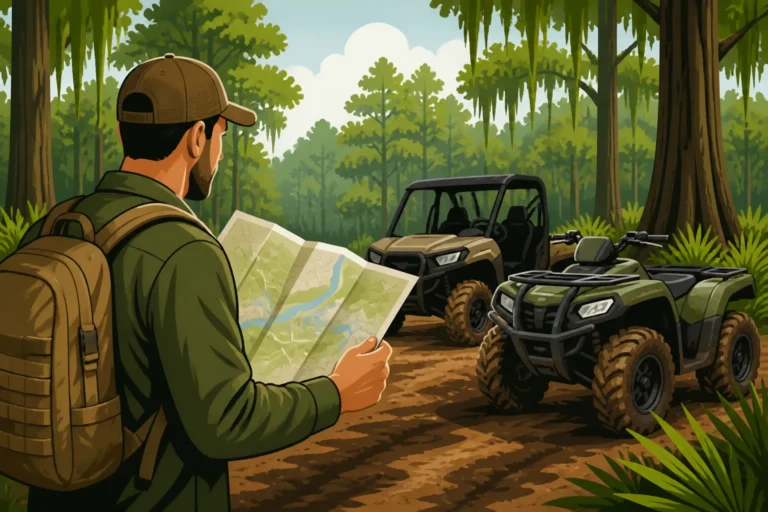
Before heading to a national forest, use current land-manager information to verify which routes are open and what access rules apply. A route shown on a general-purpose map may not be open to motorized use. For maps and planning, [Mississippi ATV Trail Map Downloads] is a useful related topic, but always compare mapping information with official signs and notices.
A tool such as onX Offroad can help you study routes and get a sense of the surrounding area, but a map layer is not permission to ride. It cannot replace posted signs, landowner approval, or confirmation from a park or forest office. Use it as one part of planning, then verify access directly before you unload.
How to Choose a Mud Riding Spot for Your Machine
Match the terrain to the machine and rider
Not every mud feature is appropriate for every ATV or UTV. A shallow, well-marked area may be manageable for a newer rider, while deep water, concealed ruts, steep banks, and sticky clay can quickly overwhelm a stock machine or an inexperienced driver. If you are unsure, start with the easiest designated route and ask staff which areas are suitable for your setup.
Think about ground clearance, tires, snorkel or air-intake configuration, winch availability, and recovery points. Modifications can improve capability, but they do not make a machine invulnerable. Water can hide holes, logs, and abrupt changes in depth. A machine that can enter an obstacle may not be able to climb out safely.
For side-by-sides, width and passenger arrangements matter too. Confirm that your vehicle fits the park’s restrictions and the routes you plan to use. [Mississippi Trails That Allow Side-by-Sides] is a helpful topic to review when comparing trail systems, while [Mississippi Trails With Deep Mud] can guide your research into more demanding terrain. Always ask whether a route is suitable for your machine’s actual width and equipment.
Ask about conditions, not just the park’s name
Rain can change a riding area dramatically. A route that was firm during a dry spell may become slick, deeply rutted, or impassable after a storm. Conversely, some parks may temporarily close muddy areas to prevent damage or for safety. Ask about recent weather, active closures, and whether the park is operating normally before you drive there.
Try to get specific answers. Instead of asking, “Is it muddy?” ask whether the designated pits are open, whether the water level is unusually high, whether a stock machine can use the easier routes, and whether recovery support is available. Those details help you decide whether to bring a second vehicle, a winch, or a more experienced riding partner.
A route can also be too dry or too wet for the day you planned. If the park offers multiple types of terrain, ask what alternatives are open. When planning a broader trip, [Mississippi Trail Closures After a Storm] provides useful context for thinking about weather-related access rather than assuming a trail remains available year-round.
Consider the group, not only the most capable rider
A group may include experienced adults, first-time riders, teenagers, or children on smaller machines. The most challenging pit in the park should not set the plan for everyone. Agree in advance on a route that keeps the group together, and give less experienced riders the option to skip an obstacle without pressure.
For a family outing, ask about age rules, supervision requirements, passenger policies, and whether the park has easier areas separated from more demanding terrain. A child riding a youth machine should not be expected to follow a full-size UTV into a deep pit. Keep a responsible adult nearby and set a clear stopping point before anyone enters a difficult feature.
Group leaders should also plan for spacing and communication. Mud can make it difficult to hear instructions or see another machine through spray. Establish a simple system for stopping, turning around, and calling for help. If your group wants a less demanding trip, compare options under [Best Mississippi ATV Trails for Beginners] rather than choosing a destination solely because it is known for mud.
Prepare Before You Tow to a Mississippi Mud Park
Confirm access and rules directly
Before leaving home, verify the park’s location, operating status, entry process, and current rules. Ask whether you need to reserve, whether the park accepts your machine type, and whether there are restrictions on machine width, noise, passengers, alcohol, pets, or camping. If the park has a social media page, treat it as useful for notices, but ask directly if a detail could affect your trip.
Check the route to the entrance as well. A trailer-friendly route may be different from the shortest route shown by a navigation app, especially on narrow rural roads or after severe weather. Confirm where to park and whether there is enough space for your trailer and tow vehicle. If you are bringing a group, decide who will drive and whether everyone knows the meeting point.
It is sensible to save the park’s contact information before you lose cell service. You can also use onX Offroad to review the surrounding area and plan a general route, while remembering that the park’s own guidance and posted notices determine access. For a broader planning checklist, see [Checking Trail Conditions Before You Load the Trailer].
Pack for recovery, heat, and wet gear
Mud riding is hard on both people and machines. Bring drinking water, weather-appropriate clothing, gloves, eye protection, sturdy footwear, and a change of clothes. A wet ride can feel uncomfortable long after the fun part is over, particularly if you have a long drive home or are camping overnight. Keep dry items in sealed bags and separate them from muddy gear.
Carry basic recovery and repair supplies suited to your vehicle and experience. This may include a rated tow strap, gloves, a tire repair kit, a small tool kit, and a working winch if your machine is equipped for one. A winch is useful only when it is correctly installed and used with safe attachment points. Never wrap a recovery strap around a person or attach it to a part of the machine not designed for recovery.
Plan for the possibility of a breakdown or a stuck machine without turning a minor problem into a risky recovery. Ride with a partner, tell someone where you are going, and keep your phone protected from water. If the area has poor reception, a map saved for offline use can help with orientation, but it does not replace a paper backup or the park’s instructions.
Protect the machine before and after the ride
Before entering mud, inspect tires, brakes, steering, lights, and fluid levels. Make sure the radiator area is clear and that any protective equipment is securely fitted. Check that your cargo is tied down and that nothing can fall from the racks when the vehicle hits a rut. A loose cooler or tool bag can become a hazard in rough terrain.
After riding, clean the machine carefully. Mud can hide damage and hold moisture against components. Inspect wheel bearings, brake areas, suspension, belts, electrical connectors, and underbody protection. Avoid directing high-pressure water at seals, bearings, or electrical parts; a thorough rinse is not the same as blasting every component.
Pay attention to the air intake and manufacturer guidance after water exposure. If the machine took on water or began running strangely, stop and assess the situation rather than riding it harder. More advice on post-ride care is covered in [Mississippi Mud and What It Does to a Machine] and [Washing Sand Out of a Southern Machine].
Ride Mud Features Safely and Respect Access Rules
Treat water and deep mud as unknown hazards
A muddy surface can conceal a sudden drop, a stump, a fence, a buried object, or a soft edge that will not support the machine. Never enter water just because another rider crossed it. Depth and bottom conditions can change, and a safe crossing for one machine may be dangerous for another.
Observe designated boundaries and obey staff instructions. If a pit is marked closed, roped off, or clearly excluded from the riding area, stay out. Do not create a bypass around a difficult section by riding through vegetation or across private land. Those shortcuts can damage the site, put your group at risk, and threaten future access for other riders.
If a machine becomes stuck, stop spinning the tires. Wheelspin can dig a deeper hole, bury the vehicle further, or throw debris. Check your footing and surroundings before attempting recovery, keep bystanders clear of the line, and use equipment only as intended. If the recovery looks unsafe or exceeds your experience, call park staff rather than improvising.
Follow signs and ask before using land
A map, social post, or visible tire track does not establish that you have permission to ride. On private property, get permission from the landowner or operator and clarify where you may go. On public land, stick to routes designated for motorized use and respect signs, gates, closures, and seasonal restrictions.
The same caution applies to wildlife management areas and leased hunting land. Access rules may differ by location and season, and permission to hunt or visit an area does not necessarily include permission to ride an ATV or UTV. [Mississippi WMA Riding Rules] is a useful place to start understanding why designated roads and local restrictions matter.
Using an off-road mapping app can help you orient yourself, but it does not grant access across private boundaries. onX Offroad may help you view terrain and plan a route, yet you still need to confirm whether the route is legally open and whether the owner or manager permits riding. When boundaries or access are unclear, turn around and ask before proceeding.
Be a good guest at the park
Stay on designated routes, avoid excessive wheelspin outside areas specifically intended for that kind of riding, and give other machines room. Mud can reduce visibility, so slow down near blind corners and intersections. Yield to riders who are climbing or recovering when it is safe to do so, and never crowd a machine that is using a winch or tow strap.
Keep noise under control and follow the park’s rules about music, alcohol, pets, fires, and quiet hours. Pack out trash, including broken straps and disposable items. A muddy area can already be difficult to maintain; leaving litter or damaging signs makes it harder for operators to keep the site open and welcoming.
If you are visiting with a large group, appoint one person to check everyone’s equipment and another to keep track of the route and head count. Be willing to change plans if conditions deteriorate. For etiquette and shared-trail expectations, [Mississippi Trail Etiquette Locals Expect] offers additional guidance that applies beyond mud parks.
A little preparation makes the difference between a fun, muddy day and a long, frustrating recovery. Confirm that a park is open and that its mud areas suit your machine, ask about restrictions before towing, and treat maps as planning tools rather than permission. When the conditions or boundaries are unclear, check with the operator or land manager before riding.
Disclaimer
This article is for general informational purposes only and does not constitute professional advice. Laws, prices and regulations vary by location and change over time. Consult a qualified professional for guidance on your specific situation.