Machines 50 Inches and Under
A machine that fits in the garage may still be too wide for a Mississippi trail, and finding that out at the entrance is a frustrating way to lose a riding day. This guide explains what “50 inches and under” means, where that limit matters, how to check trail access before hauling, and what to inspect on your ATV or UTV before you go.
What the 50-inch limit means on Mississippi trails
Trail width limits are about access, not just machine size
A 50-inch trail limit means the riding area restricts access to machines that meet its stated width requirement. It is not a promise that every Mississippi trail is open to every machine under that measurement. Each riding area can set its own rules, and access may also depend on trail designation, vehicle type, closures, permits, and posted signs.
The limit matters especially to side-by-sides. Many full-size UTVs are wider than 50 inches, while some compact models and many ATVs may fit the category. But a model’s advertised width is only a starting point: replacement wheels, offset rims, spacers, wider tires, or other changes can make the machine wider than its original specification.
A narrow machine can also be turned away if the riding area has a separate rule for vehicle class, noise, passengers, or required equipment. Before you travel, check the specific site’s rules rather than relying on a general statement that a trail is “ATV friendly.” For an overview of places where width can affect access, see [Mississippi Trails With Width Limits].
Measure your machine before loading it
Check the owner’s manual or manufacturer’s specifications for the machine’s width, then consider whether modifications have changed it. If you are unsure, measure the widest point from the outside of one tire to the outside of the other. Ask the riding area whether it measures width at the tires or uses another method; do not assume that your own measurement method matches the site’s rule.
This is an easy detail to overlook when buying used. A seller may describe a UTV as a “trail model,” but that phrase does not tell you whether it meets a particular trail’s limit. If the machine has aftermarket wheels or tires, ask for the original specifications and inspect the current setup in person.
It helps to keep a note on your phone with the machine’s make, model, year, stated width, and any tire or wheel changes. When calling a park or checking its posted rules, you can give staff those details instead of asking a vague question such as, “Can I bring my side-by-side?” If the answer is uncertain, get clarification before making the drive.
Where to ride a 50-inch machine in Mississippi
Bethel is a key destination to investigate
Bethel OHV Trail in Holly Springs National Forest is a well-known public riding destination for narrower machines. Its trail system is associated with a 50-inch machine limit, so it is a natural place to check if you ride an ATV or compact UTV. The system includes roughly 43 miles of trail, but the amount available to ride can vary with conditions and closures. See [Bethel's 43 Miles Are Built for 50-Inch Machines] for more on the trail system and its width requirement.
That does not mean every 50-inch-or-narrower machine is automatically eligible. Check the current rules for permitted vehicles, required passes or other access requirements, hours, and any trail-specific restrictions. If your machine is close to the stated limit, confirm how the trail authority determines width before you haul it to the trailhead.
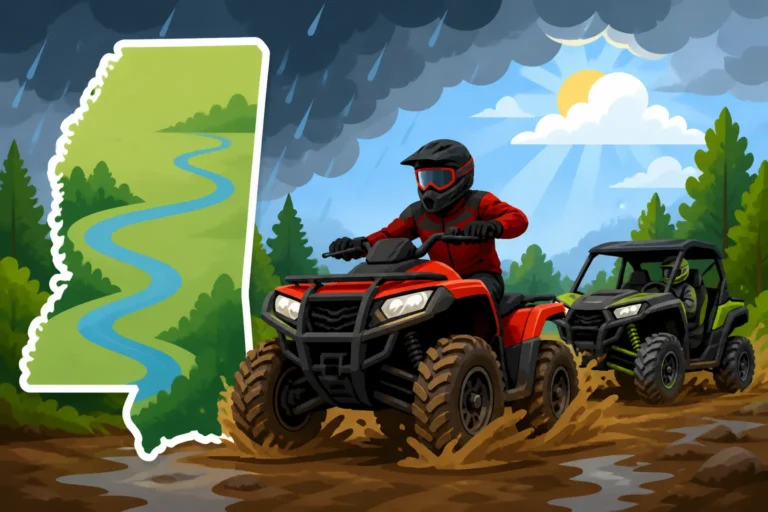
Bethel’s weather exposure is another practical consideration. Rain can make trail conditions change quickly, and a closure can affect your plans even if the route was open when you first checked. Review [Bethel Closes on Short Notice When It Rains] and verify conditions before leaving home, especially after a wet spell.
National forest roads are not automatically OHV trails
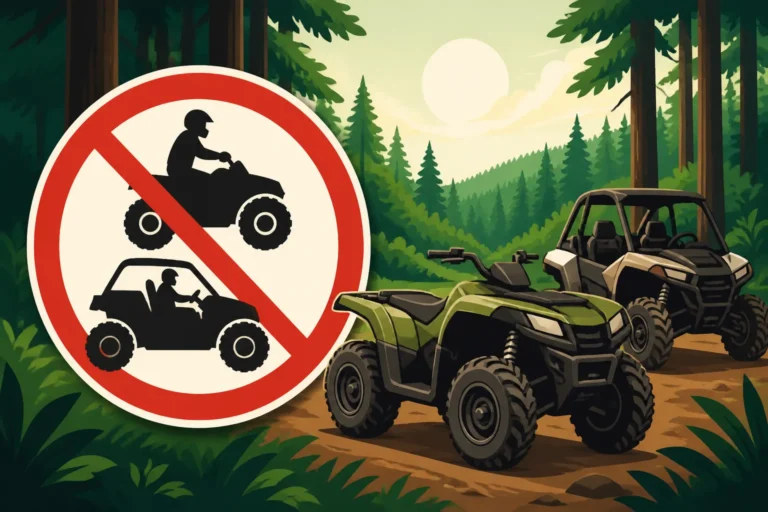
Mississippi’s national forests have roads and recreation areas, but the presence of a forest road does not automatically make it legal for ATV or UTV use. Follow the designated routes and the local rules. A gate, closure sign, map designation, or posted notice should be treated as meaningful, not as a suggestion to find another way around.
This distinction can trip up riders who see an open-looking road on a general map and assume it is available to off-highway vehicles. A road may be intended for other traffic, restricted seasonally, closed to motorized use, or subject to rules that differ from the nearby trail system. Read [Mississippi National Forest Riding Explained] before planning a forest ride, and check with the relevant land manager if the map or signage leaves you unsure.
A trail map can help you plan, but it cannot replace the rules at the trailhead. If you use a mapping app such as onX Offroad to explore routes, treat it as a planning aid and compare what it shows with the land manager’s maps and on-site signs. That extra check is especially important when a route appears to connect a designated trail with a forest road or an unmarked spur.
How to check access before you haul
Confirm width, closures, and entry requirements
Use a simple pre-trip checklist rather than relying on one search result or an old social media post. Start with the official information for the riding area, then check recent closure notices and contact the site if a key detail is missing. [Mississippi ATV Trail Map Downloads] can help you locate map resources, while [Checking Trail Conditions Before You Load the Trailer] is a useful reminder to confirm the trail is actually available on the day you plan to ride.
| What to confirm | Why it matters | What to ask or check |
|---|---|---|
| Machine width | Some trail systems limit access by vehicle width | Does the limit apply to my machine’s measured width and setup? |
| Vehicle type | A rule may distinguish ATVs from UTVs or other OHVs | Are my make, model, and vehicle class allowed? |
| Trail status | Rain, maintenance, or other conditions may prompt closures | Are the trails open today, and are any sections closed? |
| Entry requirements | A pass, permit, waiver, or other condition may apply | What do I need to carry or complete before riding? |
| Hours and access | Gate hours and seasonal schedules can affect arrival plans | What time does access begin and end? |
| Trailer parking | A trailhead may have limited space or specific parking rules | Is there room for my truck and trailer? |
When contacting a riding area, have your machine’s exact model and width ready. Ask whether the width limit is measured at the tires and whether modifications matter. If you are planning to ride with a group, check every machine: one wider vehicle can create a problem for the whole group if the destination does not allow it.
Mapping tools can also help with basic trip planning. onX Offroad may be useful for reviewing route context and locating trail-related information, but riders should still verify access with the land manager or riding area. A mapped line is not, by itself, proof that the route is open or legal for your machine.
Plan around rain, distance, and trailer logistics
Before you leave, consider the full trip rather than just the ride itself. Check the drive time, fuel stops, weather, parking availability, and whether your group needs to bring food, water, tools, or recovery gear. If you are traveling from Jackson, Tupelo, or the Gulf Coast, a same-day closure notice can mean a long, disappointing drive unless you have checked conditions first.
Rain deserves particular attention at off-highway riding areas. Wet ground can make trails harder to navigate, increase rutting, and lead operators to close sections to protect the trail. A route that looks manageable in dry weather may become a poor choice for a newer rider after heavy rain. Do not assume that a trail is open just because the parking area or nearby forest road is accessible.
For a large trailer or a group with multiple machines, confirm parking before setting off. A riding area may have room for cars but limited space for trucks pulling trailers. If you use onX Offroad or another mapping app to review the approach, still check the actual gate, parking, and access information with the site. Digital route planning is helpful; it does not tell you whether a trailhead is full or closed.
Preparing your machine and riding group
Inspect the machine and carry practical essentials
A narrow machine still needs a careful pre-ride inspection. Check tire condition and pressure, brakes, throttle response, steering, lights, and fluid levels. Look for loose parts, damaged tie rods, or tire rub that may have appeared after a wheel or suspension change. A machine that is technically under the limit but has a mechanical issue can turn an enjoyable outing into a recovery problem.
Pack for the trail rather than assuming help will be nearby. Useful items may include water, a first-aid kit, basic tools, a tire repair option, a tow strap, and a charged phone or other communication device. Keep maps accessible, and consider carrying an offline map or printed backup where service may be unreliable. If the machine has a winch, confirm that it works before you need it.
Give yourself time to look over the trailhead information after arrival. Rules can be posted at the entrance even if you reviewed a web page at home. Follow marked routes, obey closures, and avoid widening a trail by riding around muddy sections. For habits that help keep a shared riding area pleasant, review [Mississippi Trail Etiquette Locals Expect].
Match the trail to the least experienced rider
A machine’s width does not tell you whether a route is suitable for everyone in your group. Riders differ in experience, comfort, and stamina, and trail conditions can change the difficulty of a route. A narrow trail may still include mud, roots, uneven ground, or tight turns that are challenging for a first-time rider.
Talk through the plan before starting. Agree on a pace, establish a regrouping point, and make sure everyone knows what to do if the group gets separated. A more experienced rider can lead, but should avoid riding so quickly that newer participants feel pressured to take risks. If conditions worsen, turning around is a sensible choice, not a failure.
Review the site’s difficulty information where available. [Mississippi Trail Difficulty Ratings] can help you think through how trail descriptions relate to rider experience, while [Mississippi Trailheads With Trailer Parking] may help with the logistics of getting your group and machines to the starting point. Keep the day flexible: a shorter ride on a suitable route is usually better than pushing into terrain that does not match the group.
A little preparation prevents the most common 50-inch-trail frustrations: arriving with a machine that is too wide, finding a closure after a long drive, or discovering that a route is beyond the group’s comfort level. Confirm your machine’s actual width, check access directly with the riding area, and follow posted rules once you arrive. Then you can spend less time sorting out avoidable surprises and more time enjoying the ride.
Disclaimer
This article is for general informational purposes only and does not constitute professional advice. Laws, prices and regulations vary by location and change over time. Consult a qualified professional for guidance on your specific situation.