Mississippi’s $60 Forest-Wide Pass
A Mississippi national forest pass can be easy to misunderstand: it is not a general ATV registration, and buying one does not make every forest road or public trail open to riding. This guide explains what the $60 forest-wide pass is meant to cover, what it leaves out, and how to check the rules before you load your machine.
What the $60 forest-wide pass is for
The forest pass is an access permit for eligible off-highway vehicle riding on designated trails in Mississippi’s national forests. “Forest-wide” refers to coverage across the applicable national forest districts, rather than a pass limited to one riding area. It does not mean every road, trail, or piece of federal land is open to ATVs and UTVs.
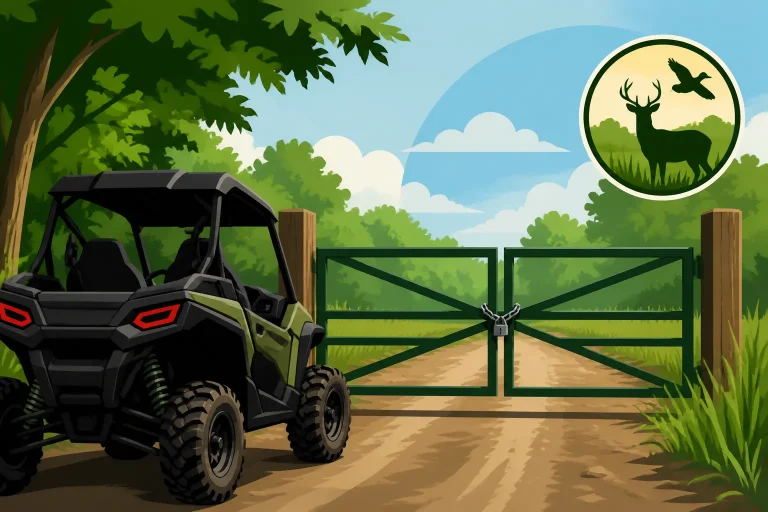
That distinction matters. National forests contain roads and trails used for different purposes, and some are closed to motorized recreation. A route that appears on a map may be intended for hiking, horses, bicycles, or administrative access. A gate, closure notice, or posted restriction takes priority over the fact that a machine has a pass.
Before buying, check the current Forest Service information for the specific trail system you plan to visit. Confirm that the route is open to your machine, that the pass covers it, and that your machine meets any trail-specific width or equipment limits. The Which Trails the $60 Forest Pass Opens guide can help you think through that distinction, but current local notices are still essential.
The pass is also separate from Mississippi title requirements. It does not issue a title, prove ownership, or function as a state registration sticker. Mississippi does not use a general ATV registration system like some states do, and the forest pass is not a substitute for a title when a title is required. For the state’s separate rules, see Mississippi Does Not Register ATVs and Mississippi Title Requirements for 2026.
It helps to keep these permissions separate:
| Item | What it addresses | What it does not do |
|---|---|---|
| National forest OHV pass | Access to covered, designated riding areas where a pass is required | Open closed routes or authorize riding everywhere on federal land |
| Mississippi title | State record of ownership for machines that must be titled | Provide permission to ride a trail |
| Trail or area rules | Route access, vehicle limits, rider requirements, and local restrictions | Replace the forest pass when one is required |
| Private landowner permission | Access to a privately owned riding area or road | Grant access to nearby national forest land |
The pass is therefore one piece of a ride plan, not a universal permit. A rider may need a valid forest pass, a machine that fits the trail, and the required documents or safety equipment. A different trail system can have different rules even when it is within the same national forest.
What forest-wide coverage means and what it does not
The practical benefit of a forest-wide pass is that riders do not necessarily need to buy a separate pass for each covered national forest district. The phrase does not mean a pass automatically grants access to every OHV opportunity in Mississippi, or that all national forest districts have open riding trails. Coverage depends on the permit’s current terms and the trails that are open and designated for motorized use.
Before traveling to a new district, check both the pass coverage and the trail status. A district may have no open route for your type of machine, or a route may be temporarily closed because of weather, maintenance, resource protection, or another management decision. A pass does not override a closure. Check the Mississippi National Forest OHV Passes information and contact the relevant Forest Service office if the published details do not answer your question.
Here is a useful way to read “forest-wide”:
- It may cover more than one district. Confirm which districts and riding areas are included under the current permit.
- It does not create new trails. Only routes designated and open for motorized use are candidates for riding.
- It does not guarantee year-round access. Conditions and closures can change.
- It does not replace local restrictions. Width, rider age, licensing, safety, and equipment rules can still apply.
- It does not carry over to unrelated land. State wildlife areas, state parks, city property, and private parks set their own access terms.
Do not rely on a general forest map alone. A road drawn through national forest land may be a public road, a forest road with limited motorized access, or a route closed to recreational riding. Forest boundaries are not permission boundaries. Read the trail map legend and posted signs, and make sure the map identifies routes intended for OHV use.
Trail access can also be vehicle-specific. Some riding areas have a width limit that rules out many side-by-sides, even when the permit itself is valid. The familiar 50-inch limit applies to certain riding opportunities, not automatically to every trail in the state. Check the wording for the particular location and machine. A machine that measures just over a stated limit does not become eligible because its owner bought a pass. See The 50-Inch Width Limit Written Into the Pass and confirm the current restriction before setting out.
One pass may not mean one pass for every machine in a household. The permit may have requirements about which vehicle it is issued to, how it must be displayed, or whether it can be transferred. Those details affect families, riding groups, and owners who trailer multiple machines. Check the current terms before purchase rather than assuming that a single pass covers a truckload of ATVs. For a broader explanation of district coverage, see One Pass Covers Every National Forest District.
How to check the current cost, purchase process, and coverage
The pass is commonly described as a $60 annual forest-wide pass, but fees, validity periods, sales locations, and permit procedures can change. Confirm the current amount and terms with the Forest Service before you pay. If you are budgeting for a season, include the possibility of other costs, such as a park entrance charge, camping fee, or separate pass required for a different recreation area.
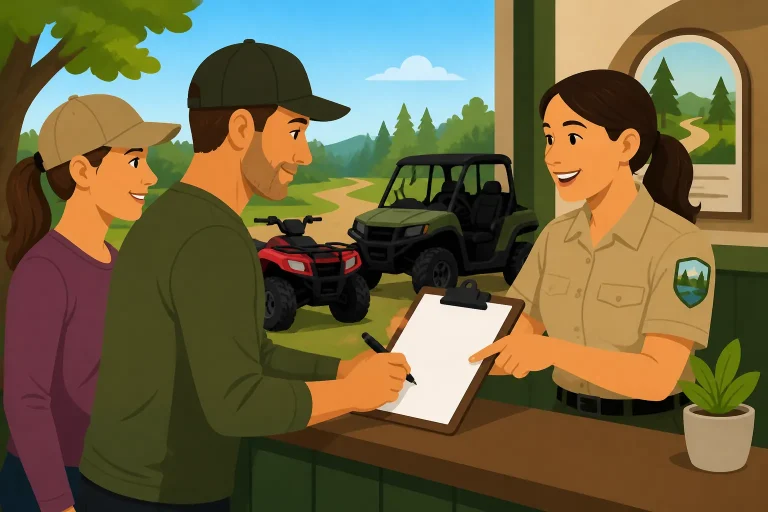
Start with the official information for the national forest or district where you intend to ride. Look for the latest OHV page, trail map, permit instructions, and alerts. If a web page is unclear, call the local Forest Service office and ask specific questions rather than asking only whether “ATVs are allowed.”
Useful questions include:
- Does this pass cover the trail system I plan to ride? Give the name of the trail or area, not just the forest.
- Is the trail open to my exact type of machine? Explain whether it is an ATV, dirt bike, or side-by-side.
- Does the trail have a width or other vehicle limit? Ask how the limit is measured if your machine is close to it.
- Is the pass assigned to a particular machine or rider? Confirm transfer and display rules.
- Where can I buy the pass, and what proof or information do I need?
- Is the trail currently open? Ask about temporary closures, recent rain, and maintenance.
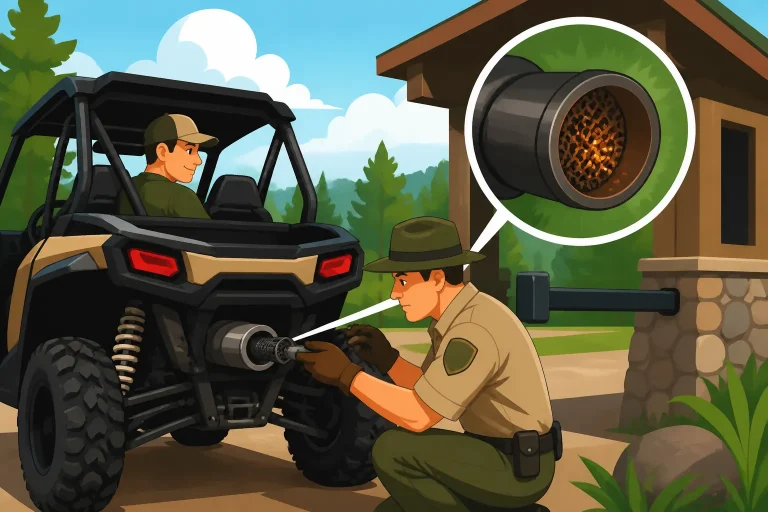
- What documents must riders carry? Ask about license, safety certificate, age, and proof-of-ownership expectations.
Do not use a retailer listing or an old social media post as the final word on availability or price. A page may remain visible after the process changes. If a pass is sold through an authorized outlet, verify that the outlet is currently approved and that you understand how to receive or display the permit. An online marketplace such as Amazon may be useful for general riding supplies, but it is not a substitute for official Forest Service permit instructions. Do not assume that a product marketed as an ATV sticker or permit grants access to Mississippi national forest trails.
When you buy, save the confirmation and any instructions that explain where the permit belongs on the machine. If the pass is a physical decal, keep it visible and follow the display direction. If it is a receipt, digital permit, or another format, learn what you must show during a check. Take a photo of the permit and receipt for your own records, but do not treat a photo as a replacement for a required original unless the agency says it is accepted.
It is also sensible to record the trail office’s phone number before you leave home. Cell coverage can be unreliable in forest riding areas, and you may need to confirm a closure or report a problem. A paper map or an offline map is more useful than a phone screen that cannot load once you lose service. Amazon can be one place to look for a waterproof map case, compact first-aid supplies, or a trail-ready tool roll, but choose gear based on what you actually need and secure it so it cannot come loose while riding.
What the pass does not authorize
A national forest pass does not turn public roads into ATV trails. Mississippi’s public-road rules are separate from forest recreation rules, and a pass does not make it legal to ride a public street or highway. The distinction can be confusing where a forest road looks like a trail or connects two riding areas. Follow signs and the applicable road rules; do not assume that forest land means off-road access. For the state-law overview, see Mississippi Bans ATVs on Public Roads.
The pass also does not grant permission to ride on private property. A timber road, hunting lease, farm lane, or path that crosses private land remains subject to the landowner’s permission and any lease or access terms. Nor does the pass authorize riding on a Wildlife Management Area road unless that specific area allows the activity under its own rules. WMA access is not interchangeable with national forest access; consult Mississippi WMA Designated Roads Only before taking a machine onto a management area.
A pass generally should not be treated as permission to:
- Ride on a route closed by a sign, gate, barricade, or temporary notice.
- Leave a designated route to make a shortcut or create a new trail.
- Ride on hiking or horse trails because they appear to connect to an OHV route.
- Cross into private property without permission.
- Use a machine that exceeds the trail’s stated width or other limits.
- Ignore required rider qualifications, safety rules, or equipment standards.
- Assume a public-land pass is accepted at a state park or private riding park.
The last point is particularly important. State parks and private parks can require their own permits, waivers, safety equipment, and payment. A national forest pass does not transfer to them. Before riding at a private park, check its rules directly; for state park considerations, see Mississippi State Park ATV Rules.
The permit also does not remove the need to carry reasonable proof that the machine is yours. Forest access requirements and title rules are different questions, but a rider should be prepared to explain who owns the machine and how it was acquired. Keep paperwork secure and avoid carrying the only original title loose on the machine. The guide to Mississippi Proof of Ownership on the Trail covers the practical side of carrying records.
Finally, a valid pass does not guarantee that a trail is safe or suitable for your skill level. A route can be rough, muddy, narrow, or difficult to turn around on. Recent rain can make conditions substantially worse, and riding around a washed-out section may cause damage or create a new environmental problem. Check current conditions before departure and be willing to change plans if a trail is closed or beyond your group’s ability.
Get ready for the ride before leaving home
The easiest way to avoid a wasted trip is to check the pass, trail, and machine as separate items. Start with the trail you actually plan to use, then confirm that the pass applies there. Next check that the machine fits the trail and that each rider meets the requirements. Finally, look at current conditions and plan how to reach the trailhead.
A simple pre-trip checklist can help:
- Confirm the pass is valid for the machine and trail you will use.
- Check current permit terms, cost, purchase options, and display instructions.
- Verify the trail is designated for your vehicle type and open on your planned day.
- Check width limits and other vehicle restrictions.
- Review age, license, safety-course, helmet, passenger, and equipment requirements.
- Save the trail map and office contact information for offline use.
- Bring proof of ownership and any required permit or rider documentation.
- Carry water, basic tools, a first-aid kit, and a way to communicate in an emergency.
- Tell someone where you are going and when you expect to return.
- Have an alternate plan if rain or a closure changes access.
For young riders, do not assume the same requirements apply at every riding area. A public-land trail may require qualifications or supervision that are not required on private property, while a state park may have additional rules. Review the relevant requirements in advance, including Mississippi Riders Under 16 Need a Safety Certificate and Rangers Checking Driver’s Licenses on a Forest Trail. Confirm the exact rule with the agency managing the location you will visit.
For a group ride, appoint one person to confirm access and share the information with everyone. It is frustrating to discover at the trailhead that a passenger machine is too wide, one rider lacks a required document, or the permit covers a different location. Have each rider understand the route, regrouping points, and what to do if someone becomes separated. If the group is large, check whether the area has group-size or event rules.
Carry only what is useful and secure it carefully. A paper map in a waterproof sleeve can help if a phone loses service or power. A compact tire repair kit, basic hand tools, and a first-aid kit may be more useful than a heavy collection of spare parts. Keep drinks and loose cargo tied down, especially on rough routes. Amazon can be a convenient place to compare general-purpose items such as dry bags or map cases, but check dimensions and mounting methods before buying gear for a particular machine.
If your trip involves more than one type of land, map the boundaries before riding. A route may move from national forest to private timberland or a wildlife area without an obvious change in terrain. The pass applies only where its terms and the land manager’s rules say it does. A GPS track shared by another rider is not proof that the route is currently open or that you have permission to use it.
When in doubt, stop and ask the land manager rather than testing the boundary. The cost of a phone call or a revised route is small compared with a citation, a damaged trail, or a machine left in a place where recovery is difficult. Treat the pass as a useful access credential for specific permitted riding, not as a blanket authorization. That mindset makes the $60 pass easier to evaluate and helps prevent the most common mistake: arriving with a valid pass but no valid route to ride.
Disclaimer
This article is for general informational purposes only and does not constitute professional advice. Laws, prices and regulations vary by location and change over time. Consult a qualified professional for guidance on your specific situation.