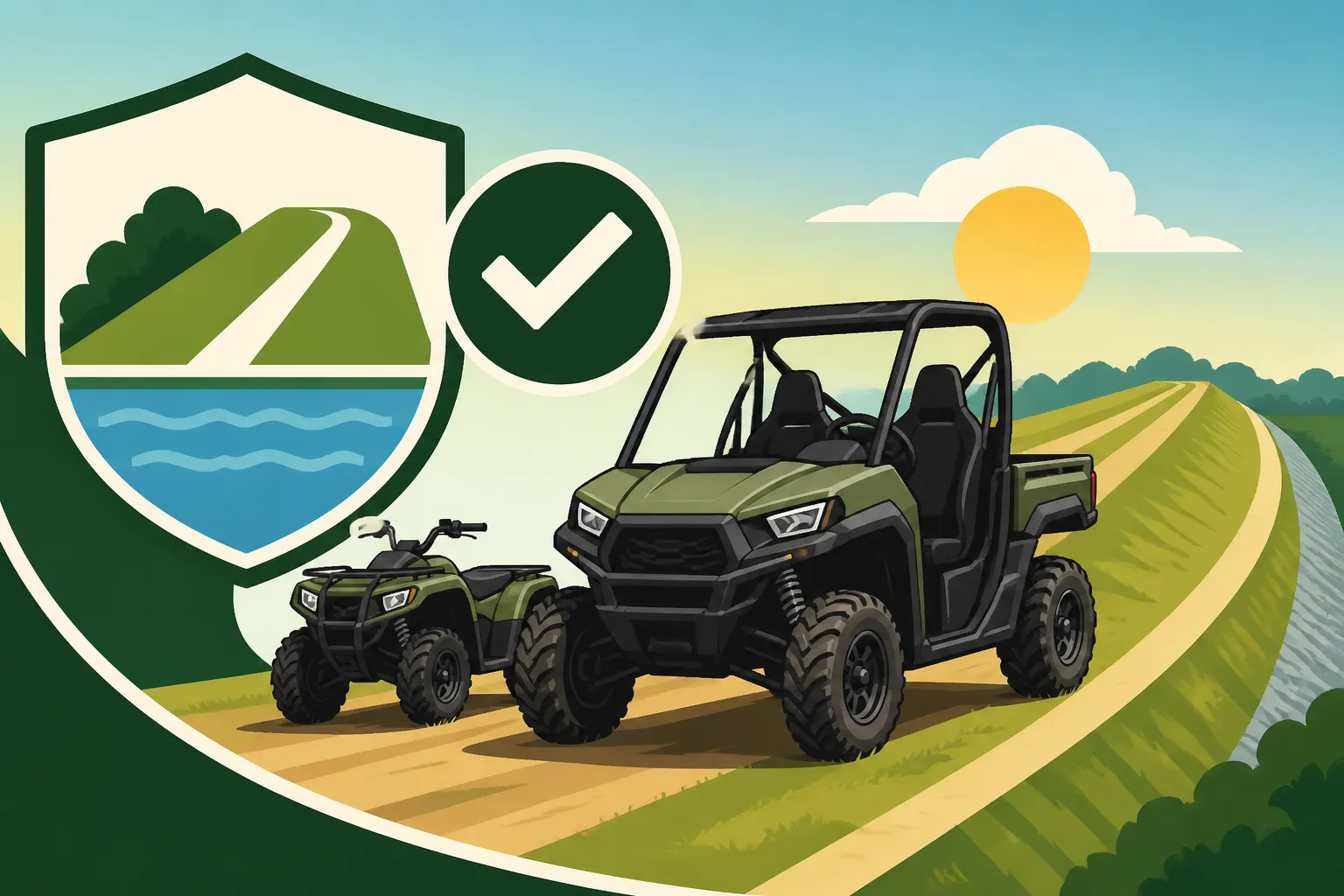
Mississippi Levee Board Rules
Riding an ATV or UTV in Mississippi offers some incredible adventures, but many riders often find themselves confused or frustrated when it comes to accessing certain areas, especially the state's vast levee system. It's easy to look at those long, wide-open stretches of elevated ground and think they're perfect for a ride, a scenic shortcut, or even a spot to fish. However, the reality is that these vital pieces of infrastructure are under strict management, and riding off-road vehicles on them is almost universally prohibited. This guide is here to shed light on why levee boards maintain these rules, what those rules actually mean for you, and where you can legally enjoy your machine.
Understanding Mississippi's Levee Systems and Their Purpose
Before we dive into why riding on them is a no-go, it's really important to understand what Mississippi's levees are all about. They're not just random dirt hills; they're engineered marvels that play a crucial role in protecting lives and livelihoods across the state. Mississippi has a powerful and often unpredictable river system, most notably the mighty Mississippi River itself, and without these barriers, vast areas would be underwater during flood season.
The Critical Role of Levees in Flood Control
Think about the sheer force of a major river in flood stage – tons of water moving at incredible speeds. Mississippi's levees are designed to hold back that immense pressure, keeping communities, agricultural lands, and critical infrastructure safe. They're built up over many years, layer by painstaking layer, to create a robust wall against rising waters. Each levee has a specific cross-section and compaction standard it needs to maintain. Even seemingly minor damage, like ruts from ATV tires or erosion from repeated use, can compromise that integrity. A weak spot in a levee is like a crack in a dam; it can lead to catastrophic failure during a flood event, putting countless people and properties at risk. It's a job that demands constant vigilance and protection, which means limiting activities that could weaken them.
Who Manages Mississippi's Levee Districts?
You might assume all public lands are managed by the state, but levee systems have a unique organizational structure. In Mississippi, major levee systems are typically managed by specialized "levee boards" or "levee districts." These aren't just government agencies; they're often independent entities with their own taxing authority and specific mandates to construct, maintain, and operate the levee system within their jurisdiction. For instance, the Mississippi Levee Board, which oversees the Yazoo-Mississippi Delta, is a prime example. They have a board of commissioners, a dedicated staff, and very specific rules and regulations to ensure the structural soundness and operational effectiveness of their levees. These boards are the ultimate authority on what activities are permitted on their lands, and they take their responsibility very seriously. Understanding [Why Levee Boards Keep ATVs Off the Banks] is key to respecting their jurisdiction.
Why ATVs and UTVs Are Generally Prohibited on Levees
It's natural to see a wide, open levee and think it's a perfect place for an ATV ride. But from the perspective of the levee boards and the engineers who maintain these structures, ATVs and UTVs present several significant challenges. The prohibitions aren't arbitrary; they're based on practical concerns for safety, infrastructure protection, and legal responsibilities.
Protecting Infrastructure from Damage
The most fundamental reason for prohibiting off-road vehicles on levees is to prevent damage to the actual structure. Picture a side-by-side like a SuperATV Defender, with its heavy frame and knobby tires, traversing a rain-soaked levee. Even in dry conditions, the weight and torque of these machines can create ruts, churn up the soil, and compact it unevenly. When the ground is wet, the damage is far more severe, creating deep grooves that can lead to erosion. This kind of surface damage isn't just cosmetic; it can weaken the levee's ability to resist water penetration, create pathways for burrowing animals, and disrupt critical maintenance access. Levee integrity is paramount, and any activity that compromises that integrity, even subtly, must be restricted. The cost to repair such damage, especially after a major flood, can be astronomical, diverting funds from other essential services.
Safety Concerns for Riders and Levee Personnel
While riders often prioritize their own enjoyment, levee boards must consider the safety of everyone. Levees are designed to be stable, but they can still have hidden hazards: soft spots, steep slopes, unexpected changes in grade, and hidden debris. An ATV or UTV rider unfamiliar with these conditions could easily lose control, leading to serious injury or even death. Furthermore, levee districts regularly conduct inspections, perform maintenance, and operate heavy equipment on these structures. Unauthorized vehicles present a collision risk with maintenance crews, especially in areas with limited visibility. The presence of recreational riders can interfere with vital operations, creating dangerous situations for both the public and those working to maintain these critical flood defenses. [Mississippi Levee Riding Is Prohibited] for a good reason – safety for everyone involved.
Legal Liability and Enforcement
Levee boards bear a significant legal responsibility for the safety and integrity of the structures they manage. If an accident were to occur involving an unauthorized ATV on their property, the board could face substantial liability claims. This is why many boards have strict rules against trespassing and enforce them rigorously. They have a duty to protect public safety and minimize risk. Consequently, they often work closely with local law enforcement, including county sheriffs and sometimes even state agencies, to patrol these areas and issue citations. Violating these rules isn't just a slap on the wrist; it can lead to fines, your machine being impounded, and even potential charges of trespassing, all to mitigate the board's liability and ensure compliance with their mandates.
Specific Levee Board Regulations Across Mississippi
While the general prohibition against riding ATVs and UTVs on levees is widespread, the specific details and enforcement can vary slightly depending on which levee board has jurisdiction. It's crucial to understand that these are distinct entities, each with its own set of rules, even if they share a common goal of flood protection.
The Mississippi Levee Board (Yazoo-Mississippi Delta)
The Mississippi Levee Board is perhaps the largest and most well-known levee authority in the state, responsible for the extensive system protecting the Yazoo-Mississippi Delta. Their jurisdiction covers a vast and historically flood-prone region, making their rules particularly stringent. Generally, there is an absolute prohibition against recreational vehicle use on their levees. They view these structures as critical infrastructure, not recreational areas. This means no ATVs, UTVs, dirt bikes, or even bicycles in many areas without explicit, written permission for a specific, authorized purpose. They conduct regular patrols and have a zero-tolerance policy for unauthorized use. Riders found on their property without permission can expect to face significant penalties. Understanding these specific regulations is vital if you're anywhere near the Delta region.
The Yazoo-Mississippi Delta Levee District
While often discussed interchangeably, it's worth noting that the administrative bodies can have nuances. The Yazoo-Mississippi Delta Levee District specifically refers to the geographic area and the system of levees within it, which is overseen by the Mississippi Levee Board. The rules regarding ATV/UTV access are uniformly strict across this entire district. These levees are actively monitored for structural integrity, and any activity that could compromise them is quickly addressed. This includes activities that might seem harmless, like driving a small quad or even walking a dog off-leash, if it could lead to erosion or damage. Their focus is solely on flood control and the protection of the land and people behind the levee. This commitment is why they have clear signage and active enforcement to deter recreational vehicle use.
Other Local Levee Districts and Their Variances
Beyond the major state-level boards, Mississippi also has smaller, localized levee districts that manage flood protection for specific towns, counties, or agricultural areas. While their mandates are similar, their specific rules might have slight variances, though the overall sentiment against recreational ATV use remains consistent. For example, a very small, rural levee district might occasionally grant temporary access for landowners to perform agricultural tasks or for emergency services, but this is always under very specific conditions and rarely extends to general recreational riding. It is never safe to assume that a local levee is open just because it doesn't have the explicit "Mississippi Levee Board" branding. The only way to know for sure is to contact the local levee district directly and obtain written permission – and even then, permission for recreational riding is extremely rare, if not impossible. When in doubt, it's always best to assume a levee is off-limits to prevent issues with [Mississippi Code Section 63-31-3] or other local ordinances.
Here's a quick comparison of why levees are restricted versus the characteristics of legal riding areas:
| Feature | Levee System (Restricted) | Designated OHV Park/Private Land (Permitted) |
|---|---|---|
| Primary Purpose | Flood control, infrastructure protection | Recreation, hunting, utility work |
| Surface | Engineered, critical compaction, erosion-prone | Designed for vehicle traffic, varied terrain |
| Ownership | Public (Levee Board), often with specific mandates | Public (Forest Service/Parks) or Private (landowner) |
| Regulation | Strict, no recreational use, high liability | Specific rules for OHV use, permits, waivers |
| Hazards | Hidden soft spots, maintenance equipment | Marked trails, supervised areas |
| Access | Generally prohibited, strict enforcement | Permitted with fees/permission, designated entry |
Consequences of Illegally Riding on Mississippi Levees
It's tempting to think that a quick ride on a levee won't hurt anyone, but the consequences for unauthorized access can be much more severe than many riders anticipate. These aren't just minor infractions; they often involve significant financial penalties, potential loss of your machine, and a host of other headaches that can easily ruin your day, or even your season. Ignoring levee board rules can quickly turn a fun outing into a costly legal mess.
Penalties and Fines for Trespassing
When you ride your ATV or UTV on a levee without explicit, written permission from the governing levee board, you are trespassing. [Mississippi Trespass Law for Riders] is clear on this. The fines for trespassing can vary, but they are generally not trivial. Depending on the specific district and the severity of the infraction (e.g., if you caused damage, or if it's a repeat offense), you could face fines ranging from a couple of hundred dollars to much more substantial amounts. Keep in mind that these fines are often just the base penalty. There can also be court costs, administrative fees, and potentially restitution if you've caused any actual damage to the levee itself. It’s far more expensive than paying a day-use fee at a dedicated off-road park.
Machine Impoundment and Recovery Costs
One of the most immediate and frustrating consequences of getting caught riding illegally on a levee is the potential for your ATV or UTV to be impounded. Law enforcement, often working in conjunction with levee board personnel, has the authority to seize your machine. Getting it back is rarely a simple process. You'll likely face impoundment fees, storage fees that accrue daily, and potentially other administrative costs before you can even retrieve your vehicle. These fees can quickly add up, easily exceeding several hundred or even a thousand dollars, especially if your machine is stored for an extended period while you deal with legal proceedings. It's a massive hassle and a significant unexpected expense that can easily eclipse the cost of the machine itself in some cases.
Long-Term Repercussions and Community Impact
Beyond the immediate fines and impoundment, there can be longer-term repercussions for riders who repeatedly violate levee rules. A criminal record for trespassing, even a misdemeanor, can impact future opportunities, from employment to obtaining loans. Furthermore, such incidents contribute to a negative perception of ATV and UTV riders in general. When a small group of riders causes damage or disregards rules, it makes it harder for the entire riding community to gain access to any lands, whether it's private property or designated public trails. Levee boards and landowners are often influenced by past negative experiences, leading to stricter enforcement and less willingness to consider any form of access. It reinforces the idea that off-road vehicles are a nuisance rather than a legitimate recreational activity, affecting everyone from the individual rider to companies like SuperATV that provide parts and accessories for these machines.
Finding Legal Riding Alternatives in Mississippi
So, if levees are largely off-limits, where can you actually ride your ATV or UTV legally and safely in Mississippi? The good news is that the state does offer some fantastic opportunities for off-road enthusiasts, whether you're looking for organized trails, wide-open spaces, or places to get muddy. The key is knowing where to look and understanding the rules of each specific location.
Designated Off-Road Parks and Trails
Mississippi is home to several excellent designated off-road parks and trail systems that cater specifically to ATVs and UTVs. These places are designed with riders in mind, offering a variety of terrain, amenities, and clearly marked trails. Places like [Bethel OHV Trails in Mississippi] in the Bienville National Forest offer miles of diverse trails, though they do have width restrictions (often 50 inches or less, so check for your side-by-side). [Red Creek Off-Road in Mississippi] is another popular spot, known for its challenging mud pits and extensive trail network. Then there are private mud parks, like Meridian OHV Park, which are often built on old logging or agricultural lands and designed for a truly rugged experience. These parks typically charge a day-use or membership fee, but in return, you get a safe, legal, and often well-maintained place to ride without the worry of trespassing.
Private Land Access and Permission
For many Southern riders, especially those who use their machines for hunting, farming, or timber work, private land offers the most extensive riding opportunities. This could be your own property, land owned by family or friends, or property leased through a hunting club or timber company. The absolute best way to ensure legal access on private land is to obtain [Written Permission From a Southern Landowner]. This permission should ideally be in writing, clearly stating the dates, specific areas, and any restrictions on your riding. Verbal permission can sometimes lead to misunderstandings, especially if different family members or property managers are involved. Always respect the landowner's wishes, leave gates as you found them, pack out everything you pack in, and avoid causing any damage. This respectful approach helps maintain good relationships and keeps private lands open for future enjoyment. Remember, even on private land, common sense and safety rules still apply.
Exploring National Forest OHV Opportunities
Mississippi is home to several beautiful National Forests, and while not all areas are open to off-road vehicles, some do offer designated OHV trails. We already mentioned Bethel, which is part of the Bienville National Forest. To ride in a National Forest, you'll often need a special permit or day-use pass. The National Forests have their own set of rules regarding vehicle types, width limits, spark arrestors, and sometimes even age restrictions for riders. It's imperative to check with the specific Ranger District office for the forest you plan to visit before you load up your trailer. They can provide detailed maps, current trail conditions, and all the necessary permit information. Always stick to marked trails, respect wildlife, and follow all posted regulations. Using a powerful side-by-side like a SuperATV General on designated forest trails can be an incredible way to experience the state's natural beauty, as long as you adhere to the specific guidelines of the forest service. By focusing on these legitimate avenues for riding, you can enjoy your machine without the stress and legal risks associated with unauthorized levee access.
Disclaimer
This article is for general informational purposes only and does not constitute professional advice. Laws, prices and regulations vary by location and change over time. Consult a qualified professional for guidance on your specific situation.