First Aid on a Long Southern Loop
A long ATV or UTV ride through Mississippi can turn from a fun day on the trail into a stressful one when someone gets hurt miles from the trailer. Heat, mud, poor cell service, and long response times make preparation matter. This guide explains what to pack, how to handle common trail injuries, and how to get help when you’re far from a road.
Prepare a first-aid plan before you ride
Build a kit for the trail, not just the truck
A small vehicle first-aid kit is a start, but it may not be enough for a group spending hours on remote trails. Keep a compact kit secured on the machine or in a rider’s backpack, and carry a larger backup kit in the tow vehicle. Make sure supplies are protected from rain, mud, and heat, and check them before each trip for damaged packaging or expired products.
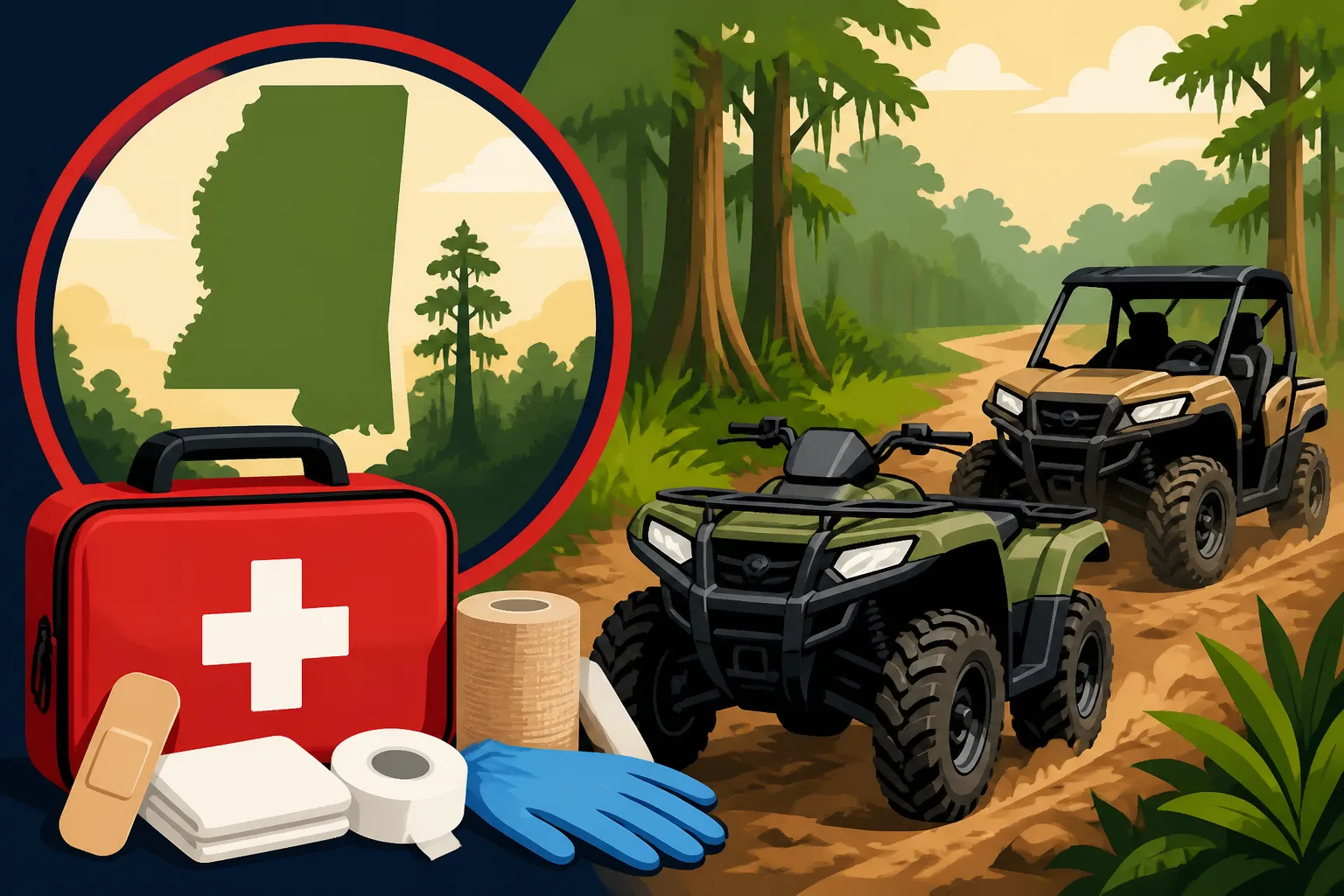
For a trail kit, prioritize supplies that help with common injuries and are simple to use: gloves, gauze pads, roller gauze, adhesive bandages, medical tape, antiseptic wipes, tweezers, trauma shears, and an emergency blanket. A commercial tourniquet may be useful for severe bleeding, but it should be used by someone who knows how to apply it. Consider a CPR face shield, too. If anyone in your group has a serious allergy or other medical condition, they should bring their own prescribed medication and tell a riding partner where it is kept.
| Item | Why it can help on a ride | Practical note |
|---|---|---|
| Nitrile gloves | Reduce direct contact with blood and body fluids | Pack several pairs in a sealed bag |
| Gauze and medical tape | Cover wounds and apply pressure | Keep them dry and easy to reach |
| Trauma shears | Cut clothing or gear away from an injury | Choose blunt-ended shears |
| Tweezers | Remove small splinters or ticks | Don’t use them to dig out deeply embedded objects |
| Emergency blanket | Help protect someone from wind, rain, or cooling | It does not replace proper treatment for shock |
| Water and oral rehydration supplies | Support hydration during a ride | Follow product directions and don’t force fluids on an injured or confused person |
| Personal medication | Addresses a rider’s known medical needs | Each person should carry their own essential medication |
Pack the kit where a rider can reach it without unloading cargo or moving a machine. Tell the group which rider has the kit and where it is. A kit nobody can find quickly is not much help when someone is bleeding or shaken after a fall.
Plan for location and communication gaps
Before leaving the trailhead, agree on a route, turnaround time, and check-in plan. Tell someone outside the group where you’re riding and when you expect to return. Include the trail system, planned route, vehicle descriptions, and the name of the person to contact if you miss your check-in. At places such as De Soto National Forest, service may be unreliable in some areas, so don’t assume a phone call will always be possible. Mississippi National Forest Riding Explained offers useful context for planning rides on public forest land.
Download maps before you leave coverage, and carry a paper map or written route notes as a backup. A navigation app such as onX Offroad can help riders review routes and share location details when its offline features are set up ahead of time. Battery life matters: start with charged phones, bring a power bank, and keep devices protected from moisture. Don’t make a navigation app your only emergency plan.
If your group rides in an area with known dead zones, discuss what you’ll do if riders become separated or someone needs emergency help. A satellite communicator or personal locator device may be worth considering for remote trips, but learn how to use it before the ride and confirm that it is charged. Save relevant contact information before departure; Mississippi Trail Phone Numbers Worth Saving can help you think through which numbers to keep handy.
Match your preparation to the route
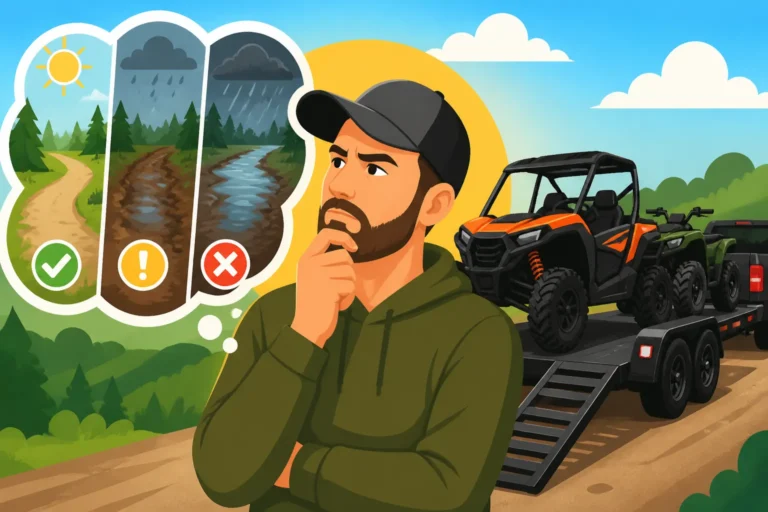
A short loop near the staging area and a long ride deep into the forest don’t call for the same level of preparation. Check the route, trail conditions, expected weather, and access points before loading the machines. Rain can change the time and effort needed to travel, while a closed or blocked route can complicate a rescue. Check Mississippi Trail Conditions After Rain before planning a ride in wet weather.
The group should also know where it can safely stop, turn around, and regroup. On narrower trails, choose a place that allows machines to pull well clear of the riding line. Bethel OHV Trails, for example, have specific trail conditions and access considerations, so check the rules and current information before heading out. The guide to Bethel OHV Trails in Mississippi is a helpful starting point.
Handle common injuries calmly and safely
Start with scene safety and a quick check
After a crash, pause before rushing in. Look for moving machines, unstable ground, fire, traffic, downed branches, or other hazards. Make the area safer if you can do so without putting yourself at risk. Turn off a machine if it is safe and practical. Ask another rider to warn approaching traffic or keep the rest of the group back.
Check whether the injured person responds and is breathing normally. If they are unconscious, having trouble breathing, bleeding heavily, or showing signs of a serious head, neck, or back injury, call 911 as soon as possible. If you’re in an area without service, send a capable rider to seek help while another person stays with the injured rider, if it is safe to do so. Share the best location details available, including the trail name, nearby trail junctions, landmarks, and GPS coordinates.
Avoid moving someone who may have a neck, back, or serious head injury unless there is an immediate danger where they are. Keep them as still and comfortable as possible while help is arranged. If the person is unresponsive and not breathing normally, call emergency services and begin CPR if you’re trained, following the dispatcher’s instructions. If an AED is available, use it according to its prompts.
Control bleeding and protect wounds
For a bleeding wound, put on gloves if available and apply firm, steady pressure with clean gauze or cloth. If blood soaks through, add more material on top rather than pulling away the first layer. Keep pressure in place while someone else calls for help or gathers supplies. Severe bleeding needs urgent emergency care. A tourniquet is generally for life-threatening bleeding from an arm or leg and should be applied by someone trained to use one.
For a small cut or scrape, rinse away visible dirt with clean water when available, then cover it with a clean dressing. Don’t pour harsh chemicals into a wound, and don’t try to remove an object that is deeply embedded. Protect the area from mud and friction, and arrange medical care if the wound is deep, contaminated, won’t stop bleeding, or may need additional treatment.
After a crash, don’t assume an injury is minor just because the rider can stand or says they feel fine. Pain, dizziness, confusion, weakness, or nausea can become more obvious after the initial shock. Keep the person with the group and watch for changes. If you’re uncertain about the severity, contact emergency services or seek professional medical assessment rather than sending the rider back onto the trail.
Watch for heat illness and dehydration
Mississippi heat and humidity can make a long ride exhausting, especially when riders are wearing protective gear and working hard in mud. Plan water breaks before anyone feels unwell, and take shade breaks when you can. Keep drinking water available and avoid treating thirst as the only signal to drink. Packing for Southern Humidity covers useful preparation for hot, damp conditions, while Heat Illness on a Southern Summer Ride focuses on recognizing and responding to heat-related problems.
Heat exhaustion can involve heavy sweating, weakness, headache, nausea, dizziness, or cool, clammy skin. Stop the ride, move the person to shade, loosen unnecessary gear, and cool them with water and airflow. If they are alert and able to swallow, offer small sips of water. Don’t force fluids on someone who is confused, vomiting, or not fully alert.
Confusion, fainting, seizures, or very hot skin can signal a life-threatening emergency. Call 911 and begin cooling the person while help is on the way. Do not leave them alone or let them ride themselves out. If the group has been riding in intense heat, reassess everyone before continuing; a rider who is already exhausted may not be safe to operate a machine.
Reduce risks from the Southern trail environment
Prevent trouble from ticks, insects, and plants
Ticks and biting insects are part of many outdoor rides in Mississippi. Use an appropriate repellent according to its label, wear clothing that covers exposed skin where practical, and check yourself and companions after the ride. Pay extra attention to warm, hidden areas such as the waistband, underarms, and behind the knees. A tick should be removed promptly with fine-tipped tweezers, grasping close to the skin and pulling steadily. Clean the bite area and your hands afterward.
If a rider develops a rash, fever, or other concerning symptoms after a tick bite, contact a healthcare professional and mention the bite. Avoid burning a tick or coating it with substances in an attempt to remove it. For seasonal preparation, Bug Spray in a Southern June has more guidance on managing insects during warm-weather rides.
Teach riders to avoid touching unfamiliar plants, and wash exposed skin after contact with irritating vegetation. A simple pair of tweezers can help with a small splinter, but don’t dig deeply into the skin. If a wound becomes increasingly red, swollen, painful, or warm, or if the rider develops a fever, get medical advice.
Be ready for falls, strains, and changing conditions
A fall can cause anything from a bruise to a fracture or concussion. Don’t let embarrassment or a desire to keep the group moving pressure someone into continuing. If a rider has significant pain, swelling, numbness, difficulty bearing weight, or a visible deformity, stop the ride and arrange appropriate medical care. For a suspected concussion, keep the person off the machine and seek professional evaluation, especially if symptoms worsen or include repeated vomiting, confusion, severe headache, or loss of consciousness.
Mud, standing water, and uneven ground can make a minor injury harder to manage. Keep dressings clean, avoid letting an injured rider walk through difficult terrain, and reassess the route if conditions have changed. The group’s pace should be set by the least experienced or most affected rider, not by the fastest machine.
Good trail habits reduce the chance of a crash in the first place. Leave space between machines, slow down where visibility is limited, and give other trail users room. Mississippi Trail Etiquette Locals Expect is a useful reminder that safe riding includes looking out for everyone sharing the route.
Organize a practical response when someone is hurt
Assign roles instead of crowding the injured rider
In a stressful moment, several people talking at once can make it harder to help. One person should take charge of calling for assistance or locating a signal. Another can provide first aid, while a third records the location and watches for approaching riders or hazards. If the group is large, ask someone to guide responders from a recognizable trail entrance or junction.
Keep the injured person warm, calm, and under observation. Don’t give food, drink, or medication to someone who is unconscious, confused, or unable to swallow safely. Make notes about what happened, when symptoms began, and what care has been given. That information can help emergency responders understand the situation.
If the person’s condition is serious, don’t attempt a difficult transport on another ATV or UTV unless emergency responders direct you or there is no safer option. Moving someone over rough ground can worsen some injuries. When you call for help, describe the injury, the person’s condition, the terrain, and the safest access point you know.
Know when to stop the ride and seek help
Call emergency services for life-threatening bleeding, trouble breathing, unconsciousness, suspected serious head or spine injuries, severe burns, seizure, signs of heat stroke, or rapidly worsening symptoms. When in doubt about a serious injury, seek professional help rather than continuing the loop. Emergency dispatchers can advise you while help is being arranged.
For a less serious injury, make an honest decision about whether the rider can safely continue, whether the route back is manageable, and whether another rider can accompany them. A rider who is dizzy, in significant pain, or struggling to control the machine should not ride out alone. If the ride is on public land, follow applicable rules and instructions; Mississippi Accident Reporting for an ATV Crash can help you understand why reporting and documentation may matter after an incident.
Once everyone is safe, record the trail location, time, and basic details of the incident. If the crash involved another person, property, or a serious injury, follow directions from emergency responders and relevant authorities. Afterward, replace used kit supplies, charge communication devices, and talk through what worked and what needs to change before the next ride. If your group uses onX Offroad or another navigation tool, review whether the route information and location-sharing setup were useful, and update your offline preparations before heading out again.
Disclaimer
This article is for general informational purposes only and does not constitute professional advice. Laws, prices and regulations vary by location and change over time. Consult a qualified professional for guidance on your specific situation.