Packing for Southern Humidity
Mississippi humidity can turn a comfortable ride into a clammy, exhausting one faster than you expect. Sweat-soaked clothes, wet gear, bugs, and sudden rain can make a day on the trail miserable if you pack as though you’re riding somewhere dry. This guide walks through what to bring, how to keep it usable, and what to adjust for your route and the weather.
Build a gear list for Mississippi conditions
Dress for heat, sweat, and changing weather
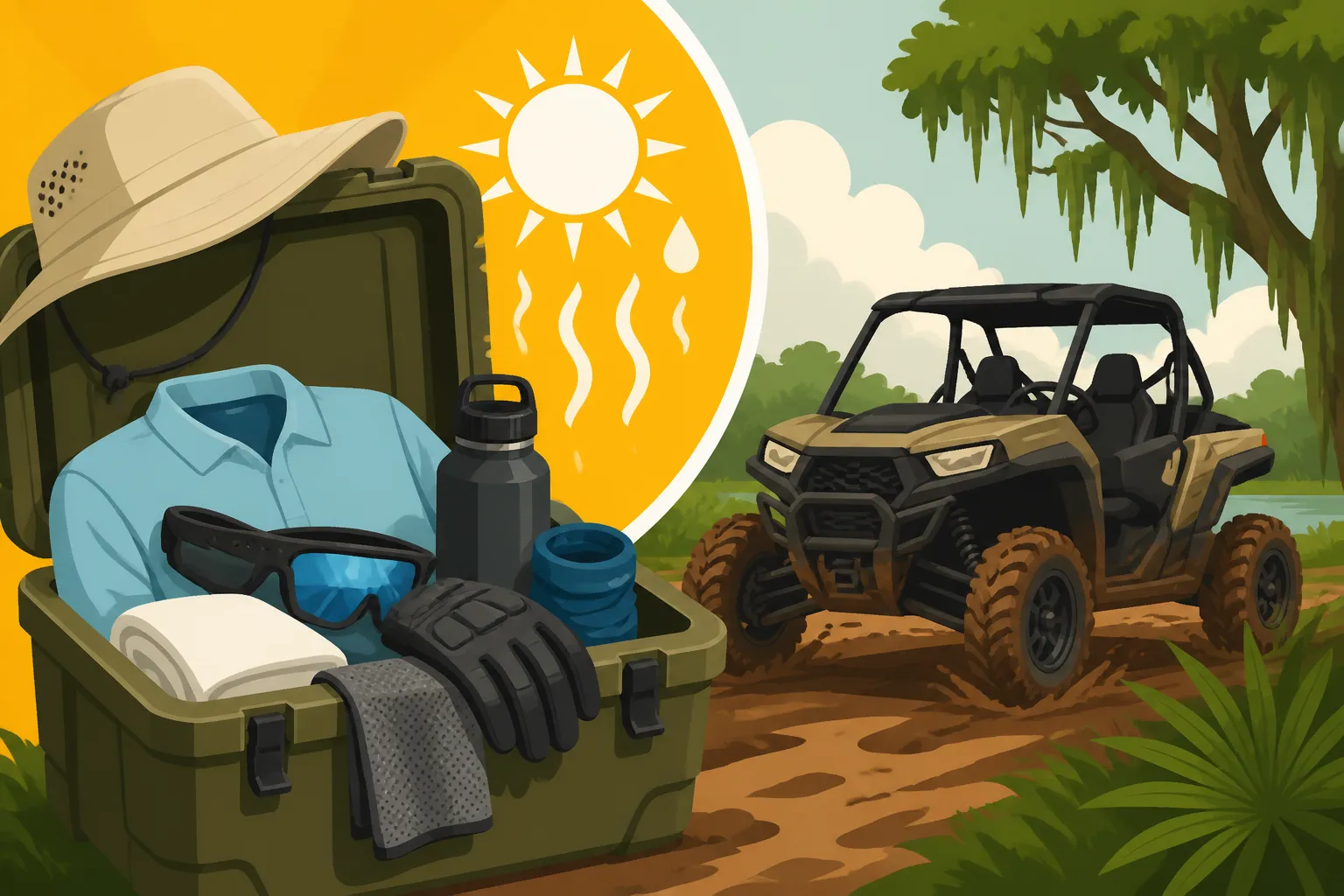
Start with lightweight, moisture-wicking layers rather than heavy cotton. Cotton can stay damp against your skin after you sweat or get caught in rain, leaving you uncomfortable for the rest of the ride. A quick-drying shirt and riding pants, protective gloves, sturdy footwear, and eye protection are a more practical base. Long sleeves can also help shield your arms from sun, brush, and insects.
Bring a thin rain layer, even if the morning looks clear. A compact waterproof shell can help during a passing shower, but remember that a non-breathable layer may feel hot and clammy in humid conditions. Wear it when rain or wind makes it useful, then take it off once conditions allow. A spare shirt packed in a dry bag can make the drive home much more pleasant.
Clothing choices should also account for the kind of riding you’re doing. A slow, muddy route may leave you wet from spray, while a faster ride can make airflow feel cooler even on a warm day. If you’re planning a summer outing, review Mississippi Riding in Summer Heat and adjust your layers, breaks, and water supply accordingly.
Protect the small essentials from moisture
Humidity can affect more than clothing. Water-resistant bags or sealed pouches help protect your phone, keys, paperwork, and first-aid supplies from rain, splashes, and damp gear. Put important items inside a dry bag, then secure the bag somewhere it won’t shift or interfere with the machine’s controls. A plastic bag can serve as a simple backup, but it’s less dependable than a closure designed to keep water out.
Pack a clean, dry pair of socks and a spare base layer separately from your wet gear. That small bit of separation matters: if everything is tossed into one bag, damp gloves or muddy clothes can transfer moisture to items you wanted to keep dry. A second bag for dirty or wet clothing also makes cleanup easier when you get home.
For navigation, protect your phone from rain and consider how you’ll access a map if your battery runs down or service is unavailable. Some riders use onX Offroad to plan routes and save map information for offline use; check your selected map and route before you leave rather than relying on a signal at the trailhead. A phone app is a useful tool, not a substitute for following posted signs and land-manager directions.
Pack water, food, and basic health supplies
Plan hydration around effort and exposure
Bring more water than you think you’ll need for a short ride, especially if the route is strenuous, exposed, or difficult to leave quickly. Humidity can make a ride feel draining even when you aren’t moving fast. Sip regularly instead of waiting until you feel parched, and plan breaks in shaded spots when available. A hydration pack is handy while riding, while extra water secured on the machine provides a backup.
How much water to bring depends on the rider, the length of the ride, the weather, and how easy it is to return to the vehicle. For a group, plan for the slowest rider and consider what happens if someone’s bottle leaks or a machine has a problem. Keep drinking water separate from water you might carry for washing mud off hands or equipment.
Don’t treat energy drinks or sports drinks as a replacement for water. Pack simple snacks that won’t melt or crumble into a mess, such as bars or crackers in sealed packaging. For more detailed planning, see [Hydration at a Southern Mud Park] and First Aid on a Long Southern Loop.
Prepare for insects, scrapes, and minor discomfort
Insects can make breaks unpleasant, especially when riders stop in shaded or damp areas. Pack insect repellent in a leak-resistant container and apply it according to its label. Keep it away from food and sensitive equipment, and wash your hands before eating. Long sleeves and socks can provide another layer of protection.
A compact first-aid kit should be easy to reach, not buried under tools and spare clothing. Include basic supplies for minor cuts, blisters, and scrapes, along with any personal medication you may need. Check the kit before each trip: adhesive bandages and wipes can become unusable if their packaging has been soaked or crushed. If someone in your group has allergies or a medical condition, make sure they carry the supplies they personally rely on.
A small towel, hand wipes, and a sealed bag for used dressings can help keep the group comfortable and your machine tidy. These supplies won’t replace appropriate medical care, but they can make a minor problem easier to manage until you’re back at the staging area.
| Item | Why it helps in humid conditions | Packing tip |
|---|---|---|
| Quick-drying spare shirt and socks | Gives you a dry layer after sweat or rain | Seal them away from wet gear |
| Water and a refill plan | Supports regular drinking during exertion | Secure bottles so they cannot shift |
| Compact rain shell | Adds protection during showers or wind | Choose a layer you can remove easily |
| Insect repellent | Helps make stops more comfortable | Keep it sealed and separate from food |
| First-aid kit | Makes minor problems easier to address | Check contents before each ride |
| Dry bags or sealed pouches | Protects essentials from splashes and dampness | Store phone, keys, and papers separately |
| Small towel and cleanup supplies | Helps with wet hands, mud, and gear | Pack wipes and used items in separate bags |
Keep your gear organized and usable
Separate dry items from wet and muddy equipment
A simple bag system prevents the familiar end-of-day scramble: one bag for dry clothes and personal items, another for wet or muddy gear, and a small pouch for things you may need while riding. Labeling or using different colors makes it easier for a passenger or riding partner to find the right bag without unpacking everything.
Think about where each item goes before you load the machine. Frequently used items should be reachable without unloading the entire rack. Heavy gear needs to be secured so it won’t move on rough ground, and bags should never obstruct the rider, passenger, lights, or controls. If you’re trailering, keep essential documents and a change of clothes in the tow vehicle rather than leaving every backup on the machine.
After a ride, open damp bags and let gear dry as soon as you can. Leaving wet gloves, clothing, or towels compressed overnight encourages lingering odors and makes everything less pleasant to use next time. Rinse or brush off mud as appropriate, and follow the equipment maker’s care instructions for items that shouldn’t be machine-washed or soaked.
Include navigation and a sensible backup plan
Before leaving, identify your trailhead, route, and way back to the parking area. Download or save relevant map information in advance if you use a phone-based navigation tool such as onX Offroad. Keep your device charged, and consider a power bank protected from water. A map is most useful when you know how to interpret it, so look at the route beforehand rather than trying to figure it out in the middle of a ride.
Do not assume that a line on a map means a route is open or that you have permission to ride it. Access can depend on the land manager, closures, signs, private property boundaries, and local rules. Check official information and trailhead notices before setting out. Mississippi Trail Conditions After Rain and Mississippi Trail Closures After a Storm are useful reminders to check conditions, not just distance.
If you’re riding in a group, agree on a meeting point and what to do if riders become separated. Make sure everyone knows who has the first-aid kit, spare water, and navigation device. A charged phone is helpful, but don’t build a plan that depends entirely on cellular coverage. A paper map or written route notes can provide a backup in places where a signal is unreliable.
Adjust your packing to the ride and the forecast
Check conditions before loading the trailer
A humid day after rain can bring slick ground, standing water, mud, and a different trail experience than the same route on a dry day. Check the forecast and available trail information before you load up, then reconsider if heavy rain, flooding, or a closure could affect access. For a useful pre-departure routine, see Checking Trail Conditions Before You Load the Trailer.
Your packing list should change with the route. A short ride near the staging area may call for less backup gear than a long loop far from your vehicle. If your plan includes more time in the woods, bring enough water, food, and basic supplies for a delay as well as the intended ride. Let someone who isn’t riding with you know where you plan to go and when you expect to return.
For places such as Bethel OHV Trail or routes in the De Soto National Forest, check the relevant land manager’s current rules and notices before traveling. Conditions and access arrangements can differ by riding area. Confirm width or other machine restrictions where applicable, and don’t assume that rules at one trail system apply at another.
Use a repeatable pre-ride checklist
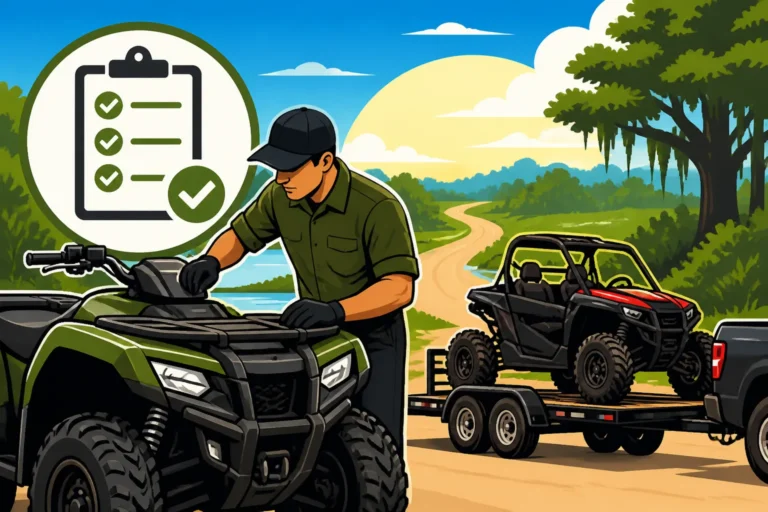
A checklist helps catch the easy-to-forget items when you’re packing early or managing gear for several riders. Run through it at home, then do a quick check again at the trailhead. The goal is not to carry every possible item; it’s to bring the essentials that match your route, group, and weather.
- Check the forecast, trail status, access rules, and expected route.
- Pack drinking water, snacks, and any personal medication.
- Put dry clothing, phone, keys, and important papers in protected bags.
- Add a rain layer, insect repellent, and a reachable first-aid kit.
- Charge navigation devices and save the route or map information you need.
- Secure bags and confirm nothing interferes with safe operation.
- Tell someone your plan and expected return time.
Before you ride, take a moment to look over your machine and the items attached to it. Loose straps can catch on brush or move over rough ground, and a bag that seemed secure at home may shift once the machine starts bouncing. Pack out wrappers, wipes, and other waste, and follow local trail etiquette. Mississippi Trail Etiquette Locals Expect offers a useful perspective on being considerate to other riders and land users.
Disclaimer
This article is for general informational purposes only and does not constitute professional advice. Laws, prices and regulations vary by location and change over time. Consult a qualified professional for guidance on your specific situation.