Mississippi Has No Sticker for a Visiting Machine
A state registration sticker can feel like the obvious thing to pack when you bring an ATV or UTV across a state line. Mississippi’s system is different: it does not issue a general state OHV sticker for visiting machines. That does not mean every trail is free or open. Here’s what visitors should check before unloading, from national forest passes to park rules and road access.
Mississippi Does Not Have a State Sticker for Visiting ATVs and UTVs
Mississippi does not require a state ATV or UTV registration sticker for visitors simply because they bring an off-road machine into the state. There is no Mississippi state OHV sticker for an out-of-state rider to buy as a counterpart to another state’s registration decal.
That answers the narrow reciprocity question: Mississippi has no state sticker for your home state to reciprocate with, and you generally do not need to obtain a Mississippi state sticker just to ride a machine here. The state also does not register ATVs in the way some visitors may expect. For background, see Mississippi Does Not Register ATVs and Mississippi Has No Sticker to Honor From Another State.
But “no state sticker” is not the same as “no permit, pass, or access rules.” A place you plan to ride may require a separate pass, ticket, waiver, proof of age, safety credential, or other paperwork. Those requirements depend on the land manager or park, not on a statewide reciprocity program.
A practical way to think about it is:
- Statewide registration sticker: Mississippi does not issue a general OHV sticker for visitors.
- National forest trails: A forest pass may be required for riding designated OHV trails.
- State parks and private parks: Each facility can set its own entry, waiver, equipment, and rider requirements.
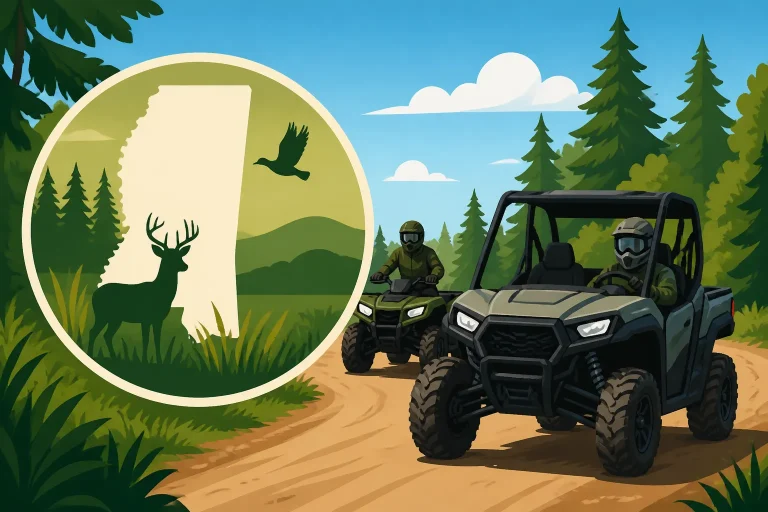
- Wildlife management areas: Access and riding are limited by that area’s rules and designated roads.
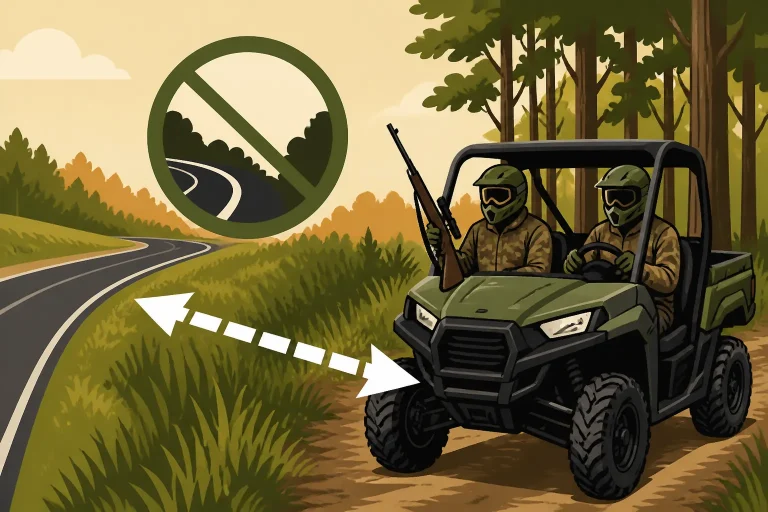
- Public roads: A state sticker does not make an ATV or UTV legal to ride on Mississippi roads.
If you are coming from a state that requires registration, keep your home-state documents with you if you have them. They may help establish ownership or satisfy a requirement at a particular destination. But do not assume that a decal from home replaces a Mississippi trail pass or that it authorizes you to ride on land where machines are not allowed.
| What you may be asked for | Who sets the requirement | Does an out-of-state sticker replace it? |
|---|---|---|
| State OHV registration sticker | Mississippi does not issue a general visitor sticker | Not applicable |
| National forest OHV pass | The forest or trail system managing the route | No; check that forest’s pass rules |
| Day-use ticket or entry fee | A park or trail operator | No |
| Liability waiver or check-in | A state or private park | No |
| Driver’s license or accepted safety certificate | Applicable state law or land manager | No |
| Proof of ownership | The land manager, officer, or circumstances of a stop | A sticker may help, but it is not always enough |
Before you travel, identify the exact place you want to ride and check its current visitor requirements. A county, forest district, park operator, and wildlife agency can all have different rules. The fact that Mississippi has no state sticker requirement does not settle those local questions.
A Mississippi Forest Pass Is Separate From State Registration
A common source of confusion is the difference between a state registration sticker and a national forest OHV pass. Mississippi’s lack of a state sticker does not waive a pass requirement on designated national forest trails.
If your trip includes a national forest trail system, contact the responsible forest office or check its official trail information before leaving home. Ask specifically whether your planned route requires a pass, which machines the pass covers, how it must be displayed or carried, and whether there are limits on machine size. A pass may apply only to designated OHV trails; it does not necessarily grant access to every road or track within a forest.
The pass question is especially important for a side-by-side. Trail systems can have width restrictions, and a machine that is lawful to own and bring into Mississippi may still be too wide for a particular route. Do not use the absence of a Mississippi state sticker as a reason to assume the vehicle will fit or qualify. Review Mississippi National Forest OHV Passes and The 50-Inch Width Limit Written Into the Pass, then confirm the applicable limits with the forest office.
Check what the pass actually covers
Before paying for a pass, make sure it applies to the riding you intend to do. Ask:
- Is the pass required for the trail system I plan to use, or only for certain routes?
- Does it cover one machine, multiple machines, or a specific rider or household?
- Is a separate day-use ticket or entrance fee required?
- Are there restrictions on width, weight, tires, or machine type?
- Must the pass be displayed on the machine, or should it be carried by the rider?
- Are any trails closed for weather, maintenance, hunting activity, or another reason?
Pass coverage and procedures can change. Check the current requirements directly with the managing office rather than relying on an old pass, a forum post, or a friend’s memory. If a pass has a fee, confirm the current amount and available purchase method with the official provider.
Know the difference between a forest road and an OHV trail
A national forest may contain public roads, designated OHV routes, closed roads, and roads intended for other uses. A pass for an OHV trail does not automatically open a gated route or permit cross-country riding. Follow posted signs and the current trail map. If a route is closed or not designated for your machine, stay off it even if you have paid for a pass.
For a trip to the De Soto National Forest or another forest area, check trail conditions before you load. Rain, maintenance, seasonal restrictions, or other closures can change what is open. The guide Mississippi Forest Pass Coverage can help you frame the questions, while the official forest office remains the place to confirm current details.
Visitors also sometimes assume a pass from their home state will count as reciprocal access. That is not a safe assumption. Mississippi does not have a state sticker system to exchange with another state, and one agency’s pass usually does not substitute for another agency’s pass. Check with the specific forest or trail operator you intend to visit.
Trail Parks, State Parks, and Private Land Set Their Own Rules
A visitor can ride in Mississippi without obtaining a statewide OHV sticker and still need to meet several requirements at the gate. Parks and riding areas may require an entry fee, a waiver, a particular form of identification, a helmet, a spark arrestor, or other equipment. They may also limit machine width, passenger age, operating hours, or the number of riders in a group.
Those are site rules, not a statewide registration program. A sticker from another state will not normally replace a park’s waiver or admission ticket.
State parks
A state park’s rules may depend on the specific park, the designated riding area, and the activity. Contact the park directly before hauling your machine. Ask whether ATVs or UTVs are permitted at all, which routes are open to them, what paperwork is required at check-in, and whether riders need to bring identification or proof of a safety credential.
Do not confuse permission to enter a park with permission to ride throughout the park. A machine may be restricted to a particular area or route. Rules on passengers, helmets, noise, and equipment can also be more specific than the general rules that apply elsewhere. Read Mississippi State Park ATV Rules and then confirm the details with the park where you plan to ride.
If a park requires a liability waiver, expect the waiver process to be separate from state registration. A visitor should not assume a home-state registration card serves as a waiver, or that an online waiver is accepted unless the park says so.
Private riding parks
Private parks set admission and operating conditions for their property. A park might require a waiver, check-in, proof of age, safety gear, or compliance with machine-size limits. Some facilities also set rules for alcohol, camping, pets, quiet hours, and riding after dark.
Check the park’s current rules before you leave. Confirm whether it is open on your planned date, whether reservations are needed, what fees apply, and whether your ATV or UTV fits the permitted class. Conditions can change with weather or maintenance, and a closed gate or posted restriction takes precedence over an old listing.
A visitor may want to keep a phone copy of the park’s rules and confirmation details, but do not rely on a phone alone where service is weak. Save the address, check-in instructions, and phone number offline. A waterproof document pouch can keep paper confirmations, a map, and emergency details together; if you already shop on Amazon, check product dimensions and closure quality rather than buying a pouch simply because it is advertised as waterproof.
Wildlife management areas and other public land
Wildlife management areas are not general-purpose OHV parks. Riding may be limited to designated roads, and access can change with hunting seasons, road closures, gates, or the area’s management rules. A state sticker from home does not give permission to ride a closed road or cross into a restricted area.
Before entering a management area, look for signs at the entrance and check the specific area’s current regulations. Ask whether machines may be used for travel, whether access is limited to named roads, and whether special restrictions apply during a hunt. See Mississippi WMA Designated Roads Only and Mississippi WMA Rules for Riders for related guidance.
Private timberland, hunting leases, and farm roads also require care. A road that looks open is not necessarily open to the public. Get permission from the landowner or lease manager, and follow any limits on routes, hours, passengers, and gates. A forest pass or park ticket does not extend to adjacent private property.
What Visitors Should Carry and What It Proves
Because Mississippi does not require a general state OHV sticker for visitors, riders sometimes ask what documents they should bring instead. There is no single packet that guarantees access everywhere, but carrying a few practical items can prevent avoidable delays and help resolve questions.
Consider bringing:
- Your driver’s license or other accepted identification.
- Any safety certificate that may apply to you or your child.
- Proof of ownership, such as a title, registration document from home, or purchase paperwork.
- The required trail pass, park ticket, or permit for the place you are visiting.
- A copy of any park waiver or reservation confirmation, if applicable.
- Emergency contact information and the address or map for your riding area.
Keep documents protected from mud and water. A phone photo can be useful as a backup, but it may not be accepted as a substitute for an original document or physical pass. Ask the land manager what form of proof it accepts.
A home-state registration can help, but it is not a universal permit
If your state issues an ATV registration card or decal, bring it. It can help show that the machine is yours or that you have complied with your home state’s rules. It does not necessarily prove that you have permission to ride a particular Mississippi trail.
The same goes for a title. A title is evidence of ownership, not a right to ride on public or private land. Mississippi’s title rules are a separate issue from visitor access. If you have questions about a Mississippi-titled machine, start with How to Title an ATV in Mississippi; if you are simply visiting, do not treat title paperwork as a substitute for a trail pass or landowner permission.
If you are carrying several papers, use a simple system. Keep machine ownership documents in a sealed pouch in the tow vehicle, and carry only what you need on the trail. You might use Amazon to find a compact waterproof pouch, but test it with the actual documents before the trip and keep a separate backup copy somewhere dry. A pouch can protect paper; it cannot make an unaccepted document valid.
Know the rules for young riders
A child’s age can affect which documents and safety precautions are required. Mississippi has rules relevant to riders on public property, and parks or forests may set additional requirements. Do not assume that a child who can ride on private property may ride every public trail without meeting the applicable conditions.
Check the rules for the exact destination and the rider’s age. Confirm whether a driver’s license or an accepted safety certificate is needed, whether a helmet is required, and whether an adult must supervise the child. The relevant starting points include [Mississippi Rules for Riders Under 16] and Mississippi Safety Certificates for Young Riders.
Keep a child’s safety credential with the rider or in a location that can be reached at a check-in. If you are unsure whether a course or certificate from another state will be accepted, ask the forest, park, or agency directly. Do not assume that a course from home automatically meets every Mississippi or site-specific requirement.
The No-Sticker Rule Does Not Make Public Roads Open to ATVs
One of the most important limits for visitors is that a state sticker, forest pass, or park ticket does not authorize ordinary road riding. Mississippi generally bars ATVs and other off-road vehicles from public roads, subject to the rules that apply to the particular situation. Do not ride on a county road, city street, or highway just because your machine is registered elsewhere.
Road access can be especially confusing when a trailhead is across the road, a private route connects to a public road, or a machine needs to cross a road to reach another parcel. Do not assume that a short distance, local custom, or an out-of-state plate makes the ride lawful. If a route requires road travel, check the exact legal rule and ask the relevant local authority or land manager before doing it.
A town’s ordinance for golf carts or low-speed vehicles is not automatically permission for an ATV or UTV. The vehicle category and local law matter. For more detail, see Mississippi Bans ATVs on Public Roads and Mississippi Local Ordinances Are the Only Path.
Crossing and connecting routes need special attention
A trail map may show routes close to a public road without authorizing riders to use the road between them. A land manager may have a designated crossing or approved connector, but that is different from riding along the road. Follow the signs and instructions for that specific crossing.
If you are uncertain whether a short connection is allowed, stop and ask before riding. A phone call to the trail operator, forest office, or local law enforcement is more useful than relying on another rider’s informal interpretation. A pass is not a road-use permit.
A plate or decal from home does not change the road rule
Some visitors bring machines with plates or registration from a state that allows certain forms of road use. That paperwork may be valid for the home jurisdiction, but it does not automatically override Mississippi’s rules. Treat state registration and road authorization as separate issues.
This distinction matters for towing, too. Your ATV may need a trailer and separate towing arrangements to reach a trail system. If you plan to haul the machine on public roads, make sure the trailer and tow vehicle comply with the rules that apply to them. Do not use the ATV itself as a road-going vehicle unless the specific route and legal conditions clearly permit it.
How to Check Reciprocity and Access Before You Travel
The best way to avoid a wasted trip is to check rules in the same order you will encounter them: the state, the land manager, the specific trail, and the facility. Mississippi’s lack of a visitor sticker answers only the first question.
Use this process before loading your machine:
- Identify the exact riding location. Get the official name of the forest, park, trail system, wildlife area, or private property. A town or county name is not precise enough.
- Ask whether the machine type is allowed. Confirm whether the location permits ATVs, UTVs, youth machines, or only certain classes of off-road vehicles.
- Check for a pass or entry requirement. Ask whether a forest pass, day-use ticket, park fee, reservation, or other permit is required. Confirm current costs and purchase instructions with the official provider.
- Confirm size and route limits. Ask about width, weight, trail designation, and whether the route is open to your particular machine. Do not guess based on the vehicle’s model name.
- Check rider credentials. Ask about driver’s licenses, safety certificates, age limits, helmets, supervision, and passenger rules.
- Ask what paperwork is accepted. Find out whether the site wants a physical pass, proof of ownership, a signed waiver, a printed confirmation, or identification.
- Check conditions again shortly before departure. Weather, maintenance, hunting activity, and other closures can affect access after you have made plans.
- Save the official contact information. Cell service may be unreliable at a trailhead, so keep the office number, route map, and check-in instructions available offline.
When you call, be specific. Say where you are coming from, what kind of machine you have, its approximate width, who will ride it, and which route you want to use. Ask whether your home-state registration has any relevance to that site’s requirements. This is more likely to produce a useful answer than asking generally, “Do you honor out-of-state stickers?”
A short checklist can help keep the rules straight:
- Mississippi does not require a general state OHV sticker for a visitor.
- A national forest may require its own pass for designated OHV trails.
- A park or private operator may require a ticket, waiver, or other paperwork.
- A home-state sticker does not automatically replace a local pass or grant land access.
- A title or registration card can help prove ownership but does not establish permission to ride.
- The road ban and land-access rules still apply.
- Requirements can vary by place and change, so confirm them with the responsible agency.
For gear, use the same practical approach. A paper map, a printed confirmation, and a dry place for documents are helpful where phone reception is uncertain. If you use Amazon to shop for a map case or pouch, check whether it can fit the actual papers and remain usable with muddy hands; then store the contact information and route details offline as well. Gear can support a safe trip, but it does not replace checking the official rules.
Common Visitor Mistakes to Avoid
The state sticker question is simple; the mistakes tend to happen when riders treat the answer as permission for everything else. Keep these distinctions in mind.
Assuming an out-of-state sticker is required
Some visitors bring a registration decal because their home state requires one. Keep it if you have it, but do not assume Mississippi requires you to obtain a matching state decal. Mississippi does not operate a general state OHV sticker program for visiting machines.
Assuming no state sticker means no trail pass
This is the opposite mistake. A national forest trail or private park can have its own pass or admission requirement. Confirm the pass rules for the actual route instead of treating the statewide rule as a blanket exemption.
Assuming a pass covers every machine and route
A pass may have limits on who can use it, which machine it applies to, or where it is valid. A large UTV may be excluded from a narrow trail even when a smaller quad can use it. Read the terms and ask the land manager before paying or setting out.
Treating a public forest as unrestricted land
Public ownership does not mean every road, timber cut, or path is open to motorized use. Stay on routes designated for your machine, respect gates and closures, and avoid crossing into private property without permission.
Using a road to connect trails without checking
A brief stretch on a public road may still be prohibited. Do not infer legality from a map, another rider’s route, or an officer not being present. Confirm any approved crossing or connector with the trail operator.
Relying on an old post or last year’s pass
Trail closures, pass instructions, park operations, and fees can change. Recheck current details with the official office before travel, especially after heavy rain or near hunting seasons. If the official information is unclear, call and make a note of the answer, including the route and machine you asked about.
The useful rule is straightforward: Mississippi does not require a general state sticker for a visiting ATV or UTV, but the place where you ride can still require permission, payment, documents, and compliance with its own restrictions. Check those rules before the machine goes on the trailer, and check them again before you head out.
Disclaimer
This article is for general informational purposes only and does not constitute professional advice. Laws, prices and regulations vary by location and change over time. Consult a qualified professional for guidance on your specific situation.