Can You Ride an ATV on the Road in Mississippi?
It’s a common scenario across Mississippi: you’ve just gotten home from a long day on the trails, and you think to yourself, "Wouldn't it be great if I could just hop on my ATV to grab a gallon of milk from the corner store?" Or maybe you're trying to get to a hunting stand that's just a short stretch down a county road. The temptation to use your off-road machine for quick trips on public asphalt is incredibly strong, fueled by convenience and the sheer joy of riding. However, the legal reality in the Magnolia State is far more restrictive than many riders realize, and misunderstanding these rules can lead to frustrating and expensive consequences. This guide aims to clear up all the confusion surrounding ATVs and UTVs on Mississippi roads, giving you the definitive answers you need to stay on the right side of the law.
The Blunt Reality: Mississippi's Statewide Road Ban
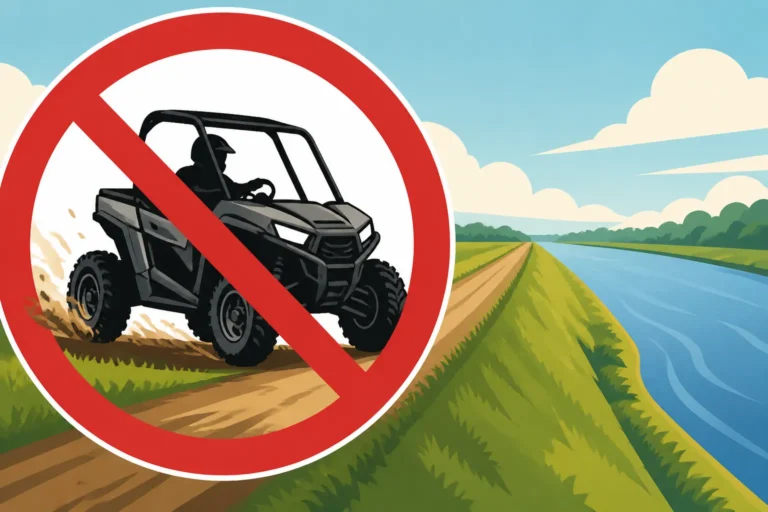
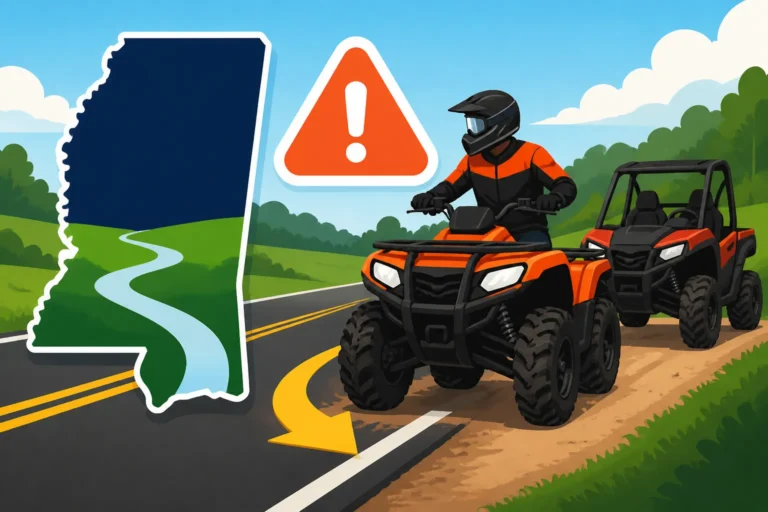
Let's cut right to the chase because it's the most important piece of information you need to understand: for the vast majority of Mississippi, riding an ATV or UTV on a public road is illegal. There's no getting around this fact at the state level. It's a tough pill to swallow for many enthusiasts, especially when you see vehicles like golf carts on neighborhood streets, but the law is very specific about off-road machines.
What the Law Actually Says
Mississippi has clear legislation concerning the use of off-road vehicles, and it's not ambiguous when it comes to public roads. If you look at [Mississippi Code Section 63-31-3], you'll find the explicit prohibition. This statute states that an all-terrain vehicle (ATV) or off-road vehicle (ORV) cannot be operated on public roads, streets, or highways in the state. The legal definitions of what constitutes an ATV or ORV are broad and cover most of the machines we commonly ride, from your standard quad to many side-by-sides. Understanding these [Mississippi ATV and ROV Legal Definitions] is crucial, as the law doesn't differentiate between your muddy hunting rig and a pristine sport quad. The intent is to keep vehicles designed for off-pavement use off the public thoroughfares primarily intended for cars and trucks.
This means that whether you're on a major highway, a rural county road, or a quiet residential street, the state law generally prohibits the operation of your ATV or UTV. There's no special carve-out for Sunday drives or quick hops to a friend's house. It's a blanket ban that many riders find surprising or frustrating, especially if they're used to different rules in other states or have heard rumors about exceptions that simply don't exist in Mississippi's state law.
No Statewide Exceptions
One of the biggest sources of confusion for riders comes from anecdotal evidence or from rules they've encountered in other states. People often assume there must be an exception for farmers, or for crossing a road, or for riding to hunting land. Unfortunately, under Mississippi state law, these common-sense exceptions do not exist. There is no statewide provision that allows you to ride your ATV down the road to check your crops, even if it's a quiet gravel path. Similarly, there's no automatic right to cross a highway, even if it's the most direct route between two pieces of private property.
Many riders hope for a "farm road exception" where agricultural use would grant them street access, but this has never become law in Mississippi. Bills attempting to introduce such exceptions, including proposals for [Mississippi's Failed 2025 Road Access Bill] and earlier attempts, have historically not passed. This leaves riders in a difficult position, often having to trailer their machines for even short distances, or risk a citation. It’s important not to confuse Mississippi’s laws with those of neighboring states that might have more lenient rules regarding off-road vehicles on public ways. What might be perfectly legal in Louisiana or Alabama could land you in serious trouble just across the border.
Consequences of Violating the Ban
Riding an ATV or UTV illegally on a public road in Mississippi isn't just a minor slap on the wrist. The penalties can be significant and are certainly more than just a polite warning. Deputies and state troopers are generally aware of these laws, and if you're caught, you could face a citation. The [Mississippi Fines for Road Riding] might seem low on paper, but they often come with court costs and other fees that add up quickly.
Beyond the monetary fine, your machine could even be impounded. Imagine the hassle and expense of having your ATV towed and stored, plus the fees required to get it back. It’s not just about the ticket; it’s the potential for a ruined day, significant out-of-pocket costs, and the general headache of dealing with the legal system. It's far cheaper and less stressful to ensure you're only riding where it's explicitly allowed. Furthermore, any accident involving an illegally operated ATV on a public road could complicate insurance claims, lead to personal liability, and exacerbate legal issues, even if the collision wasn't your fault.
Local Ordinances: The Only Path to Street Legality
While state law broadly prohibits ATVs and UTVs on public roads, there is one narrow avenue for legal road use: local ordinances. Mississippi law essentially defers to individual cities, towns, and sometimes counties, allowing them to create their own rules regarding off-road vehicle access on their specific public roads. This is where things get a bit more nuanced and require some research on your part.
How Local Ordinances Work
Local ordinances are laws passed by city councils or county boards of supervisors that apply specifically within their jurisdiction. For an ATV or UTV to be legally ridden on a public street in Mississippi, there must be a local ordinance explicitly permitting it. Without such an ordinance, the statewide ban remains in effect. This means what's legal in one town might be completely illegal just a few miles down the road in another.
These ordinances can vary wildly in their scope and restrictions. Some might allow specific types of machines (like golf carts, but not ATVs), while others might have restrictions on the time of day, the specific roads that can be used, or require certain safety equipment like turn signals, mirrors, or even a horn, even if your machine isn't typically equipped with them. For instance, a town might allow ATVs on roads posted 30 mph or less, but explicitly prohibit them from crossing state highways or main thoroughfares. You might even find specific brands written into an ordinance, or stipulations about [Mississippi Equipment Checks by Deputies] to ensure your machine meets safety standards for road use, even if those standards go beyond what's required for off-road riding. This is why a brand like SuperATV, known for its accessories and modifications, might be relevant if you're looking to upgrade your machine to meet specific ordinance requirements.
Golf Cart vs. ATV/UTV Ordinances
A common mistake riders make is seeing golf carts on local streets and assuming their ATV or UTV falls under the same rules. This is often not the case. Many Mississippi municipalities have passed ordinances specifically allowing [Mississippi Golf Cart and LSV Ordinances] on their streets, particularly in coastal or resort areas. However, an ATV or UTV is a distinct vehicle type with different characteristics, power, and safety profiles.
Just because a town has a golf cart ordinance does not mean it automatically applies to your side-by-side or quad. In fact, many towns, like [Ocean Springs Names the ATV Brands It Bars], have explicitly distinguished between golf carts and ATVs, allowing one while prohibiting the other, or placing much stricter limits on off-road vehicles. If a town does allow ATVs or UTVs, the ordinance will typically specify "all-terrain vehicles" or "off-road vehicles" directly. Never assume; always verify. Treat golf cart ordinances as separate and distinct from anything that might apply to your ATV.
Finding Local Rules
This is the actionable part: if you want to know if you can ride your ATV or UTV on the road in a specific Mississippi town or county, you must do your homework. Start by contacting the city clerk's office or the county administrator's office for the jurisdiction you're interested in. They are the keepers of the local laws and should be able to direct you to the relevant ordinances.
You can also often find this information online. Many municipalities post their code of ordinances on their official websites. Look for sections related to "vehicles," "traffic," "off-road vehicles," or "golf carts." Be prepared to dig a little, as these documents can be lengthy. Remember, you're looking for something that specifically mentions ATVs or UTVs. Don't rely on word-of-mouth or what your buddy heard. Getting a printout or a direct link to the ordinance is the best proof. This is a crucial step if you want to avoid [Mississippi Ticket Costs for Road Riding] and other legal headaches. You can use resources like [Mississippi Ordinance Lookups Before You Ride] to aid your search, ensuring you're only riding where it's explicitly permitted.
Navigating Exceptions and Specific Scenarios
Even with the strict state laws and the variability of local ordinances, there are still specific situations and common questions that come up regarding ATV and UTV use. Understanding these nuances is key to responsible riding.
Private Property and Designated Trails
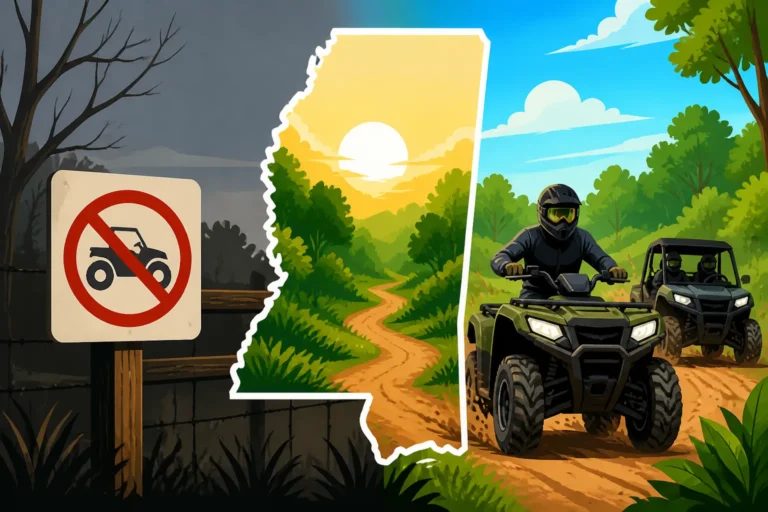
It's vital to remember that the state's prohibition on public roads does not extend to private property with the owner's permission, or to designated off-road trails. This is where the true spirit of ATV and UTV riding thrives in Mississippi. You can ride all day long on your own land, on a friend's property (with permission), or at a dedicated off-road park.
Mississippi offers some fantastic places to ride, like Bethel OHV Trails in the Bienville National Forest, or private parks such as Red Creek Off-Road. These areas are specifically designed and managed for off-road vehicle use, providing miles of trails, mud pits, and open riding areas where you can enjoy your machine without worrying about traffic laws. Always check the rules of any park or private land before you visit, as they might have their own specific requirements regarding helmets, age limits, or machine modifications. For a comprehensive list and details on where you can ride, check out resources like [Mississippi ATV Trails: Where to Ride]. These are the places where you can truly unleash the full potential of your machine.
Crossing Public Roads
One of the most frequently asked questions is, "Can I at least cross a public road if I'm going from one piece of private property to another?" Under state law, the answer is generally no, unless a local ordinance specifically allows it. The statewide ban covers operation on public roads, and merely crossing them still constitutes operation. This means that even a quick jaunt across a two-lane road could land you in trouble if there isn't a local ordinance permitting it.
This is particularly frustrating for landowners whose property is bisected by a public road, or for hunters trying to access different sections of their hunting lease. The state law does not make an exception for "brief crossings." Your best bet, if a local ordinance doesn't provide a solution, is to trailer your machine across the road or find an alternative route that stays entirely on private land or designated trails. It's a logistical challenge, but it's the safest way to avoid a citation and ensure you're compliant with [Mississippi Bans ATVs on Public Roads].
Hypothetical Scenarios and Best Practices
Let's consider a few real-world scenarios to illustrate the challenges and best practices:
-
Scenario 1: The Hunting Camp Road. You're at your hunting camp, and the only way to get to your favorite stand is to ride about a quarter-mile down a gravel county road.
- Best Practice: Do not ride on the county road unless you have verified that the specific county or a municipality within it has an ordinance allowing ATVs on that particular road. If not, you must trailer your ATV, or find an alternative route that keeps you entirely off public property. Even on quiet, unpaved roads, deputies can and do patrol. It's also wise to always have your [Carrying Papers on a Southern Back Road] with you, including proof of ownership, in case a deputy stops you.
-
Scenario 2: Quick Errand to the Store. You're just a mile from the convenience store, and your UTV has a horn, lights, and mirrors. Why not just run over there?
- Best Practice: Unless your specific town has an ordinance that explicitly permits UTVs on its streets and you meet all the equipment requirements outlined in that ordinance, this is illegal. Even if your machine has features similar to street-legal vehicles, it's still classified as an off-road vehicle by the state. Upgrading your UTV with a SuperATV street-legal kit is a great start, but it doesn't automatically make it legal for road use in Mississippi without that specific local ordinance.
-
Scenario 3: Avoiding a Traffic Jam. During a local festival or event, traffic is backed up, and you think your nimble ATV could navigate the side streets.
- Best Practice: Absolutely avoid this. Not only is it illegal under state law, but it's also extremely dangerous. ATVs are not designed for dense traffic conditions, and you could easily cause an accident. The penalties for illegal road use in such a scenario would likely be compounded by reckless driving charges.
When a deputy pulls you over, they have the right to ask for proof of ownership and to inquire about your route. Knowing [What a Mississippi Deputy Can Ask to See] and being able to explain that you are on private land or within an approved ordinance area is crucial. Ignorance of the law is never a valid defense.
| Aspect | State Law (Generally) | Local Ordinance (If Enacted) |
|---|---|---|
| Road Use | Prohibited on all public roads, streets, highways. | May permit on specified roads (e.g., <30 mph), within limits. |
| Crossing Roads | Generally prohibited as it constitutes "operation." | May be permitted as part of a specific ordinance. |
| Exceptions | No statewide exceptions (farm, hunting, etc.). | Localities may create exceptions for specific uses. |
| Vehicle Types | Applies to ATVs, UTVs, and other ORVs. | May specify ATVs/UTVs, or distinguish from golf carts. |
| Required Equipment | Not specified for road use (as it's illegal). | Often requires mirrors, turn signals, horn, lights, etc. |
| Penalties | Fines, court costs, potential impoundment. | Fines, court costs, potential impoundment for violations. |
| Best Practice | Trailer your machine for road travel. | Verify ordinance directly with local authorities. |
Why Mississippi's Laws Are So Restrictive
It's natural to wonder why Mississippi maintains such a strict stance when other states have more lenient rules. There are several reasons behind the legislative decisions and the continued prohibition of ATVs on public roads.
The Legislature's Stance
Mississippi's legislature has consistently chosen to keep [Mississippi Bans ATVs on Public Roads] in place. While bills have been introduced over the years to open up road access for ATVs and UTVs—such as the aforementioned 2025 Road Access Bill, which saw some movement but ultimately died in committee—they have not gained enough traction to become law. The reasons for their failure are varied but often include concerns about public safety, liability, and the inherent differences between off-road vehicles and those designed for street use.
Legislators often prioritize the safety of all road users. When considering these bills, concerns are raised about how ATVs, with their different handling characteristics, lack of safety features like crumple zones, and often lower visibility, would interact with cars, trucks, and pedestrians on shared roadways. The general sentiment has been that the risks outweigh the perceived benefits of allowing widespread road access.
Safety Concerns and Road Design
ATVs and UTVs are designed for off-road environments. Their tires are typically knobby for traction in dirt and mud, which can provide poor grip on hard asphalt, especially in wet conditions. Their suspension systems are built for uneven terrain, not smooth pavement, which can make them feel unstable at higher speeds on roads. They also lack many of the safety features standard in street-legal vehicles, such as airbags, robust roll cages (in many ATVs), and comprehensive lighting packages that are legally mandated for cars.
From a road design perspective, public roads are engineered for vehicles that can maintain consistent speed, handle predictably, and are easily visible. An ATV can be harder to see due to its smaller profile compared to a car, and its often-bright colors might not stand out in diverse lighting conditions. The risk of serious injury or fatality in an ATV-versus-car collision on a public road is significantly higher for the ATV rider. These are critical safety considerations that heavily influence legislative decisions and contribute to the restrictive nature of Mississippi's off-road vehicle laws.
Future Outlook for Road Access
While there's always a possibility that future legislative sessions might revisit the issue, the current trend suggests that widespread statewide road access for ATVs and UTVs in Mississippi is unlikely in the near future. Any changes would likely come in the form of highly specific, localized ordinances, rather than a broad state-level reversal of the ban.
For riders, this means the responsibility continues to fall on you to understand and respect the existing laws. Don't hold your breath for a statewide "street legal" designation to suddenly appear. Instead, focus on enjoying your machine where it's truly meant to be ridden—on private land and designated off-road trails. If you're keen on making your machine more versatile, consider modifications from companies like SuperATV that improve safety and functionality, but always confirm local regulations before assuming any modification grants you road access. Educating yourself and adhering to the current rules will save you a lot of grief and keep you riding safely and legally for years to come.
Disclaimer
This article is for general informational purposes only and does not constitute professional advice. Laws, prices and regulations vary by location and change over time. Consult a qualified professional for guidance on your specific situation.