Mississippi Towns That Name Machines They Bar
Navigating the rules for riding ATVs and UTVs in Mississippi can feel like trying to solve a riddle wrapped in a mystery, especially when you start looking at what's allowed on public roads. Many riders get frustrated, hoping to take their side-by-sides from their driveway to a local store, only to find a maze of inconsistent rules. The truth is, while state law is pretty clear on banning ATVs from public roads, some Mississippi towns have gone a step further, specifically naming certain machines or brands in their local ordinances to clarify what's definitely not allowed on their streets. This guide will help you understand why this happens and what it means for you and your machine.
The State's Stance: Why Local Rules Dominate Mississippi Roads
It's a common misconception that there's some grand, overarching state law in Mississippi that dictates exactly where and how you can ride your ATV or UTV on public roads. The reality is far simpler, and arguably, far more restrictive.
Mississippi's General ATV Road Ban
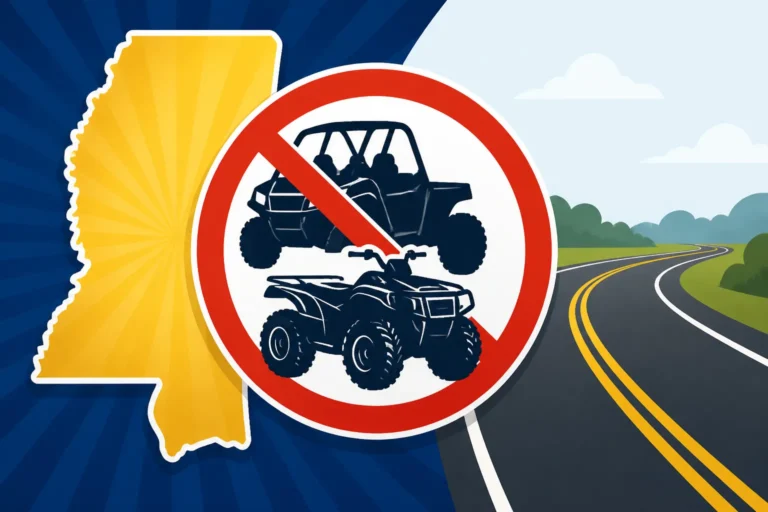
Let's cut right to the chase: Mississippi state law generally prohibits ATVs and UTVs from being operated on public roads and highways. This isn't some obscure subsection; it's a foundational principle in the state's approach to off-road vehicles. Unlike some other states that might have nuanced exceptions for agricultural use, crossing roads, or even specific rural routes, Mississippi's statutes are notably thin on these allowances. This blanket prohibition is often the source of much confusion and frustration for riders. You might have a perfectly capable machine, maybe even one you've fitted with some safety accessories, but that doesn't change the state's fundamental stance.
Because the state law is so broad and restrictive, it leaves little room for interpretation regarding widespread road access. This means that if you're pulling your rig out of the garage and hoping to hit the asphalt, you're likely out of luck unless a specific local ordinance carves out an exception. The state's position essentially pushes all the decision-making and rule-making down to the municipal level. For a deeper dive into the exact wording, you might explore [Mississippi Law Flatly Bars ATVs From Public Roads].
The Power of Local Ordinances
So, if the state says "no," how is it that some towns in Mississippi do allow certain types of off-road-style vehicles on their streets? The answer lies in the authority granted to local municipalities. Cities, towns, and even some counties have the power to enact their own ordinances, which can, under specific circumstances, supersede or elaborate on state law for local roads. This isn't about state law being completely ignored; rather, it's about local governments interpreting their power to regulate local traffic and public safety.
This means that while the state of Mississippi has a pretty hands-off, restrictive approach to ATVs on roads, your local city council or board of aldermen can decide to permit certain categories of vehicles within their corporate limits. This is why you see a patchwork of rules across the state: some towns might allow golf carts, others might allow Low-Speed Vehicles (LSVs), and a few might even have specific provisions for UTVs, provided they meet certain criteria. The crucial point is that these permissions are strictly local, and what's legal in one town might lead to a citation just a few miles down the road. Understanding this local authority is key to knowing where you can and cannot ride your machine.
Unpacking Specific Local Ordinances That Name Machines
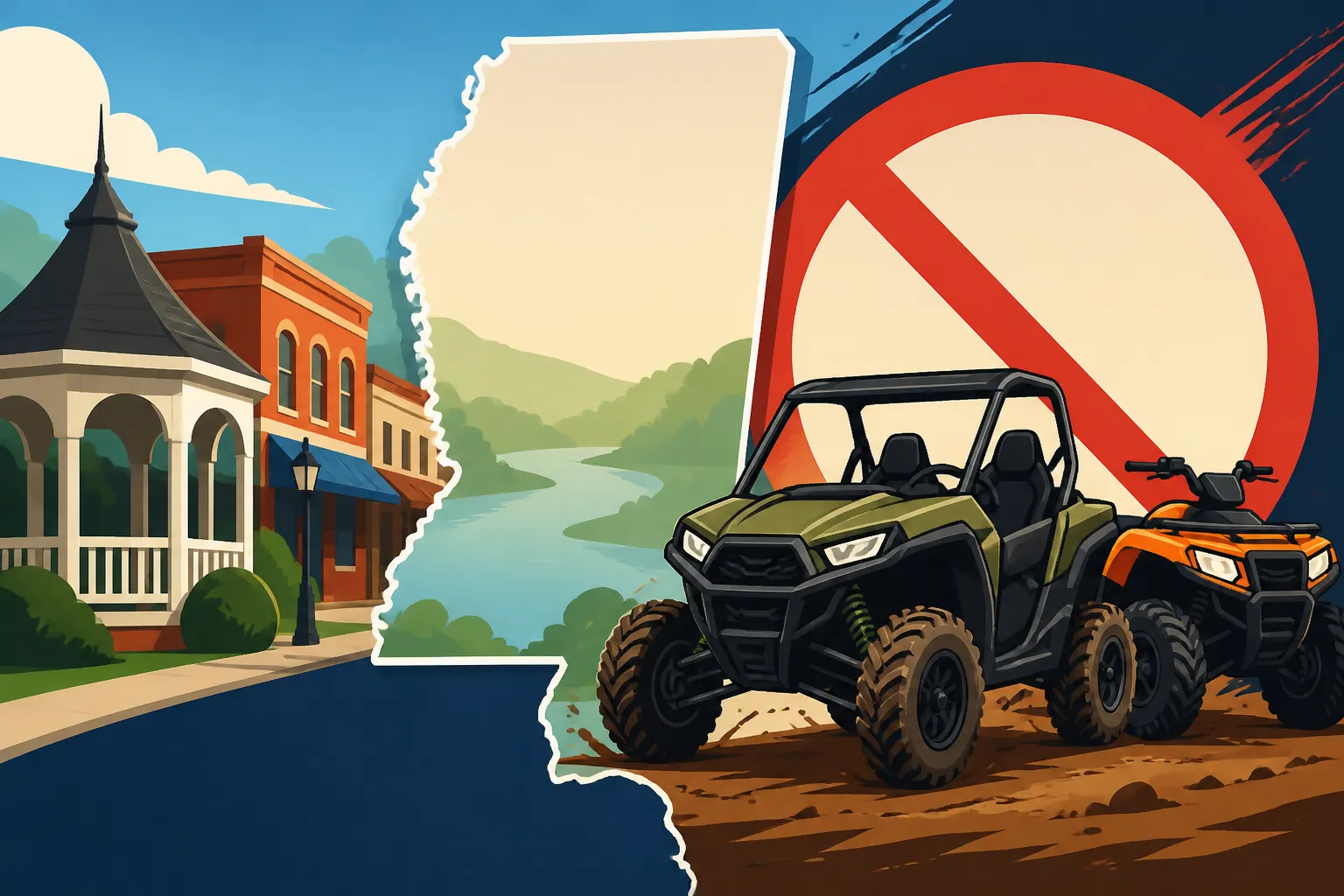
It's one thing for a town to say "no ATVs on our streets," but some Mississippi municipalities take an even more direct approach: they specifically call out certain types of machines, and sometimes even brands, that are barred from public roads. This level of specificity can be both helpful and incredibly confusing for riders.
Why Towns Name Specific Brands or Types of Machines
Why would a local government go to the trouble of naming specific brands or types of machines in their ordinances? Often, it stems from a desire for clarity, or perhaps a reaction to local circumstances. One reason might be to distinguish clearly between what they do allow (like a golf cart) and what they don't. When a city writes an ordinance permitting "golf carts," but then sees people driving highly modified UTVs, they might amend the ordinance to specifically exclude "utility task vehicles, side-by-sides, or any vehicle resembling a Polaris RZR or Can-Am Maverick." This leaves no room for ambiguity about their intent.
Another factor can be public perception and past incidents. If there have been issues with reckless riding, noise complaints, or accidents involving certain types of machines, the local government might feel pressured to specifically ban those machines by name. It's a way for them to address community concerns directly and leave no doubt about which vehicles are causing problems. [Complaints That Reach a Southern Board of Aldermen] often play a significant role in shaping these highly specific local rules, as city officials respond to the feedback from their constituents.
Examples of Such Ordinances
While I can't cite current, real-time ordinances with specific brand names, based on common practices, these types of ordinances typically read something like this: "No all-terrain vehicles, utility task vehicles, or off-road vehicles shall be operated on public streets, including, but not limited to, those commonly known as side-by-sides, four-wheelers, quads, or recreational off-highway vehicles such as those manufactured by Polaris, Can-Am, Honda, or Yamaha, unless explicitly designated as a Low-Speed Vehicle meeting all federal and state requirements."
The intent here is to be exhaustive, leaving little to the imagination. These ordinances aim to prevent any vehicle that looks like an off-road machine, even if it has some street-legal modifications, from being driven on city streets. Imagine you've spent time and money decking out your side-by-side with SuperATV windshields, mirrors, and turn signals, only to find your town has explicitly banned "any vehicle resembling a Polaris RZR." It's a disheartening situation that highlights the direct impact of these specific rules. Even if your machine is equipped with all the necessary safety features for off-road adventures, these specific local bans often focus on the inherent design and primary purpose of the vehicle, rather than individual modifications.
The Confusion for Riders and Law Enforcement
The upside of naming specific machines is supposed to be clarity, but often, it creates more confusion. For riders, it means you can't just assume. You have to actively research and understand the precise wording of your local ordinance. What if your machine isn't explicitly named, but falls into a general category that is? What if your town bans a "Can-Am Maverick" but you drive a "Can-Am Defender"? Does the intent override the specific name? These are the kinds of questions that plague riders trying to be compliant.
For law enforcement, these ordinances can also present a challenge. While a ban on "Polaris RZRs" might seem straightforward, what about highly customized machines? Or lesser-known brands? A deputy might pull someone over on what looks like a typical UTV, only to have to debate whether it technically falls under a specifically named exclusion. [What a Mississippi Deputy Can Ask to See] might include proof of vehicle type and model, which then has to be cross-referenced with a potentially complex local rule. This can lead to inconsistent enforcement, as interpretation can vary from officer to officer. It underscores the critical need for riders to be intimately familiar with their local rules, not just general state guidelines.
Distinguishing ATVs/UTVs from Permitted Vehicles
One of the biggest sources of confusion, and a primary reason why some towns resort to naming specific machines, is the blurry line between what's considered an "off-road vehicle" and what's a "street-legal" alternative like a golf cart or Low-Speed Vehicle (LSV). It's easy to look at a utility-focused side-by-side and a beefed-up golf cart and struggle to see the difference from a distance.
Golf Carts vs. Off-Road Vehicles
In many Mississippi towns, golf carts are the only non-traditional vehicles allowed on certain public roads, typically those with lower speed limits. But what truly defines a "golf cart" in the eyes of the law, and how does it differ from your ATV or UTV? Generally, a golf cart is designed for low-speed operation, often under 20 mph, and primarily for use on golf courses or private communities. They typically lack many of the safety features found on standard automobiles, and their construction reflects their limited intended use. [Mississippi Golf Cart Statutes] often set specific parameters for what qualifies.
An ATV or UTV, by contrast, is engineered for off-road performance. They have robust suspensions, powerful engines, and often aggressive tires designed for rough terrain, not smooth pavement. Even if you equip your UTV with a horn, turn signals, and a rearview mirror – perhaps even some durable SuperATV accessories to handle the rough stuff off-road – it doesn't magically transform it into a golf cart. Towns that name specific brands like "Polaris RZR" or "Can-Am Maverick" in their ordinances are often trying to unequivocally state that these machines, regardless of modifications, are not considered golf carts and are therefore prohibited on city streets. This distinction is crucial for both riders and enforcement.
Low-Speed Vehicles (LSVs) and Their Place
Low-Speed Vehicles (LSVs) represent a middle ground that often gets confused with both golf carts and UTVs. An LSV is a street-legal vehicle, typically with a top speed between 20 and 25 mph, that must meet specific federal safety standards. These standards include requirements for headlights, taillights, turn signals, stop lights, reflective devices, a rearview mirror, a parking brake, a VIN, and seatbelts. LSVs are built with safety features that golf carts often lack and are designed specifically for street use, albeit at lower speeds. You can learn more about these requirements in [Mississippi Low-Speed Vehicle Statutes].
While some UTVs can be modified to meet many of these requirements, simply adding parts doesn't automatically make an ATV or UTV an LSV. The fundamental design, manufacturer's intent, and certification process are usually different. An ATV, even one with a full suite of SuperATV street-legal conversion parts, is still fundamentally an off-road vehicle in its original manufacturing. Unless it was manufactured and certified as an LSV or specifically allowed by a unique local ordinance, it likely won't qualify. Towns that ban specific ATV/UTV brands are often implicitly, or explicitly, stating that these machines do not fall under the LSV category either, regardless of how many accessories have been added.
Navigating Local Rules: What Every Rider Needs to Know
Given the diverse and sometimes hyper-specific nature of local ordinances in Mississippi, it's absolutely vital for every ATV and UTV rider to do their homework before hitting any paved roads. Guessing or assuming can lead to frustrating and costly consequences.
Researching Your Local Ordinance
The single most important step you can take is to thoroughly research the specific ordinances in your town, city, or county. Don't rely on what you heard from a friend, or what applies in a neighboring community. Local rules can change, and they vary dramatically. Start by checking the official website for your municipality; many towns now publish their full code of ordinances online. Look for sections pertaining to "vehicles," "traffic," "off-road vehicles," "golf carts," or "low-speed vehicles."
If you can't find clear information online, don't hesitate to reach out directly. A call to the city clerk's office, or the non-emergency line of your local police department, can provide clarification. You might even ask your county supervisor for guidance, as suggested in [Asking Your County Supervisor Where You Can Ride]. Be specific about your machine and your intended use. Remember, it's always better to ask beforehand than to deal with a citation after the fact. [How to Check If Your Town Has an Ordinance] is a great starting point for this crucial research.
Understanding Definitions and Exclusions
Once you've located the relevant ordinances, read them very carefully. Pay close attention to the exact definitions provided for terms like "all-terrain vehicle," "utility task vehicle," "golf cart," and "low-speed vehicle." Often, the devil is in these details. An ordinance might define an ATV by its width, weight, or number of wheels, or even its intended primary use. It's also critical to look for any explicit exclusions, especially if they name specific brands or models of machines.
For example, an ordinance might say "golf carts allowed," but then later state "this does not include vehicles commonly known as side-by-sides or UTVs, such as those made by SuperATV's parent company, Polaris, or other off-road manufacturers." Even if you've added turn signals and a horn to your UTV, if the ordinance specifically excludes machines like yours by name or clear description of their type, your modifications won't make it legal. The manufacturer's original classification of your vehicle, and not just the accessories you've added, often holds significant weight in these interpretations.
The Risk of Non-Compliance
Operating your ATV or UTV on public roads in violation of state or local law carries real consequences. These aren't just minor inconveniences; they can be costly and significantly disrupt your plans. The most immediate impact is usually a fine. [Mississippi Fines for Road Riding] can vary, but even a small fine adds up, especially when you factor in court costs. It's a waste of hard-earned money that could be spent on fuel for trail rides or SuperATV upgrades for your off-road adventures.
Beyond the financial penalty, there's also the risk of your machine being impounded. If law enforcement determines your vehicle is being operated illegally, they have the authority to tow and store it. This means additional impound fees, daily storage charges, and the hassle of arranging for its retrieval. As explored in [When an ATV Gets Impounded After a Stop], this can quickly turn a simple joyride into a bureaucratic nightmare. Furthermore, repeated violations could lead to more serious legal repercussions. Understanding these risks should be a powerful motivator to ensure you're always riding within the bounds of the law.
The Future of ATV/UTV Road Access in Mississippi
The landscape of ATV and UTV road access in Mississippi isn't static. While the current situation is largely defined by restrictive state laws and a patchwork of local ordinances, there's always ongoing discussion and occasional efforts to bring about change.
Past Legislative Efforts
It's important for riders to know that the idea of expanding road access for ATVs and UTVs in Mississippi isn't new. There have been various attempts in the state legislature over the years to introduce bills that would create more uniform, state-level guidelines, or even allow limited road use. Unfortunately, many of these bills have faced significant hurdles. For example, some proposals, like the one discussed in [Mississippi's Failed 2025 Road Access Bill], have passed one chamber of the legislature only to die in committee in the other, or never make it out of committee at all.
These efforts often fail for a variety of reasons: concerns over public safety, the diverse interests of different communities (rural vs. urban), opposition from law enforcement agencies, or simply a lack of political will to tackle a complex issue. The legislative process is slow and often requires significant grassroots support to gain momentum. For now, it means that riders must continue to rely on the existing state framework and the decisions made by their local governments.
Advocacy and Community Involvement
If you're a rider who feels strongly about the need for clearer, more consistent, or more permissive ATV/UTV road access laws, then advocacy and community involvement are your most powerful tools. Sitting back and hoping for change is unlikely to yield results. Start by engaging with your local officials. Attend city council meetings, write letters, and explain the benefits of responsible ATV/UTV use – perhaps highlighting how SuperATV products contribute to safer off-road experiences, but acknowledging their primary purpose isn't street legal. [Bringing an ATV Question to Your Board of Aldermen] can be an effective way to get the conversation started in your community.
Consider joining or forming local ATV/UTV clubs. A unified voice carries far more weight than individual complaints or requests. These groups can pool resources, share information, and coordinate efforts to lobby for change at both the local and state levels. Educating the public and elected officials about the economic benefits, responsible recreation, and utility aspects of ATVs and UTVs can help shift perceptions. While change may be slow, collective action is often the most effective path forward for improving road access for off-road machines in Mississippi.
Key Distinctions for Street Legality in Mississippi Towns
To help clarify the differences that often lead towns to explicitly name and bar certain machines, here's a general comparison of vehicle types in relation to street legality. Remember, local ordinances can add their own unique twists!
| Feature/Category | Typical Golf Cart | Typical Low-Speed Vehicle (LSV) | Typical ATV/UTV (Off-Road Vehicle) |
|---|---|---|---|
| Primary Design Intent | Golf courses, private communities, low-speed transport | Limited street use, neighborhood travel (20-25 mph) | Off-road recreation, utility, farm work |
| Maximum Speed | Usually <20 mph | 20-25 mph | Varies widely, often 40-70+ mph |
| Required Safety Gear | Minimal (often none by state law, local discretion) | Headlights, taillights, turn signals, brake lights, seatbelts, mirrors, VIN | Minimal by state law for off-road use; aftermarket additions common |
| Manufacturer's Cert. | Not typically street-legal certified | Federally certified for street use | Off-road use only |
| License Plate/Tag | Rarely (some local tags) | Yes, typically a standard license plate | No state license plate in MS (unless specially converted to LSV) |
| Common Local Status | Often permitted on lower-speed city streets | Generally permitted on roads ≤35 mph | Generally prohibited on public roads unless specifically exempted by local ordinance, often by name |
| Typical Appearance | Open, small tires, often electric | Enclosed or open, resembles small car, street tires | Aggressive tires, heavy-duty suspension, often rugged appearance |
Disclaimer
This article is for general informational purposes only and does not constitute professional advice. Laws, prices and regulations vary by location and change over time. Consult a qualified professional for guidance on your specific situation.