Dogs at a Southern Riding Park
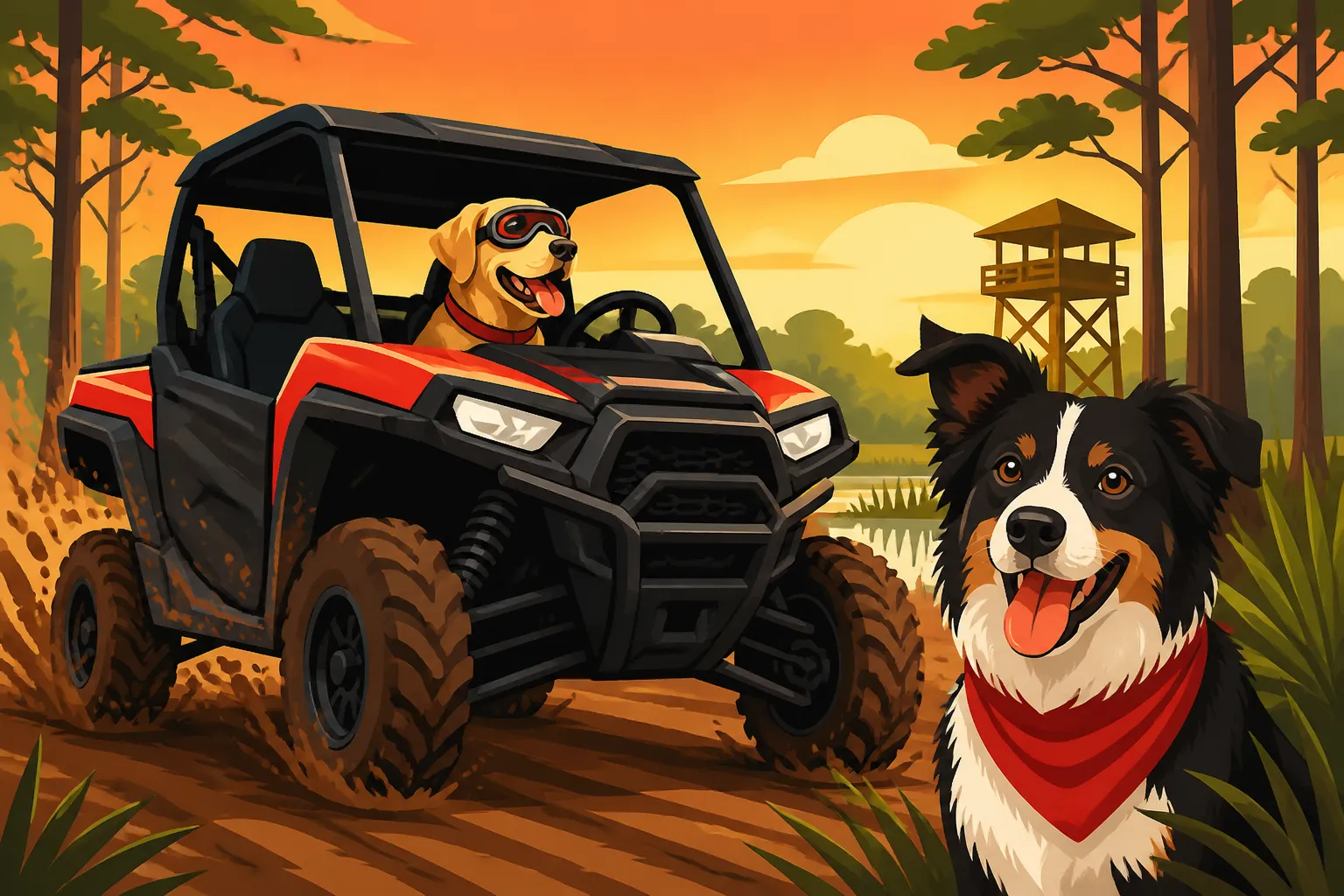
Taking a dog to a riding park can sound like an easy way to share a day outdoors, but an ATV park is not an ordinary walking trail. Rules differ by property, and engine noise, heat, traffic, and loose dogs can create real risks. Before heading out in Mississippi, confirm where dogs may go and make a plan that keeps your pet away from moving machines.
Check the park’s dog rules before you leave
There is no safe assumption that a dog allowed at a campground is also allowed on an ATV trail. A private riding park may permit pets in some areas but restrict them from trails, staging areas, or buildings. Public land has its own rules, and a park’s general pet policy may not answer every question about motorized recreation.
Call or message the place you plan to visit and ask about the exact areas you intend to use. Get the answer from the park or land manager, not just from a social media post or a friend who visited under different conditions. Rules can change, and special events or temporary closures may affect access.
Ask these questions before loading your dog:
- Are dogs allowed on the property at all?
- Can they enter the riding area, or must they stay at the campground or a designated pet area?
- Must dogs be leashed? Are there leash-length or other control requirements?
- Are there restricted zones, such as the staging area, store, swimming area, or cabins?
- Does the park require proof of vaccination, a pet fee, or other paperwork?
- Are dogs permitted during events or busy weekends?
- Where should a dog be kept while the group is riding?
- Are there rules for barking, waste disposal, or leaving a pet unattended?
The distinction between “pets welcome” and “dogs permitted on trails” matters. A park may allow a dog at a campsite but not in the places where machines are moving. If the answer is unclear, treat it as a no until the operator confirms otherwise.
For a private property, review its written policies and ask for clarification directly. Mississippi Private Park Pet Rules covers the kinds of restrictions riders should check, while Mississippi Private Park Waivers and Rules is useful for understanding why a gate waiver does not necessarily answer the pet-access question. A waiver is not permission to take a dog into every area.
If you are considering public land, check the rules for the specific riding area rather than relying on a general impression of the property. Mississippi National Forest OHV Passes explains that access and riding requirements are tied to designated areas; it does not mean every forest road or recreation area is open to every use. For state-managed land, start with the relevant park office and its current rules. Mississippi State Park ATV Rules and Mississippi State Park Waiver Requirements can help you understand that ATV access and park procedures have their own requirements, separate from pet access.
| Place or area | What to verify about your dog | Practical assumption until confirmed |
|---|---|---|
| Private riding park | Pet policy, allowed zones, leash rules, fees, and event restrictions | A campground pet policy does not automatically include the trails |
| National forest riding area | Rules for the specific trail or recreation site, plus any closures or restrictions | Do not assume a dog may accompany a motorized ride |
| State park | The park’s current pet policy and the areas where pets are allowed | Ask the park office; ATV rules and pet rules are separate |
| Campsite or cabin | Pet access, supervision rules, waste requirements, and quiet hours | A pet-friendly site may still have limits on unattended dogs |
| Riding group or event | Organizer rules and whether dogs are allowed around staging and traffic | Check before arrival, especially for organized rides |
If the park says dogs are allowed only at camp, decide whether your group can genuinely keep the dog there with appropriate supervision. A dog left alone in a vehicle, tent, or hot campsite while everyone rides is not a workable solution. If no responsible person can stay with the dog, the safer choice is to leave the dog at home or arrange care elsewhere.
Plan for the hazards around ATVs and UTVs
Even a calm, well-trained dog can react unpredictably to the sound and movement of off-road machines. A dog may pull toward a familiar person, chase a moving vehicle, bolt when an engine starts, or become overwhelmed by the noise. A machine operator may not see a small dog behind a tire, near a trailer, or in a blind spot.
The safest plan is to keep dogs out of active riding and staging areas unless the property specifically allows them there and you can maintain control. Never let a dog run beside a moving ATV or UTV, and do not carry a dog on a machine. A seat, rack, or lap is not a safe place for a pet during off-road riding: a sudden stop, rut, turn, or collision can throw the animal or interfere with the driver.
Leashes need thought, too. A leash can keep a dog from wandering, but a long or retractable line can tangle around a wheel, trailer, person, or another dog. Do not tie a dog to a machine, trailer, or gate where it could be pulled or trapped. If the park permits dogs in a non-riding area, use secure control and keep the dog far enough from vehicle paths that it cannot dart into traffic. Follow the park’s leash rule even if your dog responds reliably off leash at home.
Noise is another concern. A dog may show distress by panting, trembling, pacing, hiding, barking, or trying to escape. Ear protection designed for dogs may help some animals, but it does not make a loud riding area suitable for every pet. Do not assume a dog will “get used to it” after a few laps. If your dog is frightened or cannot settle away from the engines, remove it from the area.
Heat and dehydration can become serious problems during a Mississippi outing. Dogs may overheat even when a person feels comfortable, especially if they are active, confined in direct sun, or unable to reach shade and water. Asphalt, packed dirt, and sand can also become uncomfortable for paws. Offer clean water frequently, provide shade, and take breaks in a cool, quiet place. Do not leave a dog in a parked vehicle while the group rides; opening a window does not make that a safe plan.
Before leaving home, consider your dog’s temperament, age, health, and experience. A young dog that has never been around engines may be a poor candidate for a busy riding area. A dog with breathing, heart, mobility, or anxiety problems may face added risk. If you are uncertain about whether the outing is appropriate, ask your veterinarian before going.
Prepare a simple pet kit:
- A secure, well-fitted collar or harness with current identification
- A standard leash that is easy to control and not excessively long
- Drinking water and a clean bowl
- Waste bags and a way to dispose of them properly
- Any needed medication and basic first-aid supplies
- A familiar mat or crate for a permitted, shaded resting area
- A towel for mud and a way to check paws after walking
- A current photo and emergency contact information
If you are buying supplies, focus on fit, durability, and ease of use rather than appearance. Amazon may be one place to compare bowls, leashes, or identification tags, but check sizing and product details carefully. A new harness should be fitted and tested at home, not for the first time at a crowded trailhead.
Decide whether the dog should come along
A dog can be part of the day without being part of the ride. The key is arranging supervision and a suitable place to rest. If one adult stays at camp with the dog, that area should be allowed by the property, shaded, secure, and away from moving machines. Check on the dog regularly and make sure it is not exposed to engine noise, exhaust, dust, or excessive heat.
If everyone in your group plans to ride, bringing the dog may leave it unattended for too long. Do not solve that problem by leaving it tied outside, shut inside a trailer, or confined in a vehicle. If you cannot provide a calm and safe place with a responsible person present, skip the dog on this trip.
A short walk near camp may also be different from a trail ride. Ask whether walking is allowed and where. Stay off machine routes unless the park has clearly permitted pedestrian access there. Riders may come around bends quickly, and trail users may not expect a dog on the route. For general conduct around other users, Mississippi Trail Etiquette Locals Expect offers helpful context, but the park’s own directions take priority.
Consider the following before making the decision:
- Can the dog stay calm around engine noise? If the dog is likely to panic, bark continuously, or try to chase machines, the setting is a poor fit.
- Will a responsible person stay with it? A dog needs active supervision, not just a leash attached to something.
- Is there a cool, quiet place where dogs are allowed? Shade alone may not be enough if the dog remains close to traffic and noise.
- Can you leave promptly if the dog becomes distressed? Have transportation and a plan that do not depend on the rest of the group finishing a ride.
- Does the dog have health or mobility needs? Consider the heat, footing, and length of time away from home.
- Can you follow the property’s rules without improvising? If doing so would require taking a dog into a prohibited area or leaving it unsupervised, make another plan.
Dogs also need protection from the ordinary outdoor hazards of a southern outing. Check for ticks after time outdoors and inspect the ears, paws, and coat. Mississippi Tick Season and Riding Gear offers related seasonal advice for people; dogs need their own preventive care and should be checked according to veterinary guidance. Keep pets away from wildlife, standing water, unfamiliar dogs, and any area marked closed.
Pick up waste promptly and dispose of it where the property directs. Do not leave bags beside a trail or campsite, even if you intend to collect them later. Keep barking and other disturbances in mind at shared campgrounds, especially during quiet hours. For overnight stays, confirm the property’s pet and camping rules separately; Mississippi Private Park Camping Rules and Mississippi Private Park Quiet Hours may help identify the questions to ask.
What to do if a dog is hurt or gets loose
Know the park’s address or location before the day begins. In a large riding area, a vague description such as “near the back trail” may not help staff find you. Save the park’s contact information, learn how to reach the office or gate, and ask what to do in an emergency. Mobile coverage may be unreliable in some outdoor areas, so do not depend on a phone signal as your only plan.
If a dog becomes frightened, overheated, injured, or otherwise unwell, stop the outing and move it to a safe, quiet place away from machines. Avoid forcing a distressed dog to walk farther than necessary. Contact a veterinarian for advice about urgent symptoms, and follow the park’s incident-reporting instructions if a vehicle, person, or property was involved. Mississippi State Park Incident Reporting explains why it is sensible to know the reporting process at a managed park before an incident occurs.
If your dog slips away, tell park staff promptly and provide a current photo, description, last known location, and the dog’s name. Do not send multiple people searching along active trails without coordinating with staff; a search party on a riding route can create another hazard. Ask riders to slow or pause in the relevant area if park staff consider that appropriate.
For a dog that is showing signs of severe distress, such as collapse, difficulty breathing, or inability to stand, treat the situation as urgent and seek veterinary help immediately. Do not assume a dog will recover just by sitting in shade. Move it away from heat and noise while arranging help, without delaying professional care.
Before the next trip, use this quick check:
- The property has confirmed where dogs are allowed.
- A responsible person can supervise the dog for the whole visit.
- The dog has identification, water, shade, and a quiet place to rest.
- The plan does not involve riding with the dog or leaving it in a hot vehicle.
- You know how to contact park staff and where to seek veterinary care.
- You are willing to leave early if the dog is uncomfortable.
A riding park can be a good outing for a dog only when the property permits it and the day can be organized around the animal’s safety. If the dog must stay close to engines, remain alone, or tolerate conditions it cannot handle, leaving it home is the kinder option.
Disclaimer
This article is for general informational purposes only and does not constitute professional advice. Laws, prices and regulations vary by location and change over time. Consult a qualified professional for guidance on your specific situation.