Mississippi Tick Season and Riding Gear
A Mississippi ride can feel perfectly planned until you find a tick at your sock line after loading the quad back onto the trailer. Brush, leaf litter, tall grass, and damp trail edges can all mean more exposure, especially in warm weather. This guide explains when to be alert, what riding gear helps, and how to check yourself and your machine after a ride.
When ticks are a concern in Mississippi
Expect exposure beyond the height of summer
Ticks can be active in Mississippi across much of the year, with warmer conditions generally making outdoor encounters more likely. That does not mean every trail ride is a high-risk outing, or that a cold morning guarantees there are no ticks. A mild winter day, a shaded stretch of woods, or a brushy trail edge can still be worth taking seriously.
The kind of riding matters, too. A quick pass along a wide, cleared road may expose you to less brush than stopping to walk through tall grass, retrieve a dropped glove, or scout an overgrown spur. Riders often focus on the trail itself and forget the moments around it: unloading at the trailhead, stepping off to help a friend, or taking a break beside a grassy clearing.
Be particularly mindful around leaf litter, low vegetation, and brush that touches your legs or sleeves. In pine country near the De Soto National Forest, for example, a ride may alternate between open sandy stretches and shaded areas where plants crowd the trail edge. In the Delta or along the Coast, the vegetation and ground conditions may feel different, but the practical habit is the same: dress to reduce skin exposure and check yourself afterward.
Choose the route and riding conditions with exposure in mind
Tick prevention starts before you turn the key. Look at the type of route, recent conditions, and the amount of time your group expects to spend off the machine. A muddy ride that calls for frequent stops and walking through brush may need more protective clothing than a short ride on a broad, maintained trail.
After heavy rain, vegetation can be wet and trails may be slick or closed. That can change how much time riders spend walking around obstacles or looking for a safe way through. Check conditions before you load the trailer, and don’t assume that a familiar route is open or suitable just because you rode it recently. [Mississippi Trail Conditions After Rain] offers related planning context, while [Mississippi Trail Etiquette Locals Expect] is useful for thinking through how your group shares trail space.
Maps can help you plan a route and identify where you intend to stop, but they do not tell you whether a particular patch of grass has ticks. I sometimes use onX Offroad when planning a ride because having route information organized in advance can reduce unnecessary wandering around unfamiliar trailheads. Treat any mapping tool as a planning aid, not a guarantee of trail access, current conditions, or personal safety. Check the land manager’s rules and signs before riding.
Riding gear that can reduce tick exposure
Cover skin without making the ride miserable
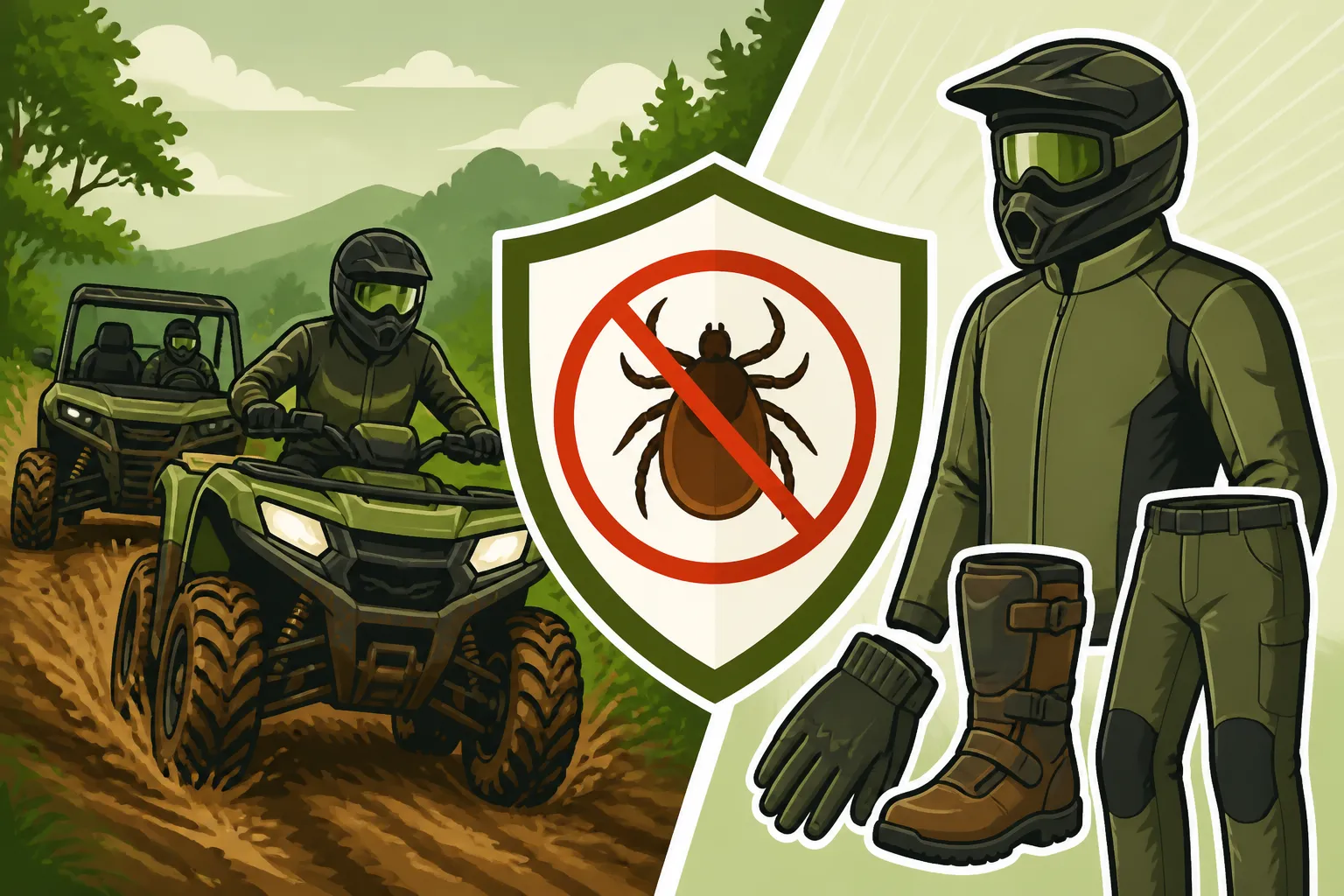
The practical goal is to make it harder for ticks to reach skin while still dressing for heat, movement, and the demands of riding. Long sleeves, long pants, and sturdy boots can help limit exposed areas. Tuck pants into boots or socks if that feels comfortable and secure, and choose clothing that does not leave large gaps when you bend, sit, or reach for the controls.
Mississippi heat and humidity make comfort a real concern. Heavy layers that feel tolerable at the trailer can become miserable once you are working a machine through mud or riding in direct sun. Choose breathable, close-fitting layers that cover your skin without restricting movement. For hot-weather planning, [Packing for Southern Humidity] and [Mississippi Riding in Summer Heat] provide useful related considerations.
Think through the details that are easy to overlook: a gap between a glove and sleeve, a shirt that rides up when you lean forward, or pant cuffs that expose your ankles when you sit. A gaiter or other light covering may help close a gap, but it should not interfere with your helmet, visibility, or ability to ride safely. A comfortable outfit you will actually keep on is better than an elaborate one you shed halfway through the ride.
Use repellents according to their labels
A repellent can be part of a prevention plan, but it is not a substitute for clothing and post-ride checks. Choose a product labeled for the protection you want, then follow its directions for where and how to apply it. Some products are intended for skin; others are designed for clothing or equipment. Do not apply a product to skin if the label says it is for clothing only.
For clothing treatments, follow the product’s instructions about application, drying, and re-treatment. Do not assume that one application lasts indefinitely or remains effective after repeated washing. If you are riding with children, check the product label and use age-specific directions rather than relying on an adult’s routine.
Keep repellent use compatible with the rest of your gear. Avoid getting products in your eyes or mouth, and wash your hands after application when the label recommends it. If you want a broader look at seasonal insect preparation, [Bug Spray in a Southern June] covers related warm-weather planning. The useful routine is simple: dress to cover skin, use products as directed, and inspect yourself afterward.
Before and after the ride
Make a pre-ride routine you can repeat
A quick gear check before leaving home can prevent the familiar scramble at the trailhead. Put on your riding clothes before you start unloading, check that cuffs and waistbands stay covered when you move, and pack a small kit with repellent, a fine-tipped tick-removal tool or tweezers, and a spare shirt. Keep the kit somewhere easy to reach rather than buried beneath tie-downs and helmets.
If your group is riding somewhere unfamiliar, decide where to meet, where to park, and which route you intend to take before everyone splits up. onX Offroad can be one way to keep route planning organized, especially when your group wants to agree on a general plan before heading out. Still, use posted signs and official land-management information to confirm access. A mapped line is not permission to ride, and it is not a substitute for checking conditions.
Tell everyone in the group what the after-ride routine will be. That matters on a family outing, where younger riders may be tired and eager to climb into the truck, and on a long day when adults are ready to head home. A quick check before anyone leaves the staging area is easier than discovering a tick much later.
Check people, clothing, and equipment after riding
As soon as you can, inspect clothing and exposed skin. Pay close attention to places ticks may be easy to miss: behind the knees, around the waist, under the arms, at the hairline, and around the ears. Check children carefully and help one another with areas that are hard to see. A shower and a more thorough inspection soon after returning can make it easier to notice anything you missed.
Remove riding clothes and check them before tossing them into a hamper or onto a bed. If you have been in brush, inspect boots, socks, gloves, and the seams of your clothing. Check towels, seat covers, and other items that were on the ground or near vegetation. Do not assume a tick stayed on the trail simply because you did not see one during the ride.
Give the machine and trailer a quick look as well, especially if you stopped in tall grass or brushed against vegetation while loading. Ticks are not a reason to avoid riding, but a few deliberate checks help keep a trail day from following you indoors. For more seasonal ride-preparation ideas, see [Mississippi Riding Season Month by Month] and [Mississippi Trail Etiquette Locals Expect].
What to do if you find a tick
Remove an attached tick carefully
If you find a tick attached to skin, use fine-tipped tweezers or a tick-removal tool. Grasp it as close to the skin as possible and pull upward with steady, even pressure. Avoid twisting or crushing it during removal. Afterward, clean the bite area and your hands.
Do not try to burn the tick, cover it with petroleum jelly, or use another home remedy to make it detach. Those approaches can delay careful removal and may irritate the skin. If the mouthparts appear to remain in the skin and you cannot remove them easily with clean tweezers, avoid digging aggressively; clean the area and seek medical guidance if you are concerned.
Make a note of when and where you noticed the bite, and watch for changes in how you feel. If you develop a rash, fever, unusual aches, or other concerning symptoms after a tick bite, contact a healthcare professional and mention the exposure. A clinician can advise you based on your symptoms and circumstances. Do not wait for a particular pattern or assume that every bite will look the same.
Keep prevention in perspective
Finding a tick does not mean you are certain to become ill, and a ride through woods does not guarantee you will find one. The point of prevention is to reduce avoidable exposure and make it easier to notice a tick promptly. Clothing coverage, correctly used repellent, and a consistent inspection routine work best as a set rather than as one perfect product or single precaution.
If one rider in your group finds a tick, it is a good cue for everyone to check their clothing and skin. It is also a reminder to review where people walked, whether gear was left in grass, and whether the group needs to adjust its routine at the next stop. A calm, careful response is more helpful than panic or blame.
For future rides, pack the same small prevention kit you would bring for water, basic repairs, and first aid. Keep it accessible, use it as directed, and make the post-ride check part of loading up. That habit is especially useful when a ride includes children, a long drive home, or stops in brushy areas where a quick glance may not be enough.
Disclaimer
This article is for general informational purposes only and does not constitute professional advice. Laws, prices and regulations vary by location and change over time. Consult a qualified professional for guidance on your specific situation.