Alcohol and a Southern Park Wristband
A colored wristband at a Mississippi riding park can show that you paid, checked in, or signed a waiver, but it may not say anything about alcohol. Before you arrive, find out what the park allows, where drinking is permitted, and what happens if someone drinks and then rides. Treating those as separate questions helps prevent a denied entry, a safety problem, or a long trip home.
What an alcohol wristband does and does not mean
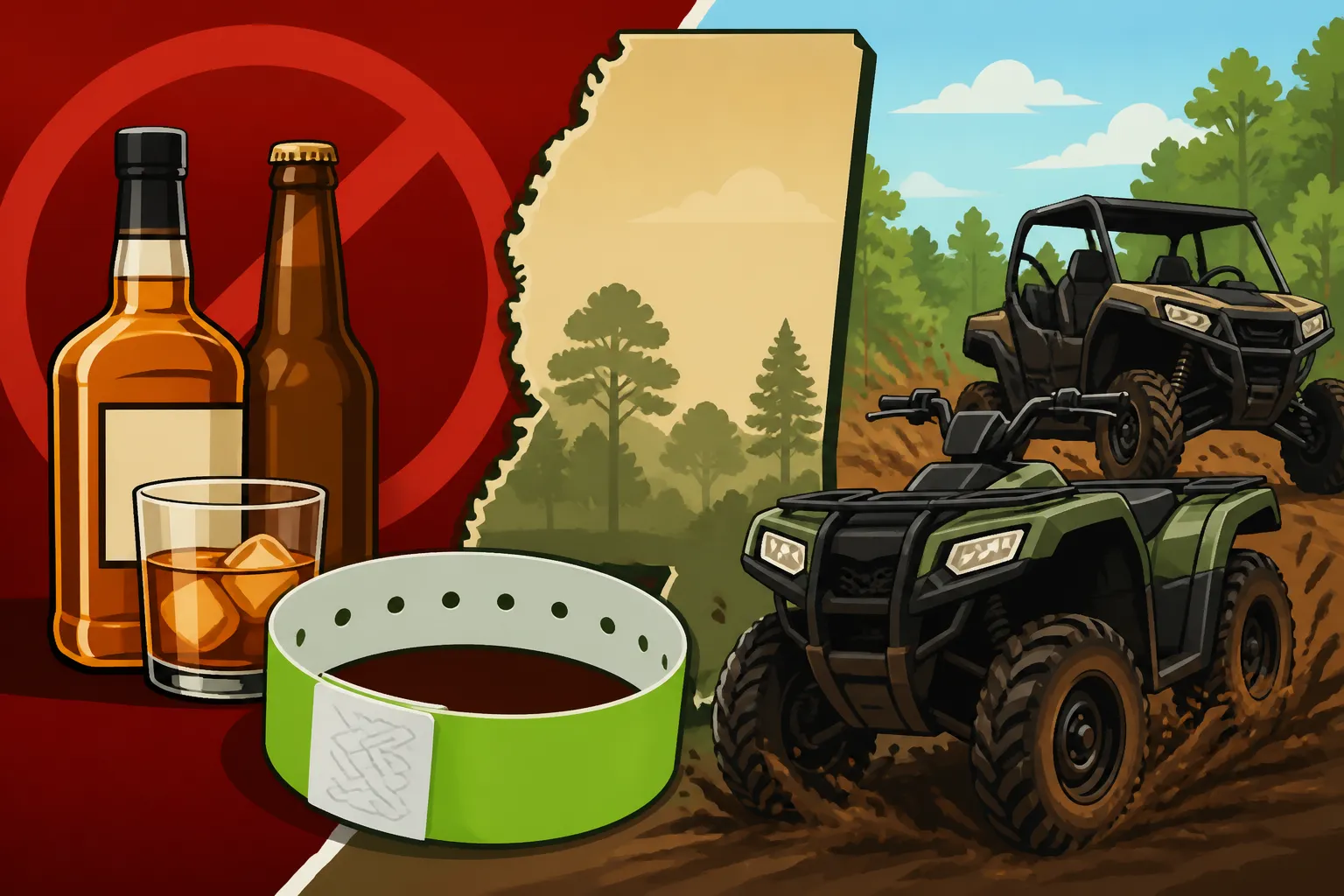
At a private riding park, a wristband is usually an access-control tool. Staff may use it to identify day visitors, campers, event participants, or people who have completed a check-in step. A wristband can also help staff tell who is authorized to be on the property. Its color or design does not, by itself, explain the park’s alcohol policy.
The key distinction is between proof of access and permission to do a particular activity. A wristband may show that you paid an entry fee, but it does not automatically permit alcohol, allow drinking anywhere on the property, or authorize someone to operate a machine after drinking. Those details come from the park’s written rules and instructions from staff.
Alcohol rules can differ from one park to another, and sometimes from one area or event to another. A park might prohibit alcohol throughout the property, allow it only in designated camping or spectator areas, or set rules about glass containers and where drinks may be carried. These are examples of policies a park could adopt, not statewide rules that apply to every Mississippi riding area. Check the specific park’s requirements in advance; Mississippi Private Park Alcohol Rules covers the kinds of questions to ask.
| Wristband or park rule | What it may tell you | What you should not assume |
|---|---|---|
| Entry or day-use wristband | You have checked in or paid for access | Alcohol is allowed |
| Camping wristband | You are authorized to use a camping area | Alcohol is allowed in riding areas |
| Event wristband | You are registered for an event | Event rules are the same as the park’s regular rules |
| Age-related wristband | Staff may have checked an age requirement | The wristband replaces any required identification |
| Waiver or check-in indicator | A required step may have been completed | You have agreed to rules you have not read |
If a staff member hands you a wristband without discussing alcohol, ask rather than interpret its color. The wristband may be used for reasons that have nothing to do with drinking. A quick question at the gate can clarify whether alcohol is allowed, where it may be consumed, and whether the park has rules for alcohol in campsites, vehicles, or common areas.
Do not assume that a private park’s rules match the rules at another park, a campground, or a public riding area. Even when a friend says a place allows alcohol, confirm the policy for your visit. Rules can be different for a special event, a busy weekend, or a particular area of the property. If the park’s website or booking information is unclear, call the office before loading the trailer.
Drinking and riding are separate decisions
A park may allow alcohol in some circumstances and still prohibit anyone who has been drinking from operating an ATV or UTV. Those positions are not contradictory: permission to drink in a designated area is not permission to ride after drinking. The safest plan is to decide in advance that anyone who drinks will not operate a machine.
An ATV or side-by-side requires attention, judgment, and coordination. Riding can involve uneven ground, mud, steep or slippery sections, other riders, and changing visibility. Alcohol can affect the very skills needed to manage those conditions. A short ride back to camp is still operating a machine, and a familiar trail does not remove the risks.
Do not rely on a wristband, a friend’s opinion, or the fact that a trail is on private property as proof that riding after drinking is acceptable. The rules that apply can depend on the circumstances and the location. For questions about legal consequences, see Mississippi DUI Law and Off-Road Machines and confirm current requirements with an appropriate local authority or qualified attorney. A park’s permission to enter its property does not settle every question about legal responsibility.
A responsible group plan separates riding time from drinking time. For example, finish the day’s riding, park the machines, secure the keys, and then follow the park’s alcohol policy. If anyone may need to move a machine later, choose a sober driver before drinking begins or arrange help from park staff if that is available. Do not assume that a passenger who has been drinking can safely or legally take over.
It also helps to make the plan explicit rather than leave it to judgment later. Agree on who is riding, who is not, and where keys will be kept. If a group includes several machines, set the same expectation for every rider. Having one sober person designated to move equipment can prevent pressure to “just take it a short distance” after drinking.
The park’s rules and the broader safety issue are related, but they are not the same. A park may ask guests to leave for breaking its policy even if no crash occurs. Conversely, following the park’s alcohol rules does not make impaired riding safe. Read the Mississippi Private Park Waivers and Rules before signing or checking in, and do not treat a waiver or wristband as a substitute for understanding the conduct rules.
How to confirm the policy and avoid trouble
Before leaving home, look for the park’s current rules on alcohol, riding, camping, and event participation. If the rules are not easy to find, contact the park directly and ask clear, specific questions. A general question such as “Can we bring beer?” may not get you the detail you need. Ask where alcohol is allowed, whether containers are restricted, and whether the rules differ between campsites and riding areas.
Use this simple process:
- Check the park’s written policy. Look at the rules provided for your reservation or visit, not only an old social-media post or a friend’s recollection.
- Ask about the wristband. Find out whether it indicates entry, camping, age verification, or something else. Ask whether it has any connection to alcohol rules.
- Confirm where drinking is permitted. Ask whether the policy covers campsites, parking areas, spectator zones, trails, or event areas differently.
- Set a no-riding-after-drinking plan. Decide who will ride and who will abstain before the group starts drinking. Keep machine keys with a sober person if needed.
- Follow staff directions. If staff explain a rule at check-in, treat it as part of the park’s requirements even if a wristband does not display it.
- Plan a safe overnight stay or ride home. If anyone has been drinking, do not let that person drive a machine or a vehicle. Arrange a sober driver or stay overnight when appropriate.
These questions can make the conversation with park staff more useful:
- Is alcohol permitted anywhere on the property?
- Are there areas where alcohol is prohibited, including trails or riding zones?
- Are glass containers, open containers, or alcohol in vehicles restricted?
- Do event rules differ from ordinary day-use or camping rules?
- Does the wristband identify entry or age status, and what identification should guests carry?
- What should a guest do if someone is drinking and appears ready to ride?
If you are staying overnight, check camping rules separately. A campsite may have requirements that do not apply to the riding area, and the reverse may also be true. Quiet hours, guest limits, campfires, and alcohol restrictions can be handled under different parts of the park’s policy. The Mississippi Private Park Camping Rules and Mississippi Private Park Quiet Hours pages can help you identify other questions to confirm before booking.
Pay attention to age requirements as well. Do not assume that a colored wristband proves a guest meets every age restriction, or that the park accepts a wristband instead of identification. Ask what the park requires from young guests and their supervising adults. The rules for a particular property may be more restrictive than a guest expects; see Mississippi Private Park Age Minimums for related checks.
At check-in, read any posted sign or handout before accepting a wristband. If the instructions are unclear, ask staff to explain them while you are still at the gate. Keep the answer consistent across your group so one person does not assume a rule is different from what another person was told. When possible, use the same plan for the whole visit: obey the park’s alcohol boundaries and do not ride after drinking.
If staff say alcohol is prohibited, do not try to infer an exception from a wristband, a campsite reservation, or a previous visit. If staff say it is allowed in a specific area, stay within that permission and follow any container or conduct limits. A park can set conditions for using its property, and staff may respond to violations by asking guests to stop, leave an area, or leave the property. The exact response depends on the park’s rules and circumstances.
Finally, keep the ride and the social part of the trip distinct. Alcohol is not a substitute for rest, hydration, or good judgment, and a wristband is not a safety clearance. If you cannot get a clear answer about the policy before arrival, plan conservatively: leave alcohol at home, or do not ride after drinking and follow staff guidance once you reach the park.
Disclaimer
This article is for general informational purposes only and does not constitute professional advice. Laws, prices and regulations vary by location and change over time. Consult a qualified professional for guidance on your specific situation.