Mississippi ATV Weight Limit of 1,000 Pounds
Navigating the world of ATVs and UTVs in Mississippi can sometimes feel like trying to untangle a stubbornly knotted fishing line, especially when it comes to understanding the official definitions and regulations. Many riders find themselves scratching their heads, wondering if their beloved machine truly falls into the "ATV" category or something else entirely, often due to a single, critical factor: its weight. This guide is here to help you cut through that confusion, focusing specifically on Mississippi's defining 1,000-pound ATV weight limit, what it means for you, and how it impacts everything from titling to how your machine is legally perceived in the Magnolia State.
Understanding Mississippi's ATV Definition
In Mississippi, simply calling your machine an "ATV" doesn't necessarily make it one in the eyes of the law. The state has specific legal definitions that differentiate various off-road vehicles, and the dry weight of your machine is a primary factor. Getting this right is crucial for understanding titling requirements, potential road use restrictions, and even insurance considerations. It's not just semantics; it's about compliance and knowing your rights and responsibilities as a rider.
The 1,000-Pound Dry Weight Standard
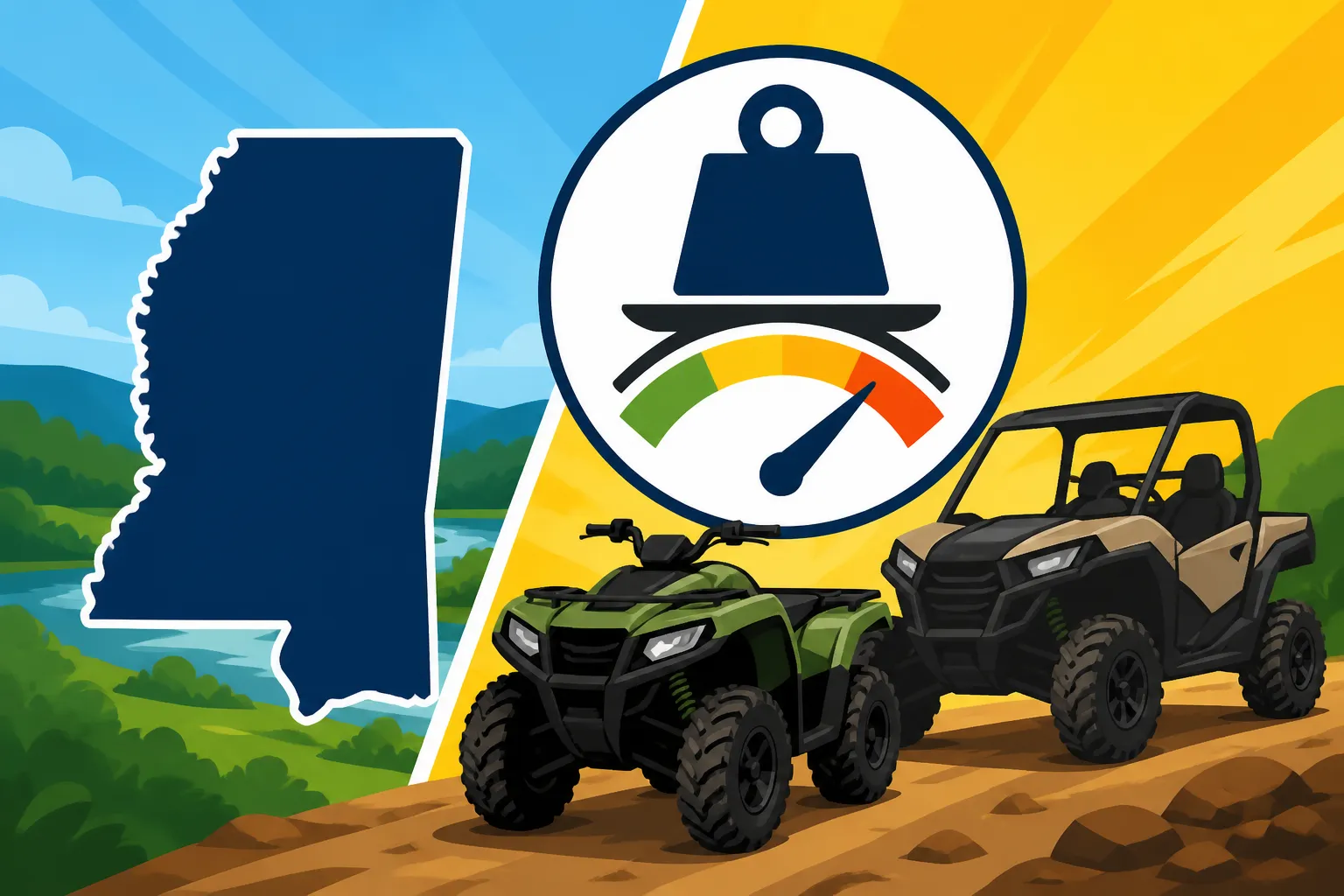
When Mississippi defines an All-Terrain Vehicle (ATV), it uses "dry weight" as a key metric. Specifically, an ATV is generally considered an off-road vehicle that weighs 1,000 pounds or less, as measured without fuel, lubricants, coolants, and other fluids. This isn't some arbitrary number; it's a legislative decision designed to categorize machines based on their size and potential impact. For many riders, this 1,000-pound threshold is the first point of confusion, especially when their quad feels substantial or they've added accessories.
Think about it: when you roll a brand-new quad off the dealer's lot, it's typically designed to fall within this dry weight limit. This helps the manufacturer classify it correctly and ensures it meets state definitions. However, as soon as you start adding a winch, heavy-duty bumpers, an oversized fuel tank, or even a full complement of tools in a storage box, your machine's actual operating weight can easily creep past that 1,000-pound mark. While the legal definition relies on the dry weight as specified by the manufacturer, it’s understandable why riders get confused when their machine, fully kitted out, feels much heavier.
Width Limits and Other Key Identifiers
Beyond the 1,000-pound dry weight, Mississippi's definition of an ATV also includes a critical width limit: it must be 50 inches or less in width. These two criteria – the weight and the width – are the twin pillars of ATV identification in Mississippi. Your machine needs to meet both to be legally classified as an ATV. It's like a secret handshake; if one part is missing, the identity isn't fully confirmed. This is why when you hear discussions about [Mississippi ATV Width Limit of 50 Inches], it's almost always paired with mentions of the weight limit.
These defining characteristics are important because they directly influence where and how you can ride. A narrower, lighter machine is generally assumed to have a smaller footprint and different handling characteristics than a wider, heavier one. This distinction is vital for trail designers, land managers, and law enforcement alike, helping them differentiate between the types of vehicles that are appropriate for specific trails or land use. Without these clear definitions, it would be a free-for-all, leading to potential damage to trails and confusion about vehicle capabilities.
Differentiating ATVs from ROVs (Side-by-Sides)
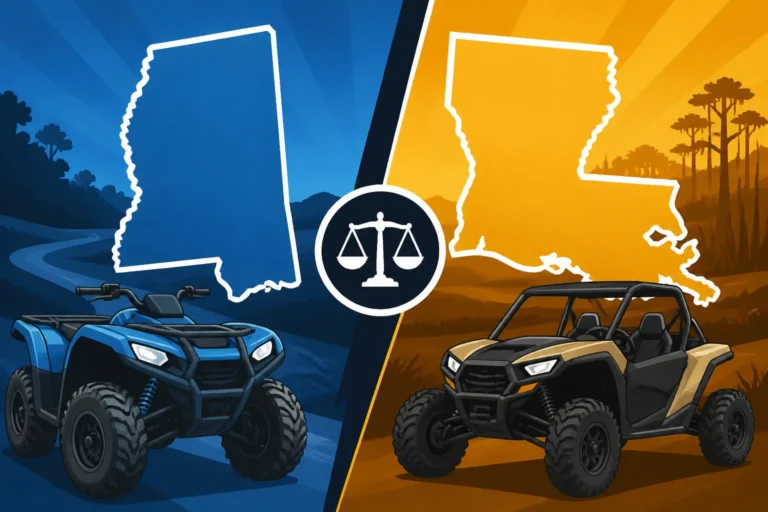
Here's where the waters get even murkier for some: distinguishing an ATV from a Recreational Off-Highway Vehicle (ROV), more commonly known as a side-by-side or UTV. The weight and width limits are the primary differentiators here. While ATVs are 1,000 pounds or less and 50 inches wide or less, ROVs are generally wider and heavier. Mississippi defines ROVs as machines that can be up to [Mississippi ROV Width Limit of 65 Inches] and have a [Mississippi ROV Weight Limit of 2,000 Pounds]. This distinction is crucial because the titling process and any potential local ordinances (though state law broadly bans both from public roads) often treat these two categories differently.
Imagine you're looking at a sleek, single-rider quad versus a multi-passenger side-by-side. The differences are usually obvious. However, with the proliferation of larger, more powerful "sport quads" or smaller, compact "utility vehicles," the lines can sometimes blur if you're not paying close attention to the manufacturer's specifications. Understanding these specific legal definitions is the first step in ensuring your machine is properly classified and that you're in compliance with Mississippi's regulations. It's about knowing if your pride and joy is a nimble ATV or a more robust ROV, and what that means for your riding adventures. You can dive deeper into these specifics by looking at [Mississippi ATV and ROV Legal Definitions].
Why the 1,000-Pound Limit Matters for Titling
For years, Mississippi was one of those states where titling an ATV was largely non-existent, creating a lot of headaches for buyers, sellers, and insurance companies alike. That's changing, and the new titling requirements starting in July 2025 make understanding your machine's classification, especially its weight, more critical than ever. It's no longer just about knowing what you have for bragging rights; it's about what the state says you have for official paperwork.
Impact on Titling Requirements
The 1,000-pound dry weight limit directly impacts whether your machine is considered an ATV for titling purposes, particularly for machines manufactured after the July 2025 cutoff date. If your machine is new and falls within the ATV definition (under 1,000 pounds dry weight and under 50 inches wide), it will require a title. This is a significant shift for Mississippi riders and is detailed in [Mississippi Machines Built After July 2025]. If your machine is heavier and wider, pushing it into the ROV category, it will also require a title, but it's important that the paperwork accurately reflects its classification.
The state needs clear categories to implement its new titling system efficiently. Without these definitions, every off-road vehicle would be thrown into a single bucket, making it impossible to apply specific regulations or differentiate between types of machines. This clarity helps the Department of Revenue process applications correctly and ensures that the title issued matches the vehicle you actually own. Getting the initial classification right, based on the manufacturer's specifications, is the cornerstone of a smooth titling process.
Navigating Voluntary Titling for Heavier Quads
What if you have a quad that feels like an ATV, you've always called it an ATV, but its dry weight technically edges over that 1,000-pound limit? This is where things get a bit nuanced, especially for machines manufactured before the July 2025 titling mandate. While those older machines don't require a title, Mississippi does offer a voluntary titling program. Even if your "quad" technically leans into ROV territory due to its weight, you might still pursue a voluntary title for it, especially for proof of ownership or resale purposes.
The key here is that the state will likely rely on the manufacturer's original classification. If the manufacturer designated it as an "ATV" despite it being slightly over 1,000 pounds (perhaps due to older classifications or specific model lines), that designation will likely carry weight. However, if the manufacturer clearly labeled it as an ROV or a multi-purpose off-road vehicle, then that's how it will be titled. The main benefit of pursuing a voluntary title, regardless of the precise classification, is establishing a clear chain of ownership, which is incredibly helpful if you ever lose your bill of sale or need to prove the machine belongs to you. You can learn more about this in [Mississippi Voluntary Titles for Older Machines].
Manufacturer's Certificate of Origin and Weight
For new machines, the Manufacturer's Certificate of Origin (MCO) is your golden ticket, and it's the primary document that will officially state your machine's dry weight and classification. [Mississippi Requires an MCO for a New Machine] because this document is essentially the birth certificate of your off-road vehicle. It details the make, model, VIN, and crucially, the manufacturer's specified dry weight and often the vehicle type (ATV, ROV, etc.). When you go to title your new machine, the county tax collector will look to the MCO to confirm these details.
If your MCO indicates a dry weight of 980 pounds, it's an ATV. If it says 1,050 pounds and is 52 inches wide, it might technically be an ROV, even if you still refer to it as a "big quad." The MCO removes much of the guesswork. It’s the definitive source for how your machine is legally classified at the time it leaves the factory. Always keep your MCO safe, as it's an indispensable piece of paperwork for titling, especially as Mississippi transitions into its new titling system. Without it, you could face significant hurdles and delays when trying to get your machine legally recognized.
Practical Implications of Exceeding the ATV Weight Limit
So, what happens if your machine, whether new or old, is definitively heavier than 1,000 pounds dry weight? It's not a disaster, but it does mean your machine falls into a different legal category in Mississippi, primarily the ROV designation. This shift has practical implications for how your machine is titled, described, and potentially even perceived in the context of local ordinances or land use rules.
Shifting to the ROV Category
If your off-road machine exceeds the 1,000-pound dry weight limit (and typically the 50-inch width limit), it's most likely going to be classified as a Recreational Off-Highway Vehicle (ROV) in Mississippi. This category includes what most people commonly call side-by-sides, UTVs, or even some of the larger, multi-passenger utility vehicles. The defining characteristics of an ROV are generally having four or more wheels, a steering wheel, non-straddle seating for at least two people side-by-side, and exceeding either the ATV weight or width limits.
This reclassification isn't about penalizing you; it's about accurately categorizing your machine based on its design and capabilities. An ROV typically has a larger footprint, greater carrying capacity, and different operational characteristics than a smaller, lighter ATV. While the core purpose of off-road recreation remains the same, the legal distinction helps state and local authorities apply appropriate rules and regulations. It’s about ensuring that a larger, heavier machine is properly identified, just as a semi-truck is identified differently from a passenger car.
Different Rules for ROVs in Mississippi
Once your machine is classified as an ROV, it operates under the ROV definitions in Mississippi law. While the state's main ATV law (Mississippi Code Section 63-31-3) broadly covers both ATVs and ROVs with its prohibitions on public road use, the specific definitions are still important. For example, ROVs have a higher weight limit of [Mississippi ROV Weight Limit of 2,000 Pounds] and a wider width limit of 65 inches. This means a side-by-side that weighs 1,500 pounds and is 60 inches wide is perfectly within the legal definition of an ROV, whereas a quad of that size would be misclassified.
Understanding these distinctions is essential when looking at manufacturer specifications, purchasing a machine, or even discussing it with an insurance agent. While the statewide road ban is universal for both categories, local rules for private parks, timber company land, or specific events might sometimes have nuances based on vehicle type. For example, some trails might be designated "50-inch only," meaning a wider ROV, regardless of weight, wouldn't be permitted. Always be aware of the specific rules wherever you plan to ride, and know that your ROV classification might come with different considerations than a true ATV. For instance, [Titling a Side-by-Side in Mississippi] will follow the ROV classification rather than the ATV.
Road Access and Local Ordinances
It's a tough pill to swallow for many riders, but Mississippi state law is pretty clear: ATVs and ROVs are generally prohibited from public roads. This applies equally to a 500-pound ATV and a 1,800-pound ROV. There are no state-level exceptions for farm use, crossing roads, or anything else that many other states allow. This is one of the most common frustrations for Mississippi riders, as the rules feel overly restrictive. However, some towns and counties have begun to pass local ordinances that do allow certain types of off-road vehicles (often golf carts and sometimes low-speed vehicles, but rarely ATVs or ROVs) on specific public streets.
Even in these rare instances of local ordinances, the specific definitions of "ATV" and "ROV" matter. An ordinance might permit "golf carts" on streets with a speed limit under 30 mph, but explicitly exclude "ATVs" or "ROVs" from those same streets. The town might even specify "street-legal golf carts" or "low-speed vehicles," which have entirely different federal and state classifications. Therefore, knowing whether your machine is legally an ATV or an ROV is crucial if you ever hope to navigate the complexities of local road access rules, which are few and far between but do exist in some form. Always check with local authorities directly if you think an ordinance might apply to you.
Buying and Selling Machines Near the Weight Threshold
When you're dealing with buying or selling an off-road machine in Mississippi, especially one that might be close to that 1,000-pound dry weight limit, doing your homework is more important than ever. Misunderstandings about classification can lead to headaches down the line, affecting titling, insurance, and even resale value. Both buyers and sellers have responsibilities to ensure a smooth transaction and avoid future problems.
Due Diligence for Buyers
As a buyer in Mississippi, it's absolutely paramount to verify the classification of the machine you're interested in, especially as the new titling laws come into effect. Don't just take the seller's word for it if they say, "Oh, yeah, it's just a big quad, definitely an ATV." Ask for documentation. This means requesting to see the Manufacturer's Certificate of Origin (MCO) for newer machines or, for used machines, any existing title or a detailed bill of sale that includes the VIN. You'll want to cross-reference the VIN with the manufacturer's specifications online to confirm the dry weight and width.
Why is this so important? Because an improperly classified machine could cause problems when you go to title it. If the seller says it's an ATV, but the MCO or manufacturer's data clearly shows it's an ROV because it exceeds 1,000 pounds or 50 inches, you might encounter issues at the county tax collector's office. You want to ensure that the machine you're buying can be titled as what it actually is, without any complications. Being thorough upfront can save you a lot of time, frustration, and potential legal hassles later. This vigilance is part of [Buying From a Private Seller in Mississippi].
Sellers' Responsibilities and Disclosure
On the flip side, if you're selling a machine in Mississippi, you have a responsibility to accurately represent its classification to potential buyers. While you might lovingly call your 1,100-pound, 52-inch quad an "ATV," if the manufacturer's specifications or an existing title clearly state it's an ROV, you should disclose that. Being transparent about the machine's true legal classification, especially concerning its dry weight and width, builds trust and helps the buyer avoid issues when they attempt to title it.
Failing to disclose the correct classification could lead to disputes after the sale, particularly once the buyer tries to get the title. Imagine a buyer planning to ride on "ATV-only" trails who discovers the machine is actually an ROV. Such a situation can sour the deal and potentially lead to demands for a refund or other legal actions. It's always better to be honest and provide all available documentation, like the MCO or previous title, so the buyer has a complete picture. Transparency protects both parties and helps prevent misunderstandings about your machine's identity.
Using a Bill of Sale for Clarity
Whether you're buying or selling an off-road machine, a detailed bill of sale is your best friend. This document is a critical piece of paperwork, especially for used machines where an MCO might be long gone or for older machines that didn't have titles. The bill of sale should clearly list the machine's make, model, year, VIN, and, importantly, confirm the agreed-upon classification (e.g., "ATV" or "ROV") if both parties are in agreement, based on the manufacturer's specifications.
Using a standardized bill of sale template, perhaps from a reputable service like LawDepot, can help ensure all necessary information is included. This protects both the buyer and the seller by creating a clear record of the transaction. A well-crafted bill of sale can include statements about the vehicle's dry weight and width based on manufacturer data, removing ambiguity. Even if you get a title, [Mississippi Bills of Sale for a Used Machine] are still incredibly important for documenting the transfer of ownership, especially when it comes to confirming the machine's defining characteristics and price. The more detail, the better, for your peace of mind and for any future dealings with the state's titling office. You can find excellent templates for this purpose through services like LawDepot, which help ensure you don't miss any critical fields. What you need is clearly outlined in [What Your Bill of Sale Must Show].
Common Misconceptions and FAQs
Despite the clear definitions in Mississippi law, many riders still harbor common misconceptions about their machine's classification, particularly when it comes to that 1,000-pound weight limit. These misunderstandings are perfectly natural given the nuances of vehicle design and the way we informally refer to our machines. Let's clear up some of the most frequent questions and address those lingering doubts.
"My ATV Feels Heavier, Is It Still an ATV?"
This is perhaps the most common question related to the weight limit. Many riders have purchased a quad, added accessories, and now, when they go to load it on a trailer or simply move it around, it feels substantially heavier than 1,000 pounds. It's easy to assume that if it feels heavier, it is heavier, and therefore might not be an ATV anymore. However, remember the key term: "dry weight." The legal definition focuses on the weight of the machine as it leaves the factory, without fuel, oil, coolant, or any aftermarket additions.
So, if your quad had a manufacturer-specified dry weight of 750 pounds, but you've added a heavy-duty plow, a large storage box, a full tank of gas, and a cooler full of drinks, your "wet weight" or "operating weight" could easily exceed 1,000 pounds. But for legal classification purposes, especially for titling, the state will primarily refer to the manufacturer's dry weight specification. This is why checking the MCO or manufacturer's website for the original specs is crucial. Your perception of its weight might be accurate for its current operating condition, but it doesn't necessarily change its fundamental legal classification as an ATV if its dry weight is under 1,000 pounds.
Modifications and Their Impact on Classification
Another point of confusion arises when riders extensively modify their machines. If you add heavy-duty tires, a lift kit, a snorkel system, robust skid plates, and reinforced bumpers, your machine's weight will increase significantly. The question then becomes: do these modifications change its legal classification? Generally, no, not for the purpose of initial titling. The state's titling process relies on the vehicle's original manufacturer specifications, as documented on the MCO or through the VIN.
While modifications increase the machine's operating weight, they don't typically alter its fundamental vehicle type as determined by the manufacturer. If your quad started life as a 900-pound ATV, it will likely be titled as an ATV even if you've piled on 300 pounds of accessories. However, it's worth noting that extremely radical modifications could potentially lead to issues if the machine no longer resembles its original form or falls within reasonable tolerances for its class. For the vast majority of riders and their typical modifications, however, the original manufacturer's dry weight and width remain the primary factors for state classification and titling. Just be mindful that a heavily modified machine might not fit on 50-inch-only trails, regardless of its titled classification.
What About Wet Weight?
We've touched on this, but it's important to reiterate: Mississippi's definition for ATVs explicitly uses "dry weight." This means you shouldn't factor in the weight of fuel, engine oil, transmission fluid, coolant, brake fluid, or even a full windshield washer reservoir (if your machine somehow has one!) when determining if your machine is under the 1,000-pound limit. Accessories, cargo, and even the rider themselves are also excluded from this dry weight calculation.
This standard provides a consistent, factory-based metric for classification. If "wet weight" were used, the classification could fluctuate every time you filled the tank or added a new accessory, leading to endless confusion. By sticking to "dry weight," the state has a clear, unchanging standard tied directly to the manufacturer's design. So, rest assured that even if your machine, fully fueled and loaded, tips the scales at 1,200 pounds, as long as its original factory dry weight was under 1,000 pounds and it meets the width requirements, it's still legally considered an ATV in Mississippi. This consistency helps riders and the titling office avoid unnecessary complications. If you need a fast title processed, regardless of wet or dry weight, you may still be able to get a [Mississippi Fast Track Titles Explained].
Comparing ATV and ROV Specifications in Mississippi
To make it easier to understand the distinctions we've been discussing, here's a quick reference table summarizing the key differences between ATVs and ROVs based on Mississippi's general legal definitions. This table highlights how weight and width are primary factors in determining your machine's classification.
| Feature | All-Terrain Vehicle (ATV) | Recreational Off-Highway Vehicle (ROV) |
|---|---|---|
| Dry Weight | 1,000 pounds or less | Up to 2,000 pounds |
| Width | 50 inches or less | Up to 65 inches |
| Seating | Straddle seating, typically for one (sometimes two) | Non-straddle seating (side-by-side) for two or more |
| Steering | Handlebars | Steering wheel |
| Primary Use | Sport, utility, single-rider focused | Utility, recreation, multi-passenger focused |
| Titling | Required for new machines (post-July 2025) | Required for new machines (post-July 2025) |
| Road Use | Generally prohibited on public roads (state law) | Generally prohibited on public roads (state law) |
This table provides a clear side-by-side (pun intended!) look at the official characteristics. While there might be some older machines or unique models that blur these lines slightly, this framework gives you a solid understanding of how Mississippi broadly categorizes these popular off-road vehicles. Knowing these distinctions can help you navigate local trail rules, purchase decisions, and the upcoming titling process with much greater confidence.
Disclaimer
This article is for general informational purposes only and does not constitute professional advice. Laws, prices and regulations vary by location and change over time. Consult a qualified professional for guidance on your specific situation.