Mississippi ATV Titling Starts July 2025
Trying to make sense of new state regulations for your ATV or UTV can feel like navigating a muddy trail after a heavy rain – confusing, slow, and full of unexpected turns. For years, Mississippi riders have enjoyed a relatively simple system where off-road machines didn't require an official title. But that's all changing very soon, and understanding the upcoming requirements is crucial to avoid headaches down the line. This guide will walk you through everything you need to know about Mississippi's new ATV and UTV titling law, which kicks off in July 2025, ensuring you're prepared for the changes ahead.
Understanding the Shift: Why Titling is Coming to Mississippi
For a long time, Mississippi stood out as one of the few states where your ATV or UTV didn't get an official state title. This meant ownership was primarily proven through a bill of sale or a manufacturer's certificate of origin (MCO), which often felt a bit informal compared to how we handle cars or trucks. This system had its pros and cons, but come July 2025, the landscape for off-road vehicle ownership in the Magnolia State is fundamentally changing.
The Pre-2025 Landscape: A History of No Titles
Before the new law takes effect, if you bought an ATV or UTV in Mississippi, whether new from a dealer or used from a private seller, you typically wouldn't receive an official state-issued title document. For many riders, this was a straightforward arrangement. You had your bill of sale, perhaps an MCO for a newer machine, and that was that. On one hand, it seemed less bureaucratic and avoided some of the paperwork burdens associated with road vehicles. There was no extra trip to the county tax collector's office just to get a piece of paper confirming what you already knew – that you owned your quad. This simplicity was often appreciated by those who just wanted to buy a machine and hit the trails or get to work on their land without jumping through additional hoops.
However, this lack of formal titling also brought its own set of frustrations and challenges. Without a central state record of ownership, proving who rightfully owned a machine could be surprisingly difficult, especially if the original bill of sale was lost or if the vehicle changed hands multiple times. Imagine trying to sell your beloved side-by-side only to have the buyer hesitate because there's no official state document backing up your claim of ownership. Or, even worse, consider the heartbreak and difficulty of recovering a stolen machine when there's no official title to trace its provenance. Law enforcement often faced an uphill battle when trying to identify and return stolen ATVs, as there wasn't a comprehensive database to check against. For anyone who has ever dealt with a lost document or a sketchy private sale, the informal system could feel incredibly risky and insecure.
The Rationale Behind the New Law: Safety, Security, and Revenue
So, what prompted this significant shift in Mississippi law? The move to require titles for ATVs and UTVs built after a certain date is driven by several key factors aimed at improving the overall environment for off-road enthusiasts and the state alike. One of the primary motivations is enhanced security. With a formal titling system, every new machine sold and legally owned will have a clear, verifiable record with the state. This creates a powerful deterrent against theft, as it becomes much harder for criminals to resell stolen ATVs without proper documentation. If a machine is stolen, law enforcement will have a much more robust system to track its ownership history, aiding in recovery efforts and prosecuting offenders. This change directly addresses a significant pain point for many riders who worry about their valuable machines being targeted.
Beyond security, the new titling law also aims to bring more clarity and uniformity to off-road vehicle ownership. It provides a consistent method for establishing legal ownership, which can significantly streamline transactions, especially for private sales. Buyers will have greater confidence knowing they are purchasing a machine with a clear chain of title, reducing the risks associated with fraudulent sales or machines with murky histories. Furthermore, the titling process often goes hand-in-hand with collecting sales tax more effectively, ensuring the state receives its due revenue, which can then be reinvested into public services. While no one enjoys paying taxes, a portion of these funds often contributes to maintaining the infrastructure that riders use, whether directly or indirectly. The formalization of ownership through titling also opens up new avenues for financing. Lenders are often more willing to offer loans for big-ticket purchases when there's a clear, state-issued title that can be used as collateral. This could make it easier for many Mississippians to afford a new side-by-side or quad by spreading the cost over time. The "July 2025" cutoff date is pivotal because it clearly delineates which machines fall under the mandatory new rules, giving everyone a clear timeline for compliance.
Who Needs a Title and When: Decoding the July 2025 Cutoff
The most crucial detail to grasp about Mississippi's new titling law is the effective date: July 1, 2025. This date acts as a dividing line, creating two distinct categories of ATVs and UTVs with different titling requirements. Understanding which side of this line your machine falls on is key to knowing whether you need to take action. This isn't just about when you bought your machine, but specifically when it was manufactured.
Machines Built On or After July 1, 2025
Let's make this crystal clear: if your ATV or UTV has a manufacturer's date of July 1, 2025, or later, getting an official Mississippi title is no longer optional – it's absolutely mandatory. This is the core mandate of the new law and applies to every single new machine hitting dealer lots from that date forward. When you purchase a brand-new quad or side-by-side after this cutoff, the titling process will become an integral part of the transaction, much like buying a new car. The dealership will typically handle much of the initial paperwork to get the ball rolling, submitting the necessary documents to the state on your behalf. This standardization aims to ensure that every newly produced off-road machine in Mississippi has a verifiable paper trail from day one.
It’s vital to understand that the trigger for mandatory titling is the manufacturer's build date, not the date you actually purchase the machine. You might buy a 2025 model side-by-side in late 2024, but if its official build date is before July 1, 2025, it might not fall under the mandatory titling requirement. Conversely, a machine built just after that date, even if purchased a bit later in the year, will definitely need a title. This distinction is important because dealers often have "leftover" models from previous years or models manufactured well in advance of their sale date. Always check the manufacturer's compliance label or VIN plate for the precise build date to be sure. This strict adherence to the build date helps prevent loopholes and ensures a consistent application of the new rule. For anyone buying a brand-new machine, this means a shift in what they need to consider, as [ATVs Made After July 2025 Must Be Titled] is now the law of the land for newly manufactured machines.
Voluntary Titling for Older Machines
Now, what about all those ATVs and UTVs already zipping around Mississippi, those built before the July 1, 2025, cutoff date? For these existing machines, the new law doesn't impose a mandatory titling requirement. You won't be forced to get a title for your trusted 2018 quad or your well-used 2022 side-by-side. However, the law does introduce a very important option: voluntary titling. This means that if you own an older machine, you have the choice to apply for an official Mississippi title, even though it's not legally required. This provides a pathway for owners of pre-existing off-road vehicles to gain the same benefits of formal ownership documentation that new machine owners will enjoy.
So, why would you go through the hassle of titling an older machine when you don't have to? There are several compelling reasons that could make it a worthwhile endeavor. The biggest benefit is undoubtedly enhanced proof of ownership. As discussed, the informal bill of sale system could lead to uncertainties. A state-issued title provides an undeniable, official record that you are the legal owner. This can be incredibly valuable if your machine is ever stolen, helping law enforcement in their recovery efforts. Furthermore, it can significantly streamline the process of selling your ATV or UTV down the road. Buyers, whether private individuals or dealers, are often more comfortable and confident when purchasing a machine with a clean title, as it eliminates any ambiguity about the vehicle's history. This can even potentially increase the resale value or make the sale quicker and smoother. Lastly, while less common for older machines, having a title can sometimes make it easier to secure financing against the vehicle, should you ever need to use it as collateral. The decision to voluntarily title an older machine really boils down to how much value you place on this enhanced security and ease of future transactions. Thinking through these [Mississippi Voluntary Title Benefits] can help you decide if it's the right move for your particular machine. The frustration here for many older machine owners will be weighing up the potential benefits against the time and effort required to get that piece of paper.
Defining What an "ATV" and "UTV" Are Under Mississippi Law
Before you even think about whether your machine needs a title, it's crucial to understand how Mississippi actually defines an "ATV" and a "UTV" (or what the state formally calls an "ROV" – Recreational Off-Highway Vehicle). These definitions aren't just bureaucratic jargon; they directly impact which machines are subject to the new titling requirements. Without a clear understanding, you might mistakenly assume your vehicle is exempt or, conversely, that it must be titled when it technically falls outside the defined categories. The state's definitions are typically based on specific physical characteristics like width, weight, and sometimes even seating capacity, ensuring a consistent application of the law.
For an All-Terrain Vehicle (ATV), Mississippi generally focuses on several key metrics. Historically, ATVs are defined as motorized off-highway vehicles that are primarily designed for use on unpaved surfaces, typically have three or four low-pressure tires, a seat designed to be straddled by the operator, and handlebars for steering. More specifically, statutory definitions often include maximum width and dry weight limits. For instance, many states define an ATV as having a maximum width of 50 inches and a dry weight typically under 1,000 pounds. These specific dimensions are important because they differentiate ATVs from larger, multi-passenger vehicles. If your quad falls within these parameters, it's almost certainly going to be considered an ATV under the new titling law.
Recreational Off-Highway Vehicles (ROVs), which most people refer to as Utility Task Vehicles (UTVs) or side-by-sides, have different characteristics and, therefore, different definitions. ROVs are typically designed for off-road use, have a steering wheel, non-straddle seating (like bucket seats or bench seats), and can carry multiple passengers. Their definitions often involve larger width and weight limits than ATVs, such as a maximum width of 65 inches and a dry weight often around 2,000 pounds. These distinctions are not arbitrary; they help lawmakers categorize vehicles for safety regulations, road access rules, and now, titling. It’s important to review the specific legal wording, which you can often find through state Department of Revenue or transportation resources. Knowing these [Mississippi ATV and ROV Legal Definitions] is the first step in determining your machine's titling status, as a golf cart, for example, would likely fall outside these specific ATV/ROV definitions and thus not require a title under this new law.
The Titling Process: A Step-by-Step Guide
Once you've determined that your ATV or UTV needs a title, or you've decided to voluntarily title an older machine, the next step is navigating the actual process. This can seem daunting, filled with paperwork and unfamiliar steps, but breaking it down makes it much more manageable. The key is preparation: knowing what documents you need, where to go, and what fees to expect will save you significant time and frustration.
Gathering Your Essential Documents
The foundation of a successful title application is having all your ducks in a row when it comes to paperwork. The specific documents you'll need will vary slightly depending on whether you're titling a brand-new machine or a used one, and whether that used machine has been previously titled or not. Getting this part wrong can lead to delays and multiple trips back and forth, which nobody wants.
For a brand-new ATV or UTV, the absolute most critical document is the Manufacturer's Certificate of Origin (MCO). This document is essentially the "birth certificate" for your machine, issued by the manufacturer. It proves that the vehicle is new, hasn't been titled before, and details its specifications, VIN, and initial ownership chain. When you purchase a new machine from a dealer, they are responsible for providing you with the MCO (or submitting it on your behalf as part of the titling process). It's incredibly important to keep this document safe and sound, as losing it can create a major headache down the line. Without the MCO, titling a new machine becomes significantly more complicated, often requiring a duplicate from the manufacturer or a title bond procedure. So, as soon as you get your hands on that MCO, treat it like gold. Remember, [Mississippi Requires an MCO for a New Machine] to initiate the titling process for a factory-fresh off-road vehicle.
If you're titling a used ATV or UTV, the documentation requirements shift. The primary document you'll need is a comprehensive Bill of Sale. This isn't just a scribble on a napkin; it needs to be a detailed record of the transaction. A proper bill of sale should include the full names and addresses of both the buyer and the seller, the date of the sale, a complete description of the ATV or UTV (make, model, year, color, and most importantly, the Vehicle Identification Number or VIN), the purchase price, and signatures from both parties. Having the VIN clearly listed is paramount, as this is how the state identifies the specific machine being titled. If the used machine was previously titled in another state, you will also need to surrender that original out-of-state title. This ensures that the vehicle isn't double-titled and helps establish a clear chain of ownership. If your private seller in Mississippi doesn't have a formal bill of sale, or if you're drafting one yourself, using a reputable template from a service like LawDepot can ensure you capture all the necessary information and meet any state-specific requirements. This can prevent rejection of your application due to missing details. For any used machine, understanding [Mississippi Bills of Sale for a Used Machine] is essential to ensure a smooth titling experience.
Where to Apply: Your County Tax Collector's Office
Once you've meticulously gathered all your required documents, the next step is to physically submit your application. For ATV and UTV titles in Mississippi, you won't be heading to the Department of Motor Vehicles like you might for a car. Instead, your local County Tax Collector's office is your destination. This is a crucial piece of information, as going to the wrong government office can be a significant waste of time and energy, adding to the frustration of dealing with bureaucracy. Each county in Mississippi has its own tax collector's office, which handles various local tax and administrative functions, including vehicle titles.
When you arrive at your county tax collector's office, be prepared to present several key items beyond just your ATV's paperwork. You'll need valid photo identification, such as your driver's license, to confirm your identity. They will also typically require proof of residency within that county, which could be something like a utility bill or another official document showing your current address. This is important because vehicle titles are generally issued by the county where the owner resides. Make sure all your information matches on all documents to avoid any discrepancies. It's a good idea to call ahead or check your county's tax collector's website for specific hours of operation and any particular requirements they might have. Some smaller offices might have limited hours or require appointments for certain services. While you're there, be prepared to make payment for any applicable fees and taxes. They typically accept various forms of payment, but cash, check, or card are usually the standard. The staff at the tax collector's office are there to guide you through the process, so don't hesitate to ask questions if you're unsure about anything. Remember, your local [Mississippi County Tax Collectors and Titles] are the gatekeepers to getting your ATV or UTV officially titled.
Fees and Taxes You'll Encounter
Getting your ATV or UTV titled in Mississippi isn't just about paperwork; there are also some financial considerations you'll need to factor into your budget. While the state aims to make the process accessible, there are specific fees and taxes that are part of the deal. Understanding these costs upfront will help you avoid any surprises and ensure you're prepared for the complete financial picture of your new (or newly titled) off-road machine. These fees are relatively standard, but they do add up.
First and foremost, there's the actual title fee itself. This is typically a flat, nominal charge levied by the state for the administrative cost of issuing your official title document. It's not a percentage of your machine's value but a fixed amount, making it predictable regardless of whether you're titling a modest youth quad or a high-end utility side-by-side. This small fee goes towards maintaining the state's titling database and covering the operational costs of the Department of Revenue that oversees the process. While it might seem like just another small charge, it's a necessary part of establishing that official record of ownership. To put it plainly, expect a straightforward [Mississippi Title Fee of $9] to cover the basic cost of the document.
Beyond the basic title fee, you might encounter a few other charges depending on your specific circumstances. If you've financed your ATV or UTV purchase, the lending institution will typically want their lien recorded on the title. This legally protects their interest in the machine until the loan is paid off. There's a separate, small fee for this lien recording service. It's a standard practice across vehicle titling, so if you've ever financed a car, this process will feel very familiar. Make sure you have the lienholder's information handy when you apply for your title if this applies to your situation. The good news is that this is usually another nominal, fixed cost, so you won't be surprised by a hefty charge here. For those financing their purchase, budgeting for the [Mississippi Lien Recording at $5] will be necessary.
Finally, and perhaps most significantly for your wallet, is the sales tax. In Mississippi, ATVs and UTVs are subject to a 7% sales tax. This is a crucial point, as it's a higher rate than what's applied to passenger cars. This tax is usually collected at different points depending on where you bought your machine. If you purchased your ATV or UTV from a licensed dealer in Mississippi, they are typically responsible for collecting the 7% sales tax at the time of purchase and remitting it to the state. This means the sales tax is usually rolled into your "out-the-door" price. However, if you bought your machine through a private sale, or if you brought it into Mississippi from another state where you didn't pay Mississippi's sales tax rate, you will be responsible for paying the 7% use tax directly to the county tax collector when you apply for your title. It's the state's way of ensuring that all applicable sales or use taxes are paid on major purchases, regardless of how or where the transaction occurred. This can be a significant amount, so be prepared for [Mississippi Sales Tax at 7 Percent] to be a major part of your titling expense, especially on a new or recent purchase.
Common Titling Challenges and How to Overcome Them
Even with a clear process, titling an ATV or UTV isn't always a straight shot. Life happens, and sometimes you're dealing with less-than-perfect scenarios that can throw a wrench into the works. From lost documents to unique ownership situations, many riders encounter specific challenges. The good news is that Mississippi's new titling system has provisions to address these common hurdles, helping you navigate even the trickiest situations.
Lost or Missing Paperwork
One of the most common and frustrating scenarios people face when trying to title any vehicle is having lost or missing original paperwork. For those looking to title a used ATV or UTV, especially an older one that predates the mandatory titling, you might find yourself without a Manufacturer's Certificate of Origin (MCO) or even a proper bill of sale. Perhaps you inherited a quad from a relative, or you bought it years ago in a casual transaction, and now the original documents are nowhere to be found. This can feel like a dead end, making you wonder if you'll ever be able to get an official title. The thought of not having that official proof of ownership, especially with the new laws coming into play, can be quite unsettling.
Fortunately, Mississippi has a solution for these sticky situations: the title bond procedure. This process is designed precisely for cases where you have legitimate ownership of an ATV or UTV but lack the necessary supporting paperwork, like an MCO or a complete bill of sale. Essentially, a title bond is a type of surety bond that you purchase, which guarantees to the state (and any potential prior owners) that you are the rightful owner of the machine. If, by some remote chance, a previous legitimate owner were to come forward after you've obtained your title via bond, they could make a claim against that bond for compensation. The process typically involves submitting an application, paying a premium for the bond (which is usually a percentage of the machine's value), and sometimes undergoing a vehicle inspection to verify the VIN. Once approved, the title bond essentially acts as a substitute for the missing ownership documents, allowing the state to issue you a clear title. This procedure provides a vital pathway for many riders who would otherwise be stuck in a paperwork limbo. Understanding the [Mississippi Title Bond Procedure] is crucial for anyone facing this particular challenge. Additionally, if you need to create affidavits to explain the circumstances of your missing paperwork, online services like LawDepot can provide templates that help ensure your statements are legally sound and properly formatted for submission.
Buying a Used Machine Without a Title (Before 2025) or From Out of State
The new titling law brings a fresh layer of complexity to buying used ATVs and UTVs. What if you're looking at a great deal on a pre-2025 quad from a private seller in Mississippi who, understandably, never got a title because it wasn't required? Or, conversely, what if you find the perfect side-by-side in a neighboring state, like Alabama or Louisiana, where it was titled, and now you want to bring it home to Mississippi? Both scenarios present unique challenges that need to be addressed to ensure a smooth transition to official Mississippi ownership. It can be a bit of a headache trying to figure out which rules apply when.
When purchasing a pre-2025 machine from a private seller within Mississippi, the key document remains a robust bill of sale. Since these older machines weren't required to have a title, the bill of sale is your primary proof of purchase and chain of custody. Ensure it includes all the necessary details: buyer and seller information, machine description (make, model, year, VIN), purchase price, and signatures. While it won't be mandatory for you to title it (as it's pre-2025), you might still choose to pursue a voluntary title for the benefits discussed earlier. If you do, that detailed bill of sale will be essential for your application. The new law doesn't retroactively force titles on these machines, but it does create an incentive for owners to establish clear ownership for future sales.
For machines coming from out-of-state, the situation is a bit different. If you buy an ATV or UTV that was previously titled in another state, you will typically need to surrender that original out-of-state title to the Mississippi County Tax Collector's office. This is standard practice across most states when transferring vehicle ownership. The out-of-state title serves as your proof of ownership, allowing Mississippi to issue you a new title in your name. You'll follow the standard titling application process, providing your identification, proof of residency, and the original out-of-state title along with a bill of sale. It's essentially converting the vehicle's title from one state's system to another. The important thing is to ensure you actually receive the original title from the seller in the other state, as a copy usually won't suffice. Don't let the thought of navigating another state's paperwork deter you from a great find, just be prepared for the extra step of transferring the title. For more specific guidance, looking into [Mississippi Titles for an Out-of-State Machine] can clarify the process.
Special Cases: Inherited, Gifted, or Business Machines
Beyond the typical buy-and-sell scenarios, life often throws in a few curveballs when it comes to vehicle ownership. What happens if you inherit an ATV from a family member who passed away? Or if someone generously gifts you a UTV? What about machines used exclusively for a business, like a logging company or a farm? These special circumstances often require unique documentation and procedures when applying for a title, and failing to understand them can lead to significant delays and frustration. The standard bill of sale or MCO might not apply, leaving you wondering how to legally prove your ownership.
If you've inherited an ATV or UTV after the owner's passing, the titling process will typically involve probate documents or a small estate affidavit, depending on the value of the estate and how it was handled. You'll likely need the death certificate of the previous owner, along with legal documents (such as letters of administration or a will) that demonstrate you are the rightful inheritor of the machine. The tax collector's office will need to see this legal chain of transfer to issue a new title in your name. This can be a sensitive and complex process, so gathering all relevant legal paperwork from the estate settlement is paramount. Dealing with the grief of losing a loved one is hard enough without the added stress of bureaucratic hurdles, so being prepared with the right documents can ease this burden. If this is your situation, researching [Mississippi Titles for an Inherited Machine] will provide more specific guidance.
Receiving an ATV or UTV as a gift also requires a slightly different approach. While there's no purchase price, you still need to demonstrate a transfer of ownership. A "Gift Affidavit" or a detailed bill of sale with a stated value of $0 (or "gift") and clear language indicating it's a gift, signed by both the giver and the recipient, is usually required. Be aware that even gifted vehicles can sometimes be subject to use tax based on their fair market value, so it's wise to check with the tax collector's office on any potential tax implications before applying. This ensures that the state recognizes the transfer as legitimate, even without a monetary exchange.
For ATVs or UTVs owned by a business, such as those used on a farm, for timber operations, or as part of a rental fleet, the titling process will be similar to individual ownership but with a few key differences. The title will typically be issued in the business's name, and the application will require business documentation, such as articles of incorporation or a fictitious name statement, along with proof of authorization for the individual applying on behalf of the company. The tax collector will want to see that the person signing the application has the legal authority to act for the business. While the machine might be used exclusively off-road for commercial purposes, if it falls under the July 2025 cutoff, it still needs to be titled. Understanding these nuances is crucial for smooth operations, and more details can be found under [Mississippi Titles for a Business Machine]. In any of these special cases, using templates for affidavits or bills of sale from a legal document service like LawDepot can be invaluable to ensure all necessary information is present and correctly formatted, preventing unnecessary delays.
Expediting Your Title: The Fast Track Option
While the standard titling process in Mississippi is designed to be thorough, it's not always the quickest. Sometimes, you need that official piece of paper in your hand sooner rather than later. Whether you're trying to finalize a quick sale, meet a financing deadline, or just have peace of mind, waiting weeks for a title can be an agonizing experience. Fortunately, the state recognizes that there are times when speed is of the essence, offering a "Fast Track" option for those who need to jump to the front of the line.
When Speed Matters: The Need for a Fast Track Title
The standard processing time for a Mississippi ATV or UTV title can feel like an eternity when you're waiting. After you've submitted all your paperwork to the county tax collector, the application still needs to be processed by the state's central titling division, printed, and then mailed out. This entire process can easily take several weeks, sometimes even longer, especially during peak seasons or if there are any minor issues with your application that require follow-up. For many riders, this waiting period is just a minor inconvenience – the machine is already in their possession, and they can ride it while the paperwork grinds through.
However, there are specific situations where waiting a month or more for your title simply isn't feasible. Imagine you've found a buyer for your side-by-side, but they need the title in hand to secure their loan or they're eager to register it in their own state immediately. Or perhaps you're using your ATV as collateral for a loan, and the lender requires the titled document within a tight timeframe. Maybe you're a dealer trying to turn inventory quickly, or you simply despise waiting and want that official confirmation of ownership as soon as humanly possible. These are precisely the scenarios where the standard processing time becomes a source of significant frustration. Nobody wants to miss out on a deal or delay important plans because of paperwork. This is why the state offers an alternative for those urgent needs. For a typical title, you might be looking at [Mississippi Titles Take About Six Weeks] from the time of application to receiving it in your mailbox, a timeline that simply won't work for everyone.
How the Fast Track Works and Its Cost
Recognizing the need for a quicker turnaround, Mississippi offers a "Fast Track" option for ATV and UTV titles. This isn't a magical bypass of the legal requirements, but rather an expedited processing service that shaves a considerable amount of time off the standard waiting period. Essentially, by paying an additional fee, your title application is prioritized, moving it through the system much faster than regular applications. Think of it like paying for express shipping versus standard mail – you get the same end product, but a lot quicker.
The Fast Track process typically involves submitting your application directly to a specific state office or counter, often in the state capital area, rather than solely through your local county tax collector's office. This allows for direct, in-person processing by the state's titling division, cutting out the transit time and batch processing that can delay standard applications. The crucial component that enables this speed is an additional fee. This fee is distinct from the regular title application fee and is specifically for the expedited service. It's a premium you pay for the convenience of speed. While specific amounts can change, it's typically a set, additional dollar amount. This extra cost covers the increased administrative effort to push your application through quickly and ensures that those who truly need the speed are willing to pay for it. For those who prioritize a swift resolution, the [Mississippi Fast Track Fee of $30] is a cost well worth considering, especially when time is money.
What to Expect: Turnaround Times and Picking Up Your Title
The primary appeal of the Fast Track option is its significantly reduced turnaround time. Instead of waiting weeks, the promise of the Fast Track is to get your title processed and ready in a matter of days. Many state titling agencies aim for a 72-hour (three business day) window for Fast Track applications. This means that if you submit a complete and correct application on a Monday, you could potentially have your title in hand by Thursday or Friday of the same week. This quick processing can be a game-changer for those urgent situations mentioned earlier, allowing you to finalize sales, complete financing arrangements, or simply gain peace of mind much faster. The ability to achieve [Fast Track Titles in 72 Hours for $30] is a clear benefit for those with time-sensitive needs.
When using the Fast Track service, you typically don't wait for the title to be mailed to you. Instead, you arrange to pick it up in person at the designated state office or Fast Track counter. This eliminates any potential postal delays and ensures you receive the document directly. You'll need to bring valid photo identification, such as your driver's license, for verification when you pick up your title, just to ensure it's going to the rightful owner. It's always a good idea to confirm the exact pickup location and hours, as these specific counters often have their own operational schedules. For instance, the state might have a specific counter in Clinton, Mississippi, dedicated to these expedited services. Knowing that you can access [The Fast Track Title Counter in Clinton] directly for pickup removes another layer of uncertainty from the process. While it requires an extra trip, the guaranteed speed and direct handover are invaluable for those who choose this option.
Beyond the Title: What Mississippi's Law Doesn't Cover
It's absolutely critical to understand that while Mississippi's new titling law represents a significant step forward in formalizing ATV and UTV ownership, it does not change every other aspect of off-road vehicle regulation in the state. Getting a title for your machine does not automatically grant you new privileges, nor does it impose new requirements in other areas. Many riders might mistakenly believe that a title equates to full road legality or mandatory insurance, but this is simply not the case in Mississippi.
No Registration, No License Plate, No Road Riding
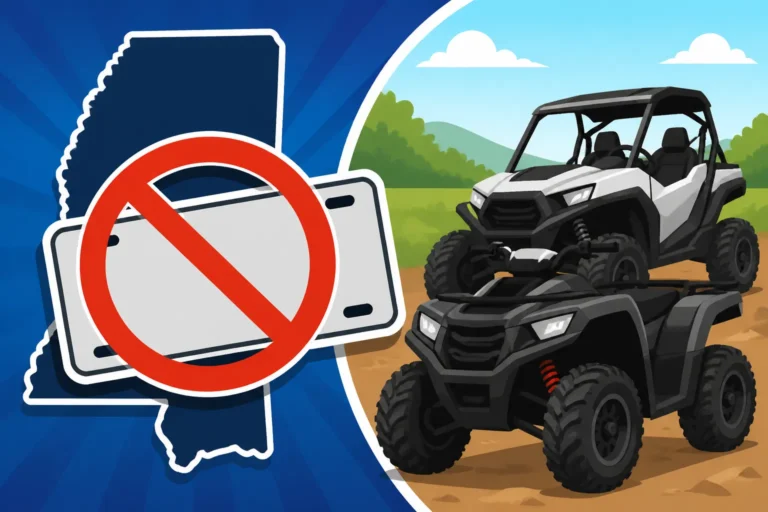
This is perhaps the biggest point of confusion and a common source of frustration for many ATV and UTV owners in Mississippi. Even with the new titling requirement, Mississippi is not instituting a statewide registration system for off-road vehicles. This means your ATV or UTV will still not be assigned a state registration number, and most importantly, it will not be issued a license plate for road use. The title simply proves ownership; it does not authorize road operation. [Mississippi Does Not Register ATVs] is a crucial distinction that remains even with the new titling laws. This means you won't be paying annual registration fees or receiving renewal stickers like you would for a car or truck.
Consequently, the strict ban on riding ATVs and UTVs on public roads, streets, and highways in Mississippi remains firmly in place. A title does not open up any new pathways for road access. The general rule is that these machines are intended for off-road use only, typically on private property with permission, or on designated public trails. Attempting to ride your newly titled ATV down a public road will still put you at risk of fines and legal penalties. Many riders feel a sense of exasperation about this, as they see other states with varying degrees of road access, or they wish they could simply cross a road to get to another trail. However, Mississippi's law is quite clear on this matter. The state legislature has, at various times, considered bills to allow some limited road access, but these have generally not passed into law. So, while you'll have an official title, your machine will still prominently display that [Mississippi Issues No License Plate], serving as a constant reminder of its off-road-only status. It's imperative that riders understand that a new title does not grant permission to ride on public roadways. Trying to skirt this rule can lead to trouble with local law enforcement, who are well-versed in the standing law that asks, [Can You Ride an ATV on the Road in Mississippi?] – and the answer, broadly speaking, is no.
Insurance Remains Optional (But Highly Recommended)
Another area where the new titling law doesn't introduce changes is in vehicle insurance requirements. Unlike passenger cars and trucks, which are legally mandated to carry liability insurance in Mississippi for road use, ATVs and UTVs are not subject to a statewide compulsory insurance law. This means that even after you obtain an official title for your off-road machine, you are not legally required to purchase an insurance policy for it. For some riders, this might feel like a relief, one less expense to worry about.
However, just because it's not legally mandated doesn't mean it's not a critically smart idea. In fact, most experienced riders and financial advisors would strongly recommend carrying ATV or UTV insurance. Think about it: these machines are significant investments, often costing thousands, if not tens of thousands, of dollars. They are also powerful vehicles that can be involved in accidents, leading to injuries or property damage. Without insurance, you would be personally liable for all costs associated with an accident you cause, including medical bills for injured parties and repairs to damaged property. This could easily run into the tens or even hundreds of thousands of dollars, a financial blow that could devastate most families. Furthermore, comprehensive or collision coverage can protect your own investment from theft, fire, or damage incurred in an accident, even if you weren't at fault. Imagine your prized side-by-side being stolen from your garage or totaled in a trail accident; without insurance, that entire financial loss falls squarely on you. Many riding parks or organized events may also require proof of insurance, even if the state doesn't. Therefore, while [Mississippi Has No Insurance Mandate], making it optional, most riders agree that [Why Mississippi Riders Still Buy ATV Insurance] is a question with a very clear, financially responsible answer.
Understanding the Limitations of a Title
It’s crucial for every ATV and UTV owner to grasp the fundamental purpose and limitations of a state-issued title. While getting an official title for your machine is a significant step in formalizing ownership, it is not a magic key that unlocks new riding opportunities or grants universal permissions. The title serves a very specific function: it officially documents who the legal owner of the ATV or UTV is. This is invaluable for proving your rights to the machine, aiding in sales, and assisting in recovery if stolen. It's a legal document for your vehicle, much like the deed to your house establishes your property ownership.
However, a title does not convey permission to operate your machine just anywhere you please. This is a common misunderstanding that can lead to legal trouble. For example, owning a titled ATV does not give you the right to ride on private land without the owner's explicit permission. It doesn't override posted "No Trespassing" signs, nor does it grant access to areas that are otherwise off-limits to off-road vehicles, such as certain public lands, wildlife management areas (WMAs), or ecologically sensitive zones. Your title also has no bearing on local ordinances that might restrict ATV use in specific towns or counties. These rules are separate and distinct from ownership documentation. Just as owning a chainsaw doesn't give you the right to cut down your neighbor's trees, owning a titled ATV doesn't give you carte blanche to ride everywhere. The frustrations that arise when riders realize their shiny new title doesn't change their riding access are very real. It’s essential to remember that [Why a Title Does Not Open Any Roads] is a fundamental principle of off-road vehicle operation in Mississippi. Always secure permission for private land, and always check the specific rules and regulations for any public riding area you plan to visit, title or no title.
Required Documents for Mississippi ATV/UTV Titling
To summarize the various requirements, here's a helpful table outlining the core documents you'll need depending on your specific situation. This can be a quick reference to ensure you don't miss anything vital when preparing for your trip to the County Tax Collector's office.
| Scenario | Primary Document(s) Needed | Supporting Documents (if applicable) |
|---|---|---|
| New Machine (Built July 2025+) | Manufacturer's Certificate of Origin (MCO) | Valid Photo ID, Proof of Residency, Payment for Fees & Taxes |
| Used Machine (MS Private Sale, Pre-2025, Voluntary Title) | Detailed Bill of Sale (from seller) | Valid Photo ID, Proof of Residency, Payment for Fees & Taxes |
| Used Machine (From Out-of-State, Titled) | Original Out-of-State Title, Bill of Sale | Valid Photo ID, Proof of Residency, Payment for Fees & Taxes |
| Used Machine (Missing MCO/Bill of Sale) | Approved Title Bond Application | Valid Photo ID, Proof of Residency, Payment for Fees & Taxes, Vehicle Inspection (if required) |
| Inherited Machine | Death Certificate, Legal Probate Docs | Valid Photo ID, Proof of Residency, Payment for Fees & Taxes |
| Gifted Machine | Gift Affidavit or Bill of Sale (value $0) | Valid Photo ID, Proof of Residency, Payment for Fees & Taxes (possible use tax) |
| Business Machine | Business Docs (Articles of Inc., etc.) | Valid Photo ID of authorized individual, Proof of Residency, Payment for Fees & Taxes |
Disclaimer
This article is for general informational purposes only and does not constitute professional advice. Laws, prices and regulations vary by location and change over time. Consult a qualified professional for guidance on your specific situation.