Correcting a Misspelled Name on a Title Application
There's nothing quite like the excitement of getting a new-to-you ATV or UTV, whether it's a shiny new model from the dealership or a reliable used machine you found in the Delta. But that thrill can quickly turn into a headache when you discover a simple, frustrating error on your title application: a misspelled name. It’s a small detail that can cause surprisingly big problems, from delaying your ownership proof to complicating future resale. This guide is here to walk you through exactly what to do when you find a typo on your Mississippi ATV or UTV title application, so you can get back to planning your next ride.
The Frustration of a Misspelled Name on Your ATV/UTV Title Application
Imagine finally getting all your paperwork in order for your new machine, sending it off, and then receiving the dreaded notification or, worse, the title itself, only to see your name isn't spelled correctly. It's a common, yet incredibly annoying, hiccup in the process. You think, "It's just one letter, surely it won't be a big deal?" But oh, it can be. This tiny error can throw a wrench into everything, making you feel like you're stuck in bureaucratic quicksand.
Why Even a Small Typo Matters So Much
That little typo, whether it’s an extra "e," a missing "h," or a transposed letter, carries more weight than you might expect. When it comes to legal documents like a title, precision is paramount. The name on your title needs to exactly match your legal identification, like your driver's license. If it doesn't, you run into issues proving ownership.
Consider this scenario: You’ve had your quad for a few years, but with "Jon Doe" on the title instead of "John Doe." Now you’ve found the perfect buyer for your machine and you’re ready to finalize the sale. You present your title and your driver's license, and the buyer, or even worse, the county tax collector during the transfer process, points out the discrepancy. Suddenly, your straightforward private sale is on hold. You can’t legally transfer ownership if the identity on the title doesn't align with the person trying to sell it. This can raise red flags about fraud or simply create a bureaucratic nightmare, costing you time, money, and potentially the sale itself. Your title is the ultimate proof that you own that machine, and any doubt cast on that proof can have serious consequences.
Common Scenarios Leading to Misspellings
Misspellings don't just happen out of thin air; they often arise from a few common situations. Sometimes, it's as simple as human error during data entry at the dealership or the county office. Someone might be rushing, or their fingers might slip. Other times, it might come down to less-than-perfect penmanship on a handwritten bill of sale or application. You know how it is – you write your name quickly, and a looped 'a' looks like an 'o,' or a hurried 'm' resembles an 'n.'
Another frequent cause is the subtle variations in names people might use. For instance, you might be known as "Catherine" but your legal name is "Katherine." Or perhaps you've always gone by "Liz," but your official documents say "Elizabeth." While these differences are understood in everyday life, they can be a source of confusion on formal paperwork. Even a middle initial being wrong or missing can sometimes trigger a flag, depending on the strictness of the clerk reviewing the documents. When dealing with a large influx of applications, especially during peak riding seasons, these small details can easily be overlooked initially, only to surface later when the title arrives.
Immediate Steps When You Spot a Name Error
Finding a mistake on your title application can feel disheartening, but the good news is that it’s often correctable, especially if you act quickly. Don’t panic. Instead, take a deep breath and prepare to tackle it head-on. The sooner you address it, the smoother the resolution will likely be.
Contacting the Mississippi County Tax Collector's Office
Your first and most crucial step is to get in touch with the local county tax collector’s office where you submitted your application. They are the gatekeepers of all things titling in Mississippi, and they’re the ones who can guide you through the correction process. It's really important to do this as soon as you notice the error. There’s often a specific timeframe, sometimes around [Mississippi's 30-Day Application Window], within which corrections are simpler to make before a permanent record is fully established.
When you call or visit, be prepared. Have your original application handy, along with the Vehicle Identification Number (VIN) of your ATV or UTV. You’ll also want your valid photo ID that shows the correct spelling of your name. Explain clearly that there's a clerical error on the application regarding your name. The staff there are usually quite understanding; they deal with these kinds of issues regularly. They can advise you on whether an amendment form is needed, if you need to resubmit parts of the application, or if they can make a minor adjustment directly. Getting straight to the source is always the most efficient path. You can find more information about their role in general titling in the post [Mississippi County Tax Collectors and Titles].
Gathering Necessary Documentation for Correction
To facilitate a smooth correction process, you’ll need to back up your claim with solid proof of your correct name. Think of it like building a small case for yourself. The most straightforward evidence will be your valid driver's license or state-issued ID, which clearly displays your legal name. Don't forget to bring the original title application you submitted, if you have a copy, along with your original [Mississippi Bills of Sale for a Used Machine] or the [Mississippi Requires an MCO for a New Machine] if it was a brand-new purchase.
If the error stemmed from the dealer’s paperwork, bring any copies of their forms you have. Sometimes, a birth certificate or a passport can also serve as supporting documentation if there are broader discrepancies or if your driver’s license itself somehow reflects an older, incorrect name (though this is less common). The goal is to provide undeniable evidence of what your name should be on the official title document. Having all these documents organized and ready will show the tax collector’s office that you're serious about getting this fixed and will help them process your request more efficiently. Remember, the more information you can provide, the easier it will be for them to verify and correct the mistake. What your bill of sale should contain is covered in [What Your Bill of Sale Must Show].
The Correction Process: What to Expect
Once you’ve made contact with the tax collector’s office and gathered your documents, you’re officially in the correction phase. This part can feel a little tedious, but knowing what to expect can help ease any anxiety. It's often not as daunting as it first appears, especially for a simple name misspelling.
Submitting an Amended Application or Correction Request
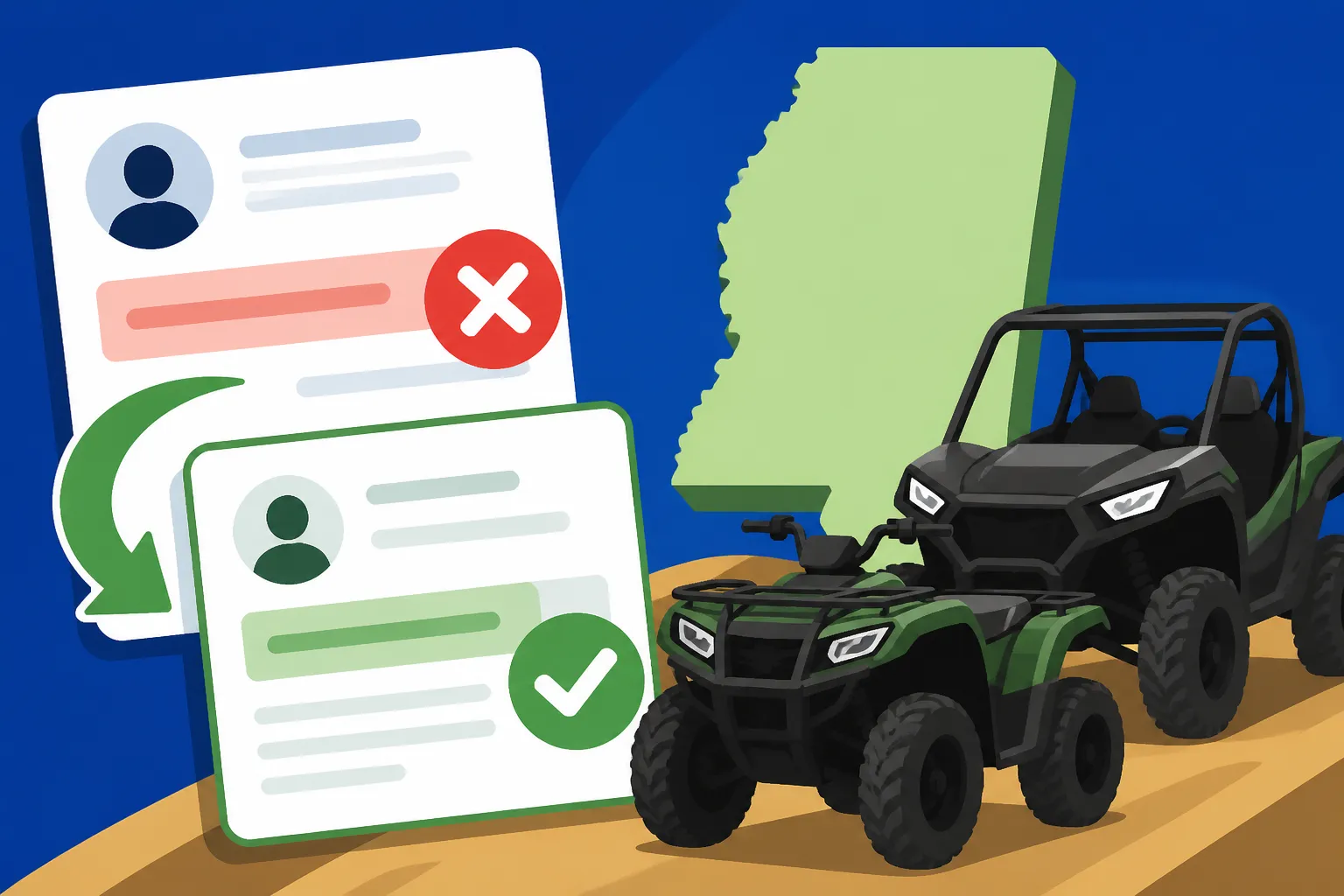
Depending on when you catch the error and the specific policies of your county's tax collector's office, you might be asked to submit an entirely new, amended application, or simply fill out a dedicated correction request form. In many cases, for minor clerical errors like a misspelled name, they might have a simplified process. This often involves highlighting the error on the original application copy, writing the correct spelling, and initialing next to it, along with submitting your supporting identification.
The official reviewing your request will cross-reference the incorrect name with your legal ID. They might also check their system to see if the error originated on their end during data entry or if it was present on the initial paperwork you provided. Be prepared for them to ask a few clarifying questions. If there isn't a specific form provided by the state for this kind of correction, and you feel the need to submit a formal written request or an affidavit explaining the situation, resources like LawDepot can be incredibly helpful. They offer templates for various legal documents, including affidavits, which could be adapted to formally state the error and request a correction, especially if notarization is required. While not always necessary, having a well-structured document can add clarity to your request.
Potential Fees and Processing Times for Corrections
Now, let's talk about the practical side: fees and wait times. The good news is that for a genuine clerical error on a title application, many counties will waive additional fees, especially if the mistake is caught quickly and is clearly not an attempt to change ownership or other significant details. However, it's always wise to ask upfront if there are any re-submission or processing fees associated with correcting the error. Sometimes, if the correction requires an entirely new title to be printed, you might be asked to pay a nominal title fee, such as the [Mississippi Title Fee of $9]. This is usually a small amount compared to the hassle of an incorrect title.
As for processing times, unfortunately, corrections can sometimes extend the overall wait. While a standard title might take about [Mississippi Titles Take About Six Weeks] to process initially, a correction could add a week or two, depending on the volume of work at the tax collector's office. If you're in a real hurry – perhaps you need the correct title for an imminent sale or for insurance purposes – you might inquire about a "fast track" option. Some counties or the state’s central titling office offer services like [Mississippi Fast Track Titles Explained], which can get you a corrected title in a much shorter timeframe, often for an additional fee, such as the [Mississippi Fast Track Fee of $30]. It’s an option to consider if time is of the essence, but be prepared for that extra cost. For more general inquiries they might hear, you can check out [Mississippi Title Questions Collectors Hear].
Preventing Future Misspellings
While correcting a misspelled name is certainly manageable, preventing it in the first place is always the best approach. A little extra diligence on the front end can save you a lot of grief and extra trips to the county office. Think of it as investing a few extra minutes now to avoid hours of frustration later.
Double-Checking Every Detail Before Submission
This might sound obvious, but it bears repeating: scrutinize every single detail on your title application before you hand it over. Once you've filled out your name, address, and machine information, don't just sign and rush. Take a moment, step back, and read it as if you're a stranger looking for mistakes.
A great tip is to read your name aloud exactly as it's written on the form. Our brains are incredibly good at auto-correcting what we expect to see, so reading it out loud forces you to pay closer attention to each letter. Better yet, have a trusted friend or family member review the application, specifically asking them to check for name spellings, VIN accuracy, and other critical data. A fresh pair of eyes can often spot errors you've overlooked. Ensure that the name on the application matches precisely what's on your driver's license or other legal ID. This simple step, taking just an extra minute or two, can prevent weeks of delays and the headache of rectifying a misspelled name.
Tips for Dealers and Private Sellers
For those buying from a dealer, your experience should generally be smoother, as dealers are accustomed to handling extensive paperwork. However, it’s still wise to review everything before you sign. Professional dealerships often use standardized forms and digital systems, which can reduce the chance of manual transcription errors. Still, a quick glance at your name on every document they prepare for your title application is a smart move. They will typically submit your paperwork for you, but it's your name on the line.
If you’re buying from a private seller, the responsibility often falls more heavily on your shoulders. Ensure the seller provides a clear, legible [What Your Bill of Sale Must Show]. If their handwriting is difficult to read, don't hesitate to politely ask them to print clearly, especially for names and the VIN. Sometimes, using a standardized bill of sale template can prevent ambiguity. This is where a resource like LawDepot can be invaluable. They offer various customizable legal document templates, including comprehensive bills of sale that can be filled out digitally, ensuring clarity and minimizing handwriting errors. This not only helps with the name but also ensures all other critical details, like the VIN (Vehicle Identification Number), are correctly recorded. Before you head to the tax collector, you can also take a photo of the VIN on the machine itself to have on hand, as advised in [Photographing a VIN Before a Delta Sale], just as an extra layer of verification. Proper documentation from the start protects both the buyer and the seller and makes the titling process, and any future sale, much smoother.
Disclaimer
This article is for general informational purposes only and does not constitute professional advice. Laws, prices and regulations vary by location and change over time. Consult a qualified professional for guidance on your specific situation.