Serial Numbers on an Older Delta Quad
Many folks across Mississippi, especially in our beloved Delta region, have older ATVs that have been family workhorses or weekend warriors for years. You've probably never given much thought to a formal title, and why would you? For machines built before the big July 2025 cutoff, it simply wasn't a requirement. But when it comes time to sell that trusty quad, or heaven forbid, if it ever gets stolen, having a clear, verifiable serial number becomes absolutely critical. This guide will walk you through everything you need to know about finding, verifying, and preserving those vital serial numbers on your older Delta quad, helping you navigate the waters of ownership and future transactions.
Why Your Older Delta Quad's Serial Number Matters More Than You Think
It's easy to assume that because your older quad has been running perfectly fine for years without a title, its serial number isn't a huge deal. You bought it from a neighbor, or maybe it's been in the family since new. But trust me, as someone who's seen it all in the world of ATVs, that little string of numbers, often called a VIN (Vehicle Identification Number) or sometimes just a serial number for older machines, holds more weight than you might realize. Even before [Mississippi ATV Titling Starts July 2025], these numbers were the true identity of your machine.
The Pre-2025 Landscape and What's Changed
For decades, if you owned an ATV or UTV in Mississippi that was manufactured before July 1, 2025, you didn't need to get it titled by the state. This led to a very relaxed approach to paperwork for many riders. Often, a simple handwritten bill of sale was all that changed hands, and sometimes, for truly old machines, even that was lost to time. The focus was on getting out and riding, not on bureaucratic forms. This era meant that while [Mississippi Does Not Register ATVs], the lack of a formal title also meant less official tracking of ownership.
However, the landscape is changing. With the introduction of mandatory titling for machines built after July 1, 2025, the state is also offering [Mississippi Voluntary Titles for Older Machines]. This is a fantastic opportunity for those of us with older quads to finally get an official record of ownership. But here's the kicker: to get that voluntary title, you absolutely need a clear, legible, and verifiable serial number. Without it, the process becomes significantly more complicated, or even impossible, frustrating many long-time owners who simply want to protect their investment.
Proof of Ownership Beyond a Handshake
Imagine this scenario: you've decided to sell your beloved 2010 Yamaha Grizzly. It's been a faithful companion on countless hunting trips and around the farm. A buyer comes along, excited to take it off your hands. They ask for a title, and you explain that in Mississippi, for machines built before the cutoff, it wasn't required. They nod, but then they ask for the serial number, and you realize it's caked in mud, or worse, faded beyond recognition. Suddenly, what should be a straightforward sale becomes fraught with doubt.
A clear serial number, even on an untitled machine, serves as irrefutable proof that this specific vehicle belongs to you. When you draft a [Mississippi Bills of Sale for a Used Machine], including the serial number is non-negotiable. Without it, how can a buyer be sure they're not purchasing a stolen machine? How can you prove you sold that quad if there's a dispute? Even if you're not getting a formal title, always document that serial number on your bill of sale. Services like LawDepot offer templates that ensure all the necessary information, including your machine's unique identifier, is captured accurately, protecting both buyer and seller.
Protecting Against Theft and Recovery Challenges
This is perhaps the most sobering reason why your quad's serial number is so vital. Unfortunately, ATV theft is a real problem, especially for valuable machines often stored in rural areas like the Delta. If your quad is stolen and you can't provide law enforcement with its serial number, your chances of recovery plummet dramatically. Without that unique identifier, it's just "a red Honda quad" among potentially hundreds of others.
When you report a theft, the first thing police will ask for is the VIN or serial number. This is how they enter it into national databases, how they identify it if it's found across state lines, or how they flag it if someone tries to register or sell it. Think of it like your own Social Security number – it's what makes your machine uniquely identifiable in a sea of similar models. Having that number readily available, perhaps even [Photographing a VIN Before a Delta Sale] and keeping a record, is your best defense against permanent loss.
Tracking Down Those Elusive Digits on Vintage Machines
Finding the serial number on an older quad can sometimes feel like a treasure hunt, especially if your machine has spent its life battling Mississippi mud, humidity, and thick brush. Unlike modern vehicles with easily accessible VIN plates, older ATVs sometimes have their numbers in less obvious spots, and they're more susceptible to environmental wear.
Common Hiding Spots on Older Quads
While every manufacturer is a little different, there are a few tried-and-true places to start your search for the serial number on an older ATV:
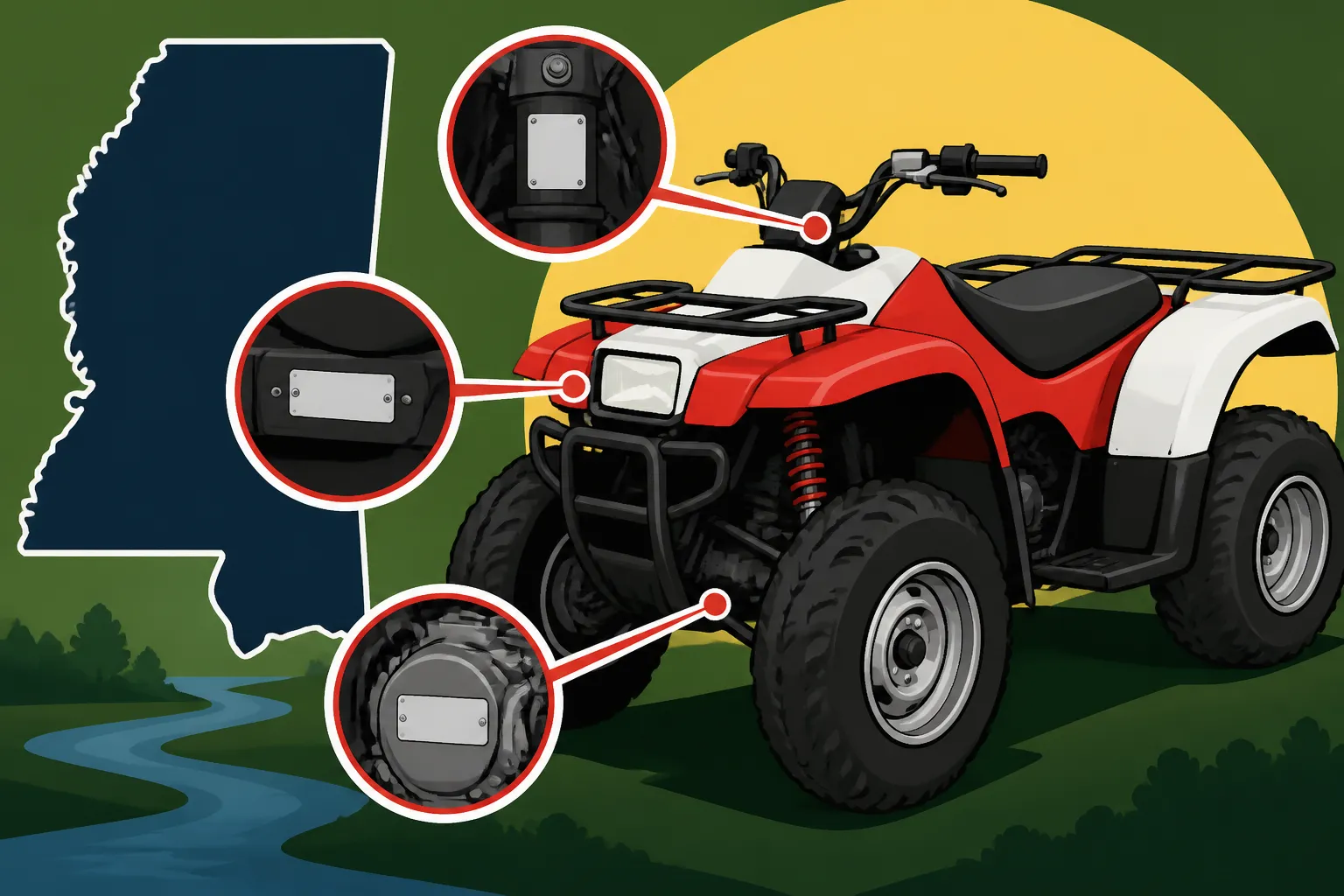
- The Frame: This is by far the most common location. Look on the right-hand side of the main frame rail, often near the steering head (where the handlebars connect) or down by the footpeg. Sometimes it's stamped directly into the metal. Other times, it might be on a riveted metal plate.
- The Engine Casing: Many older quads also have an engine serial number. This isn't always the primary VIN, but it can be crucial secondary identification. Look on the engine block itself, usually near where the engine mounts to the frame, or on a flat machined surface.
- Manufacturer's Sticker/Plate: Some manufacturers used adhesive stickers or small riveted plates, often on the frame, under the seat, or even on the front fender plastics. These are very prone to fading, peeling, or being painted over on older machines.
- Original Paperwork: Dig through any old receipts, owner's manuals, or original bills of sale. Sometimes, a previous owner might have meticulously noted the serial number down. Even a faded warranty card could hold the key.
Dealing with the Ravages of Time and the Delta Environment
The humid Mississippi climate, combined with the love of mud and water many Delta riders share, can be brutal on anything metal. Rust is a common enemy, often obscuring stamped numbers. Paint jobs, accidental or intentional, can cover over crucial identification. Years of grit and grime can literally polish away the raised edges of a stamped VIN.
When you're searching, be prepared to do a little cleaning. Use a stiff brush, a wire brush (gently!), or even some fine-grit sandpaper if rust is severe, but be incredibly careful not to damage the numbers further. A strong flashlight held at an angle can help illuminate faint engravings. Sometimes, rubbing chalk or a pencil lead over the area can bring out the numbers. Remember, patience is key. It's often not a quick glance, but a dedicated search.
Tips for a Successful Serial Number Hunt
Here are a few pointers to make your search more effective:
- Clean the Area Thoroughly: Before you even start looking, give your quad a good wash, paying special attention to the frame rails, under the seat, and around the engine. Mud and dirt are the primary culprits hiding these numbers.
- Consult Your Owner's Manual: If you still have the original owner's manual for your machine, it often contains diagrams showing the exact location of the VIN or serial number. This can save you a lot of time.
- Use Good Lighting: A bright flashlight, even in daylight, can help highlight faint stampings or etchings. Try shining it from different angles.
- Take Photos: Once you find it, even if it's faint, take multiple photos from different angles and in varying light conditions. This serves as a vital record.
- Don't Assume "Gone": Many riders assume their serial number is missing when it's just incredibly difficult to see. Take your time, clean thoroughly, and explore all the common spots.
When the Numbers Are Faded, Damaged, or Missing: Your Options
Let's face it, sometimes despite your best efforts, that serial number on your older Delta quad is just not cooperating. It might be severely rusted, completely painted over, or genuinely defaced. This is a common and incredibly frustrating problem for owners of older machines. But don't despair just yet; you still have a few avenues to explore to establish legal ownership and potentially get that voluntary title.
| Issue | Initial Steps | Next Steps (if initial fails) | Potential Outcome |
|---|---|---|---|
| Faded/Hard to Read | Clean area thoroughly, use strong light, try chalk/pencil rub. Consult owner's manual for exact location. | Take high-resolution photos, enhance digitally. Have an experienced mechanic or dealer inspect. | May become legible enough for documentation or titling. |
| Damaged/Partially Missing | Attempt to decipher remaining digits. Gather all past paperwork (bill of sale, repair records). | Contact manufacturer with any partial numbers. Involve law enforcement for verification/stolen check. Explore [Mississippi Title Bond Procedure]. | Possible to establish partial ID, may require title bond for full ownership proof. |
| Completely Missing/Defaced | Scour all potential locations exhaustively. Dig for any previous paperwork (even if it's old/informal). | Contact local law enforcement for a stolen vehicle check. Pursue a [Mississippi Title Bond Procedure]. Obtain a notarized affidavit. | Very challenging. Title bond is likely the only path to a voluntary title. Sale may be difficult. |
The Critical Role of Your Paperwork Trail
If the physical serial number is a challenge, your paperwork becomes your golden ticket. Did you get a bill of sale when you bought the quad, even if it was a casual transaction? Do you have original purchase receipts, an owner's manual that lists the VIN, or old service records from a dealership that might have noted it? Sometimes, a very old, handwritten bill of sale is all you have, and that's okay. The key is to gather every single piece of paper related to that machine.
Even if the paperwork is informal, it helps establish a chain of ownership. If you're trying to get a voluntary title, the state will want to see that you legitimately own the machine. A robust bill of sale, especially one clearly detailing the machine (make, model, year, and any discernible identification numbers), is vital. You can find excellent templates from resources like LawDepot that help you create professional, legally sound bills of sale or affidavits of ownership, which can be crucial when dealing with a tricky serial number situation.
Involving Law Enforcement and Stolen Vehicle Checks
When you're dealing with a missing or damaged serial number, contacting your local law enforcement (Sheriff's office or city police) is a critical step. They can often run the partial serial numbers you might have found, or even just the make, model, and year, through national databases to check for stolen vehicle reports. This is an important protective measure for you, ensuring you don't inadvertently possess a stolen machine.
Furthermore, some agencies may offer to inspect your vehicle to help locate or verify the numbers, or to officially document that the number is indeed unreadable or missing. This official documentation can be extremely helpful if you plan to pursue a title bond or a voluntary title through the state. [Checking a Used Quad Against Stolen Machine Records] is always a wise move, regardless of the condition of the VIN.
Navigating the Mississippi Title Bond Process
If you have absolutely no verifiable serial number and little to no paperwork, you might feel like you're out of options. However, Mississippi offers a solution for situations like this: the title bond procedure. This process is typically used when you can't prove legal ownership through traditional means (like a clear title or MCO) but can demonstrate possession. While it's more commonly associated with [Mississippi Machines With No Paperwork] at all, it's also applicable when a serial number is so compromised it can't be used for identification.
Essentially, you purchase a surety bond that guarantees you are the rightful owner. If someone else later claims ownership, they can make a claim against the bond. After a set period (usually three years), if no claims are made, you can apply for a clear title. This is often the path taken by those wanting to get a [Mississippi Voluntary Titles for Older Machines] when their serial number is untraceable. It's a lifesaver for older machines that have been passed down or bought informally over the years.
Legal Document Assistance for Clarity
Preparing for any kind of official interaction regarding your older quad – whether it's selling it to a private party, applying for a voluntary title, or initiating a title bond – requires solid documentation. This is where services like LawDepot can be incredibly valuable. They provide templates for various legal documents, from a comprehensive bill of sale that properly details your machine's information (even if the serial number is partial) to affidavits of ownership. Using such a service ensures your paperwork is correctly formatted and includes all necessary legal clauses, reducing potential headaches down the line. It adds a layer of professionalism and legitimacy that a crumpled, handwritten note simply can't provide.
Securing Your Investment: Proactive Measures for Your Older ATV
It's clear that even for older quads, taking care of your serial number and related documentation is crucial. While you might not have worried about it much in the past, a proactive approach now can save you a world of trouble later, whether you're selling, experiencing theft, or just wanting to solidify your ownership.
Documenting Your Machine for Peace of Mind
The best offense is a good defense, and when it comes to your ATV, that means thorough documentation. Even if your quad predates the July 2025 titling changes, you should still treat its identification with care.
- Take High-Quality Photos: As soon as you find your serial number, even if it's faint, take several clear, well-lit photos. Use your phone or a digital camera, and take pictures from different angles. Store these photos in multiple places: on your computer, in cloud storage, and even print a copy to keep with your physical paperwork. Consider having a close-up shot that's clearly legible and a wider shot that shows the number in context on the machine.
- Create a Digital Record: Type out your serial number and other key machine details (make, model, year, engine size, color, any unique modifications) into a digital document. Store this securely and share it with a trusted family member. This is your insurance policy if the physical numbers disappear or if your original paperwork gets lost.
- Keep All Paperwork: Any bill of sale, repair receipt, parts order, or insurance document that lists your machine's serial number should be kept in a safe, dry place. A fireproof box or secure filing cabinet is ideal. These records are vital if you ever need to prove ownership for a voluntary title or in the event of theft.
Considering a Voluntary Title for Added Security
While [Mississippi Machines Built Before the Cutoff] aren't required to be titled, the state now offers the option for a voluntary title. If you plan to keep your older quad for a long time, pass it down, or eventually sell it, obtaining a voluntary title is an excellent way to secure your ownership officially. This not only creates a permanent state record of your ownership but also provides you with an official document that is universally recognized.
The process for a voluntary title will, of course, rely heavily on your ability to provide a clear serial number and adequate proof of ownership. If you've got a clean, legible VIN and a solid bill of sale, the process should be relatively straightforward. If your serial number is problematic, you'll need to explore options like the [Mississippi Title Bond Procedure] to get to that point. It's an extra step, but the peace of mind and enhanced resale value it offers for [Selling a Titled Machine in Mississippi] are often well worth the effort.
Ongoing Vigilance and Best Practices
Finally, staying vigilant is key. Regularly inspect the areas where your serial number is located, giving them a quick clean to prevent dirt and rust from building up. If you notice any fading or damage, address it immediately by documenting what's left and seeking advice.
When [Buying From a Private Seller in Mississippi], always ensure you get a detailed bill of sale that includes the serial number. If the seller can't provide one, or if the number is unreadable, proceed with extreme caution and consider a title bond for your own protection. For any legal documents related to your ATV's ownership or sale, consider using services like LawDepot to ensure everything is above board and legally sound. Taking these steps for your older Delta quad ensures its identity is protected, making your ownership experience smoother and your investment more secure for years to come.
Disclaimer
This article is for general informational purposes only and does not constitute professional advice. Laws, prices and regulations vary by location and change over time. Consult a qualified professional for guidance on your specific situation.