Mississippi ATV Width Limit of 50 Inches
Navigating the world of off-road vehicles in Mississippi can sometimes feel like trying to solve a puzzle, especially when you start looking at the fine print of state regulations. One of the most common points of confusion and frustration for riders, particularly those eyeing a new machine or wondering if their current quad is compliant, revolves around width limits. This guide aims to clear up the muddy waters around Mississippi's 50-inch ATV width limit, helping you understand what it means for your rides, your machine choices, and where you can legally hit the trails without a hitch.
Understanding the Mississippi ATV Definition and the 50-Inch Limit
It's easy to think all four-wheeled off-road machines are "ATVs," but Mississippi law draws some crucial distinctions that directly impact what you can ride and where. This isn't just bureaucratic jargon; it's about safety, trail preservation, and making sure everyone understands the rules of the road – or, in this case, the trail.
What the State Law Says About ATVs
When the state of Mississippi talks about an "all-terrain vehicle" or ATV, it's referring to a very specific type of machine. The legal definition is quite particular, and it's where that 50-inch width limit comes into play. Essentially, an ATV is generally defined as a motorized, off-highway vehicle designed to travel on four low-pressure tires, having a seat designed to be straddled by the operator, and handlebars for steering control. Crucially, the law specifies a maximum width that many riders often overlook or simply aren't aware of until they run into a problem. This 50-inch measurement isn't arbitrary; it's a cornerstone of how the state categorizes and regulates these machines. Knowing this definition is your first step in understanding your rights and responsibilities as a rider.
This specific definition is vital because it determines how your machine is treated under various state statutes, from titling requirements to where you can actually ride. Without this clear understanding, you might inadvertently find yourself in a situation where your beloved quad, which you thought was perfectly legal, doesn't quite fit the bill according to the letter of the law. It’s a point of contention for many riders who feel the definition might be a bit outdated given the evolution of off-road vehicle design, but for now, it's the rule we all have to abide by. You can dive deeper into the official wording by looking up [Mississippi ATV and ROV Legal Definitions].
Distinguishing ATVs from ROVs
Beyond the traditional ATV, there's another class of off-road vehicles that has become incredibly popular: Recreational Off-Highway Vehicles, often called ROVs, UTVs, or side-by-sides. These machines typically feature a steering wheel, foot pedals, and side-by-side seating, resembling a miniature car more than a traditional ATV. The key difference, from a regulatory standpoint, often comes down to size and design. While ATVs are capped at 50 inches in width and are designed for a single straddled rider (or sometimes two on factory-designated two-up models), ROVs can be significantly wider. For instance, [Mississippi ROV Width Limit of 65 Inches] is a separate category that acknowledges these larger machines, but it also means they operate under a different set of rules and are often restricted from trails that are exclusively for 50-inch ATVs.
This distinction is more than just semantics; it's about access. Many trails, especially those managed by federal agencies or some private parks, have physical barriers or clearly posted signs that specifically limit access to machines 50 inches wide or less. If you show up with a wider side-by-side, even if it's perfectly legal as an ROV, you might find yourself turned away. This can be incredibly frustrating if you've trailered your machine for hours, only to discover it doesn't fit the specified criteria. It underscores the importance of not just knowing your machine's dimensions but also understanding the specific regulations of your intended riding area before you load up.
The Specificity of the 50-Inch Rule
The 50-inch width rule for ATVs in Mississippi isn't just a guideline; it's a hard limit embedded in the legal framework. This means that if your ATV, measured from the widest point of the tires, exceeds 50 inches, it technically doesn't qualify as an "ATV" under Mississippi state law for certain purposes. This can lead to a host of issues, from questions during a private sale to enforcement on public lands. Many manufacturers now produce sport quads and utility ATVs that push, or even slightly exceed, this 50-inch mark, making it a critical detail for buyers to be aware of.
For new buyers, this means carefully checking the specifications of any ATV you consider purchasing. Don't just assume it meets the criteria. For owners of older machines or those who have made modifications (like wider A-arms or offset wheels), it's crucial to remeasure. Even an inch or two over can change how your machine is classified, potentially limiting your riding options or even leading to fines if encountered in an area with strict enforcement. This rule often sparks lively debate among riders, with many feeling that it restricts their choices and doesn't account for modern machine designs, but until laws change, it remains a key factor in Mississippi's off-road landscape.
Why Mississippi Cares About Machine Width
You might wonder why a state would be so particular about a few inches of width on an off-road vehicle. It's not about making life harder for riders; it's rooted in practical considerations concerning safety, environmental protection, and ensuring trails remain accessible and sustainable for everyone.
Safety Concerns and Public Land Management
One of the primary reasons for width restrictions, particularly on public lands like national forests, is safety. Narrower trails are often designed with specific hazards and turns in mind, and a wider machine might struggle to navigate these safely, increasing the risk of rollovers or collisions. Beyond the immediate rider safety, the width limit is also a crucial tool for public land managers. They are tasked with balancing recreational access with resource protection. By limiting width, they can better control the types of vehicles accessing certain areas, ensuring that trails designed for smaller, more agile ATVs aren't overwhelmed or damaged by larger, heavier machines.
Consider a multi-use trail, perhaps one shared with hikers, mountain bikers, or even equestrians. A wider, faster machine can present a greater hazard in these shared spaces, not just to other users but also to the machine's operator if they can't maneuver properly. These regulations are a proactive measure to prevent accidents and maintain a harmonious environment for all who wish to enjoy Mississippi's beautiful outdoor spaces. It’s about creating a safe and predictable experience for the diverse groups that utilize these lands.
Infrastructure Protection and Trail Preservation
Another significant reason behind width limits is the protection of the trail infrastructure itself and the surrounding environment. Many designated OHV trails are specifically designed for narrower machines. They might feature tight turns, narrow bridges, or sections where the path itself is only wide enough for a 50-inch vehicle. Wider machines can quickly degrade these trails, widening them unnecessarily, damaging vegetation on the shoulders, or even breaking down man-made structures like culverts or wooden bridges that weren't built to support a broader footprint.
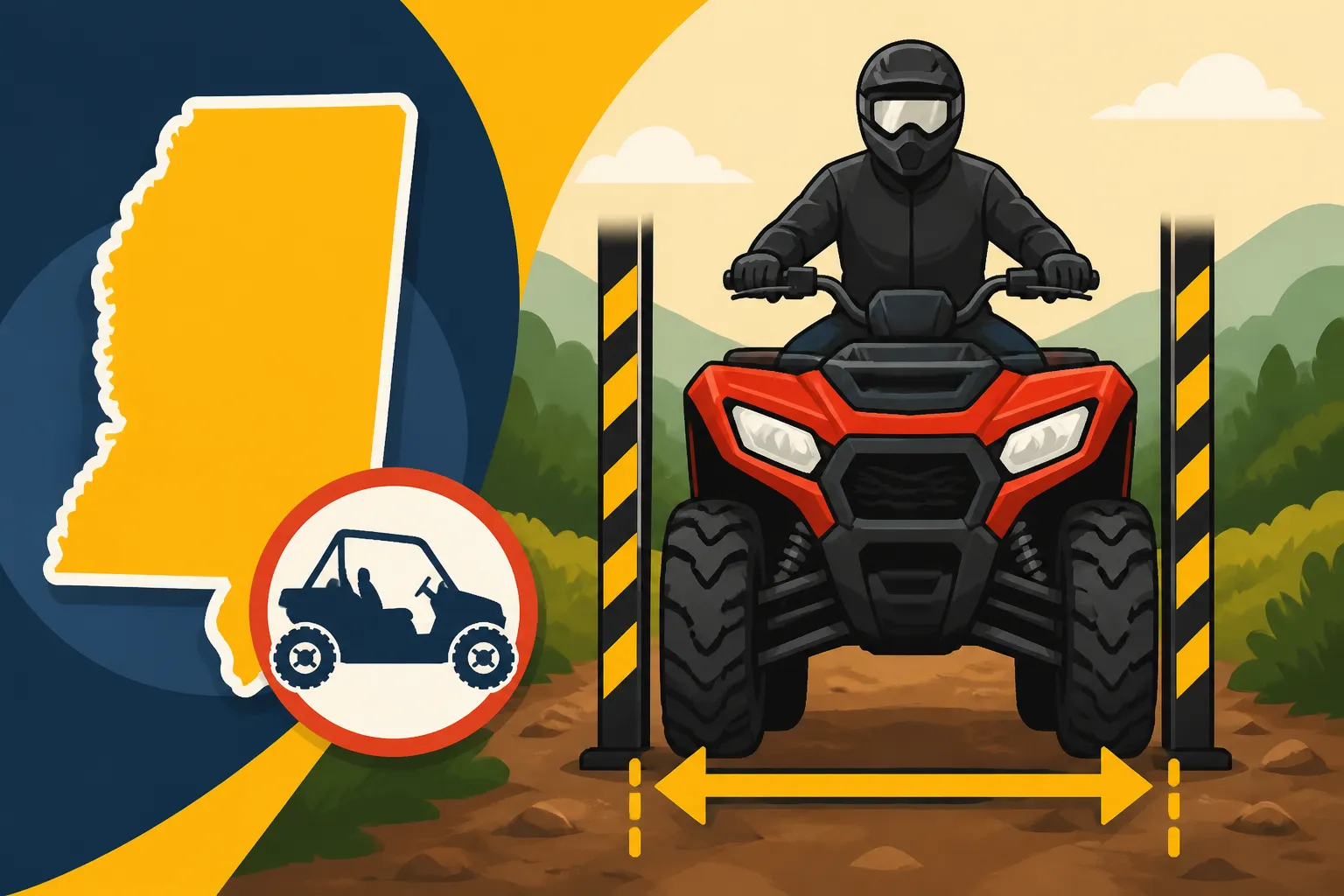
This damage isn't just an aesthetic issue; it can lead to erosion, impact local ecosystems, and necessitate costly repairs or even trail closures. Land managers often build physical barriers, like posts or boulders, at trailheads to enforce width limits, not out of malice, but to literally protect the trail from machines that would cause undue damage. It's an effort to ensure these trails can be enjoyed for generations to come, preventing the kind of rapid degradation that would happen if all types and sizes of machines were allowed unrestricted access. This commitment to sustainability is vital for keeping our riding areas open and pristine.
Enforcement Challenges and Uniformity
Having a clear, statewide definition with specific dimensions like the 50-inch width limit also simplifies enforcement. When law enforcement or park rangers encounter an off-road vehicle, a clear numerical standard makes it easier to determine if the machine is compliant with regulations. Without such a standard, enforcement would become subjective, leading to inconsistent application of the rules and potential disputes. This uniformity benefits everyone; riders know exactly what to expect, and authorities have a clear benchmark.
While local jurisdictions might have their own ordinances, the state's baseline provides a foundational understanding. This helps ensure that regardless of where you're riding in Mississippi, there's a general understanding of what constitutes a legal ATV, even if specific trails have stricter rules. It helps to streamline the entire process, from titling at the county tax collector's office to checking passes at a national forest entrance. This clarity, even if sometimes restrictive, ultimately helps maintain order and ensures the regulations are applied fairly across the board.
Impact of the 50-Inch Rule on Riders and Machine Choices
The 50-inch width limit isn't just a line in a law book; it has tangible impacts on riders, influencing everything from the machines they choose to the aftermarket modifications they consider. Understanding these implications can save you a lot of headache and potential disappointment down the road.
Machine Selection and Aftermarket Modifications
For many riders, the 50-inch rule directly dictates what kind of ATV they can confidently purchase. If your primary riding spots are public lands with strict width restrictions, then a machine that naturally falls within that limit is a must. This means carefully reviewing specifications from manufacturers like Honda, Yamaha, Polaris, and Can-Am. Some sport quads and even utility ATVs are designed to be wider for stability and performance, sometimes pushing 52, 53, or even 55 inches. If you're buying new, it's critical to confirm the width before you sign on the dotted line.
Aftermarket modifications also come into play. Many riders love to customize their machines with wider A-arms, wheel spacers, or different offset wheels to improve stability or handling. While these modifications can enhance your riding experience in certain terrains, they almost always increase the overall width of your ATV. If you plan to ride on trails with the 50-inch limit, these modifications could render your machine non-compliant. It’s a classic trade-off: enhanced performance versus restricted access. You have to decide which is more important for your personal riding style and preferred locations. Be mindful of these choices, as they can significantly impact your access to popular riding areas like [Bethel's 43 Miles in Mississippi], which strictly enforces width limits.
The Frustration of Owning a Wider Machine
There's a unique frustration that comes with owning an ATV that's just a few inches too wide for certain designated trails. Imagine spending good money on a machine, loading it up, driving hours to a popular riding spot, and then being turned away at the gate because your ATV exceeds the 50-inch limit. It’s a common scenario that can ruin a planned weekend and leave riders feeling exasperated. This situation is particularly prevalent with some of the more performance-oriented sport quads or older utility ATVs that were designed without such strict width limits in mind.
This frustration isn't just about missing out on a single ride; it can limit your overall access to prime riding destinations. If most of the desirable public trails in your area enforce the 50-inch rule, owning a wider machine means your options are severely curtailed. You might be relegated to private land or mud parks that don't have such restrictions, but you'll miss out on the diverse terrain and scenery offered by state and national forest trails. This often leads riders to consider selling their wider machine or investing in a second, narrower ATV just for compliant riding.
Implications for Buying and Selling Used ATVs
The 50-inch width limit also has significant implications for the used ATV market in Mississippi. When you're buying a used machine, it's absolutely crucial to not just ask about the year and model, but also to confirm its actual width. Sellers might not even be aware of the exact dimension or its importance. If you buy a used ATV that's over 50 inches, you're inheriting all the access limitations that come with it. It's wise to bring a tape measure when inspecting a potential purchase, especially if public trail riding is high on your agenda.
For sellers, being upfront about your machine's width, especially if it exceeds 50 inches, is good practice. Disclosing this information can prevent disappointed buyers and streamline the sales process. You might even consider documenting the machine's actual width on a [Mississippi Bills of Sale for a Used Machine] form, perhaps using a template from a service like LawDepot, to ensure full transparency. Machines that are 50 inches or under often command a slightly higher premium in the used market simply because they offer wider access to trails. Conversely, wider machines might take longer to sell or fetch a lower price if buyers are informed about the trail restrictions.
Navigating Trails and Public Lands with Width Restrictions
So, you understand the 50-inch rule. Now, how does that translate to actual riding? The rule's impact is most felt when you're planning a trip to a public OHV trail or specific riding area. Knowing the policies of these different venues is key to a successful ride.
National Forests and the 50-Inch Requirement
Mississippi is home to parts of several beautiful national forests, which offer some of the best public land riding opportunities in the state. However, these federal lands, like the De Soto National Forest, often have very specific regulations for off-highway vehicles, and the 50-inch width limit is frequently a prominent one. For example, [Bethel's Width Limit in Mississippi] explicitly states that machines must be 50 inches or less to use its trails. These limits are not arbitrary; they are put in place by the U.S. Forest Service to protect the natural environment and manage the user experience.
When you plan to ride in a national forest, it's imperative to check the specific regulations for that ranger district or trail system. Don't assume. Websites, kiosks at trailheads, or a quick call to the ranger station can provide up-to-date information. Ignoring these limits can lead to fines, being turned away from the trailhead, or even having your machine impounded. It's always better to be safe than sorry, so confirm your machine's dimensions and the trail's requirements well in advance. Remember, a [Mississippi National Forest OHV Passes] might get you access, but it doesn't waive the width requirements.
Private Parks and Their Own Rules
While national forests are usually the most stringent with width limits, private riding parks in Mississippi often have more varied rules. Some private mud parks are designed to accommodate much wider vehicles, including custom-built buggies and side-by-sides, and may not have a 50-inch limit at all. Their focus might be on different types of riding, and their infrastructure can handle larger machines. Other private parks, however, especially those that aim to provide a trail-riding experience similar to public lands, might implement their own width restrictions to preserve their trails or maintain a specific type of riding environment.
The key here is that private parks set their own rules. You cannot assume their regulations align with state law or national forest guidelines. Always check the park's website, social media, or call ahead to confirm their specific vehicle requirements, including width limits, before you make the trip. Many parks will have waivers you need to sign, and these often include rules about machine specifications. If you’re unsure, a simple call can save you a wasted journey and ensure your day of riding is enjoyable rather than frustrating.
What Happens if Your Machine is Too Wide
So, what actually happens if your ATV exceeds the 50-inch limit and you attempt to ride on a restricted trail? The consequences can range from mild inconvenience to significant penalties. At the very least, you'll likely be denied access to the trail. Park staff or forest rangers are usually quite vigilant about enforcing these rules, especially where physical barriers are in place. If you somehow manage to get past a checkpoint and are found on the trail, you could face a citation and a fine. These fines can vary depending on the jurisdiction and the specific infraction.
In some cases, especially for repeat offenders or if your machine causes damage, your ATV could even be impounded. This is a severe penalty that involves significant hassle and cost to retrieve your machine. It’s important to remember that these rules are in place for valid reasons, and circumventing them not only puts you at risk but also jeopardizes the future of trail access for everyone. Adherence to these limits is a sign of responsible riding and helps maintain good relations between riders and land managers.
The Role of Local Ordinances and Other Limitations
While the state 50-inch ATV width limit primarily dictates access to certain trails, it's also important to understand how local ordinances and other state laws might interact with your machine's size, especially concerning public roads.
City and County Variations
Mississippi's off-road vehicle laws can be a bit fragmented, with state law providing a general framework, but local cities and counties often having their own specific ordinances. This patchwork of rules can be incredibly confusing for riders. While state law may define an ATV with a 50-inch limit, a local municipality might have a completely different set of rules for what kind of off-road vehicle, if any, is allowed on certain city streets or county roads. For example, some towns might explicitly ban ATVs of any size from public roads, while others might have very specific provisions for golf carts or low-speed vehicles but remain silent or prohibitive on ATVs.
It's critical to research the local ordinances of any city or county where you plan to ride, especially if you anticipate even briefly crossing a public road. A simple search or a call to the local sheriff's department or city clerk's office can provide clarity. This is particularly relevant given that [Mississippi Bans ATVs on Public Roads] at the state level, making local ordinances the only potential avenue for any kind of road use, and even then, these are rare and highly specific. Don't assume that because your ATV is 50 inches wide it automatically gains access to municipal streets; local rules will almost certainly override that assumption.
Understanding Overall State Bans on Public Roads
Regardless of your ATV's width, Mississippi has a very clear and generally uncompromising stance on off-road vehicles on public roads. With very few, if any, exceptions (which are typically limited to agricultural use for specific distances), ATVs and UTVs are prohibited from operating on public streets, roads, and highways. This is a statewide ban, and it applies whether your machine is 45 inches wide or 60 inches wide. The 50-inch width limit is mostly about trail categorization and access, not road legality.
This is a common point of misunderstanding and frustration for riders, especially those who come from states with more permissive road-use laws for ATVs. Many riders wish to simply cross a road to get to another section of trail or access a gas station, but under Mississippi law, this is generally not allowed. Violating this ban can lead to fines, impoundment of your machine, and other legal consequences. While some [Mississippi Towns That Refuse ATVs on Streets] might explicitly list their prohibitions, the state law acts as a blanket ban unless a specific local ordinance carves out a very narrow exception.
Other Key ATV Regulations in Mississippi
Beyond width and road bans, Mississippi has other important regulations that riders should be aware of. While the state does not require ATVs to be registered in the way cars are, and does not issue license plates, it does have titling requirements for machines manufactured after July 2025. This means new machines will need a title, and while older machines may not require one, obtaining a [Mississippi Voluntary Titles for Older Machines] can still offer benefits for ownership proof.
Other regulations might include age restrictions for riders, helmet laws for those under a certain age, and requirements for a safety certificate for young operators on public lands. While these don't directly relate to the 50-inch width, they are part of the broader regulatory landscape that every responsible ATV owner in Mississippi needs to navigate. Always make sure you're up to date on all state and local laws, as they are designed to keep you and others safe, as well as protect access to our treasured riding areas. For any specific questions regarding titling, a good resource might be to contact your local county tax collector's office or review information like [Mississippi Title Questions Collectors Hear].
Practical Tips for Riders Facing Width Limits
Navigating width limits doesn't have to be a constant headache. With a few proactive steps and a bit of planning, you can ensure your riding experiences are enjoyable and compliant.
Measuring Your Machine Accurately
The first and most crucial step is to know the exact width of your ATV. Don't rely on manufacturer specifications alone, especially if you've added any aftermarket accessories or if it's a used machine. Tires can make a big difference, and a new set might subtly change your overall width.
Here's how to measure accurately:
- Park on a Flat Surface: Ensure your ATV is on level ground.
- Measure the Widest Point: Take a tape measure and stretch it across the widest point of your machine. This is almost always going to be the outer edges of your tires.
- Account for Tire Bulge: Don't just measure the rim; measure from the outermost edge of one tire to the outermost edge of the opposite tire, accounting for any sidewall bulge.
- Consider Accessories: While less common for width, ensure no other accessories (like large fender flares) push your machine past the limit, although tires are the main culprit.
- Record It: Keep a note of your machine's exact width. This small piece of information can save you a lot of trouble.
Knowing your precise measurements gives you confidence when planning trips and allows you to challenge any mistaken assumptions about your vehicle's compliance. It’s a simple step that can prevent a lot of frustration.
Documentation and Proof of Compliance
Having your machine's dimensions handy isn't just for your own peace of mind; it can also be useful if you're ever questioned by a park ranger or law enforcement. While you likely won't carry a tape measure everywhere, having the manufacturer's spec sheet (if it's a stock 50-inch machine) or even a simple document you've created can be helpful.
For private sales, especially if your machine is exactly 50 inches wide (or slightly under), you might want to explicitly state this on a [Mississippi Bills of Sale for a Used Machine] document. Services like LawDepot can help you draft clear and comprehensive sales agreements that include such important details. This not only protects you as a seller but also provides the buyer with concrete information about their new machine's compliance for various riding areas. While not legally required, this kind of documentation demonstrates due diligence and can smooth out any potential misunderstandings.
Advocating for Wider Trail Access
If you're among the many riders who own a wider ATV or UTV and feel limited by the 50-inch rule, you're not alone. There's a growing community of riders who are advocating for more inclusive trail access. This isn't about ignoring safety or environmental concerns, but rather about creating new trails or designating existing ones that can safely accommodate a broader range of modern off-road vehicles.
Getting involved with local ATV clubs or advocacy groups is a great way to make your voice heard. These organizations often work directly with land managers, elected officials, and park authorities to discuss trail development, maintenance, and policy changes. By combining efforts, riders can present a unified front, showcasing the demand for wider trails and offering solutions that benefit the entire riding community while still preserving Mississippi's natural resources. It’s a long game, but collective action can make a real difference in expanding riding opportunities for everyone.
| Feature | Mississippi ATV (General) | Mississippi ROV (Side-by-Side) |
|---|---|---|
| Max Width | 50 inches | 65 inches (for some classifications) |
| Seating | Straddled seat(s) | Side-by-side bucket or bench seats |
| Steering | Handlebars | Steering wheel |
| Primary Use | Recreational, utility, sport | Recreational, utility, sport, multi-passenger |
| Common Trail Use | Trails designed for narrower vehicles, often 50" restricted | Wider trails, open areas, some parks (check specific park rules) |
| Weight Limit | [Mississippi ATV Weight Limit of 1,000 Pounds] (dry weight) | [Mississippi ROV Weight Limit of 2,000 Pounds] (dry weight) |
| Road Use | Generally prohibited on public roads statewide | Generally prohibited on public roads statewide |
Disclaimer
This article is for general informational purposes only and does not constitute professional advice. Laws, prices and regulations vary by location and change over time. Consult a qualified professional for guidance on your specific situation.