Mississippi ROV Width Limit of 65 Inches
Navigating the world of off-road vehicles in Mississippi can feel like trying to find your way through a dense swamp without a map, especially when it comes to understanding the specific rules for your machine. One common head-scratcher for owners, or folks dreaming of getting a new side-by-side, is the precise width limitations for Recreational Off-Highway Vehicles (ROVs). This guide is designed to cut through the confusion and explain exactly what Mississippi's 65-inch width limit for ROVs means for you and your riding adventures, ensuring you're prepared for whatever the trail throws your way.
Understanding Mississippi's ROV Definition and the 65-Inch Limit
Before we dive into the nitty-gritty of the 65-inch width limit, it's crucial to understand what Mississippi actually considers an ROV in the first place. This distinction is vital because it determines which rules apply to your machine, especially when you're thinking about where you can ride.
What is an ROV in Mississippi Law?
In Mississippi, an ROV, or Recreational Off-Highway Vehicle, is typically defined by certain characteristics that set it apart from its smaller cousin, the ATV. Think of an ROV as what most folks commonly call a "side-by-side" or a UTV (Utility Terrain Vehicle). These machines generally feature a steering wheel, like a car, and seating for two or more passengers side-by-side, often with a roll bar or cage for protection. They usually have four or more low-pressure tires and are designed for off-highway travel. The key here is that they're built for recreation and utility, but they're not street-legal vehicles. While [Mississippi ATV and ROV Legal Definitions] covers this in more detail, it's the fundamental difference from an ATV, which typically has handlebars and a straddle seat, that really matters for these width discussions. Understanding these basic definitions is your first step to being an informed rider.
The design of an ROV inherently means it's a wider, often more substantial machine than a traditional ATV. They're built for stability, carrying more passengers or cargo, and tackling tougher terrain. This broader footprint is precisely why state laws and trail systems often have different rules for them compared to ATVs. It's not just about size for size's sake; it's about how these machines interact with trails, other users, and the environment. Knowing your machine's category is the foundation for understanding all the other regulations that follow, including the critical width limitations that dictate where you can legally and safely ride.
The Significance of the 65-Inch Width Limit
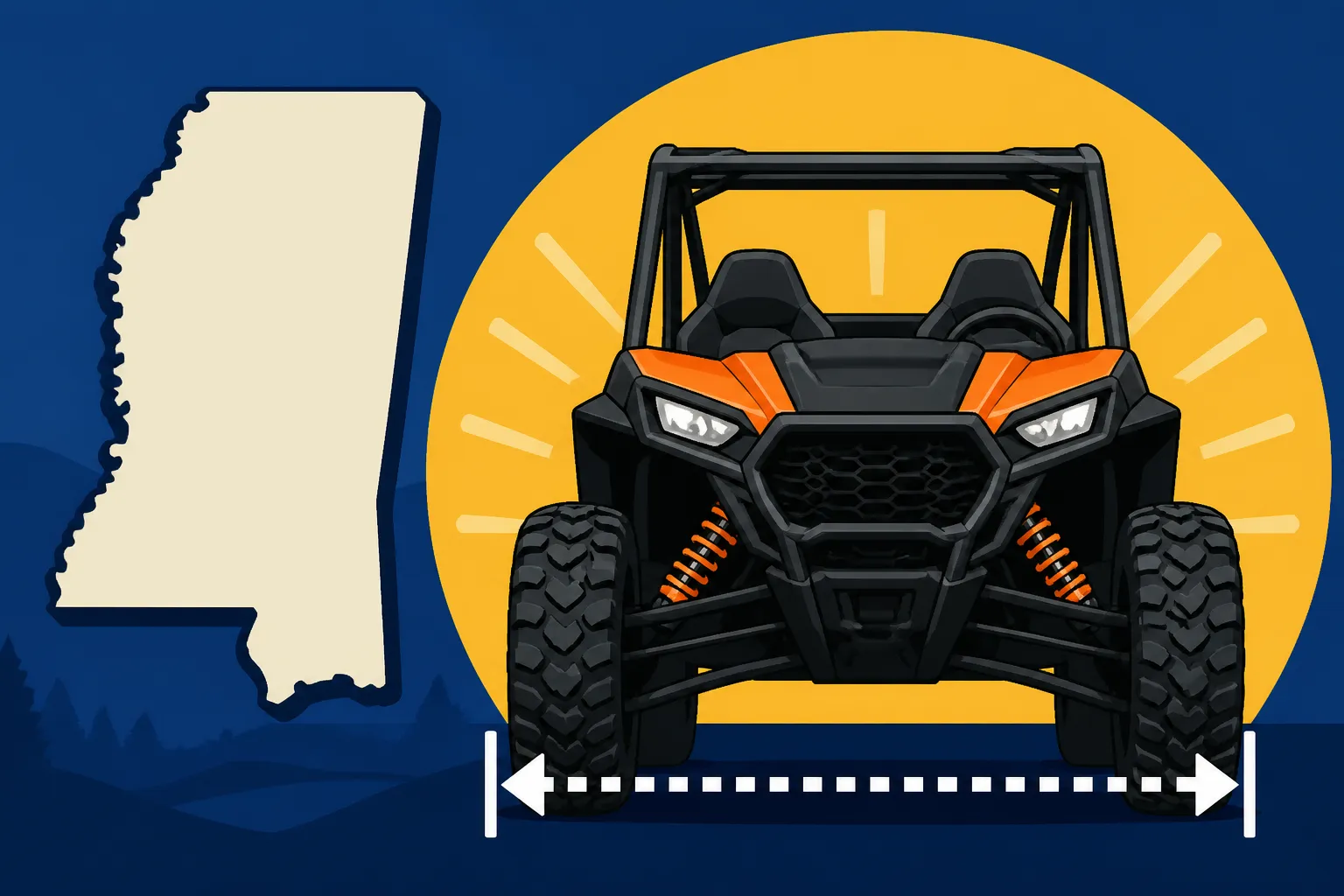
So, why 65 inches? This isn't just an arbitrary number pulled out of thin air. The 65-inch width limit for ROVs in Mississippi is a crucial measurement, primarily influencing where you can and cannot ride your machine, especially on public lands. If your ROV measures wider than 65 inches from its outermost points (excluding mirrors, generally, but always check specific trail rules), it could be considered too wide for many designated trails. This specific limit helps manage trail erosion, minimizes conflicts with other trail users, and ensures that trails designed for a certain type of machine aren't damaged by larger, heavier vehicles. It’s a physical boundary that dictates access, a silent gatekeeper that you need to be aware of before you even load up your trailer.
Exceeding this 65-inch limit isn't necessarily illegal in the sense that you can't own the machine, but it will significantly restrict your riding options. You might find yourself turned away from public trails, facing fines, or even having your machine impounded if you attempt to ride in restricted areas. While [Mississippi Does Not Register ATVs], and titling requirements are more about age than width for ROVs (specifically, machines built after July 2025 require a title, as explained in [Mississippi ATV Titling Starts July 2025]), the width limit is all about operation on specific lands. It’s a practical limit that governs your ability to enjoy the vast network of trails Mississippi offers. Knowing this limit before you buy an ROV or modify your current one can save you a world of frustration down the road.
How the ROV Width Limit Impacts Trail Access and Riding
The 65-inch width limit isn't just a number in a book; it directly impacts your ability to hit the trails and enjoy the ride. For many riders, the point of owning an ROV is to explore, so understanding these access rules is paramount to planning your adventures.
Public Trails and the 65-Inch Rule
For many public land systems, especially within Mississippi's national forests, the 65-inch width limit is strictly enforced for ROVs. Trails are often designed with specific widths in mind to prevent environmental damage, maintain the trail's integrity, and ensure a safe experience for all users, including hikers, equestrians, and narrower ATVs. Places like the Bethel OHV Trails in Mississippi, a popular destination for off-road enthusiasts, have specific rules about machine dimensions. If you show up with an ROV that’s wider than 65 inches, you might be denied entry at the trailhead, no matter how far you drove to get there. Forest rangers and park staff are generally well-versed in these regulations and aren't shy about enforcing them. This adherence to size limits helps protect the delicate ecosystems that [Mississippi National Forest Riding Explained] delves into, ensuring these beautiful areas remain accessible for future generations of riders.
It's a frustrating scenario to have your day cut short because your machine doesn't fit the rules, but it's a reality that many riders face. The signs at trailheads will often explicitly state these width limits, and it's always a good idea to check official park websites or call ahead before you load up. For example, [Bethel OHV Trails in Mississippi] might have specific guidance on their width restrictions. The consequences of attempting to ride an oversized machine can range from a polite request to turn around to a more serious citation and fine. This limit is less about outright banning wider machines and more about channeling them to appropriate riding areas, preserving the trails that are built for specific vehicle types. Always prioritize compliance to ensure a smooth and enjoyable experience, and remember to [Checking Trail Conditions Before You Load the Trailer] as closures can also impact your ride.
Private Parks and the Flexibility of Width Limits
While public lands often have strict, non-negotiable width limits like the 65-inch rule, private mud parks and off-road riding areas can sometimes offer more flexibility. These privately owned and operated parks set their own rules, which means some might be more accommodating to wider ROVs, while others may still adhere to similar standards as public trails, especially if they have narrower, technical trails. It all depends on the park's design, its target audience, and its operational philosophy. Some private parks are specifically designed for larger, heavily modified machines and feature expansive mud pits and wide-open tracks where width isn't a primary concern. Others might have a mix of terrain, with some areas open to wider machines and other, more restrictive trails.
The key with private parks is to do your homework well in advance. Never assume that just because it's private land, all bets are off when it comes to width limits. Check the park's website, read their rules and regulations, or even give them a call to confirm their policies regarding ROV width. They might have different classifications for machines or certain trails designated only for narrower vehicles. Some parks might even require you to sign a liability waiver, which you could prepare or review using resources like LawDepot if you're ever creating similar documents for private land access. Being proactive ensures you don't arrive with a machine that's too big for their trails, preventing disappointment and wasted travel time. Private parks offer a fantastic alternative to public lands, but their specific rules are just as important to understand.
Practical Considerations for ROV Owners Regarding Width
Understanding the rules is one thing, but actually applying them to your machine requires a bit of practical know-how. From measuring your ROV to considering how modifications affect its dimensions, these are the real-world aspects of living with the 65-inch width limit.
Measuring Your ROV Accurately
Knowing the exact width of your ROV is absolutely critical for compliance with the 65-inch limit. It’s not just about looking at it and guessing; you need to get out the tape measure and be precise. The general rule of thumb is to measure the widest point of your vehicle, from the outermost edge of one tire to the outermost edge of the other, or whatever body part protrudes the furthest. This usually means measuring across the tires or the fender flares. Importantly, this measurement typically excludes mirrors, because mirrors are often flexible or collapsible and aren't considered part of the permanent structural width that impacts trail clearance. However, always double-check the specific regulations for the trail or park you intend to visit, as some might have their own nuanced interpretations.
Common pitfalls in measurement include measuring from the inside of the tires, assuming the manufacturer's stated width accounts for all variations, or forgetting about accessories. For instance, if you've added wider, aftermarket tires or wheels, your machine's width could have increased significantly beyond its factory specifications. It's not uncommon for a new set of aggressive tires or different offset wheels to push a machine beyond that critical 65-inch mark. Taking your time, using a reliable tape measure, and even having a friend help you get an accurate reading across the widest points will give you the confidence you need when heading to the trails. Don't let an inaccurate measurement be the reason your riding day ends prematurely.
Aftermarket Modifications and Width Changes
The allure of aftermarket modifications is strong for many ROV owners. Whether it's for enhanced performance, a more aggressive look, or improved capability in specific terrain like deep mud, there's a huge market for parts. However, a significant number of these modifications can, and often do, increase your ROV's overall width. This is especially true for items like wider A-arms, long-travel suspension kits, and different offset wheels or larger, more aggressive tires. These changes, while potentially improving stability or articulation, can easily push your machine past the 65-inch threshold without you even realizing it. It's a classic case of improving one aspect of your machine only to inadvertently create a compliance issue for trail access.
Before you invest in any major aftermarket modifications, especially those affecting your suspension or wheel/tire setup, always consider the impact on your ROV's width. What was once a trail-legal machine could suddenly become too wide for your favorite public lands. If you've already made such changes, it’s imperative to re-measure your ROV. Don't rely on the original factory specs. The money spent on new parts might feel wasted if you can no longer ride where you want to go. It’s also wise to keep records of your modifications and measurements, perhaps using a detailed inventory list or affidavit created through a service like LawDepot, especially if you plan on selling the machine in the future and need to clearly document its current specifications. Always think about trail compatibility when upgrading, as not all enhancements are compatible with all riding areas.
Legal Implications and Enforcement of the 65-Inch ROV Limit
It’s one thing to know the limit, but quite another to understand the potential ramifications if you don't adhere to it. The 65-inch ROV width limit, while often tied to trail access, does carry legal implications if violated.
What Happens if Your ROV is Too Wide?
When your ROV exceeds the 65-inch width limit, the immediate consequence you're likely to face is denial of access to trails that enforce this restriction. This can happen at the gate of a national forest OHV park, a state park, or even by a patrolling ranger on the trail. Imagine trailering your machine for hours, only to be told you can't ride. It’s a frustrating and costly waste of time and fuel. Beyond simply being turned away, you could also face fines. While Mississippi's off-road vehicle laws can be quite brief (as explored in [Mississippi Code Section 63-31-1]), enforcement personnel on federal or state lands may issue citations based on the specific regulations governing those areas. These fines, while perhaps not astronomical, are an unwelcome expense and can certainly put a damper on your day.
In more severe cases, especially if you ignore warnings or are found repeatedly violating rules, your machine could potentially be impounded. This is a rare occurrence for a width violation alone, but it underscores the seriousness with which some regulations are viewed. Enforcement can vary, with some rangers or park staff being more lenient with warnings, while others adhere strictly to the letter of the law. It’s always best to be informed and compliant to avoid any negative encounters. Remember, these limits are in place for a reason – to preserve the trails and ensure safety for everyone. Knowing [What a Mississippi Deputy Can Ask to See] is good practice, but knowing your machine's compliance before the ride is even better.
Titling, Registration, and the Width Limit (or Lack Thereof)
It's important to clarify that the 65-inch ROV width limit typically has no bearing whatsoever on how your ROV is titled or whether it needs to be registered in Mississippi. This is a common point of confusion, as many people assume all vehicle regulations are intertwined. However, Mississippi's titling laws for ROVs focus primarily on the machine's manufacture date. For example, [Mississippi Machines Built After July 2025] are required to be titled, regardless of their width. Machines built before this cutoff are generally exempt from mandatory titling, though voluntary titling is an option for owners who want to prove ownership more clearly. The width of your ROV, whether it’s 60 inches or 70 inches, doesn’t change these titling requirements.
Furthermore, Mississippi famously does not require ATVs or ROVs to be registered for off-highway use. This is a significant difference from many other states that mandate registration or special permits. So, while you'll need a title if your ROV meets the age requirement, you won't need to worry about a registration sticker or plate, as discussed in [Why a Titled ATV Gets No License Plate]. The 65-inch width limit is purely an operational restriction related to where you can ride, not whether you can legally own or transport your machine. It’s all about maintaining trail integrity and managing access, not establishing vehicle ownership or road legality.
Comparing ROV and ATV Width Limits in Mississippi
Understanding the nuances of vehicle classification in Mississippi is key to navigating the state's off-road landscape. The distinction between ATVs and ROVs, particularly concerning their width limits, profoundly influences where and how you can ride.
The Distinction Between ROV and ATV Widths
One of the clearest distinctions between ATVs (All-Terrain Vehicles) and ROVs (Recreational Off-Highway Vehicles) in Mississippi's regulations lies in their respective width limits. While ROVs are capped at 65 inches for many public trails, ATVs face a stricter, narrower restriction. The [Mississippi ATV Width Limit of 50 Inches] is a long-standing rule that reflects the design and intended use of these smaller, often single-rider machines. This significant 15-inch difference isn't arbitrary; it dictates completely different access points and trail experiences. A 50-inch ATV is built to navigate tighter, more technical trails, often fitting through gaps and over obstacles that a wider 65-inch ROV simply couldn't.
This disparity in width limits means that certain trails are exclusively for ATVs, while others might accommodate both, or perhaps none if your ROV is too wide. The design philosophy behind ATVs is for agile, single-track type riding, whereas ROVs are designed for greater stability, passenger capacity, and often utility. When you're considering a new machine, or even just planning a ride, this width difference is paramount. It’s not just about what you can buy, but what you can actually do with it in Mississippi's diverse riding areas. Furthermore, weight limits also differ; for instance, the [Mississippi ATV Weight Limit of 1,000 Pounds] is much less than the [Mississippi ROV Weight Limit of 2,000 Pounds], again highlighting the different capabilities and classifications of these machines.
Choosing the Right Machine for Your Riding Style
With distinct width limits for ATVs and ROVs, your riding style and preferred terrain should be major factors in your purchase decision. If your heart is set on exploring the extensive network of public trails in Mississippi's national forests and you love the challenge of tight, winding paths, then a 50-inch ATV might be your ideal machine. These trails are specifically designed for narrower vehicles, and an ATV will give you unfettered access to many areas that wider ROVs simply cannot enter. You'll enjoy the agility and maneuverability that only a smaller machine can offer, allowing you to immerse yourself fully in the forest environment.
However, if your adventures lean towards group rides, carrying gear for hunting or camping, or you simply prefer the comfort and stability of a side-by-side with a steering wheel and roll cage, then an ROV is probably more your speed. Just be acutely aware of the 65-inch width limit. Many private parks, wider logging roads (where permitted), and some designated public areas can accommodate ROVs up to this width. If you plan to primarily ride on private land, you might have even more flexibility, assuming the landowner allows it. It's about aligning your machine's capabilities and its legal dimensions with the places you actually want to ride. Don't buy a mega-wide side-by-side if your dream is to zip through tight forest trails; you'll only end up frustrated. Consider your riding priorities carefully before making that significant investment.
Documentation and Resources for Mississippi ROV Owners
Even with a clear understanding of width limits, being a responsible ROV owner in Mississippi involves knowing where to find critical information and how to manage important documents. This is about being prepared for any situation, whether it's an inspection or a future sale.
Manufacturer's Specifications and Owner's Manuals
Your ROV's owner's manual is an invaluable resource that many riders overlook or only consult in times of trouble. This manual contains a wealth of information, including the precise dimensions of your machine as it left the factory. This factory width is your baseline for understanding the 65-inch limit. It's crucial to locate this information and keep it handy. If you've lost your manual, most manufacturers provide digital versions on their websites, or you can often order a replacement. Knowing your factory specs helps you identify whether any aftermarket modifications have pushed your ROV beyond the legal width for certain trails.
Beyond physical dimensions, the owner's manual also details maintenance schedules, operational instructions, and safety warnings that are vital for keeping your machine in top condition and ensuring safe riding. For new machines, you’ll also receive a Manufacturer's Certificate of Origin (MCO), which is a key document for titling, as highlighted in [Mississippi Requires an MCO for a New Machine]. Keeping all your original paperwork organized, whether in a physical binder or a digital folder, is a best practice for any ROV owner. These documents serve as proof of ownership, guide maintenance, and inform you of your machine's original specifications, which is particularly useful if a park ranger ever questions your ROV's dimensions.
Understanding Local Ordinances and Park Rules
While Mississippi has state-level guidelines for ROV widths, it's incredibly important to remember that local ordinances and the specific rules of individual riding parks can impose additional, sometimes stricter, restrictions. A statewide limit is merely a baseline. A county or city might have its own rules for local trails or areas, and private parks certainly operate under their own sets of regulations. For example, [Mississippi WMA Riding Rules] might differ significantly from a private park's rules, even for machines of the same width. This layered regulatory environment means that a machine that's perfectly legal for one type of public land might be prohibited in another specific local area or a private park.
Before you load up your ROV and head out, always make it a point to check the rules for your specific destination. Call ahead to the park office, visit their website, or consult local government resources. It's much better to spend a few minutes researching than to drive for hours only to find out your ROV is too wide for that particular riding area. If you're riding on private property, always ensure you have explicit permission from the landowner. For specific agreements or waivers related to private land access, tools like LawDepot can be useful for generating legally sound documents that outline terms of use, helping to protect both the rider and the landowner. Being proactive and informed is the best way to ensure a hassle-free and enjoyable off-road experience in Mississippi.
A Comparative Look: ATV vs. ROV in Mississippi
| Feature | ATV (All-Terrain Vehicle) | ROV (Recreational Off-Highway Vehicle) |
|---|---|---|
| Typical Width Limit | 50 inches | 65 inches |
| Steering | Handlebars | Steering wheel |
| Seating | Straddle seat, typically 1-2 riders in tandem | Side-by-side bucket seats, typically 2-4+ riders |
| Roll Protection | None (rider relies on helmet/gear) | Roll bar/cage |
| Common Use | Recreational trail riding, hunting, light utility | Recreational trail riding, hunting, heavy utility, sport |
| Maneuverability | High, for tight turns and narrow trails | Moderate, greater stability on wider trails |
| Mississippi Titling | Mandatory if built after July 2025; voluntary for older | Mandatory if built after July 2025; voluntary for older |
| Mississippi Reg. | Not required for off-highway use | Not required for off-highway use |
Disclaimer
This article is for general informational purposes only and does not constitute professional advice. Laws, prices and regulations vary by location and change over time. Consult a qualified professional for guidance on your specific situation.