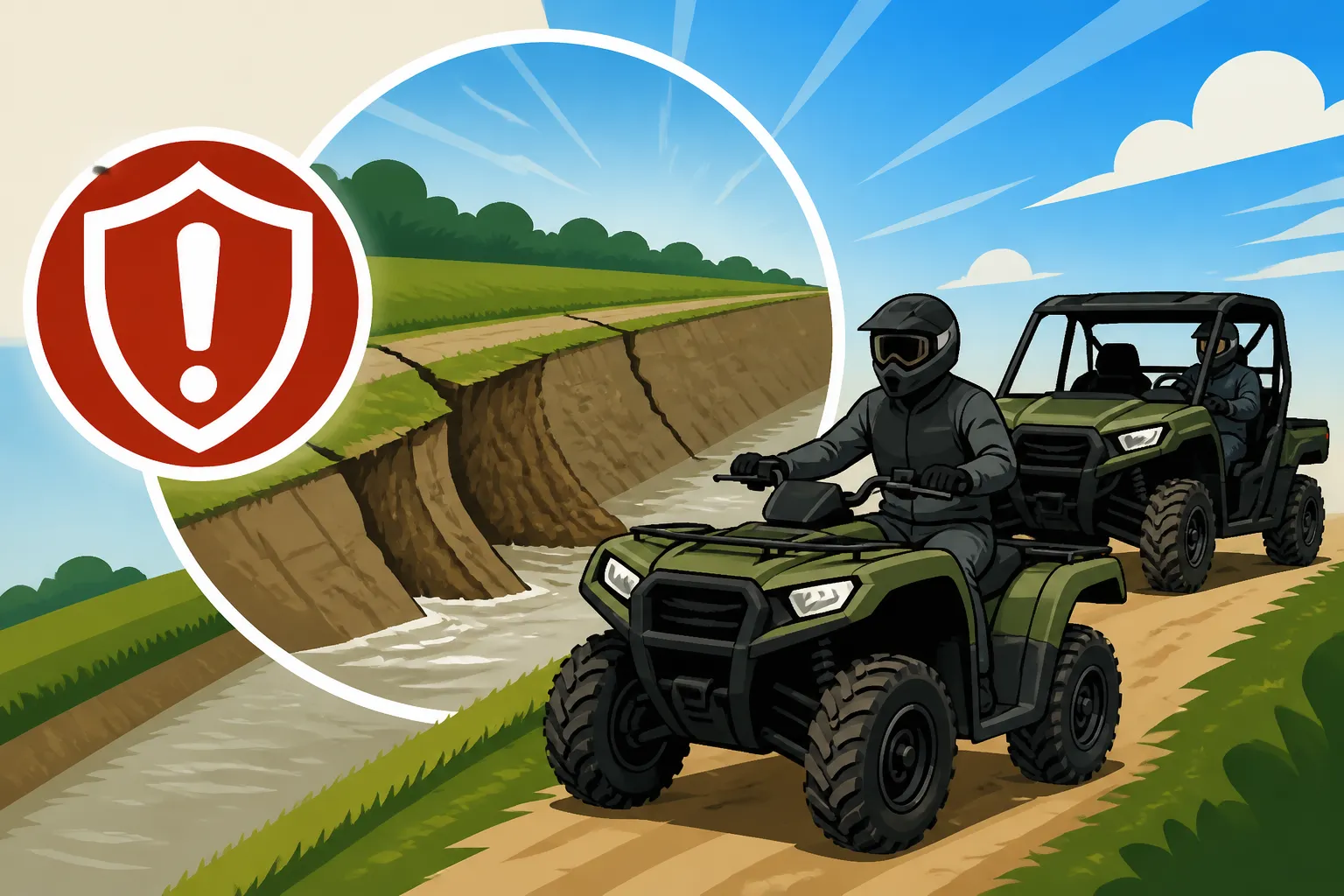
Levee Damage Treated Seriously
We all know the call of Mississippi's wild places – that urge to explore the backcountry, feel the rumble of your ATV or UTV beneath you, and simply get away from it all. But sometimes, in the pursuit of adventure, riders can unknowingly (or knowingly) venture into areas that are not only off-limits but crucial to the safety and well-being of entire communities. One such area that demands the utmost respect and careful consideration is Mississippi's levee systems, where even seemingly minor actions can lead to severe consequences for both the rider and the state's vital infrastructure. This guide is here to shed light on exactly why damaging levees is taken so seriously and what riders need to understand to stay safe and legal.
The Critical Role of Mississippi's Levees
It’s easy to look at a levee, especially one that stretches for miles across a flat landscape, and just see a dirt hill or a convenient path. But these aren’t just any elevated mounds of earth. Mississippi’s levees are engineered marvels, painstakingly constructed and maintained to serve a singular, critical purpose: to protect lives, homes, and livelihoods from the devastating power of floodwaters. Without them, large swaths of the state, particularly in the Delta region, would be uninhabitable or perpetually at risk.
What Levees Protect
Imagine living in a community where every major rainfall or river surge brought with it the terrifying possibility of your home being submerged. That's the reality that Mississippi's levee system prevents. These massive earthen barriers are designed to hold back swollen rivers and protect vast agricultural lands, towns, cities, and crucial infrastructure like roads, bridges, and utilities. They are the silent guardians against natural disaster, working tirelessly season after season.
When you see a levee, think of it as a meticulously designed shield. Its slopes, crown, and foundation are all integral to its stability and ability to withstand immense pressure from water. Any disruption to this structure, whether it’s a deep rut, a compaction point, or a breach, compromises its integrity. This isn't just about protecting a field from getting wet; it's about protecting entire economic ecosystems and the very fabric of communities from being washed away.
Why They Are So Vulnerable to ATV/UTV Traffic
While a sturdy off-road machine from a brand like SuperATV might feel invincible, capable of conquering nearly any terrain, a levee's construction materials, typically compacted earth and clay, are surprisingly vulnerable to the specific stresses that ATV and UTV traffic can impose. The weight, tire pressure, and aggressive tread patterns of these machines are designed for grip and performance, which unfortunately translates to significant potential for damage on earthen structures.
Deep ruts created by spinning tires or heavy machines can disrupt the careful compaction of the soil, making it more susceptible to erosion from rain. Even seemingly minor divots can create channels for water to penetrate deeper into the levee's core, potentially leading to saturation and weakening of the structure. Furthermore, the sheer weight of a UTV, especially with multiple passengers, can cause compaction that alters drainage patterns or even creates unseen internal stresses within the earthen material. These aren't just dirt roads; they are vital flood defenses, and their structural integrity is paramount.
Legal Ramifications of Levee Damage
Riding an ATV or UTV on a levee isn't just frowned upon; it carries serious legal consequences. This isn't a mere slap on the wrist for trespassing. Because levees are so critical to public safety and infrastructure, laws and regulations surrounding their protection are stringent, and the entities responsible for their maintenance don't take violations lightly. The potential penalties can range from hefty fines to being held financially responsible for extensive repairs, which can quickly add up to staggering amounts.
Understanding Mississippi's Levee Board Rules
In Mississippi, the protection and maintenance of these vital structures fall under the jurisdiction of specific levee boards. These bodies, such as the Mississippi Levee Board, are vested with considerable authority to enact and enforce rules designed to safeguard the levees. Their regulations often explicitly prohibit unauthorized vehicular traffic, including ATVs and UTVs, on levee crowns, slopes, and rights-of-way. These rules are not arbitrary; they are born from decades of experience in flood control and a deep understanding of what it takes to maintain these critical defenses.
These levee boards operate with a clear mandate: prevent damage and maintain readiness. Therefore, if you're caught riding on a levee without explicit permission, you're not just breaking a minor rule; you're interfering with a critical public safety function. It's imperative for all riders to understand that [Mississippi Levee Board Rules] are strictly enforced, and ignorance of these regulations is rarely, if ever, accepted as an excuse. Always assume a levee is off-limits unless you have direct, written permission from the governing authority.
Penalties for Unauthorized Riding and Damage
The penalties for riding an ATV or UTV on a levee can be far more severe than those for other types of unauthorized off-road activity. This isn't just about trespass; it's about potentially endangering communities. If caught, you could face significant fines, with the amount often escalating based on the extent of the damage caused and whether it's a repeat offense. These fines can easily dwarf the typical citations one might receive for, say, [Mississippi Penalties for Illegal Road Riding].
Beyond fines, the most substantial financial consequence can be restitution. If your machine causes ruts, erosion, or any other form of damage to the levee, you could be held personally liable for the full cost of repairs. Levee repairs are not cheap; they often involve heavy machinery, specialized engineering assessments, and extensive labor, all of which can quickly accumulate into tens of thousands of dollars, or even more. In severe cases, particularly if significant structural integrity is compromised, criminal charges related to property damage or endangerment could even be pursued, though this is less common.
The Environmental and Community Impact
While the legal and financial ramifications are certainly daunting, the impact of levee damage extends far beyond an individual's wallet or legal record. There are profound environmental consequences and a direct, tangible threat to the very communities that these structures are designed to protect. When a levee is compromised, it's not just a patch of dirt that's affected; it's a ripple effect that touches everything from ecosystems to local economies.
Erosion and Ecological Disruption
The ruts and disturbed earth left by unauthorized ATV or UTV traffic on levees can dramatically accelerate erosion. When rain falls on a compromised levee, it funnels into these new channels, washing away topsoil and sediment at an alarming rate. This sediment doesn't just disappear; it often washes into adjacent waterways, silting up streams, rivers, and drainage ditches. This increased sedimentation can harm aquatic life by clouding the water, disrupting spawning grounds, and smothering important habitats.
Furthermore, the vegetation on levee slopes, whether it's native grasses or planted cover, plays a crucial role in maintaining the levee's stability by binding the soil with root systems. ATV/UTV traffic can destroy this protective vegetation, exposing the underlying soil to the elements and further exacerbating erosion. This ecological disruption can have long-lasting effects, altering local habitats and impacting the delicate balance of the natural environment, which then requires costly and time-consuming restoration efforts.
Impact on Local Communities and Agriculture
Perhaps the most poignant impact of levee damage is the direct threat it poses to the local communities and agricultural operations that depend entirely on these structures for protection. A compromised levee is a weakened defense, and during a severe flood event, that weakness could be the difference between a community staying dry and suffering catastrophic inundation. Homes, businesses, schools, and hospitals are all at risk when levees are not maintained at their peak integrity.
For agricultural areas, a levee breach can mean the loss of an entire season's crop, widespread soil erosion, and immense financial hardship for farmers. The psychological toll on residents living in the shadow of a damaged levee, constantly fearing the next heavy rain, cannot be overstated. When a rider damages a levee, they are not just marking up dirt; they are undermining a collective sense of security and potentially setting the stage for future devastation for their fellow Mississippians.
Responsible Riding Alternatives and Prevention
Understanding the gravity of riding on levees isn't about discouraging ATV and UTV use entirely; it's about channeling that passion for off-road adventure into safe, legal, and responsible avenues. Mississippi offers fantastic opportunities for riders, but it's crucial to know where those opportunities lie and how to properly prepare for them. Respecting designated areas not only keeps you out of trouble but also ensures the longevity of riding access for everyone.
Where Can You Ride Legally and Safely?
Mississippi truly offers some incredible places to ride, but these are almost always on specifically designated trails or private lands with explicit permission. These areas are designed to handle the impact of off-road vehicles and often provide diverse terrain suitable for all skill levels. Instead of risking severe penalties and environmental damage on critical infrastructure, seek out these approved locations.
For public land options, places like [Bethel OHV Trails in Mississippi] in the Bienville National Forest offer miles of marked trails that are managed for off-road use. Similarly, private mud parks such as [Red Creek Off-Road in Mississippi] provide extensive riding areas, often with amenities like wash stations and camping. Always do your research before you load up the trailer. Before heading out, always check the rules for the specific area, as some have width restrictions or require [Mississippi National Forest OHV Passes]. If you're considering private land, make sure you have [Written Permission From a Southern Landowner] to avoid trespassing issues.
Equipping Your Machine for Responsible Riding
While the focus here is on where to ride, having the right gear can also contribute to responsible riding, particularly when it comes to maintaining your machine and minimizing impact on designated trails. For example, if you're navigating rocky or heavily wooded trails in legal riding areas, a robust set of skid plates can protect your machine's vital undercarriage. Many riders turn to brands like SuperATV for durable protection, ensuring their machine can handle challenging terrain without breaking down.
It's also worth considering your tires. While aggressive mud tires are fantastic for dedicated mud parks, they can cause excessive damage to sensitive trails if not used appropriately. Think about the terrain you’ll actually be riding on in legal areas. Accessories like winches, often sourced from companies like SuperATV, are excellent for self-recovery on legitimate trails and prevent you from getting stuck and potentially damaging a non-designated area out of desperation. Remember, even the best aftermarket parts are for enhancing your experience on legal trails, not for enabling illicit access to sensitive areas.
Here’s a quick comparison of designated riding areas versus prohibited ones:
| Feature | Designated OHV Parks & Trails (e.g., Bethel, Red Creek) | Prohibited Areas (e.g., Levees, Private Land without Permission) |
|---|---|---|
| Legality | Permitted with proper passes/fees | Illegal, subject to fines and severe penalties |
| Terrain | Designed for ATV/UTV use, varied difficulty | Critical infrastructure, often unstable or sensitive terrain |
| Impact | Managed to minimize environmental impact | High risk of erosion, structural damage, ecological harm |
| Safety | Often patrolled, emergency access, marked hazards | No oversight, potential hidden dangers, no emergency support |
| Consequences | Enjoyable ride, community engagement | Fines, restitution for damage, legal action, community anger |
| Community View | Supported by local riders, contributes to tourism | Seen as destructive, irresponsible, and dangerous |
The Importance of Education and Awareness
Ultimately, prevention is the best defense against inadvertently causing damage or facing legal repercussions. This starts with education and a commitment to awareness. Before you head out, take the time to research the specific rules and regulations of your intended riding location. A quick phone call to a national forest office or a quick search for a private park's rules can save you a world of trouble.
It’s not enough to simply say you "didn't know." When it comes to something as vital as flood control infrastructure, the expectation is that riders will inform themselves. Join local ATV clubs or online riding communities; these are excellent resources for understanding local nuances, sharing trail conditions, and learning about legal riding opportunities. Being a responsible rider means being an informed rider, someone who respects the land, the law, and the communities that call Mississippi home. By choosing to ride legally and responsibly, you help ensure that the passion for off-roading can thrive for generations to come.
Disclaimer
This article is for general informational purposes only and does not constitute professional advice. Laws, prices and regulations vary by location and change over time. Consult a qualified professional for guidance on your specific situation.