Campfires in a Southern Dry Spell
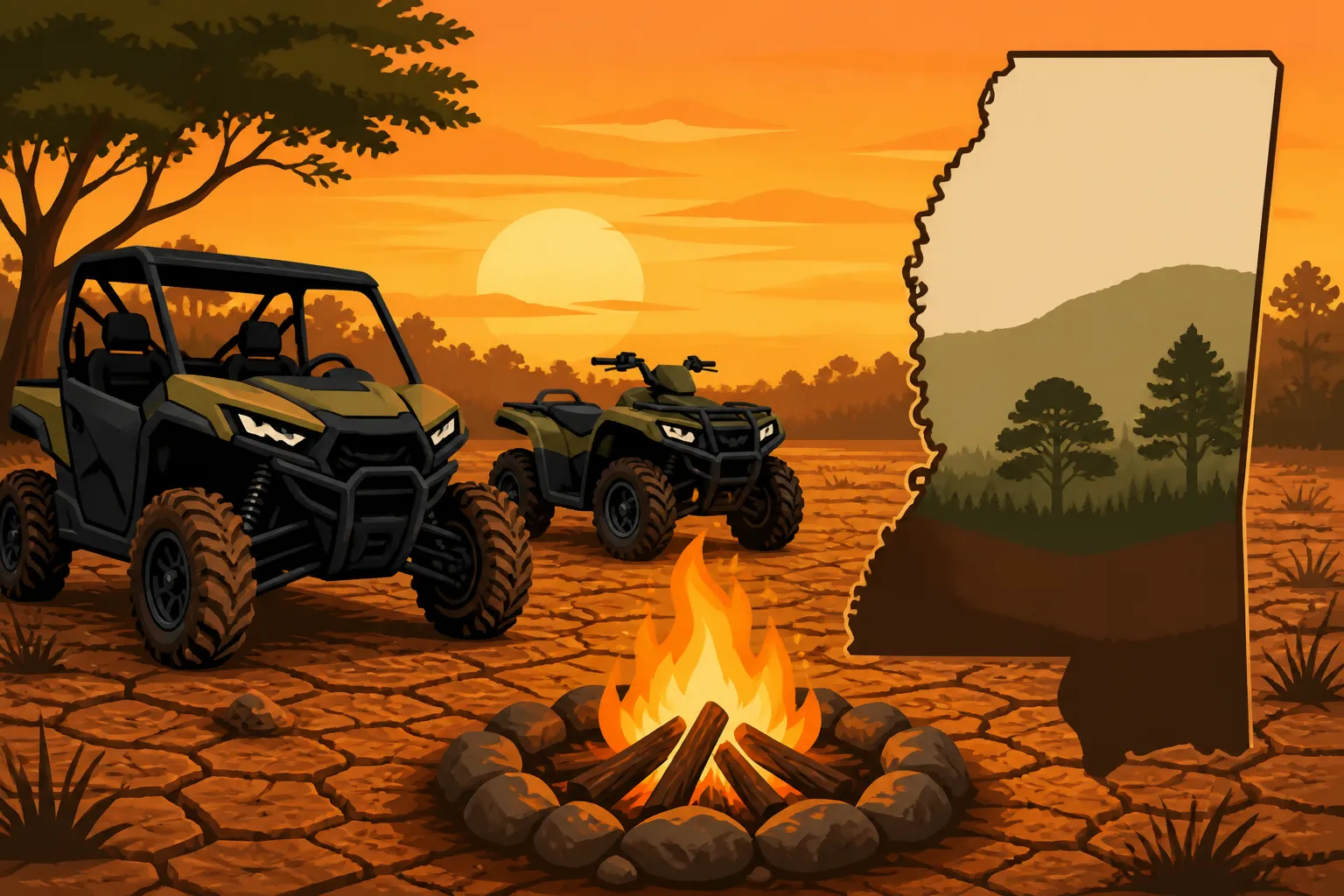
A campfire can seem like a natural end to an ATV or UTV riding day, but a Southern dry spell changes the risk quickly. A fire ring, campsite, or forest pass does not automatically mean a fire is allowed. Check the rules for the land you are on, watch conditions throughout your stay, and be ready to skip the fire altogether.
Why a dry spell changes campfire decisions
Dry grass, pine needles, leaves, and low branches can catch from a stray ember. Wind can carry sparks beyond a fire ring, while dry soil and vegetation may let a fire spread even when the ground looks damp in one spot. Heat, low humidity, and several rain-free days can all raise the risk.
The practical question is not just whether campfires are usually allowed at a place. It is whether they are permitted there now, under current conditions, and in the specific spot where you plan to camp. Restrictions can change with weather and may come from a land manager, park operator, county, or other authority. A rule for one campground may not apply to a nearby trailhead or public-land campsite.
Before lighting a fire, check for current restrictions and ask the person or office responsible for the site if the information is unclear. The overview in Mississippi Fire Restrictions in Dry Months can help you understand why conditions matter, but do not treat a general summary as permission to burn at a particular location.
Also separate the different permissions involved in an off-road trip:
- Riding access determines where and when your ATV or UTV may be used.
- Camping permission determines whether you may stay overnight at a location.
- Fire permission determines whether you may have a campfire, and what kind is allowed.
Having permission for one does not automatically grant the others. For example, a pass that covers specified riding access does not necessarily authorize a campsite or fire. Check what it covers in Mississippi Forest Pass Coverage, then confirm camping and fire rules separately.
A fire restriction can prohibit open flames while still allowing some other activities, or it can be part of broader limits on outdoor burning. Do not guess that a small cooking fire is exempt, or that a permanent metal ring is usable during a restriction. The wording and scope of the current rule matter. If you cannot confirm that your planned fire is permitted, use a no-flame option or go without.
Check the site and conditions before you unload
Do this before the riding gear and camp kitchen come out of the trailer. A quick check at home or before entering the property can prevent a wasted trip and keep you from making a risky decision after dark.
- Identify who manages the land. It may be a national forest, state park, wildlife management area, private riding park, campground, or private property. Rules can differ even between nearby sites.
- Check current fire notices. Look for posted signs, official notices, or instructions from the site operator. If the information is incomplete, contact the relevant office or manager before starting a fire.
- Confirm that fires are allowed at your exact campsite. Permission to camp does not necessarily include permission to burn. Ask whether fires are limited to established rings or prohibited altogether.
- Check for changes during your stay. A restriction may take effect after you arrive, or wind and dry conditions may worsen. Follow new signs and instructions instead of relying on what was allowed earlier.
- Make a backup plan. Pack food that can be prepared without an open flame, or use a cooking method the site explicitly permits. Do not assume a gas stove or other appliance is allowed during every restriction.
Park rules can add conditions beyond general fire guidance. If you are camping at a state park, check the applicable information in Mississippi State Park ATV Rules. For a private riding property, ask the operator about both camping and fire policies; Mississippi Private Park Camping Rules is a useful starting point for the questions to raise.
| What to confirm | Why it matters | What to do if unclear |
|---|---|---|
| Current fire restriction | Conditions and rules may have changed since your last visit | Do not light a fire until the responsible authority confirms it is allowed |
| Approved fire location | A campsite or fire ring may not be approved for use during a restriction | Ask the land manager or follow posted instructions |
| Allowed fuel and appliances | Rules may distinguish between wood fires and other cooking equipment | Use only a method the site explicitly permits |
| Wind and nearby vegetation | Sparks can travel, and dry material can ignite quickly | Skip the fire if conditions are gusty or the area is dry |
| How to extinguish the fire | Embers can remain hot after visible flames disappear | Keep water and a tool for stirring available before lighting |
Do not rely only on a general weather forecast or a visual look at the campsite. A patch of damp ground does not establish that the broader area is safe, and a calm afternoon can turn windy. If the fire ring is surrounded by dry leaves or brush, or if gusts are carrying sparks, do not light a fire even if you believe one is technically permitted. Permission is a minimum condition, not a guarantee that a fire is wise.
If a fire is allowed, keep it small and controlled
A campfire should be manageable from the moment it is lit until it is completely out. Keep it within the approved area, use only the fuel allowed by the site, and do not leave it unattended. Avoid building a large fire for convenience or burning rubbish, packaging, or other materials. Those can create flying embers, smoke, or hazards that are difficult to control.
Before lighting, gather the water and tools you would need to put the fire out. Keep children, pets, fuel containers, and parked machines away from the fire area. Never use gasoline or other accelerants to start or enlarge a campfire. Do not light a fire beneath low branches or close to dry brush, piles of leaves, tents, or other equipment.
An ATV or UTV’s exhaust and hot components are another reason to be careful around dry vegetation. Park on a surface and in a location that the land manager allows, away from dry grass and brush. Turn the machine off before refueling, and keep fuel handling well away from any flame. A spark arrestor and other equipment requirements for riding are separate matters; they do not make it safe to have a campfire. Check Mississippi Spark Arrestor Requirements for the riding-related issue, and follow campfire rules independently.
A basic fire-safety kit can include a bucket, water, a shovel, and a suitable fire extinguisher. If you are purchasing equipment, check that it is appropriate for the kind of fire it is intended to handle and that you know how to use it; Amazon is one place riders may look for compact equipment, but availability does not replace checking the item’s specifications. Keep the kit accessible, not buried under cargo or inside a locked vehicle.
When it is time to put the fire out, do not assume that a lack of visible flames means the fire is safe. Use this sequence:
- Stop adding fuel well before you plan to leave or go to sleep.
- Pour water over the fire and embers carefully, avoiding a sudden rush of steam or ash.
- Stir the material with a shovel or other suitable tool so water reaches buried embers.
- Add more water and stir again if you find heat, smoke, or glowing material.
- Check the fire area and nearby ground before leaving. If anything is still hot, continue extinguishing it.
Never leave a fire burning while you ride, even if someone says they will keep an eye on it from a distance. A shift in wind or a stray ember can turn a small fire into a larger problem quickly. If a fire escapes its ring, spreads, or cannot be controlled with the equipment on hand, move people to safety and contact emergency services. Do not put yourself in danger trying to fight a growing fire.
Plan the ride around fire risk, not just the campsite
Dry conditions can change the safest plan for the whole trip. A no-fire meal plan is often the simplest choice, especially when you are riding in an unfamiliar area or cannot confirm the current rules. Bring food that is ready to eat, or use only an alternative cooking method that the land manager says is allowed. A portable appliance is not automatically exempt from restrictions.
Think about where you will camp before you leave. Confirm that the site accepts overnight stays, learn where fires are permitted, and know how to contact the operator or land manager. If you are crossing between different properties or management areas, do not assume the first site’s rules carry over. The same applies to a group ride: tell everyone the fire plan and the restrictions before the group arrives.
It also helps to keep the ATV portion of the trip separate from assumptions about camping. A legal place to ride may not have overnight access, and a campsite may not allow off-road travel around the site. Check trail access and campsite terms as separate questions. For more trip-planning context, Mississippi Campgrounds Next to a Riding Area can help you think through how lodging and riding access fit together.
Make the decision again when you reach camp. Read posted notices, look at the actual conditions, and ask staff if there is any doubt. If there is a restriction, strong wind, unusually dry vegetation, or no reliable way to extinguish the fire, do not light one. A quiet evening without a campfire is a small trade-off compared with a fire spreading into nearby woods, grass, or equipment.
The safest approach during a Southern dry spell is simple: confirm the rule for the exact site, keep riding access and fire permission separate, and treat uncertainty as a reason not to burn. Rules and conditions can change, so check with the responsible land manager or park operator before each trip.
Disclaimer
This article is for general informational purposes only and does not constitute professional advice. Laws, prices and regulations vary by location and change over time. Consult a qualified professional for guidance on your specific situation.